
Why the Right Pattern Matters for Your First Dress
Sewing your first dress is a proud moment. The best sewing patterns for beginners dresses usa help you get there without stress. A good beginner pattern has few pieces. It uses simple shapes. The steps are written in plain words. When you pick the right pattern, you finish the dress. When you pick the wrong one, the dress may sit in a bag for a year.
New sewers often buy a pattern because they like the photo on the cover. The dress looks lovely. The model looks happy. But the inside of the pattern tells the real story. Some patterns have twenty pieces. Some call for zippers, buttons, and linings. Those skills come later. Your first dress should teach you the basics. You cut. You press. You sew straight seams. You hem. That is enough.
This guide walks you through the whole process. You will learn what makes a pattern easy. You will see the main types of beginner dress patterns. You will learn what each type costs. You will learn how to care for your patterns so they last. You will read answers to common questions. By the end, you will know which pattern to buy first and how to sew it with care.
What Makes a Pattern Beginner-Friendly: Best Sewing Patterns for Beginners Dresses Usa
Few Pieces
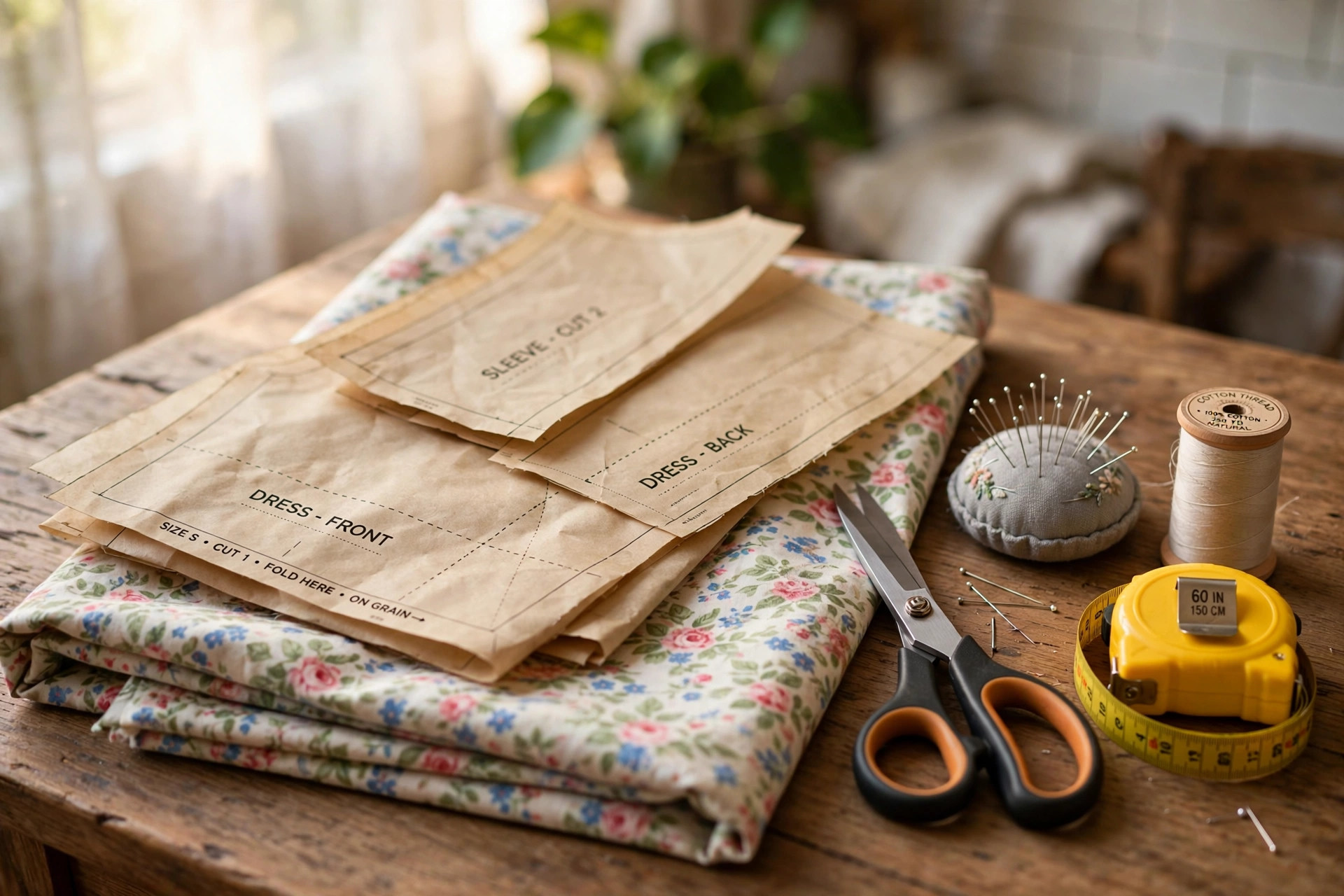
Count the pattern pieces before you buy. A good beginner dress has four to eight pieces. A front. A back. Maybe a sleeve. A facing or a simple bias finish. Each extra piece adds one more chance to get lost. Easy dress patterns for new sewists keep the piece count low on purpose.
Simple Construction
Look for straight seams and simple shapes. Avoid patterns with set-in sleeves on your first try. Sleeves set into armholes take practice. Raglan sleeves and sleeveless bodices are kinder to new hands. Avoid invisible zippers at first. A pullover style with an elastic waist is a fine place to start.
Clear Instructions
Open the instruction sheet if you can. Good brands use short steps. They number each step. They show drawings for hard parts. Simple summer dress pattern instructions often use the word “right sides together” many times. That is a good sign. It means the steps repeat. Repetition builds skill.
Sizing You Can Trust
Beginner dress patterns should print many sizes on one sheet. Most American brands print sizes 6 to 22 or XS to XXL. Check the size chart on the envelope. Measure your bust, waist, and hips with a tape measure. Buy the size that matches your high bust first, then adjust. Good charts make this clear. Poor charts cause most fit problems.
Forgiving Fabrics
The best beginner patterns list woven cotton as the suggested fabric. Cotton is stable. It does not slide. It presses well with an iron. Beginner friendly dress sewing patterns often suggest quilting cotton or broadcloth. Save the silk and the jersey for later. Stretchy and slippery cloth fights you at every step.
Types of Beginner Dress Patterns
The Shift Dress
The shift dress is a straight, loose dress. It skims the body. It has no fitted waist. This is one of the easiest first projects. The pattern often has a front, a back, and a neckline facing. Some versions have short sleeves cut in one piece with the bodice. You can sew a shift in one afternoon. It looks neat with a belt or plain.
The A-Line Dress
The A-line dress is narrow at the shoulders and wide at the hem. The shape is flattering on many bodies. The seams are straight lines from the shoulder to the hem. That is why beginners love it. You practice long, straight stitching. The dress still looks finished and pretty. Many schools teach the A-line first.
The Wrap Dress
The wrap dress ties at the waist. It has no zipper. That removes a hard step. The wrap style adjusts to your body. If the fit is a little off, the ties hide it. Some wrap patterns have longer instructions, so pick one marked easy. A true wrap dress needs careful tying, but it sews fast.
The Sundress
A sundress is sleeveless with a simple bodice and a full or straight skirt. Many sundress patterns use elastic at the back waist. Elastic is forgiving. It stretches to fit. Sundresses suit summer cotton and light prints. They are popular first projects because the pieces are large and simple.
The Shirt Dress (Later)
The shirt dress looks like a long button shirt. It has a collar, buttons, and often a belt. It is a classic. But it is not a first project. Collars and buttonholes need skill. Buy this pattern for your third or fourth dress. By then your hands will know what to do.
How to Choose Your First Pattern
Start with the fabric store. Big craft chains in the United States carry the main pattern brands. Simplicity sells many easy patterns for new sewers, and you can browse their range at Simplicity. Vogue patterns are known for style, though many run harder; still, their easy line is worth a look at Vogue Patterns.
Read the envelope back. The back lists the fabric types, the notions, and the body measurements. Notions are the small extras you must buy. Thread, elastic, interfacing, and buttons are notions. A beginner pattern should need only thread and maybe elastic. If the notion list is long, put the envelope back.
Check the difficulty label. Brands mark patterns as easy, average, or advanced. Some use words like “learn to sew” or “it’s so easy.” Trust those labels. They are printed for you. Do not start with an advanced pattern to save time. It will cost you more time in the end.
Think about the size range. A pattern that covers your size is a must. Some brands now print more size ranges on one envelope. That is good value. One envelope can serve you for years as your skills grow.
Look at the line drawings. Every envelope shows small flat drawings of each view. The views are the different versions you can sew from one envelope. Pick a pattern where at least two views look simple. You will sew the simplest view first.
Cost and Price of Beginner Dress Patterns
Pattern prices in the United States vary. Big brand paper patterns often list for 15 to 25 dollars. Sales are common. Craft stores cut pattern prices often, sometimes to a few dollars. Watch the weekly ads at stores like JOANN and Hobby Lobby. Patient shoppers rarely pay full price.
Independent pattern makers sell PDF patterns online. These cost 10 to 18 dollars. You print them at home or at a copy shop. Home printing takes many pages and much tape. A copy shop can print the large sheets for a few dollars. PDF patterns often have better photos and modern sizing. They are a good choice if you own a printer.
Fabric is the bigger cost. Cotton broadcloth costs 6 to 12 dollars per yard in most stores. A simple dress needs 2 to 3 yards. So the cloth costs 12 to 36 dollars. Thread, elastic, and interfacing add 5 to 10 dollars. A full first dress often costs 25 to 60 dollars in materials. That is still less than many store dresses, and the dress is made to your size.
Tools cost money once. A basic sewing machine, an iron, scissors, pins, and a tape measure are the core kit. If you still need a machine, read a best beginner sewing machine for home crafts guide before you shop. A best sewing kit for beginners adults crafts list can help you buy only what you need. A best rotary cutter for quilting fabric crafts tool is useful later, but sharp scissors work fine at first.
Step-by-Step: Sewing Your First Dress
Read Everything First
Read the instruction sheet from start to finish before you cut. Circle the view you will sew. Note which pieces you need. New sewers who skip this step often cut the wrong pieces. Ten minutes of reading saves hours of fixing.
Prewash Your Fabric
Wash and dry your fabric the way you will wash the finished dress. Cotton shrinks. If you skip this step, your dress may shrink after the first wash. Press the fabric with a hot iron after it dries. Flat fabric cuts true.
Cut with Care
Lay the pattern tissue on the fabric. Follow the grain line arrow. The grain line must run straight with the fabric edge. Pin the tissue down well. Cut with long, smooth strokes. Do not lift the fabric while you cut. Mark all notches and dots with chalk or small clips. Marks help you match pieces later.
Sew Slowly
Set your machine to a medium stitch length. Sew at a slow speed. Keep your eyes on the seam guide, not the needle. Backstitch at the start and end of each seam so it does not open. Press every seam after you sew it. Pressing is half of sewing. A pressed seam looks clean and lies flat.
Try It On
Try the dress on before you hem it. Pin the hem to the length you want. Check the fit at the shoulders and waist. Small fixes now are easy. Fixes after the hem is done are hard. When the fit is right, sew the hem and give the dress a final press.
Care and Upkeep of Patterns and Dresses
Paper patterns tear with use. After you cut your size, fold the tissue back into the envelope. Store envelopes upright in a box. Keep them dry. If a piece tears, tape it with clear tape on the back. Many sewers trace their size onto new tissue or Swedish tracing paper. The original stays whole. The copy takes the wear.
PDF patterns need a different kind of care. Save the file in a folder with the pattern name. Print only the size you need. Some PDF patterns let you print one size layer. That saves paper and ink. Keep a notebook with notes on each pattern. Write down the size you cut and any changes you made. Your future self will thank you.
Wash your handmade dresses with care. Turn them inside out. Use cool water. Hang them to dry or use low heat. Handmade seams last longer with gentle washing. Press the dress after washing for a crisp look. Store dresses on hangers so the shoulders keep their shape.
Safety Tips for New Sewers
Sewing is safe when you build good habits. Keep your fingers away from the needle. Do not sew over pins if you can help it. A broken needle can fly. Remove pins as the presser foot nears them. Many teachers say to pull pins out just before the needle reaches them.
Unplug your iron when you step away. Irons cause most sewing room burns. Let the iron cool on its heel rest. Keep the cord away from the hot plate. Rotary cutters are very sharp. Always close the blade guard after each cut. Cut away from your body. Store blades up high if children visit your sewing space.
Good light protects your eyes. Sew near a window or use a bright desk lamp. Take breaks every hour. Stand, stretch, and rest your eyes. Tired hands make mistakes. A short break keeps your work clean and your body well.
Craft stores are a fine place to see tools in person, and large retailers such as Target also stock basic sewing notions. For art and craft supplies beyond sewing, Blick carries a wide range. Home improvement stores like The Home Depot sell work tables and storage that suit a sewing corner. For general project advice, Bob Vila offers many how-to guides for home makers.
Frequently Asked Questions
How long does a first dress take to sew?
Plan for four to six hours spread over two days. Cutting takes one to two hours. Sewing takes two to three hours. Pressing and fitting take the rest. Do not rush. Short sessions keep your work neat.
What is the easiest dress style for a true beginner?
A sleeveless shift or a simple A-line sundress is easiest. Both have few pieces. Both skip zippers and set-in sleeves. Elastic-waist styles are also kind to beginners.
Should I buy a paper pattern or a PDF pattern?
Paper patterns are ready to use and easy to store. PDF patterns cost less and print at home, but taping pages takes time. For your first dress, a paper pattern from a sale bin is often the simplest choice.
What fabric should I avoid as a beginner?
Avoid slippery fabrics like satin and charmeuse. Avoid stretch knits until you learn to handle them. Avoid plaids and stripes at first, since matching them takes skill. Plain woven cotton is your best friend.
How do I know my pattern size?
Measure your bust, waist, and hips with a tape measure. Compare the numbers to the chart on the envelope back. Pick the size that matches your high bust for dresses. You can blend between sizes at the waist and hip lines.
Can I sew a dress without a sewing machine?
You can hand sew a simple dress, but it takes many hours. A basic machine sews faster and makes stronger seams. If you plan to sew more than one dress, a machine is worth the cost.
A Short Final Word
The best sewing patterns for beginners dresses usa share the same traits. Few pieces. Clear steps. Simple shapes. Kind fabrics. Pick a shift, an A-line, or a sundress for your first try. Buy the pattern on sale. Prewash your cotton. Cut with care and sew slowly. Press every seam. Your first dress may not be perfect. It will still be yours. Each dress after it will be better. Keep your patterns, keep your notes, and keep sewing.
References
Blick Art Materials. (n.d.). Art and craft supplies. https://www.dickblick.com Bob Vila. (n.d.). Home improvement advice. https://www.bobvila.com Hobby Lobby. (n.d.). Arts, crafts, and home decor. https://www.hobbylobby.com JOANN. (n.d.). Fabric and craft supplies. https://www.joann.com Simplicity. (n.d.). Sewing patterns. https://www.simplicity.com Target. (n.d.). Retail store. https://www.target.com The Home Depot. (n.d.). Home improvement products. https://www.homedepot.com Vogue Patterns. (n.d.). Sewing patterns. https://www.voguepatterns.com
Was this guide helpful?

About Michael Thompson
The My Garden US editorial team writes practical, in-depth home and garden guides for American homeowners — tested advice, no fluff.
You May Also Like
DIY Flower Arrangement Kit for Home Decor: A Practical Guide
July 18, 2026 0 views
DIY Soap Dispenser Kit for Bathroom Crafts: A Complete Guide
August 14, 2026 0 views
Best Craft Scissors Set for Paper and Fabric
March 2, 2026 0 views