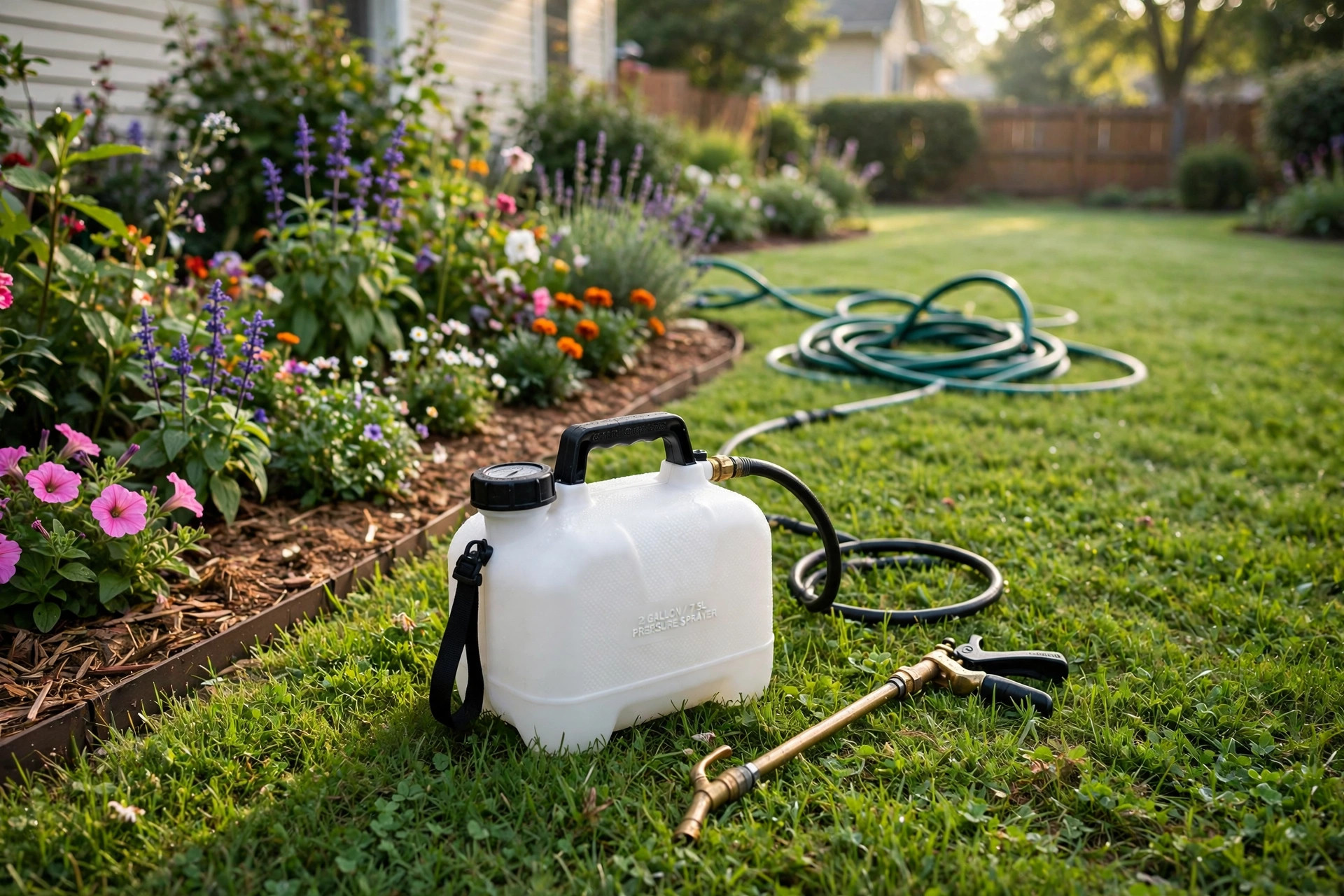

The best garden sprayer for lawn care is one of the most useful tools a lawn owner can buy. It lets you feed grass, kill weeds, and treat pests with care and control. Without a sprayer, most people pour liquids by hand or pay a lawn company every month. Hand pouring gives uneven coverage. A lawn company gives even coverage but costs real money. A quality sprayer sits between the two. It gives you control at a fair price.
This guide covers what you need to know before you buy. You will learn why a sprayer matters, what features to look for, which types fit which yards, what they cost, how to keep one working for years, and how to use it safely. The words are kept simple. By the end, you should be able to pick the best garden sprayer for lawn care with confidence.
Why a Garden Sprayer Matters for Lawn Care
Grass needs food, water, and protection to stay green. Fertilizer feeds it. Weed killer keeps dandelions and crabgrass away. Fungicides and insecticides stop problems before they spread. All of these work best when they land evenly on the grass. A sprayer spreads liquid in a fine mist. The mist coats the blades and the soil below. That even coat is what makes the product work as intended.
If you pour liquid fertilizer from a jug, some spots get too much and some get too little. Spots with too much can burn. Spots with too little stay weak. A sprayer fixes this. The nozzle breaks liquid into drops of similar size. You walk at a steady pace. Each pass lays down the same amount. The result is one even color instead of patches.
A sprayer also saves time. One filled tank can cover a whole small yard. Treating spot weeds takes minutes instead of an hour of pulling. For larger lawns, a backpack sprayer covers thousands of square feet without a refill.
Cost is another reason. Professional services charge monthly fees that add up fast. The do-it-yourself path with a good sprayer costs a fraction of that. A tank of mixed product costs only a few dollars. The sprayer lasts for years if you clean it. The math favors the sprayer in almost every case.
What to Look for When Choosing a Sprayer: Best Garden Sprayer for Lawn Care
Start with tank size. Handheld sprayers hold one to two quarts for spot treatment. Pump sprayers hold one to four gallons and suit most lawns. Backpack sprayers hold three to four gallons and free your hands while you walk. Hose-end sprayers attach to a garden hose and draw concentrate as water flows. Match the tank to your lawn size.
Check the pump and pressure system. Hand pump models build pressure with ten to fifteen strokes of the handle. Battery models remove the pumping work and keep pressure steady. Battery sprayers cost more, but they are worth it for large lawns or sore shoulders. Manual pumps are simple and never need charging.
Look at the wand and nozzle. A longer wand keeps spray away from your clothes and reaches into corners. Adjustable nozzles switch between a fine mist and a steady stream. Mist covers wide areas. Stream targets a single weed. Some sprayers ship with two or three nozzle tips. That is a good sign. It means the maker thought about real lawn jobs.
Seals and gaskets matter more than most buyers think. Cheap sprayers use rubber seals that wear out fast in weed killers and fertilizers. Better sprayers use chemical resistant seals that last for seasons. If a listing says the sprayer is rated for chemicals, that is a good sign. Independent product tests often show which models hold up over time.
Comfort counts too. Backpack models should have wide padded straps. A tank with a wide mouth is easier to fill and rinse.
Finally, check the parts list. The best sprayers sell replacement hoses, pump cups, and nozzle tips. Spare parts keep a good sprayer alive for a decade. No parts means the sprayer is disposable. Many how-to guides show how a quick seal change brings an old sprayer back to life.
Types of Garden Sprayers for Lawns
Pump sprayers are the most common type. You pour in mixed liquid, close the lid, pump the handle, and spray. They come in one to four gallon sizes. For a small to medium lawn, a two gallon pump sprayer covers most jobs. Pump sprayers are simple, cheap, and easy to repair. They are the best garden sprayer for lawn care for most first time buyers.
Backpack sprayers ride on your back with the pump handle at your side, so you pump while you walk. They hold three to four gallons and cover big lawns fast. If your yard is over ten thousand square feet, a backpack model is worth the money.
Battery powered sprayers keep pressure steady from a full tank to an empty one. That gives the most even coverage of any type. They weigh more and cost more. For people with sore shoulders or very large lawns, they are the best choice. You can compare models at large retailers like Lowe’s or check brand sites such as Fiskars and Corona Tools.
Hose end sprayers attach to a garden hose and mix concentrate with water as it flows. They cover huge areas fast and you carry no weight. But control is poor. Wind blows spray off target and the mix ratio changes with water pressure. Use them for quick feeding, not careful spot treatment.
Trigger sprayers in tiny sizes handle spot jobs. A quart bottle kills the odd weed near the walkway. They cost a few dollars. Every lawn owner should keep one for touch ups between spray days.
If your lawn program leans toward weed and insect control, read some pesticide sprayer reviews before you buy, since chemical duty wears seals and hoses faster. If you prefer natural methods, our guide to a sprayer for organic gardening covers models that handle compost teas and organic blends. And if you water beds as well as grass, a drip irrigation kit can handle steady watering while the sprayer handles feeding.
Cost and Price Ranges
Handheld trigger sprayers cost five to fifteen dollars and last a season or two.
Pump sprayers cost twenty to seventy dollars. The low end buys a one gallon plastic model with basic seals. The high end buys a four gallon model with a brass wand and chemical rated seals. Most lawn owners land in the thirty to fifty dollar range. This is the sweet spot for value.
Backpack sprayers cost sixty to one hundred fifty dollars. Manual backpacks sit at the low end. Models with padded straps and better pumps sit at the high end.
Battery powered sprayers cost eighty to two hundred fifty dollars. A four gallon battery backpack is the top of the line. Compare it to one season of a lawn service and the sprayer pays for itself fast.
Hose end sprayers cost ten to thirty dollars. They are cheap because they are simple.
The sprayer is only part of the cost. Concentrate products cost ten to thirty dollars per bottle, and one bottle makes many tanks. A two gallon tank of mixed weed killer costs about two to three dollars. A full season of do-it-yourself treatment for a medium lawn often costs under fifty dollars in product.
Care and Upkeep
A sprayer that is cleaned lasts years. A sprayer that is left dirty lasts months. The rule is simple. Rinse after every use.
Start by emptying the tank. Never store mixed product in the sprayer. Then fill the tank one third with clean water, pump it up, and spray the water through the wand and nozzle. This flushes the hose and tip. Do it twice. Take the nozzle tip off and rinse it under a tap. Clear clogs with a soft brush or toothpick. Never use wire. Wire scratches the tip and ruins the spray pattern.
Once a month during the season, check the seals. If the pump cup and lid gasket look dry, rub on a little silicone grease. If a seal is torn, replace it. Spare seal kits cost a few dollars, and repair guides walk through the steps.
At the end of the season, wash the tank, hose, wand, and nozzle with soapy water. Rinse well and let every part dry fully. Pump the handle a few times with the tank empty to push water out. Store the sprayer in a dry spot that does not freeze, out of direct sun. A sprayer stored right is ready the first warm week of spring.
Never mix chemicals without reading both labels. Some products react with each other. Mix water first, then product, in the order the label says. A marker dye that colors the spray helps you see where you have been and stops double treatment, which can burn grass.
If a part breaks, fix it before replacing the whole tool. A cracked hose, a worn pump cup, and a clogged tip are the three most common failures. All three have cheap parts. Garden suppliers like Gardener’s Supply and Burpee sell parts and explain which fit which models.
Safety When Spraying Your Lawn
Lawn chemicals are tools, not toys. Use them with respect and they are safe. Ignore the labels and they can hurt you, your pets, and your plants.
Read the label first. Every legal lawn product carries a label with directions for mixing, timing, and re-entry. The label is the law. Follow it word for word. If it says to wear gloves and goggles, wear them. The EPA oversees these labels to protect users and the environment.
Wear basic gear. Gloves, long sleeves, long pants, and closed shoes cover most needs. Goggles help when you pump and when wind shifts. Wash your hands and face when you finish. Wash your spray clothes apart from the family laundry.
Spray on calm days. Wind above ten miles per hour carries mist onto flower beds, gardens, and neighbor yards. Early morning is often calmest. It is also best for the grass, since the product dries before the hot sun hits. Do not spray before heavy rain. Rain washes product off before it works, and runoff can reach storm drains.
Keep people and pets away while you spray. Bring pets inside. Put a small flag on the lawn afterward so visitors know. Honor the re-entry time on the label.
Store products and the sprayer locked away. Keep concentrates in their original bottles with labels on. Never pour chemicals into food jars or drink bottles. The EPA publishes free checklists for home chemical storage.
Clean spills right away. Sprinkle cat litter or dry soil on a spill, sweep it into a bag, and trash it. Do not wash spills into the street or a drain.
Protect pollinators too. Bees visit clover and weeds in lawns. Spray early morning or late evening when bees are not flying. Bob Vila has more tips on pollinator friendly lawn care.
Frequently Asked Questions
What size sprayer do I need for an average lawn? A two gallon pump sprayer suits most suburban lawns up to about five thousand square feet. One fill covers a full weed treatment or feeding pass. For lawns over ten thousand square feet, step up to a four gallon backpack or battery model.
Can I use one sprayer for weed killer and fertilizer? Yes, if you clean it well between uses. Rinse tank, hose, and nozzle twice with clean water. Some owners keep two sprayers, one for weed killers and one for everything else. Two cheap sprayers cost less than one ruined flower bed.
How often should I spray my lawn? Most lawn programs need four to six treatments a year: spring feeding, late spring weed control, summer feeding, fall weed control, and late fall feeding. Follow the product label. More is not better. Too much fertilizer burns grass.
Do battery sprayers work better than pump sprayers? They spray more evenly. The battery holds pressure steady, so the pattern stays uniform. Manual pumps lose pressure as you spray. For small lawns a manual pump is fine and costs less. Independent reviews often favor battery models for comfort on big jobs.
Why does my sprayer lose pressure? The most common cause is a dry or worn pump seal. Grease the pump cup, or replace the seal kit. Next check for a cracked hose or loose lid. Then clean the nozzle tip, since clogs make pressure read low.
Is it safe to spray around vegetable beds? It can be, with care. Block drift with cardboard, spray on calm mornings, and choose products labeled safe for edibles. Respect the wait time before harvest.
A Final Word
The best garden sprayer for lawn care is the one that fits your yard, your budget, and your hands. For most people, that is a two gallon pump sprayer with chemical rated seals and an adjustable nozzle. It costs less than fifty dollars, covers a normal lawn, and lasts for years with simple rinsing. Bigger yards call for a backpack or battery model. Small yards do fine with a one gallon pump.
Buy the sprayer, read the labels, spray on calm mornings, and rinse the tank when you finish. Do those four things and your lawn will reward you with thick green grass season after season.
References
Bob Vila. (n.d.). Home improvement advice. https://www.bobvila.com Burpee. (n.d.). Seeds, plants, and gardening supplies. https://www.burpee.com Consumer Reports. (n.d.). Product reviews and ratings. https://www.consumerreports.org Corona Tools. (n.d.). Garden and landscape tools. https://www.corona-tools.com Family Handyman. (n.d.). DIY home repair and maintenance. https://www.familyhandyman.com Fiskars. (n.d.). Garden and cutting tools. https://www.fiskars.com Gardener’s Supply Company. (n.d.). Gardening tools and supplies. https://www.gardeners.com Lowe’s. (n.d.). Home improvement products. https://www.lowes.com U.S. Environmental Protection Agency. (n.d.). Protecting human health and the environment. https://www.epa.gov
Was this guide helpful?

About Emily Rodriguez
The My Garden US editorial team writes practical, in-depth home and garden guides for American homeowners — tested advice, no fluff.
You May Also Like
Best Garden Fork for Turning Compost: How to Pick the Right One
January 14, 2026 0 views
Compost Accelerator for Faster Breakdown: A Practical Guide
May 6, 2026 0 views
How to Clean Rusty Garden Tools: A Step-by-Step Guide
March 18, 2026 0 views