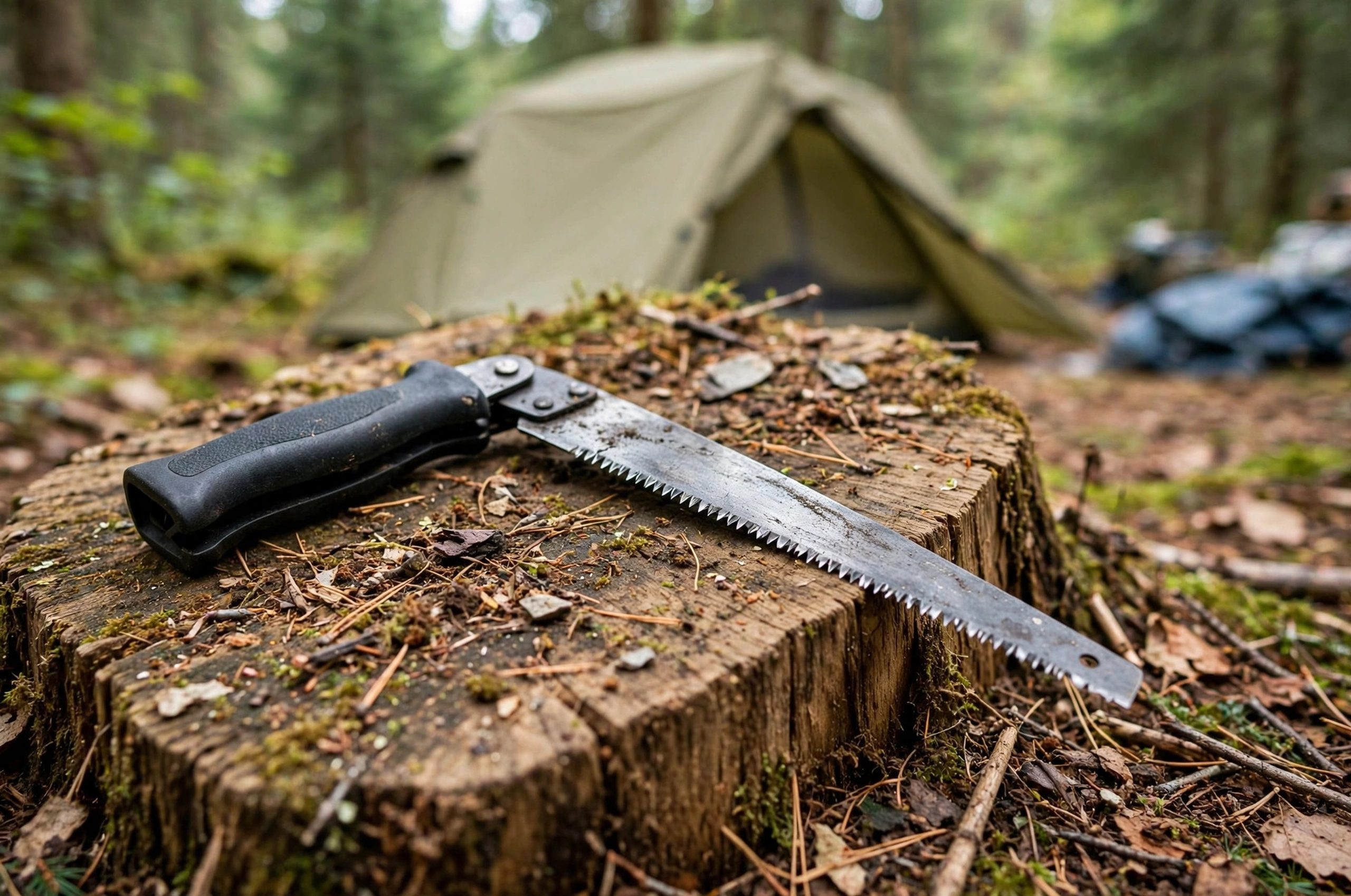
A good camping trip has a way of turning you into a part-time lumberjack. You need tent poles trimmed, firewood cut to size, and a fallen limb cleared from the trail. A folding saw for pruning does all of that and slips into a side pocket when you are done. If you are new to folding saw for pruning, start with the basics below.
Table of Contents
Table of Contents
- Folding Saw for Pruning: Why a Folding Saw Belongs in Your Pack
- Blade Length: The Key Trade-Off
- Tooth Style and Why It Matters
- Weight, Handle, and Locking
- Curved vs. Straight Blades
- Using the Saw at Camp
- Camp Saw Safety
- Care and Maintenance on the Trail
- What to Look For: A Buyer's Checklist
- Pairing the Saw With Your Kit
- References
But not every folding saw belongs in a backpack. Some are built for the garden and weigh too much. Others are ultralight toys that stall on real wood. This guide explains what makes a folding pruning saw work on camping trips, compares the features that matter, and shows how to use and care for the saw once you own it.
Folding Saw for Pruning: Why a Folding Saw Belongs in Your Pack
When it comes to folding saw for pruning, getting the details right makes all the difference.
Many homeowners find that folding saw for pruning is easier than they expected once they know the basics.
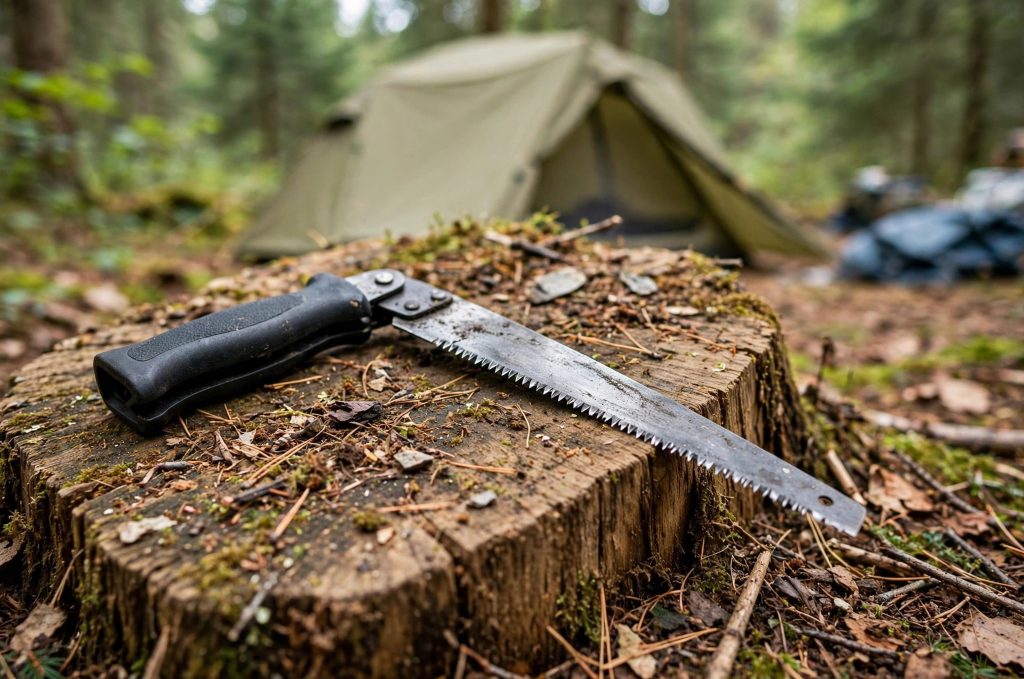
Camp life runs on cut wood. Kindling for the fire. A ridge pole for the tarp. A walking stick from a straight sapling. You can do some of this with a hatchet, but a saw is safer and more precise for most camp woodwork. It cuts on a controlled stroke instead of a swing, which matters when you are tired, the light is low, and the ground is uneven.
A folding saw adds one more advantage: it packs small. The blade folds into the handle like a pocketknife, so the teeth cannot snag your pack or your hand. A fixed-blade pruning saw needs a sheath and still eats pack space. For anyone counting ounces and inches, the folding design wins.
Gardeners already know the tool. The same saw that prunes apple branches in the yard cuts campfire wood on the trail. If you are choosing between models, our guide to the pruning saw for thick branches covers full-size options for home use.
Blade Length: The Key Trade-Off
Many homeowners find that folding saw for pruning is easier than they expected once they know the basics.
The key to folding saw for pruning is choosing the right approach for your space and budget.
Blade length is the first decision, and it is a trade-off between cutting power and pack weight.
- Six to seven inches. The ultralight class. These saws weigh a few ounces and disappear into a pocket. They cut branches up to about three or four inches thick, which covers most camp needs: kindling, tent stakes, small firewood. The Felco 600, for example, pairs a 6-inch blade with a weight under six ounces. The Advnture camping saw roundup praises this size for slipping into a hiking pants pocket.
- Eight inches. The middle ground. Noticeably faster on wrist-thick wood, still easy to pack. A good choice if your trips involve real firewood processing.
- Ten inches. The workhorse. A ten-inch blade cuts branches up to six inches across, which is serious firewood territory. The cost is weight and pack space. The Corona RazorTOOTH ten-inch model is a favorite in this class, with triple-ground teeth that rip through hardwood. Reviewers at The Hiking Adventure note its speed on thicker logs.
For most campers, seven to eight inches hits the sweet spot. You get real cutting ability without a tool that dominates your pack. Go ten inches if you regularly process larger firewood or clear trail blowdowns.
Tooth Style and Why It Matters
The key to folding saw for pruning is choosing the right approach for your space and budget.
With a little planning, folding saw for pruning can fit even a busy schedule.
Folding pruning saws cut differently than the carpenter's saw in your garage. Most quality pruning saws use Japanese-style teeth that cut on the pull stroke. You apply pressure as you draw the blade toward you, and the push stroke just resets. This design is safer in awkward positions because you are not pushing the tool away from your body. The classic pruning-tools chapter at The Free Library explains that pull-stroke saws reduce the chance of the blade jumping or binding.
Look for these tooth features:
- Impulse-hardened teeth. The tooth tips are heat-treated for hardness. They stay sharp much longer than plain teeth, which matters when you are miles from a sharpener.
- Triple-ground or razor teeth. Teeth ground on three faces cut faster and cleaner than simple stamped teeth. They remove more wood per stroke.
- Taper-ground blade. A blade that is thinner at the top than at the teeth resists binding in the cut. The saw slides instead of wedging.
Cheap saws often have simple stamped teeth that dull quickly and a blade that binds in green wood. Spending a little more on tooth quality pays off on the first trip.
Weight, Handle, and Locking
With a little planning, folding saw for pruning can fit even a busy schedule.
Before you start, it helps to understand how folding saw for pruning works in real homes.
Every ounce matters on the trail. A good camping folding saw weighs between five and ten ounces. Check the weight before you buy, and remember that the listed weight sometimes skips the sheath or pouch.
The handle should fill your hand. Rubber or co-molded grips stay comfortable during long cutting sessions and do not slip when wet. A handle that is too slim will blister your palm after twenty minutes of sawing.
The locking mechanism is a safety feature, not a luxury. A saw that locks open cannot fold onto your fingers mid-stroke. Most quality saws lock in both the open and closed positions. Test the lock in the store if you can. It should click firmly with no wobble. Avoid saws with no lock at all; the camping saw reviews at Advnture flag missing locks as a real drawback on otherwise good tools.
A lanyard hole is a small bonus that earns its keep. Tie a short cord through it and you can hang the saw from a belt loop or keep it from sliding off a log into the leaves.
Curved vs. Straight Blades
Before you start, it helps to understand how folding saw for pruning works in real homes.
A good plan for folding saw for pruning saves time, money, and frustration.
You will see both shapes on the shelf. Each has a job.
Curved blades pull themselves into the cut. The curve keeps more teeth in contact with the wood through the stroke, which makes cutting faster with less effort. They excel at pruning and at cutting branches at arm's length. Most dedicated pruning saws are curved.
Straight blades are simpler and often cheaper. They work fine for general camp cutting, especially on a flat surface like a stump. Some campers prefer them for notching and fine work.
For a do-everything camp saw, curved wins. The speed difference on green wood is noticeable, and green wood is what you cut most at camp.
Using the Saw at Camp
A good plan for folding saw for pruning saves time, money, and frustration.
For most people, folding saw for pruning comes down to a few smart choices.
Technique matters more than muscle. Let the teeth do the work.
1. Secure the wood. Brace the branch against a log or hold it firmly with your free hand, well clear of the blade path. Cutting a wobbling branch is slow and dangerous. 2. Start with light strokes. Use the tip of the blade to start a groove. A few gentle strokes establish the kerf, the channel the blade follows. 3. Use long, steady pull strokes. Draw the blade toward you with even pressure, using as much of the blade length as you can. Let the push stroke ride back with no pressure.
4. Keep the blade straight. Twisting the saw mid-cut binds the blade and can snap it. If the cut wanders, stop and restart the groove. 5. Clear the kerf. Every few strokes, pull the saw out and knock the sawdust from the teeth. Packed teeth cut slowly.
For branches under tension, such as a bent sapling, cut from the side that is being squeezed together. Cutting the stretched side first lets the branch snap shut on the blade. Trail-crew guidance from the USDA Forest Service describes the two-cut method for loaded limbs: a small relief cut underneath, then the main cut from the top.
Camp Saw Safety
For most people, folding saw for pruning comes down to a few smart choices.
If you are new to folding saw for pruning, start with the simplest option and build from there.
A folding saw is one of the safer cutting tools, but it still has teeth designed to slice wood, and they do not care what they slice.
- Open the blade fully and confirm the lock before every use.
- Keep your free hand behind the cutting line, never in front of the blade.
- Cut away from your body on the pull stroke path. Think about where the blade goes if the wood gives way suddenly.
- Fold and lock the saw the moment you set it down. An open saw on a stump is a trap for the next person who grabs it.
- Never hand someone an open saw. Fold it first.
- Keep the saw dry when stored. A damp blade in a closed handle rusts from the inside.
Teach these rules to anyone borrowing your saw, especially younger campers. The tool is simple, but respect for the edge is not automatic.
Care and Maintenance on the Trail
If you are new to folding saw for pruning, start with the simplest option and build from there.
When it comes to folding saw for pruning, getting the details right makes all the difference.
A folding saw needs little care, but a few habits keep it cutting well for years.
Clean after use. Wipe sap and sawdust from the blade with a rag. In the field, a green leaf or a splash of water does the job. Sap left on the teeth hardens and slows every future cut.
Oil the pivot. A drop of oil at the folding joint keeps the action smooth and stops rust where the blade meets the handle. Any light oil works.
Protect the teeth in transit. Fold the saw closed and locked. If your model came with a pouch, use it. Teeth banging against other gear dull faster than teeth cutting wood.
Know when to replace the blade. Impulse-hardened teeth cannot really be sharpened at home; the hardened tips resist files. When the saw starts tearing instead of cutting and cleaning does not help, replace the blade rather than the whole tool. Many quality saws sell replacement blades, which is cheaper and keeps a good handle in service. The folding saw overview at My Backyard Grow notes that replaceable blades are a mark of a saw built to last.
Dry before storing. At the end of the trip, open the saw, wipe the blade dry, and leave it open for an hour before folding it away. Storing a damp saw closed traps moisture against the steel. At home, hang it with your other tools using good garden tool storage ideas for the shed.
What to Look For: A Buyer's Checklist
When it comes to folding saw for pruning, getting the details right makes all the difference.
When you compare models side by side, run through this list:
- Blade length matched to your wood size, usually seven to eight inches for general camping.
- Pull-stroke, triple-ground, impulse-hardened teeth.
- Taper-ground blade that resists binding.
- Positive lock in open and closed positions.
- Comfortable non-slip handle with a lanyard hole.
- Weight under ten ounces for backpacking, under a pound for car camping.
- Replacement blades available from the maker.
- A sheath or pouch included.
Hit most of those and you have a saw that will serve for many seasons. The Chanlong folding saw specs show what the mid-range market offers: hardened teeth, ergonomic handles, and weights that suit a pack.
Skip the bargain-bin saws with no brand name, no lock, and mystery steel. They dull on the first trip and the handles crack when you need them most. A folding saw is a small purchase. Buy the good one once.
Pairing the Saw With Your Kit
Many homeowners find that folding saw for pruning is easier than they expected once they know the basics.
The folding saw covers the middle of camp woodwork. Pair it with a sturdy fixed-blade knife for carving and feather sticks, and you can handle nearly everything a campsite demands without carrying an axe. Some campers add a small hatchet for splitting, but many find the saw and knife combination lighter and safer.
If your trips lean more toward yard work than wilderness, a cordless pruning saw for branches might suit home use better. But no battery tool packs as light or as reliably as a folding saw on the trail. No charge to remember, no motor to fail, just teeth and a handle. A little care goes a long way with folding saw for pruning.
References
The key to folding saw for pruning is choosing the right approach for your space and budget.
Advnture. (n.d.). The best camping saws: portable, lightweight, and effective. https://www.advnture.com/buying-guides/best-camping-saw
A.M. Leonard. (n.d.). Felco 600 6-1/3in folding pull-stroke saw. https://www.amleo.com/felco-model-600-tri-edge-folding-pruning-saw-6-3-inch-straight-blade/p/F600
Chanlong. (n.d.). Best folding pruning saw. https://www.chanlong.com/product/folding-saw/best-folding-pruning-saw
My Backyard Grow. (n.d.). Best folding pruning saw: Top picks for effortless tree trimming. https://mybackyardgrow.com/best-folding-pruning-saw/
SlashGear. (n.d.). 4 survival saws that could be useful on your next camping trip. https://www.slashgear.com/1531801/survival-saws-that-could-be-useful-for-next-camping-trip/
The Free Library. (n.d.). Chapter 6: Pruning tools. https://www.thefreelibrary.com/Chapter+6+Pruning+tools-a0183858125
The Hiking Adventure. (n.d.). Best backpacking saw: Cutting edge recommendations. https://thehikingadventure.com/best-backpacking-saw
USDA Forest Service. (n.d.). Handtools for trail work. https://www.fs.usda.gov/t-d/pubs/htmlpubs/htm05232810/page04.htm
With a little planning, folding saw for pruning can fit even a busy schedule.
Was this guide helpful?

About My Garden US
The My Garden US editorial team writes practical, in-depth home and garden guides for American homeowners — tested advice, no fluff.