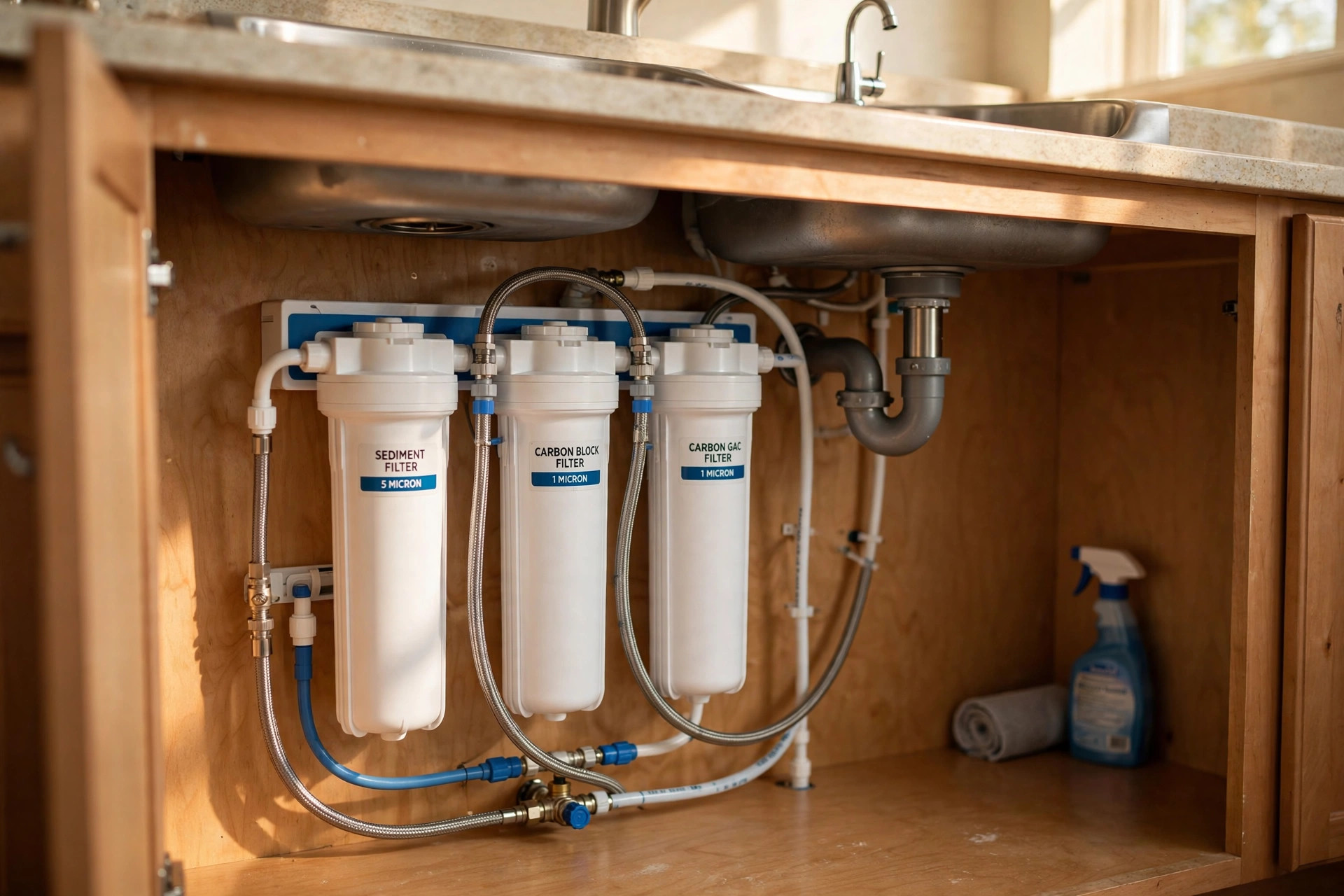
Many families in Texas want better water from their kitchen tap. An under sink filters texas homes usa buyer often starts with a simple complaint. The water smells of chlorine. It tastes flat or bitter. It leaves white spots on dishes. An under sink filter fixes these problems at one faucet, without the cost of treating the whole house. It sits inside the sink cabinet, out of sight, and it cleans the cold water line before the water reaches your glass.
This guide explains what under sink filters do, the main types sold in the United States, how to pick the right one, what they cost, and how to keep one working well. It is written for home owners who want clear facts and no jargon.
Why Under Sink Filters Matter in Texas Homes
Texas tap water comes from many sources. Some cities use surface water from lakes and rivers. Others use ground water from wells and aquifers. Both can carry things that affect taste, smell, and health. Chlorine and chloramine are added to kill germs. They often leave a strong smell. Hard minerals such as calcium and magnesium are common in many Texas towns. They make water feel heavy and leave scale on fixtures.
An under sink filter removes or reduces these problems at the kitchen sink. That is the faucet most families use for drinking and cooking. The rest of the house keeps its normal water. This point-of-use approach is cheaper than a whole-house system. It is also easier to install and easier to keep up.
Families with small children or older parents often care most about water quality. A good filter gives them one safe, clear source for drinking, cooking, and filling bottles.
What to Look for When You Choose: Under Sink Filters Texas Homes Usa
Before you buy, answer three simple questions. First, what is in your water? Second, how much filtered water do you use each day? Third, how much space is inside your sink cabinet?
Test Your Water First
Start with a test. Many Texas water utilities publish a yearly water quality report. You can find it on your city or utility web site, or you can ask for a paper copy. For more detail, buy a simple home test kit. Kits test for chlorine, hardness, pH, and common metals. Some labs accept mailed samples and send back a full report for a modest fee.
A test keeps you from buying the wrong filter. If your main problem is chlorine taste, a simple carbon filter is enough. If lead shows up, you need a filter rated to remove it.
Know Your Daily Use
Most under sink filters are made for drinking and cooking water only. A family of four uses about one to three gallons of filtered water a day. Cartridges are rated by gallon capacity. A 500-gallon cartridge lasts a family of four about six months. Bigger families should choose a higher-capacity unit so they do not change filters every few weeks.
Measure the Cabinet
Open the sink cabinet and measure the space. Most under sink systems need a block of space about the size of a small trash can. Check for the garbage disposal, pipes, and cleaning supplies. If you are planning other work, it helps to plan the filter together with your sink choice. Read our guide to undermount stainless sinks for help matching a sink to your cabinet space. If a disposal is in the way, see our notes on garbage disposal installation to learn how the two can share one cabinet.
The Main Types of Under Sink Filters
Four types cover almost all home use. Each works in a different way. Each is best for a different water problem.
Carbon Block Filters
Carbon block filters are the most common. Water passes through a dense block of activated carbon. The carbon traps chlorine, bad taste, odor, and many chemicals. It also catches some sediment. These filters are low cost and easy to change. They do not remove most dissolved minerals or salts. For Texas homes where chlorine taste is the main complaint, a carbon block filter is often the best first step.
Reverse Osmosis Systems
Reverse osmosis, often called RO, forces water through a very fine membrane. The membrane blocks lead, fluoride, arsenic, nitrates, and many other dissolved solids. RO systems usually have three to five stages. They include a pre-filter, the membrane, and a post-filter for taste. They work slowly and store clean water in a small tank.
RO systems remove almost everything, which is both their strength and their weakness. They waste some water with each gallon they make. Older models waste three or four gallons for each clean gallon. Newer models waste far less. They also need more space and more upkeep than simple filters. Product makers such as Whirlpool and GE Appliances publish clear guides that explain how these multi-stage systems fit under a sink.
Multi-Stage Filtration Systems
Multi-stage systems stack two or three cartridges in a row. A common set is a sediment pre-filter, a carbon block, and a specialty cartridge for lead or cysts. Each stage does one job. Together they handle taste, odor, sediment, and specific health risks. These systems cost more than a single carbon filter but less than full RO. They are a good middle choice for city water that meets basic standards but still tastes poor.
Specialty and Inline Filters
Inline filters are small single cartridges that sit in the water line. They are cheap and simple. They suit a home that only wants better taste at one tap. Specialty filters target one problem, such as scale, iron, or chloramine. Chloramine is used by some Texas utilities instead of chlorine. It needs a special carbon made to break it down. Standard carbon works much more slowly on chloramine, so check your utility report before you buy.
Cost and Price: What to Expect
Prices vary by type and by brand. A simple single-cartridge carbon filter costs about 40 to 120 dollars. A good multi-stage system costs about 150 to 400 dollars. A full reverse osmosis system costs about 200 to 600 dollars. High-end RO units with pumps and smart monitors can cost more.
The filter is only the first cost. Cartridges need regular change. A carbon cartridge costs about 20 to 60 dollars and lasts six to twelve months. An RO membrane costs about 40 to 100 dollars and lasts two to three years. RO pre-filters need change every six to twelve months. Add these costs over five years to see the true price.
Installation adds cost if you hire a plumber. A simple filter takes a handy home owner about one hour. An RO system takes two to three hours. A plumber may charge 150 to 350 dollars for the job, depending on the area and the system. Many home owners compare prices at large retailers such as Home Depot and Lowe’s before they decide between doing it themselves and hiring help.
If your budget is tight, start with a single carbon unit. It gives the biggest taste improvement for the least money. You can upgrade to a multi-stage system later using the same faucet hole.
Installation: What the Job Involves
Most under sink filters connect to the cold water line under the sink. The steps are simple. Turn off the cold water valve. Mount the filter bracket to the cabinet wall. Cut into the cold water line or use the adapter that comes in the box. Run a line to the filter inlet and a line from the outlet to a dedicated faucet. Most kits include a small faucet that mounts in an extra sink hole or in the counter top.
If your sink has no spare hole, a plumber can drill one in many counter tops. Laminate tops drill easily. Stone tops need a diamond bit and a steady hand. Some home owners replace the main faucet with a model that has a built-in filtered water lever. This saves a hole and looks neat.
Keep the filter away from the garbage disposal if you can. Vibration can loosen fittings over time. Leave room to twist cartridges out for changes. A shut-off valve on the inlet line makes future filter changes quick and dry. For general how-to guidance with clear photos, This Old House and Bob Vila both cover under sink plumbing projects in plain language.
Care and Upkeep
A filter only works if you keep it up. Set a reminder for cartridge changes. Write the install date on the cartridge with a marker. Many families change carbon cartridges every six months, in spring and fall. That rhythm is easy to remember.
Flush a new cartridge before you drink from it. Run water through the new filter for five to ten minutes, or as the maker directs. This clears carbon dust and loose material. The first glass may look gray. That is normal. Throw it out and keep flushing until the water runs clear.
Watch for signs of a worn cartridge. Water flow slows down. Taste or odor comes back. The change light on a smart faucet turns red. Do not wait. An old cartridge can dump trapped material back into the water. It can also grow bacteria if left too long.
Once a year, check all fittings for drips. Feel the lines with a dry hand. Look for water stains on the cabinet floor. Put a small plastic tray or a battery leak alarm under the filter. A ten-dollar alarm can save thousands in cabinet damage.
Safety Notes
Under sink filters are safe when they are chosen and kept up well. A few safety points deserve care.
First, match the filter to a real need. No single home filter removes everything. Read the performance data sheet before you buy. Look for independent test marks such as NSF or ANSI certification. These marks show that a lab checked the maker’s claims. Consumer Reports tests water filters and explains these marks in clear terms.
Second, keep hot water out of the filter. Filters connect to the cold line only. Hot water can damage the cartridge and release trapped material.
Third, protect against leaks. Turn off the inlet valve if you leave home for more than a few days. This is a good habit for any under sink plumbing. If you see a drip, shut the valve and fix the fitting before it gets worse.
Fourth, know the limits of your system. People on well water should test for bacteria. Most under sink filters do not kill germs. If bacteria are present, the well needs treatment first. People with weak immune systems should talk to a doctor about their water plan. Extra care is wise for infants, the elderly, and anyone with a long-term illness.
Fifth, follow local rules. Some Texas cities have rules about RO drain lines and water waste. Check with your city before you install a system that sends waste water to the drain. Newer high-efficiency RO models waste far less water than old ones. The ENERGY STAR program and Bosch Home both publish useful background on efficient home water and appliance choices, which helps when you compare models.
Frequently Asked Questions
Do under sink filters remove fluoride?
Some do and some do not. Standard carbon filters leave most fluoride in place. Reverse osmosis membranes remove most of it. Special alumina cartridges also reduce fluoride. Check the product data sheet for the exact claim.
Will a filter fix hard water spots?
Only in part. Filters that focus on taste do not soften water. Hard water spots come from calcium and magnesium. A water softener handles whole-house hardness. If spots bother you at the sink only, an RO system will cut them at that one faucet. For the rest of the house, hardness remains.
How long does installation take?
A single-cartridge filter takes about one hour for a handy person. A multi-stage system takes about two hours. A reverse osmosis system takes two to three hours because of the tank and the extra lines. A plumber works faster but charges for the visit.
Can I install one in a rental home?
Often yes. Many landlords allow a simple filter because it does not change the plumbing in a big way. Ask first and get the answer in writing. Choose a model that is easy to remove. Keep the old parts so you can put everything back when you move out.
Do filtered water faucets drip?
A good faucet should not drip. If it drips, the cause is often air in a new RO tank or a worn seal. Flush the system fully after install. If dripping goes on, check the maker’s guide or call a plumber. Do not ignore a steady drip, since it wastes water and can stain the sink.
Is filtered water better for cooking?
Most cooks say yes. Chlorine and off tastes can show up in rice, pasta water, coffee, and tea. Filtered water gives a cleaner base for coffee, tea, rice, and pasta water. The Spruce has many plain guides on how water quality changes everyday cooking and brewing.
A Short Final Word
An under sink filter is a small project with a daily payoff. It costs less than a whole-house system. It hides inside a cabinet. It gives your family one clean source for drinking and cooking. Start with a water test. Pick the type that fits your water and your budget. Change the cartridges on time. Do those three things, and the filter will serve your Texas home well for years.
If you are planning a wider kitchen update around the new filter, our guide to under sink filters covers the general buying points, and our notes on kitchen backsplash tiles can help you finish the look of the sink wall once the plumbing work is done.
References
Bob Vila. (n.d.). Home improvement advice. https://www.bobvila.com Bosch. (n.d.). Home appliances. https://www.bosch-home.com Consumer Reports. (n.d.). Product reviews and ratings. https://www.consumerreports.org ENERGY STAR. (n.d.). Energy efficient products. https://www.energystar.gov GE Appliances. (n.d.). Kitchen and home appliances. https://www.geappliances.com Lowe’s. (n.d.). Home improvement products. https://www.lowes.com The Home Depot. (n.d.). Home improvement products. https://www.homedepot.com The Spruce. (n.d.). Home and garden advice. https://www.thespruce.com This Old House. (n.d.). Home renovation guidance. https://www.thisoldhouse.com Whirlpool. (n.d.). Home appliances. https://www.whirlpool.com
Was this guide helpful?

About Michael Thompson
The My Garden US editorial team writes practical, in-depth home and garden guides for American homeowners — tested advice, no fluff.