
Introduction
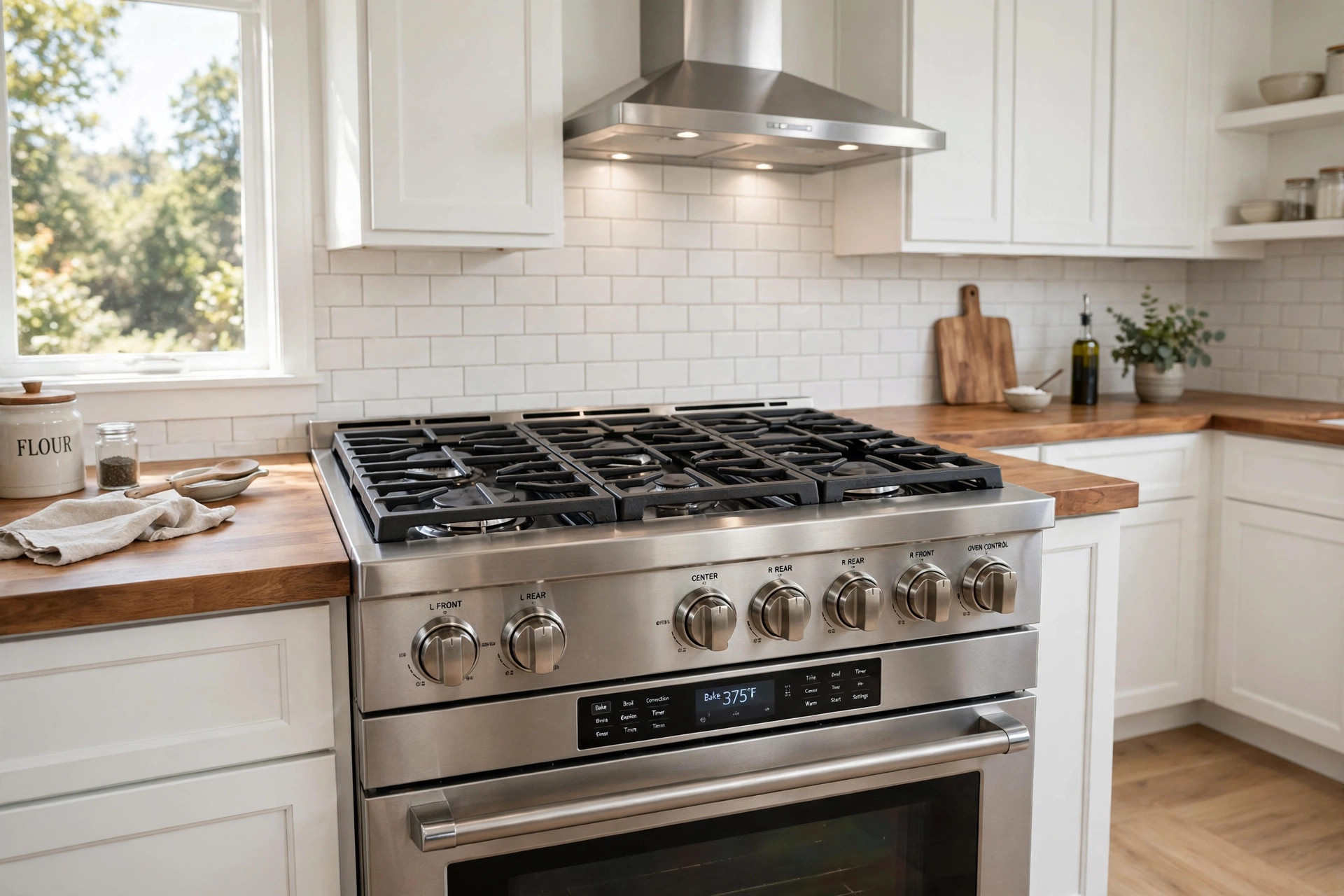
A dual fuel range gives a cook the best of both worlds. The cooktop runs on gas. The oven runs on electricity. Many home cooks in the United States choose this mix because gas flames give fast, open control over heat, while electric ovens give steady, even heat for baking. This dual fuel ranges buying guide USA will walk you through the main choices you face before you buy.
A range is one of the largest purchases for a kitchen. It stays in the home for ten years or more. A poor choice shows up every day in burnt bottoms, uneven roasts, or gas bills that run too high. A good choice makes daily cooking simpler and more pleasant. The sections below cover what matters, how to choose, the main types, cost and price, care and upkeep, safety, and answers to common questions.
Why It Matters: Dual Fuel Ranges Buying Guide Usa
The cooking surface shapes every meal. Gas burners respond the moment you turn the knob. The flame grows or shrinks at once. That speed helps when you sear meat, boil water, or slide a pan off the heat before a sauce burns. Many cooks say gas gives them a feel for the flame that electric coils and glass tops do not match.
The oven tells a different story. Electric ovens hold a steady temperature. They heat the whole box evenly. Cakes rise straight. Cookies bake to the same color on every tray. Electric ovens also make self-cleaning simpler, since high heat cycles work well in a sealed electric box. A gas kitchen ranges buying guide USA explains the all-gas choice, but cooks who want gas on top and electric inside land on dual fuel.
Kitchen size matters too. A range must fit the opening in the cabinets. It must clear the hood above it. Many American kitchens leave a 30-inch space for a range, but larger kitchens can hold 36, 48, or even 60 inches. Buying the wrong width turns an easy delivery into a costly return.
What to Look For
Size and Fit
Measure the opening before you shop. Write down the width, depth, and height of the space. Leave room for the door to swing open and for the cooktop to sit level with the counters. A 30-inch model fits most kitchens. A 36-inch model gives an extra row of burners and a wider oven. Large models add a second oven or a warming drawer.
Burner Power
Burner strength is measured in BTU, or British thermal units. Higher BTU means more heat. A strong burner may reach 18,000 to 22,000 BTU. That level boils a large pot fast and sears steak well. A low burner may sit near 5,000 BTU. That gentle heat melts chocolate and keeps sauces warm without burning. Look for at least one strong burner and one gentle burner. Home cooks benefit from this overview of kitchen appliances from The Spruce when comparing burner layouts.
Oven Capacity
Oven size is measured in cubic feet. A 30-inch range usually offers 4.5 to 6 cubic feet. A 36-inch range can offer more than 5 cubic feet, sometimes split into two ovens. Think about holiday cooking. A large turkey needs a wide oven with room for air to move around the bird. If you bake for a family, capacity matters more than extra features.
Convection
Many dual fuel ranges include a convection fan. The fan moves hot air through the oven. Food cooks faster and browns more evenly. Convection helps when you roast vegetables on two racks at once. Check whether the fan runs on both bake and roast modes, and whether the oven needs a lower temperature setting for convection.
Grates and Cleaning
Continuous grates let you slide pots from one burner to the next without lifting. They also give the cooktop a smooth, even look. For the oven, look for self-cleaning cycles. A pyrolytic cycle burns food spills to ash at very high heat. A steam-clean cycle loosens light spills with water and heat. Both save time, though pyrolytic cycles use more energy and take longer.
Types and Options
Freestanding Ranges
A freestanding range has finished sides and a back panel with controls. It slides into a gap between cabinets. This is the most common type in American homes. It costs less than built-in types. Installation is simple. The back panel keeps the wall behind the range clean.
Slide-In Ranges
A slide-in range has no back panel. The controls sit on the front edge or on the cooktop itself. It rests between cabinets and looks built into the counter line. Slide-in models cost more than freestanding models. They need a finished wall behind them, since there is no panel to cover it. Many buyers pair a slide-in range with a stainless range hoods buying guide USA to plan the space above.
Professional-Style Ranges
Professional-style ranges mimic restaurant equipment. They are wide, heavy, and strong. Burners reach high BTU levels. Ovens hold large pans. These ranges suit serious cooks and large kitchens. They cost two to four times more than standard ranges. They may need a stronger hood and a larger gas line. This Old House offers useful guides on fitting professional-style appliances into home kitchens.
Double Oven Models
Some dual fuel ranges hold two ovens side by side. One side may be a smaller oven for daily use. The other may be a large oven for roasts and baking. Two ovens let you cook a turkey at one temperature and bake pies at another. The trade-off is width. Double oven models usually measure 48 inches or more.
Cost and Price
Dual fuel ranges cost more than all-gas or all-electric ranges. The mix of gas and electric parts adds cost. Prices in the United States tend to fall into three bands.
Entry models run from about 2,000 to 3,500 dollars. These are 30-inch freestanding ranges from major brands. They include the core mix of gas burners and an electric oven. Features stay simple. Home Depot lists many models in this range for online comparison.
Mid-range models run from about 3,500 to 6,000 dollars. These add convection, stronger burners, continuous grates, and better oven linings. Slide-in designs appear in this band. Lowe’s carries a wide selection of mid-range dual fuel models.
Professional-style models run from 6,000 dollars up to 15,000 dollars or more. These are wide, heavy ranges with high BTU burners and large ovens. Brands such as those covered at Bosch Home and GE Appliances sit at the upper end of the home market, while specialty makers go further.
Installation adds cost. A dual fuel range needs both a gas line and a 220-volt electric outlet. If the kitchen lacks one of these, a plumber or electrician must add it. That work can cost several hundred dollars. Delivery, old appliance removal, and anti-tip bracket fitting add smaller fees.
Operating cost stays moderate. Gas cooktops cost less to run than electric cooktops in most regions. Electric ovens cost a little more to run than gas ovens. The mix keeps total energy cost near the middle. Energy Star publishes guidance on efficient home appliances that can help estimate running costs.
Care and Upkeep
Clean the cooktop after each use. Wipe spills before they harden. Lift the grates and wash them in hot soapy water when grease builds up. A soft brush reaches around the burner caps. Never soak the igniter parts. Wet igniters may click without lighting.
Run the oven self-clean cycle only as often as the manual advises. Remove the racks first unless the manual says they can stay. Open a window during the cycle, since the high heat can make smoke and odor. For light spills, a damp cloth and baking soda paste handle most marks between deep cleans.
Check the door seal once a year. The gasket keeps heat inside the oven. A worn seal leaks heat and wastes energy. It also makes baking less even. Most seals pull out by hand and push back in, so replacement is a simple job.
Keep the vent filters clean if the range has a downdraft vent. Greasy filters cut airflow and let smoke spread through the kitchen. Wash metal filters in the dishwasher or in hot soapy water.
Safety
Gas appliances demand respect. A gas leak can fill a kitchen with flammable gas. Learn the smell of the odorant added to natural gas. It smells like rotten eggs. If you smell gas, do not light a match or flip a switch. Leave the house and call the gas company from outside.
Install a carbon monoxide detector near the kitchen. Gas flames produce small amounts of carbon monoxide. A working range in a vented kitchen stays safe, but a detector adds a guard. Test the detector twice a year and change batteries as needed.
Use the range hood every time you cook on gas. The hood pulls heat, smoke, and combustion fumes out of the kitchen. Bob Vila covers range hood sizing and venting in depth. A hood that is too small or that recirculates air without venting outside gives less protection.
Fit the anti-tip bracket that ships with the range. A heavy pot on an open oven door can tip a range forward. The bracket anchors the back of the range to the wall. Delivery crews can fit it, or a homeowner can follow the manual. Consumer Reports recommends checking the bracket during any range installation.
Keep children and pets away from hot burners. Turn pot handles inward so they cannot be knocked. Never use the oven to heat the kitchen. Never store flammable items in the drawer under the oven if the drawer sits near the gas line.
Frequently Asked Questions
Do I need both a gas line and special wiring?
Yes. A dual fuel range needs a gas supply for the cooktop and a 220-volt outlet for the oven. Standard 110-volt outlets will not run the oven. Have both checked before the range arrives. Whirlpool and other makers list the electrical needs in each model manual.
Are dual fuel ranges worth the extra cost?
They are worth it for cooks who want fast gas burners and even electric baking. If you mostly boil and fry, an all-gas range costs less. If you mostly bake, an all-electric range costs less. Dual fuel earns its price when you cook both ways often.
What size should I buy?
Measure your opening first. Most American kitchens fit a 30-inch range. Larger kitchens may hold 36 or 48 inches. Bigger ranges need bigger hoods and more clearance. Choose the largest size your space allows if you cook for many people.
Can I install a dual fuel range myself?
Delivery crews can place the range, but gas hookup should be done by a qualified installer. Gas leaks are dangerous. An electrician should wire the 220-volt outlet if one is missing. Local codes in many states require licensed workers for gas connections.
How long does a dual fuel range last?
A well-made range lasts 13 to 15 years with normal care. Clean the burners, keep the oven seal sound, and service the gas parts when the flame turns yellow or uneven. Cheaper models may last less. Heavy professional models may last longer.
Do dual fuel ranges work during a power outage?
The gas burners can often be lit by hand with a match during an outage, but the electric oven will not run. The igniters also need power. Check the manual for the exact steps. Never use the range as a room heater.
A Short Final Word
A dual fuel range suits the cook who wants speed on the cooktop and steady heat in the oven. Start with measurements. Choose the size that fits. Pick burner power to match your cooking. Weigh the cost of installation against the daily ease the range brings. Pair the range with a proper hood, keep up with cleaning, and respect the gas line. The guidance in this dual fuel ranges buying guide USA should make the choice clear. For wider kitchen plans, a french door refrigerators buying guide USA can help you match the rest of the appliances to the new range.
References
Bob Vila. (n.d.). Home improvement advice. https://www.bobvila.com Bosch. (n.d.). Home appliances. https://www.bosch-home.com Consumer Reports. (n.d.). Product reviews and ratings. https://www.consumerreports.org ENERGY STAR. (n.d.). Energy efficient products. https://www.energystar.gov GE Appliances. (n.d.). Kitchen and home appliances. https://www.geappliances.com Lowe’s. (n.d.). Home improvement products. https://www.lowes.com The Home Depot. (n.d.). Home improvement products. https://www.homedepot.com The Spruce. (n.d.). Home and garden advice. https://www.thespruce.com This Old House. (n.d.). Home renovation guidance. https://www.thisoldhouse.com Whirlpool. (n.d.). Home appliances. https://www.whirlpool.com
Was this guide helpful?

About Emily Rodriguez
The My Garden US editorial team writes practical, in-depth home and garden guides for American homeowners — tested advice, no fluff.
You May Also Like

A Practical Guide to Vinyl Plank Flooring for Texas Homes in the USA
May 28, 2026 1 views
Gas Kitchen Ranges for Sale in the USA: A Plain Guide for Buyers
January 9, 2026 0 views
Under Sink Filters Texas Homes USA: A Plain Guide for Cleaner Tap Water
May 10, 2026 0 views