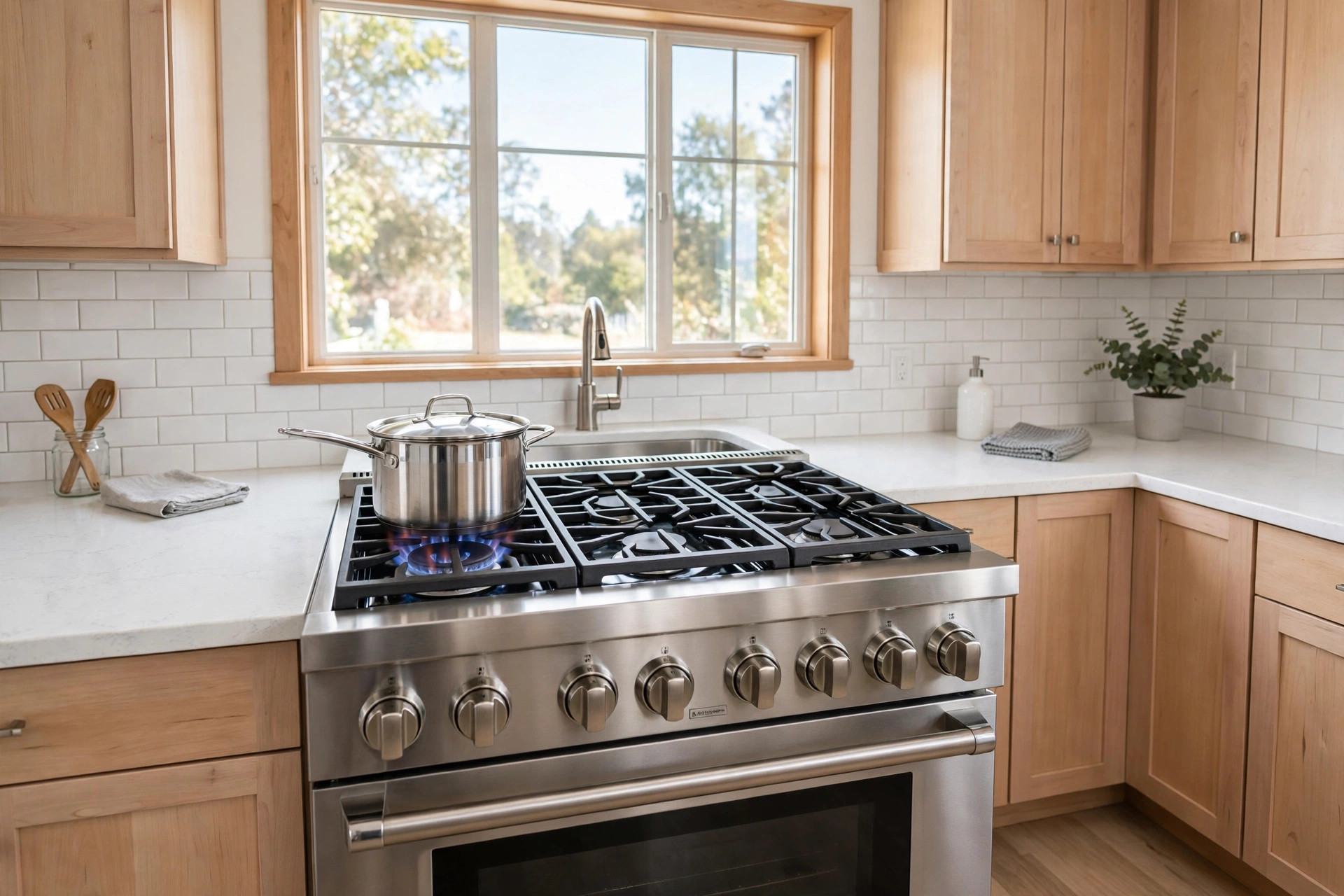

A gas kitchen ranges buying guide USA is a simple road map. It helps a buyer choose the right stove for an American home. A gas range uses a gas flame to heat pots and pans. It also has a gas oven below the cooktop. Many cooks in the United States prefer gas. They like the fast heat and the control of an open flame. They can see the flame and change its size in a second. This guide explains what matters most when buying a gas range in the USA. It covers size, burners, ovens, cost, safety, and care. By the end, a reader will know how to compare models with confidence.
Why a Gas Range Matters in an American Kitchen
The range is the heart of most kitchens. Families cook on it every day. A good range lasts fifteen to twenty years. That makes the choice worth careful thought. Gas ranges are common in American homes because they heat fast. A gas burner gives heat the moment it is lit. Electric coils need time to warm up. Gas also cools fast when the flame is turned down. This gives the cook fine control.
Gas ranges work during power outages in many homes. The burners can be lit by hand with a match when the electricity is out. The oven may not work without power, since most modern ovens need electric controls. Still, the cooktop stays useful. That is a comfort for homes in storm areas.
Fuel cost is another point. In many states, natural gas costs less than electricity per unit of heat. A gas range may lower the monthly bill a little. The savings depend on local prices. A buyer should check the gas and electric rates in their own city.
Many home buyers also like the look of a gas range. It is a strong selling point in real estate ads. The ENERGY STAR program notes that efficient appliances can cut waste in the home.
What to Look For When Buying a Gas Range: Gas Kitchen Ranges Buying Guide Usa
Buying a gas range starts with the kitchen space. The buyer should measure the width of the opening. Most American ranges are 30 inches wide. Some are 36 inches. A few are 24 inches for small kitchens. The buyer should also check the depth and height. The range should sit level with the counters.
Next comes the cooktop. The buyer should count the burners. Most gas ranges have four or five. A fifth burner in the center is useful for large pots. Some models have a long oval burner for griddles. The buyer should look at the burner power, called BTU. BTU stands for British Thermal Unit. It measures heat output. A strong burner may reach 18,000 BTU or more. A gentle simmer burner may stay near 5,000 BTU. High BTU is good for boiling water fast. Low BTU is good for melting butter without burning it.
The grates matter too. Continuous cast iron grates let the cook slide heavy pots across the top. They also hold small pans steady. Some grates are light and easy to lift for cleaning. Cast iron is heavy but durable.
The oven is the other half of the range. The buyer should check the size, measured in cubic feet. A family of four often wants at least 5 cubic feet. The buyer should look at the rack count. Three racks give more space for big meals. Self-cleaning is a useful feature. It burns food spills to ash at high heat. The cook then wipes the ash away. Some ovens have a steam clean option for light spills.
The ignition type is worth a look. Most new gas ranges use electric spark ignition. A click of the knob starts the flame. This is safe and easy. Older ranges used pilot lights that burned all day. Pilot lights waste gas and are rare now.
The finish also counts. Stainless steel is the most common finish in American kitchens. It resists heat and looks modern. It shows fingerprints, but it wipes clean. White and black finishes are also sold.
Extra features can help. A warming drawer keeps dishes hot. A storage drawer below the oven holds pans. A clock and timer help with baking. Some models have a built-in griddle on the cooktop. Digital controls give exact oven temperature settings. The buyer should not pay for features that will go unused. A simple plan keeps the price fair. Guides at The Spruce explain common range features in plain terms. Consumer Reports tests many gas ranges and rates them for cooking quality.
Types of Gas Kitchen Ranges
A buyer will meet three main types. The first is the freestanding gas range. It stands alone and fits between counters. It has finished sides. It is the most common type in the USA. It is also the easiest to install.
The second type is the slide-in gas range. It sits between cabinets. The cooktop rests over the counter edge. This gives a built-in look. Slide-in models cost more than freestanding ones. They need exact cabinet measurements. They suit a planned kitchen remodel.
The third type is the professional-style range. It looks like restaurant equipment. It has heavy grates and high BTU burners. It is wide, often 36 inches or more. It costs much more. It suits serious home cooks. It may need a strong kitchen vent. The buyer should check that the home vent can handle the heat output.
A buyer may also meet dual fuel ranges. These have a gas cooktop and an electric oven. Some cooks like gas heat on top and even electric heat below. A buyer can learn more in the guide on dual fuel ranges for American homes. Dual fuel models need both a gas line and a 240-volt outlet. They cost more to install.
Cost and Price of Gas Kitchen Ranges in the USA
Prices vary widely. A basic freestanding gas range may cost 500 to 900 dollars. It has four burners and a simple oven. A mid-range model may cost 900 to 2,000 dollars. It has better grates, more burners, and self-cleaning. A slide-in model may cost 1,500 to 3,500 dollars. A professional-style range may cost 3,000 to 10,000 dollars or more.
Installation adds to the price. A gas line must reach the range. If the home already has a gas line in the kitchen, hookup may cost 100 to 300 dollars. If a new gas line must run from the street or tank, the cost can reach 1,000 dollars or more. A licensed gas fitter should do this work. The buyer should get two or three quotes.
A buyer should also plan for the vent hood. Gas cooking gives off heat and moisture. A good vent keeps the kitchen fresh. A basic vent hood may cost 200 to 500 dollars. A strong vent for a professional range may cost much more. This Old House has clear advice on kitchen ventilation. Reviews at Bob Vila compare popular range brands and their prices.
How Gas Ranges Are Installed
Installation is not a job for a beginner. Gas lines can leak. A leak is dangerous. The buyer should hire a licensed gas fitter. The fitter checks the line pressure. The fitter connects the range with an approved gas hose. The fitter tests every joint for leaks with soap solution or a gauge.
The buyer should check the local building code. Many cities require a permit for gas work. Some require an anti-tip bracket. This bracket keeps the range from tipping forward if a child climbs on the open oven door. It is a small part that adds real safety.
The buyer should also check the electric outlet. A gas range needs a standard 120-volt outlet for the igniters, lights, and clock. The outlet should sit behind the range. The fitter or an electrician can add one if it is missing.
Ventilation should be planned before the range arrives. The vent hood should be at least as wide as the range. It should move enough air for the burner BTU. The maker of the range can give the needed air flow. A Whirlpool care guide explains how gas ranges connect and vent. GE Appliances also lists installation needs for its models.
Care and Upkeep of a Gas Range
A gas range needs simple regular care. Spills should be wiped soon after the cooktop cools. Food left on burners can clog the gas ports. A clogged port gives an uneven flame. A pin or a small brush can clear the port. The grates can soak in hot soapy water. A soft brush removes baked-on food.
The oven needs care too. A self-cleaning oven does most of the work. The buyer should follow the maker guide. Racks may need removal before the high-heat cycle. They can warp in the heat. For light spills, a damp cloth and mild soap are enough. Strong oven cleaners can harm the oven coating. The buyer should read the label before using any cleaner.
The burners should be checked once a year. A steady blue flame is the sign of a healthy burner. A yellow or orange flame may mean the air mix is wrong or the port is dirty. The buyer should call a service tech if the flame stays yellow after cleaning. Bosch offers service tips for gas cooking appliances. Product specs at Lowe’s help buyers compare grate and burner care needs.
Safety With a Gas Kitchen Range
Gas is safe when it is handled with care. The buyer should learn the basic rules. Never leave a lit burner without watch. Turn pot handles inward so they cannot be knocked. Keep paper, towels, and curtains away from the flame. Long sleeves should be rolled up or kept back.
The home should have a working carbon monoxide detector near the kitchen. Gas cooking makes small amounts of carbon monoxide. A good vent and a detector add safety. The detector should be tested each month. Its battery should be changed each year.
Children need rules around the stove. Knobs on some ranges are easy to turn. A child lock or knob covers can help. The anti-tip bracket should be installed. Hot pots should sit on back burners when children are near.
If the smell of gas is strong, the family should act fast. Do not light a match. Do not flip a light switch. Leave the house. Call the gas company from outside. The gas company will check for a leak. This rule is taught in many home safety guides. The buyer should share it with the whole family.
Frequently Asked Questions
Is a gas range cheaper to run than an electric range? In many US states, natural gas costs less than electricity for the same heat. This can make a gas range a little cheaper to run. The real savings depend on local fuel prices and cooking habits. A buyer can compare the two fuels with a simple call to the local utility.
Can I replace an electric range with a gas range? Yes, if a gas line can reach the kitchen. A licensed fitter must add or extend the line. The work needs a permit in most cities. The buyer should get quotes before buying the range. The gas line cost can change the budget.
Do gas ranges need a vent hood? A vent hood is strongly advised. It removes heat, steam, and cooking fumes. It also removes small amounts of carbon monoxide. Many building codes require a vent for new gas ranges. A recirculating hood is better than no hood, but a ducted hood works best.
How long does a gas range last? A well-kept gas range can last fifteen to twenty years. The burners and oven are simple and durable. Regular cleaning and yearly checks keep it running. A buyer who keeps the manual and follows it will get the most years from the range.
What size gas range fits a standard American kitchen? Most American kitchens fit a 30-inch range. That is the standard width. Larger kitchens may fit a 36-inch model. Small apartments may use a 24-inch range. The buyer should measure the space and note the height and depth too.
Are gas ranges allowed in all US states? Rules are changing in some cities and states. A few places now limit new gas hookups in new buildings. Most existing homes can keep gas ranges. A buyer should check the local code before a remodel. A local fitter or city office can give the current rule.
A Final Word
A gas kitchen ranges buying guide USA ends with a simple checklist. Measure the space. Count the burners and check the BTU. Pick the oven size for the family. Set a budget that covers the range, the gas line, and the vent. Hire a licensed fitter. Keep the range clean and check the flame each year. A buyer who follows these steps will pick a range that cooks well for many years. The open flame of gas gives control that many cooks love. With care, it is a safe and lasting part of the American kitchen. A buyer planning a full kitchen update can also review guides on sinks, such as undermount stainless sinks, and on dishwashers, such as dishwasher third rack deals near me.
References
Bob Vila. (n.d.). Home improvement advice. https://www.bobvila.com Bosch. (n.d.). Home appliances. https://www.bosch-home.com Consumer Reports. (n.d.). Product reviews and ratings. https://www.consumerreports.org ENERGY STAR. (n.d.). Energy efficient products. https://www.energystar.gov GE Appliances. (n.d.). Kitchen and home appliances. https://www.geappliances.com Lowe’s. (n.d.). Home improvement products. https://www.lowes.com The Spruce. (n.d.). Home and garden advice. https://www.thespruce.com This Old House. (n.d.). Home renovation guidance. https://www.thisoldhouse.com Whirlpool. (n.d.). Home appliances. https://www.whirlpool.com
Was this guide helpful?

About James Carter
The My Garden US editorial team writes practical, in-depth home and garden guides for American homeowners — tested advice, no fluff.
You May Also Like

Where to Find Kitchen Island Seating in the USA: A Buyer’s Guide
July 8, 2026 0 views
Kitchen Backsplash Tiles: An American Homes Guide
May 24, 2026 0 views
Microwave Drawer Units: A Guide for American Homes
January 1, 2026 0 views