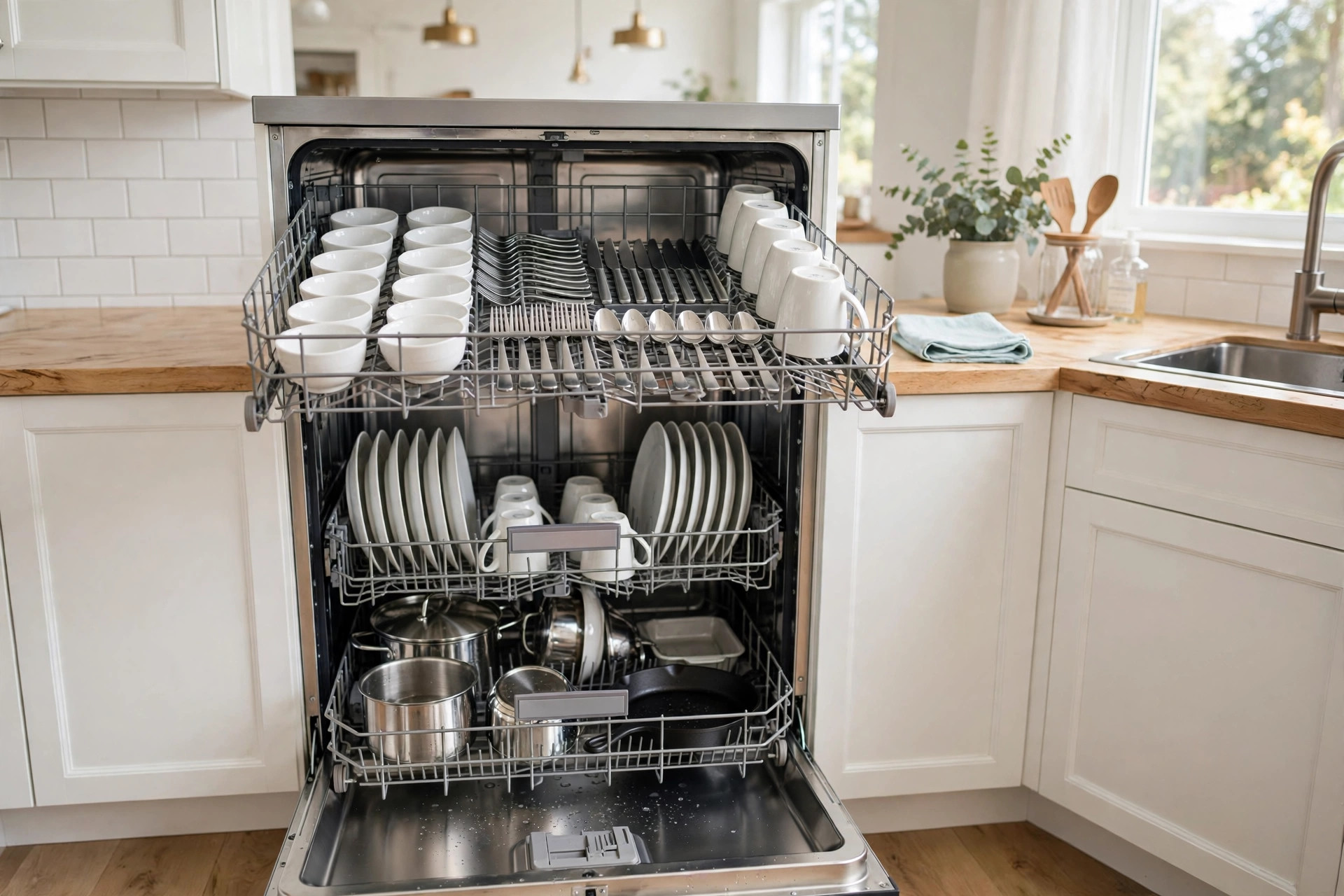
This dishwasher third rack American homes guide begins with a simple fact. Most dishwashers sold in the United States today have two racks. Many newer models now add a third rack at the very top. That extra rack changes how the machine loads and how much it holds. It is a small change with a large effect on daily kitchen life. This guide explains what the third rack is, how it works, what to look for, what it costs, and how to care for it.
Why the Third Rack Matters in American Homes
American kitchens grew busier over the last few decades. Families cook more meals at home. They own more small items than before. Lids, measuring cups, ramekins, small bowls, and coffee mugs pile up by the sink. A standard two rack dishwasher forces these small items into the lower rack. They fall through the tines. They flip over. They block the spray.
The third rack solves that problem. It is a shallow rack that slides into the top of the dishwasher tub. It holds flat or small items in a single layer. Water jets reach each item. The lower racks stay free for plates, pots, and pans. Many owners find they can skip one wash cycle per week.
Capacity is the main reason buyers ask for this feature. A third rack can add room for twenty to forty extra pieces per load. Silverware moves out of the basket. Utensils lie flat instead of standing in a cup. Long items such as spatulas, tongs, and knives fit in a safe, flat position. For large families the extra space matters most.
There is also a cleaning reason. Items on a third rack get their own spray. They do not hide behind tall plates. Coffee mugs come out cleaner. Plastic lids stop warping because they sit flat and away from the heating element.
How the Third Rack Works: Dishwasher Third Rack American Homes Guide
A dishwasher third rack American homes guide must explain the working parts. The rack itself is a wire or coated tray. It pulls out on small rollers or glides. You load it while it hangs in the top slot or while it sits outside the tub. Then you push it back in.
What Fits on a Third Rack
The third rack takes items that are too small for the lower racks and too tall for the upper rack. Common items include coffee mugs, small bowls, ramekins, measuring cups, plastic lids, baby bottle parts, and flat utensils. Large knives fit here too, lying flat with the blade pointing away from the edge. Long serving spoons and spatulas fit as well. The rack usually has slots or dividers to hold each item in place.
Manufacturers publish lists of items that work best on the top rack. Shoppers can read loading guides on GE Appliances, Whirlpool, and Bosch Home Appliances before they buy. Reading these pages before you shop helps you judge which layout suits your kitchen.
Water Jets and Spray Arms
Water must reach the third rack or it is useless. Makers solve this in several ways. Some add a dedicated spray arm above or below the top rack. Others use fixed jets in the ceiling of the tub. When you shop, look for a model that sprays the third rack on its own.
Water pressure matters. Homes with low water pressure may see poor results on the top rack. If your home has soft water, you may need less detergent. Soft water with too much detergent leaves a film on glasses. These details apply to the whole machine, but they show up first on the third rack because it sits farthest from the pump.
What to Look for When You Buy
Shopping for a dishwasher with a third rack takes a little homework. The feature now appears on machines at many price points. The racks are not all alike. A careful buyer compares several details before choosing.
Rack Design and Layout
Look at the shape of the rack. Some racks are wide open trays. Others have fixed dividers for utensils. Open trays hold more items. Divided trays hold items more firmly. If you wash many small lids, an open tray with movable clips may work best. If you wash many knives and serving tools, a divided tray keeps them apart and safe.
Check whether the rack slides out on its own or lifts out of the tub. A rack that slides fully out makes loading easy. A rack that lifts out can serve as a serving tray for clean utensils.
Adjustability of the Upper Rack
A third rack takes room at the top of the tub. That room has to come from somewhere. On many models the middle rack can move up or down. This matters when you wash tall glasses or a large pot. If the middle rack cannot adjust, the third rack may steal headroom you need. Look for a middle rack with two or three height settings. Test it in the store if you can.
Noise, Finish, and Controls
Third rack models often come with other upgrades. Many run at forty four to fifty decibels. That is about as loud as a quiet library. Stainless steel tubs dry dishes better than plastic tubs. Hidden controls on the top edge of the door look clean and modern. These features raise the price. Decide which ones matter to you.
Independent test labs publish noise and cleaning scores for major models. Consumer Reports rates dozens of machines each year and notes which ones include a third rack. Home guides also help. This Old House explains dishwasher features in plain language. Bob Vila covers buying tips for kitchen appliances. The Spruce lists pros and cons of popular models.
Types and Options on the Market
Not every third rack is built the same way. Makers use three main designs. Each has strengths and weak points. This dishwasher third rack American homes guide describes all three so you can compare.
The Dedicated Silverware Tray
The first design is a shallow tray made only for silverware and flat utensils. It sits at the very top of the tub. Forks, spoons, and knives lie in neat rows. This design removes the silverware basket entirely. The lower rack gains a full row of space for bowls or plates. The weakness is clear. The tray holds little else.
The Shallow Third Rack
The second design is a general purpose shallow rack. It holds utensils, small bowls, mugs, lids, and cups. Dividers may fold down to open the space. This is the most common design in American homes. It suits families with mixed loads. The weakness is depth. Tall mugs may not fit.
The Split and Flexible Rack
The third design splits into two halves or has folding sections. You can slide one half aside to make room for a tall item below. This design suits cooks who wash odd shaped tools. Pastry cutters, long whisks, and serving platters all fit. The moving parts add cost. Check the warranty on rack parts before you pay extra.
Some buyers pair a new dishwasher with a larger kitchen update. If you plan new counters, read our guide on quartz countertop installation reviews before you schedule the work. If new cabinet doors are part of the plan, see shaker cabinet doors deals for buying tips. And if a new range is on the list, our piece on dual fuel ranges covers what to know.
Cost and Price
A third rack adds to the price of a dishwasher. Budget models with a basic third rack start near five hundred dollars. Mid range models with a flexible third rack and quiet operation run from seven hundred to one thousand dollars. High end models with a deep third rack and smart controls can reach one thousand five hundred dollars or more.
Large home stores list many third rack models side by side. Shoppers can compare prices and read owner reviews on The Home Depot. Energy use also affects the true cost. The federal Energy Star program rates dishwasher efficiency, and Energy Star lists certified models that use less water and power. A certified machine may cost more at the store but save money each month on utility bills.
Installation adds to the total. A basic swap of one dishwasher for another costs about one hundred fifty to three hundred dollars for labor. Some stores offer free delivery and haul away of the old unit. Ask about these services before you agree to a price.
Repair costs deserve a note. Third rack parts such as glides, clips, and spray arms are replaceable. A broken glide may cost twenty to forty dollars in parts. Labor adds more. Most racks carry a one year parts warranty. Some makers extend rack coverage. Keep your receipt and register the product online.
Care and Upkeep
A third rack needs little care. A few habits keep it working well for years. Rinse the rack with warm water every month. Food bits collect in the corners and under the dividers. A soft brush removes them. Do not use steel wool. It scratches the coating and can cause rust.
Check the spray jets above or below the rack each season. Hard water leaves mineral crust on small jets. A toothpick clears a clogged jet. If your water is very hard, run an empty cycle with a cup of white vinegar once a month.
Watch the coating on wire racks. Most racks wear a vinyl or nylon coat. If the coat chips, the bare wire can rust. A small chip can be sealed with a food safe repair coating sold at hardware stores. If many chips appear, order a replacement rack from the maker.
Load the rack with care. Do not force items between the tines. Do not stack bowls on top of each other. Each item needs space for water to flow around it. Overloading is the most common cause of dirty dishes on the top rack.
Empty the rack in the right order. Take items from the third rack last. Water can pool on top of cups and lids. A small towel in hand catches the drips.
Safety Notes
A third rack holds sharp tools, so safety comes first. Always load knives with the blade facing down or flat and away from the rack edge. Point handles toward the front of the machine. This keeps your hands away from the blade when you unload. Teach children never to reach into the dishwasher alone. Unload sharp items yourself.
Small items can fall through the rack and land on the heating element. A plastic lid on a hot element can melt. Make sure lids sit flat and cannot slip through the wires. If your rack has wide spacing, place a small mesh bag over tiny items such as bottle nipples.
Detergent pods and powders are strong chemicals. Store them out of reach of children and pets. Pods belong in the dispenser cup on the door. A pod placed loose in the rack may dissolve too early and leave dishes dirty.
Hot steam burns. Wait a few minutes after the cycle ends before you open the door fully. Open the door a crack first and let the steam escape. Then unload.
Frequently Asked Questions
Can I add a third rack to my old dishwasher?
In most cases, no. The tub, spray system, and door rails are built for the rack count the machine was sold with. A few makers sell add on trays that rest on the upper rack, but these are not true third racks. They lack their own spray. If you want a real third rack, you will need a new machine.
Does a third rack use more water?
No. The machine uses the same amount of water per cycle. The pump sends water to the top spray through the same system. You wash more items with the same water. That is the main efficiency gain. Fewer cycles per week means less water over the month.
Will tall glasses still fit on the middle rack?
It depends on the model. Many third rack machines let you lower the middle rack by two or three inches. That restores room for tall glasses. Some budget models do not adjust. If you own very tall stemware, measure it and check the spec sheet before you buy.
Are third racks hard to load?
Most owners learn the layout in a week. The rack has visible slots and dividers. Utensils lie flat in rows. Small bowls sit in marked zones. After a few loads the pattern feels natural. Children in the home can learn it too, which makes unloading faster.
Do third racks break easily?
The racks are sturdy when used as directed. The glides and clips are the parts most likely to wear. Replacement parts are sold by the maker and by parts stores. Do not stand on the rack or pile heavy pots on it. Treat it as a tray for light items and it will last the life of the machine.
Is a third rack worth the extra cost?
For most buyers, yes. The added capacity cuts the number of loads. Silverware comes out cleaner lying flat. Small items stop falling through the tines. If you hand wash many small items today, the rack will pay for itself in saved time.
A Final Word
The third rack is a simple idea done well. It adds a shallow top tray to the dishwasher. It holds the small items that once caused trouble. It frees the lower racks for big jobs. It cuts the number of loads per week. When you shop, compare rack designs, check the spray system, and make sure the middle rack adjusts. Then choose the machine that fits your kitchen and your budget. This dishwasher third rack American homes guide ends where your own research begins: in the aisle, with a tape measure in hand.
References
Bob Vila. (n.d.). Home improvement advice. https://www.bobvila.com Bosch. (n.d.). Home appliances. https://www.bosch-home.com Consumer Reports. (n.d.). Product reviews and ratings. https://www.consumerreports.org ENERGY STAR. (n.d.). Energy efficient products. https://www.energystar.gov GE Appliances. (n.d.). Kitchen and home appliances. https://www.geappliances.com The Home Depot. (n.d.). Home improvement products. https://www.homedepot.com The Spruce. (n.d.). Home and garden advice. https://www.thespruce.com This Old House. (n.d.). Home renovation guidance. https://www.thisoldhouse.com Whirlpool. (n.d.). Home appliances. https://www.whirlpool.com
Was this guide helpful?

About Jennifer Lee
The My Garden US editorial team writes practical, in-depth home and garden guides for American homeowners — tested advice, no fluff.