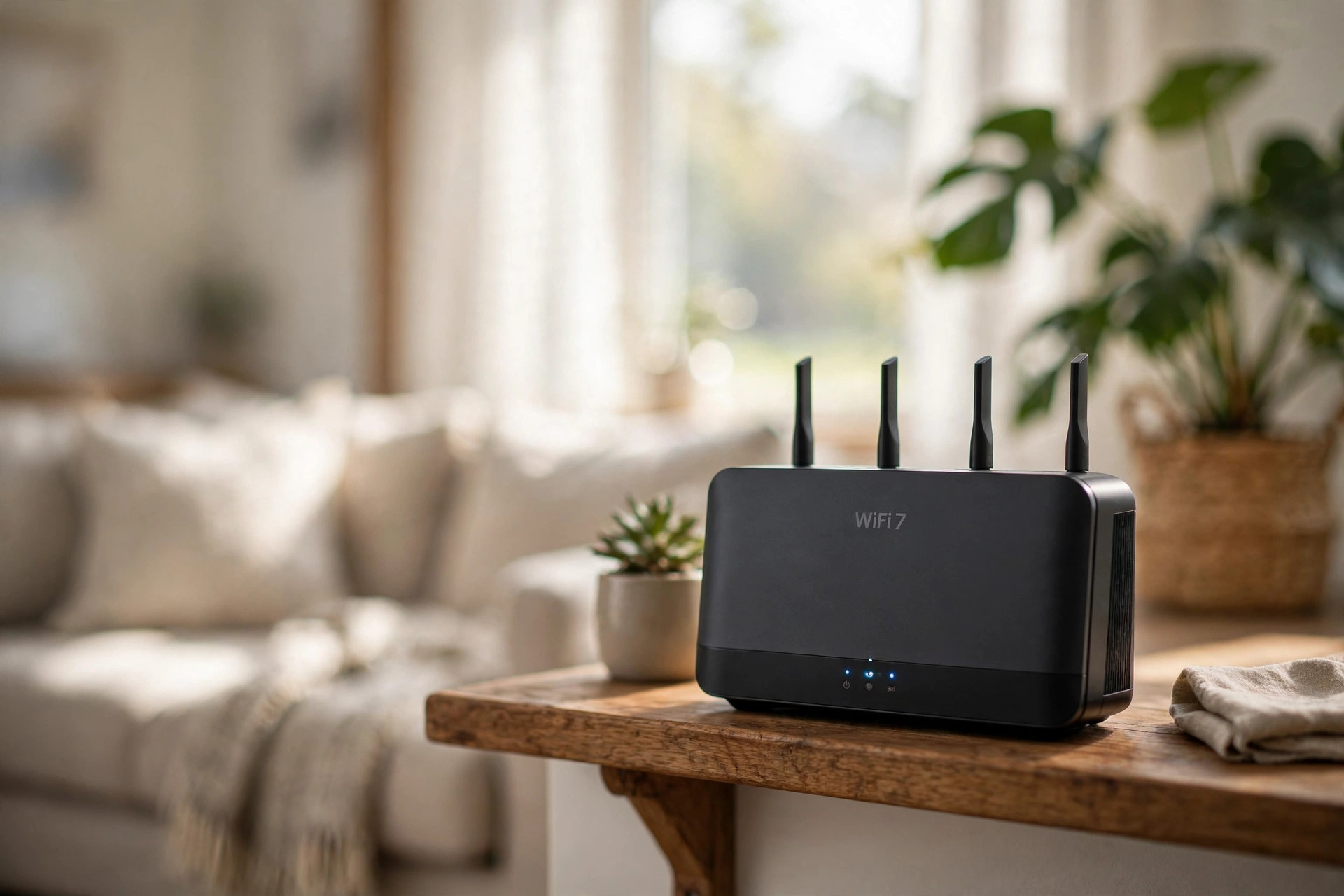
A wifi 7 router for smart home reviews usa shoppers are reading right now can be confusing to compare. Every box promises faster speed. Every brand claims wider coverage. The prices range from two hundred dollars to six hundred dollars. This guide keeps the talk simple. It explains what WiFi 7 means, how it helps a smart home, and what to check before you spend your money. The goal is a steady network that keeps every device in the home connected, from the video doorbell to the smart thermostat.
Why a WiFi 7 Router Matters for a Smart Home
Most American homes now hold more than twenty connected devices. Phones, tablets, and laptops share the network with smart doorbells, voice speakers, light bulbs, cameras, locks, and televisions. Each device talks to the router on a regular basis. When too many devices compete, the network slows down. Video calls freeze. Cameras lose their live feed. Light switches react late.
WiFi 7 is the newest wireless standard. It carries more data at once than older WiFi 5 and WiFi 6 routers. It handles crowded networks with more calm. For a smart home, that matters more than raw top speed. A single speed test number looks fine on a box. What a family feels is the steady response of twenty or thirty devices working at the same time. WiFi 7 was designed for that kind of load.
The standard also cuts delay, which engineers call latency. Smart home controls feel quicker when latency is low. A lock opens the moment you tap the phone. A voice command turns off the lights without a pause. Reviewers who test routers in the United States report that WiFi 7 models hold up better in homes full of devices than last-generation models did.
What to Look for When You Choose: Wifi 7 Router for Smart Home Reviews Usa
Speed and Wireless Bands
WiFi 7 routers use up to three bands: 2.4 GHz, 5 GHz, and 6 GHz. The 6 GHz band is the newest. It offers fast lanes with less traffic. Check that the router you consider supports all three bands. A feature called multi-link operation lets a device use two bands at the same time. This keeps the connection stable when one band gets busy.
Do not chase the largest number on the box. Combined speed figures add the bands together, which no single device can reach. Look instead at real-world test numbers from independent reviewers. Sites such as PCMag and Consumer Reports publish measured results for popular models sold in the United States.
Coverage and Home Size
A router must reach every corner of the house. Walls, floors, and appliances all weaken the signal. For homes under 2,000 square feet, one strong router often works. For larger homes, a mesh system with two or three units spreads the signal more evenly. Each unit talks to the others and hands devices from one to the next as people move through the home.
Think about where your smart devices sit. The video doorbell lives outside the front door. Outdoor cameras sit at the corners of the house. These spots need a strong signal. A mesh system places a node near these trouble spots. A single router in the center of the house may leave the garage and the back yard weak.
Smart Home Features
A good router for a smart home should support the Matter and Thread standards. Matter lets devices from different brands work together. Thread is a low-power radio network for small devices such as sensors and locks. Many new WiFi 7 routers include a Thread border router built in. That means smart home sensors can join the network without an extra hub.
Check the router app as well. A clear app lets you pause the network for the kids, set up a guest network, and see which devices are online. Strong security settings matter too. Automatic updates keep the router patched. A built-in firewall and WPA3 encryption protect the home from intruders. Homeowners who pair routers with security cameras and sensors get the most from these tools.
Number of Devices
Look for the maximum device count in the specifications. Older routers may list support for fifty devices. A busy smart home can reach that limit faster than expected. WiFi 7 routers often support two hundred or more connections. Choose a model with room to grow. New devices will join the home in the coming years, and the router should handle them without strain.
Types and Options on the Market
Mesh WiFi 7 Systems
Mesh systems are the most popular choice for whole-home coverage. A main unit connects to the modem. Satellite units sit in other rooms. They share one network name, so phones move between them without dropping. Reviewers at The Verge note that mesh WiFi 7 systems give the most even speeds across large American homes. The trade-off is cost. A three-pack often runs from four hundred to seven hundred dollars.
Single Stand-Alone Routers
A single powerful router suits apartments and smaller houses. It costs less than a mesh pack. Set-up is simple. Place the router in a central spot, high off the floor, away from metal objects. Many stand-alone WiFi 7 routers still cover 2,500 square feet well. If one corner stays weak, some models accept an add-on satellite later.
Gaming and High-Performance Routers
Some WiFi 7 routers aim at gamers. They add priority settings that favor game traffic. The same low delay helps video calls and smart home responses too. These models cost more and look flashy. For a family that games and streams, the extra features may be worth it. For a simple smart home, a standard model does the job.
Router and Modem Combos
A few brands sell a single box that works as both modem and router. This cuts the number of devices on the shelf. Check with your internet provider first. Some providers limit which modems they allow on their network. A combo unit can be hard to upgrade later, since the modem and the router age at different rates.
Cost and Price in the United States
Prices for WiFi 7 routers in the United States fall into three bands. Basic single routers run from about one hundred fifty to three hundred dollars. Mid-range mesh two-packs run from three hundred to five hundred dollars. High-end mesh three-packs and gaming routers run from five hundred to eight hundred dollars.
Think of the router as a five-year purchase. A cheap router that drops the camera feed every week costs more in trouble than it saves in dollars. Many reviewers suggest matching the router to the internet plan. A gigabit plan deserves a router that can pass a gigabit to your devices. A slower plan gains less from the most expensive router.
Watch for extra fees. Some brands charge a monthly fee for advanced security or parental controls. Others include these features free. Over five years, a ten-dollar monthly fee adds six hundred dollars to the true cost. A security system with no monthly fee follows the same logic, and the same math applies to router subscriptions.
Care and Upkeep
A router works best with a little care. Place it in the open, not inside a cabinet. Heat shortens the life of electronics. Dust the vents twice a year with a dry cloth. Restart the router once a month. A restart clears small errors and lets the router take a fresh look at the wireless channels in the neighborhood.
Keep the firmware up to date. Most modern routers update on their own. Check the app once in a while to confirm. Updates fix security holes and sometimes improve speed. Change the default admin password on the first day. Use a long password that you store in a safe place.
Review the device list in the app every few months. Remove old devices you no longer own. This keeps the network tidy and makes it easier to spot a stranger on the network. If a device starts to act strange, remove it and add it back. This simple step fixes many smart home problems.
Safety
A router is the front door of the home network. Treat it with the same care you give a door lock. Use WPA3 encryption if the router offers it. Turn off remote management unless you truly need it. Set up a separate guest network for visitors. Guests then use the internet without seeing your cameras or computers.
The Consumer Product Safety Commission reminds the public that connected devices bring new risks along with new comfort. Keep smart devices on the guest network when you can. This limits the damage if one device is hacked. Teach every member of the household the basics. Do not share the WiFi password with strangers. Do not click links in odd emails that claim the router needs a reset.
Place the router where children and pets cannot pull it down. The power brick and cables should sit out of reach. A router that falls can break, and a broken router leaves the whole home offline. None of these steps take long, and each one makes the home safer.
Frequently Asked Questions
Do I need WiFi 7 if my internet plan is slow? Not always. A WiFi 7 router helps most when many devices share the network or when the plan is fast. With a slow plan, a good WiFi 6 router may serve the home just fine. WiFi 7 still helps with device capacity, so a busy smart home can gain even on a modest plan.
Will my old devices work with a WiFi 7 router? Yes. WiFi 7 routers accept older WiFi 5 and WiFi 6 devices. The older devices will not gain WiFi 7 speed, but they will connect and work as before. Newer phones and laptops with WiFi 7 chips gain the full benefit.
How many devices can a WiFi 7 router handle? Most models list support for one hundred to three hundred devices. Real-world limits depend on how busy the devices are. A camera that streams video all day uses far more of the network than a light bulb that reports its state once an hour.
Is a mesh system better than one router for a smart home? For large or multi-story homes, yes. Mesh spreads the signal evenly and reaches outdoor devices better. For small homes, one strong router is simpler and cheaper. Match the choice to the size of the home and the weak spots you already know.
Should I rent a router from my internet provider? Renting is easy, but the rental fee never ends. Ten dollars a month becomes six hundred dollars over five years. A router you own pays for itself in about a year. Provider routers also lag behind the latest standards. Many buyers at Google Store and other shops prefer to own their gear.
How long should a router last? Plan on four to six years. Standards move forward, and device counts keep rising. A router bought today should serve well through the early 2030s for most families. Replace it sooner if cameras drop, speeds fall, or the maker stops sending security updates.
A Short Final Word
A wifi 7 router for smart home reviews usa buyers trust is one that fits the home, not the one with the largest number on the box. Count your devices. Measure your home. Decide between a single router and a mesh system. Check for Matter and Thread support. Read independent test results from sources such as Ring, SimpliSafe, and ADT product pages for the devices the router must serve, and from review sites for the routers themselves. Spend once, set it up with care, and the network will fade into the background, which is exactly where it belongs.
References
ADT. (n.d.). Home security and automation. https://www.adt.com CNET. (n.d.). Technology news and reviews. https://www.cnet.com Consumer Reports. (n.d.). Product reviews and ratings. https://www.consumerreports.org Google Store. (n.d.). Smart home devices. https://store.google.com PCMag. (n.d.). Technology product reviews. https://www.pcmag.com Ring. (n.d.). Smart home security devices. https://www.ring.com SimpliSafe. (n.d.). Home security systems. https://www.simplisafe.com The Verge. (n.d.). Technology news and reviews. https://www.theverge.com U.S. Consumer Product Safety Commission. (n.d.). Product safety information. https://www.cpsc.gov
Was this guide helpful?

About James Carter
The My Garden US editorial team writes practical, in-depth home and garden guides for American homeowners — tested advice, no fluff.