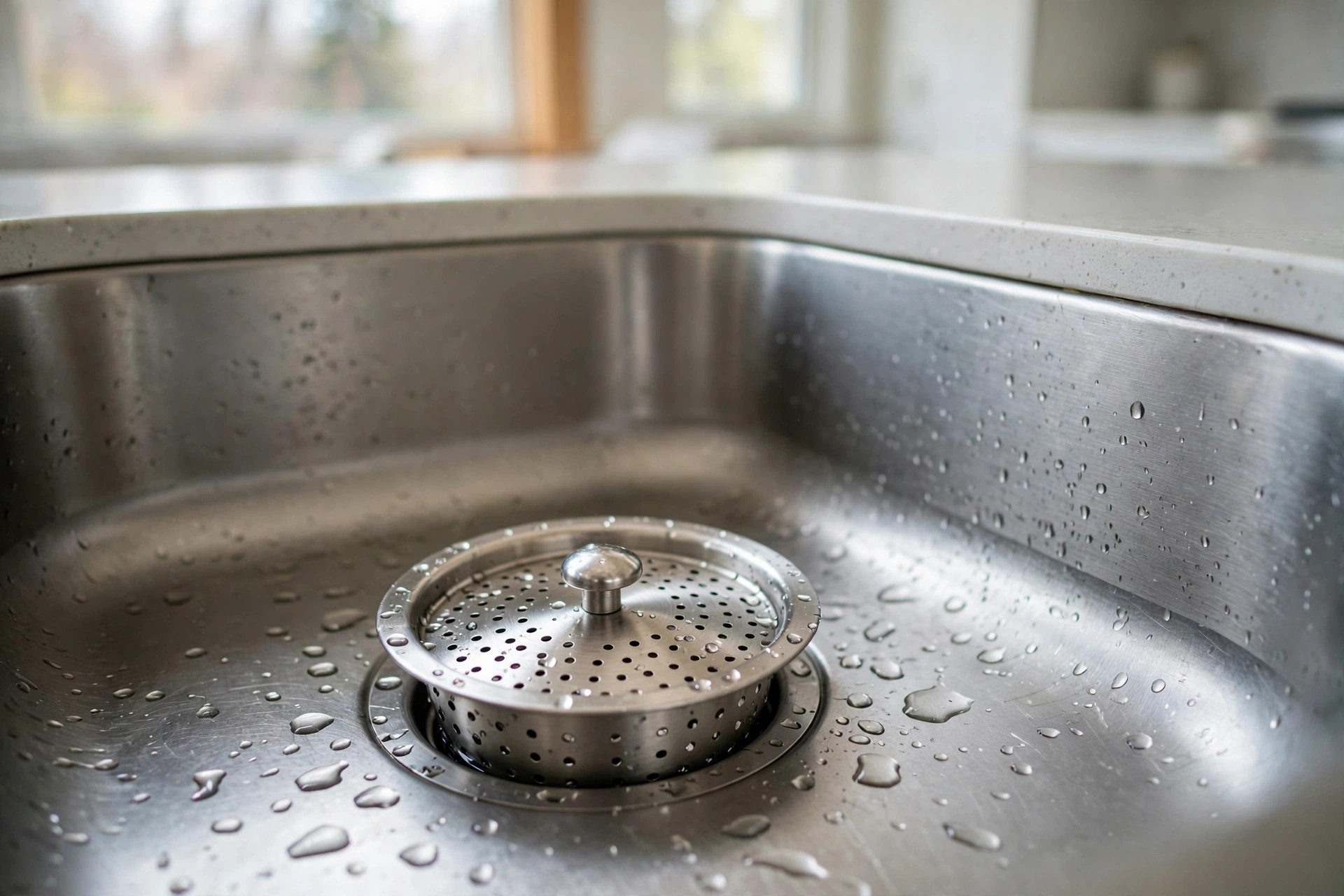

The kitchen sink basket strainer is a small part that does a large job. It sits in the drain of your sink and stops food scraps from slipping into the pipes. If you read kitchen sink basket strainer reviews USA shoppers trust, one point comes up again and again: a good strainer costs very little, yet it can save you from a large plumbing bill. A cheap or poor strainer lets bits of food pass. These bits build up in the trap and the pipe. Over time the drain runs slow. Then it clogs. Then you pay a plumber.
Most kitchen sinks in the United States use a standard 3 1/2 inch drain opening. The basket strainer is made to fit that size. It has a small basket that lifts out so you can empty it. Many also have a rubber or metal stopper that lets you fill the sink with water for washing dishes. Some homes need two strainers for a double bowl sink. Some need one for a single bowl.
This guide walks you through the types, the materials, the prices, and the points that real reviews mention most. It also covers care and common safety points. The writing is plain on purpose. The facts are the point.
Why the Basket Strainer Matters
Water drains from a kitchen sink dozens of times a day. Every glass of water, every rinsed plate, and every washed vegetable sends small scraps toward the drain. Without a strainer, these scraps enter the P-trap and the wall pipe. Grease is the worst of all. Hot grease runs down as a liquid and turns solid inside the pipe. Food bits stick to it. The pipe grows narrow. Water drains slow. Bad smells rise from the drain.
A basket strainer catches scraps before they travel. You lift the basket out, tap the scraps into the trash or the compost bin, and set it back. The whole task takes a few seconds. Plumbers at guides like This Old House often point out that the cheapest fix for a slow drain is prevention, not chemicals. A strainer is prevention.
Reviews from American buyers also show another angle. Many renters buy a basket strainer on their own. It needs no tools to set into the drain. The landlord keeps the plumbing. The renter keeps the small price. When the renter moves, the strainer can move too.
What to Look for When You Buy: Kitchen Sink Basket Strainer Reviews Usa
Fit comes first. Check the size of your drain opening. Most kitchen sinks use the 3 1/2 inch standard. Some bar sinks and prep sinks use a smaller 2 inch opening. A strainer that is too large will not seat. A strainer that is too small will let water and scraps flow past its edges. Measure once. Buy once.
Material comes next. The common choices are stainless steel, plastic, and chrome plated brass. Stainless steel leads most kitchen sink basket strainer reviews USA buyers write. It does not rust. It holds its shape. It keeps its shine for years. Plastic is light and cheap, but it can stain and crack with heat. Chrome plated brass looks rich, but the plating can chip if you drop the basket hard. For a part that sits in hot water every day, stainless steel is the safe pick.
The stopper seal matters more than most buyers expect. Some strainers seal by pressing a rubber gasket into the drain. Others use a metal cap with a knob. A weak seal will not hold water when you want to fill the sink. Test the seal when the strainer is new. Fill the sink with two or three inches of water. Wait five minutes. If the level drops, the seal is poor.
Weight and depth of the basket also count. A deeper basket holds more scraps. It needs emptying less often. A heavier basket stays put when the garbage disposal shakes the sink. Light baskets can rattle or lift under strong water flow. Reviews often praise strainers with a solid feel in the hand.
The handle or knob should be easy to grip with wet hands. Some designs have a small post handle. Others have a flat tab. This is a small detail, but you will touch it every day. If you cook often, you may also want to check how the strainer works with your sink style. A farmhouse kitchen sink review can tell you how deep apron front sinks pair with standard strainers.
Types of Basket Strainers
The classic basket strainer is the most common type. It drops into the drain from the top. Under the sink, a nut and a washer hold the strainer body tight. Plumber putty or silicone seals the rim. The basket lifts out for cleaning. The body stays fixed. This type works with almost every kitchen sink sold in the United States.
The push button strainer is a newer design. You press the cap once to close the drain. You press it again to open it. There is no loose basket to lift out. Cleaning is simple because the cap stays attached. Some buyers love the clean look. Others report that the push button wears out after a year or two of heavy use. Read long term reviews before you choose this type.
The flange mount strainer uses a flat rim that sits on the sink surface. It is the standard in most homes. The twist lock strainer has small tabs that grip under the sink flange. It is less common. It can be harder to replace because fewer stores stock it. If your sink already has one, match the type when you buy a replacement.
Strainers also differ by finish. Polished stainless matches most sinks. Brushed nickel and matte black finishes match designer faucets. A strainer in a matching finish looks neat, but the finish will face hot water and food acids every day. Plain stainless hides wear best. If you are planning a full sink upgrade, a stainless steel sink gauge comparison guide can help you pick the right sink to pair with your strainer.
Cost and Price
This is a small purchase. Most basket strainers cost between 8 and 30 dollars in the United States. A basic stainless steel model at a hardware store can cost under 10 dollars. A mid range model with a tight seal and a good finish costs 15 to 25 dollars. Designer finishes and push button types can reach 30 to 40 dollars. Buying a pair for a double sink often saves a few dollars over two single buys.
Price does not always track quality, but the very cheapest strainers show up in bad reviews more often. The basket is thin. The seal is weak. The metal feels light. For 5 or 10 dollars more, you get a heavier body and a better gasket. That small step up is the best value in this part of the kitchen.
Think about the cost of not having one. A plumber visit for a clogged kitchen drain often costs 100 dollars or more in many American cities. One avoided visit pays for the best strainer on the shelf ten times over. That math shows up in many reviews. Buyers call it cheap insurance.
Installation Basics
Many basket strainers install from the top of the sink with no special tools. You set the strainer body into the drain hole with a ring of plumber putty or a bead of kitchen silicone under the rim. Under the sink you slide on the washers and tighten the lock nut. Do not over tighten. Too much force can bend the flange or crack a porcelain sink.
The basket and the stopper are separate parts. They drop in last. No plumbing changes are needed for a standard replacement. If you are replacing an old strainer, clean the drain rim well before you set the new one. Old putty left behind will spoil the seal.
If your drain runs slow even with a strainer in place, the problem may be old grease in the pipes. A best drain cleaner for kitchen sink article can walk you through safe options. Avoid pouring harsh acids into pipes with a disposal unit. They can damage seals.
Care and Upkeep
Care is simple. Empty the basket every day. Tap scraps into the trash. Rinse the basket under hot water. Once a week, pull the basket out and wash it with dish soap and a soft brush. Pay care to the small holes. Dried food in the holes narrows them and slows the drain.
Avoid bleach and harsh oven cleaners on stainless steel. They can dull the finish. A paste of baking soda and water removes most stains. White vinegar cuts mineral scale. Dry the basket after washing to avoid water spots. If your water is hard, mineral scale builds up faster. A water test and a filter review can tell you what your water holds. The EPA water pages give plain facts about home water quality.
Check the rubber gasket once or twice a year. Rubber ages. It hardens and cracks. A cracked gasket lets scraps slip past the basket edge. A replacement gasket costs a dollar or two. If the strainer body wobbles, tighten the lock nut under the sink by hand. Do not use a wrench with full force. Finger tight plus a small turn is enough.
Safety
A basket strainer is a simple part, but a few safety points are worth note. Never push food scraps past the strainer with your hand into an open disposal drain. Keep the disposal switch off and the strainer out only when you are sure the unit is off. Home safety guidance on small parts reminds buyers that small parts can be a hazard for young children. A loose basket on the counter is in reach of a toddler. Put it back in the sink when done.
Hot water is the other risk. A metal strainer gets hot when the sink holds hot water. Lift it by the handle, not the basket edge. If you pour boiling pasta water through it, give the metal a moment to cool before you lift it out to clean.
Buy strainers made for food contact. Reputable brands such as Moen, Kohler, and Delta Faucet sell sink parts that meet American plumbing norms. Big retailers like Home Depot and Lowes stock many of these parts, and repair guides at Family Handyman show the steps in plain pictures. For water treatment options in hard water homes, Aquasana is one of several home water brands worth a look.
Frequently Asked Questions
Will one strainer fit any kitchen sink?
Most kitchen sinks use the 3 1/2 inch drain. One standard strainer fits those. Bar sinks and some older sinks use smaller drains. Measure your drain opening before you buy. A tape measure across the hole takes ten seconds.
How often should I empty the basket?
Once a day is enough for most homes. If you cook a lot, empty it after each big meal prep. A full basket slows the drain. Food left overnight can smell by morning.
Can I put the basket in the dishwasher?
Most stainless steel baskets can go in the dishwasher. Place them on the top rack. Plastic baskets may warp in high heat. Check the maker notes first. Hand washing with a brush is gentler and takes little time.
Why does my new strainer not hold water?
The seal is the cause in most cases. Check that the rubber gasket sits flat. Check that the lock nut under the sink is tight. Check that no old putty blocks the rim. If the seal still fails, the strainer may be a poor fit for your drain. Return it and try a different brand.
Do I need a strainer if I have a garbage disposal?
Yes. The disposal grinds food, but it still needs care. Large scraps, bones, and grease should not go in. A strainer in the second bowl of a double sink catches what the disposal side misses. It also keeps the sink usable when the disposal is off.
How long does a basket strainer last?
A good stainless steel strainer lasts many years. The basket and the body rarely fail. The rubber gasket is the weak part. Plan to replace the gasket every three to five years. If the basket dents or the seal will not hold, replace the whole unit. At this price, a fresh start is cheap.
A Short Final Word
The kitchen sink basket strainer is one of the plainest parts in the home. It is also one of the most useful. Pick a standard 3 1/2 inch fit. Pick stainless steel. Pick a seal that holds water. Empty it daily and wash it weekly. Read a few kitchen sink basket strainer reviews USA homeowners wrote before you buy, and you will see the same advice repeat. Spend a little. Save a lot. Keep the pipes clear.
References
Aquasana. (n.d.). Water filtration systems. https://www.aquasana.com Delta Faucet. (n.d.). Kitchen and bathroom faucets. https://www.deltafaucet.com Family Handyman. (n.d.). DIY home repair and maintenance. https://www.familyhandyman.com Kohler. (n.d.). Bathroom and kitchen fixtures. https://www.kohler.com Lowe’s. (n.d.). Home improvement products. https://www.lowes.com Moen. (n.d.). Faucets and plumbing fixtures. https://www.moen.com The Home Depot. (n.d.). Home improvement products. https://www.homedepot.com This Old House. (n.d.). Home renovation guidance. https://www.thisoldhouse.com U.S. Environmental Protection Agency. (n.d.). Protecting human health and the environment. https://www.epa.gov
Was this guide helpful?

About James Carter
The My Garden US editorial team writes practical, in-depth home and garden guides for American homeowners — tested advice, no fluff.
You May Also Like
Best Shower Filter for Hard Water USA: A Buyer’s Guide
October 2, 2026 0 views
Water Softener Regeneration Frequency Guide USA
September 13, 2026 0 views
UV Water Purifier for Well Water Reviews: What Rural Homeowners Should Know
September 6, 2026 0 views