
Every time rain falls on a roof, gallons of clean water run away through the gutters and into the street. A rain barrel catches that water and holds it for the dry weeks ahead. This guide to rain barrel with filter kit reviews usa will help you choose the right barrel and filter kit for your home. It covers why these systems matter, what to look for, the main types, the costs, and how to keep the water clean and safe.
Why a Rain Barrel With a Filter Kit Matters
Water bills rise every year in most parts of the country. In the hot months, half of a household’s water can go to lawns and gardens. Rain water is free. It is also better for plants than treated tap water, because it has no chlorine and no added chemicals. A barrel under a downspout can fill with fifty gallons in a single storm.
A filter kit makes the difference between plain storage and useful water. Leaves, dust, bird droppings, and grit wash off the roof with the first rain. Without a filter, that debris lands in the barrel. The water turns cloudy. It grows algae. It clogs hoses and drip lines. A filter kit screens out the large debris at the gutter and finer dirt at the barrel. The water stays cleaner, and the barrel lasts longer.
Many homeowners who read whole house water filtration guides learn the same lesson indoors: cleaner water starts with good filtration. Outdoors, a rain barrel with a filter kit does the same job on a smaller scale.
What to Look for in a Rain Barrel With a Filter Kit: Rain Barrel with Filter Kit Reviews Usa
The best kits are simple. They have few parts, and each part does one job well. When you read reviews, look for comments about these points.
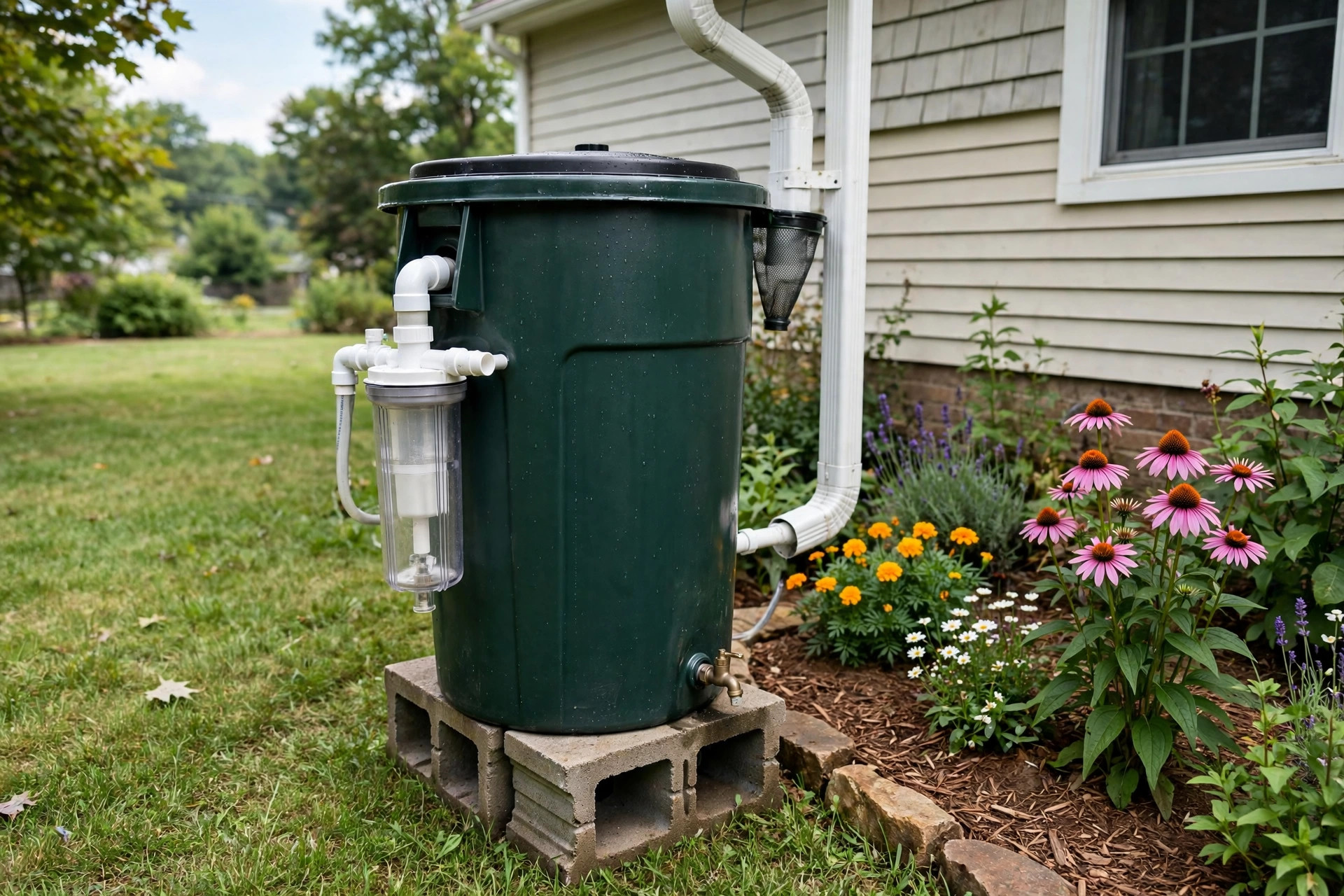
Barrel size and strength. Most home barrels hold fifty to sixty gallons. Smaller thirty-gallon barrels suit small yards and patios. The plastic should be thick and food-grade if you want to water vegetable beds. A flat back fits neatly against the house wall. Check that the lid seals tight so mosquitoes cannot get in.
First-flush diverter. The first rain of a storm carries the most dirt off the roof. A first-flush diverter sends that dirty first gallon or two into a small side pipe, then lets the cleaner rain flow to the barrel. Reviewers praise this feature more than any other, because it keeps the barrel water clear from the start.
Gutter screen and mesh filter. A coarse screen at the downspout catches leaves and twigs. A finer mesh at the barrel inlet catches sand and pollen. Kits that use both stages keep the water far cleaner than a single screen.
Overflow control. A barrel fills fast in a heavy storm. A good kit includes an overflow port with a hose that leads water away from the house foundation. Without it, the barrel spills water against the wall and can dampen the basement.
Spigot and hose reach. The spigot should sit a few inches above the bottom so settled dirt stays in the barrel. Many gardeners raise the barrel on a stand to gain water pressure. A standard garden hose fitting makes watering simple.
Child and pet safety. A locking lid matters if small children or pets play near the barrel. Drowning risk is real even in shallow water, so reviewers often stress a secure cover.
Types of Rain Barrels and Filter Kits
Reviewers across the country describe a few common designs. Each has strengths.
Food-grade plastic barrels. These are the most common. They are made from used shipping drums, reconditioned for home use. They are strong, light, and modest in price. Most hold fifty-five gallons. They come in dark colors that block light and slow algae growth.
Decorative barrels. Some barrels look like wood, stone, or clay urns. They cost more, but they suit front yards and patios where looks matter. Most use the same filter kits as plain barrels, so the water quality is no different.
Wooden barrels. True wooden barrels, often oak or cedar, have a classic look. They need more care. Wood can crack in dry spells and may need re-sealing. Few include a filter kit as standard, so buyers often add one.
Slim and corner models. For narrow side yards, slim barrels sit close to the wall. Their capacity is smaller, but they suit homes with tight space.
Linked systems. Two or more barrels can be joined with a link kit so they fill as one. Reviewers with large gardens or heavy summer use favor linked barrels. The filter kit sits on the first barrel and protects the whole line.
Underground cisterns. A few homeowners bury a large cistern for several hundred gallons. This is a bigger project and costs much more. Most guides place it beyond the scope of a basic barrel review.
What Reviews Say About Filter Kit Performance
Across hundreds of reviews, a few patterns repeat. Buyers are happiest when the filter kit does three things: keeps debris out, keeps insects out, and needs little cleaning.
Mesh filters with a pore size near one millimeter stop most sand and grit while still letting water flow fast. In heavy rain, cheap screens clog and the water backs up over the gutter. Reviewers advise a screen with enough area to pass a strong flow. Kits with a removable basket filter get praise, because the basket can be lifted out and rinsed in seconds.
First-flush diverters draw mixed comments. Owners who live near trees or on dusty roads call them essential. Owners in clean suburban areas say the gutter screen alone is enough.
Mosquito control is another repeated theme. Any gap in the lid or filter box can let mosquitoes breed. Reviewers recommend a fine mesh, a sealed lid, and a larvicide tablet made for water gardens as a backup. Covers of any kind should be checked each spring.
Winter care also comes up in northern reviews. Barrels must be drained before the first hard freeze, and the filter kit should be taken off and stored. Frozen water cracks plastic and splits spigots. This simple step prevents the most common barrel failure.
Cost and Price Range
Prices vary by size, looks, and filter kit quality.
A basic fifty-gallon barrel with a simple screen and spigot usually sells for forty to eighty dollars. Kits with a first-flush diverter, fine mesh, and overflow hose run eighty to one hundred and sixty dollars. Decorative models cost one hundred and fifty to three hundred dollars. Linked kits for two barrels add thirty to sixty dollars.
A few cities and water districts offer rebates for rain barrels. Homeowners should check with their local water utility, since a rebate can cut the cost in half. The savings on the water bill build slowly. A household that waters a large garden through summer may save fifty to one hundred dollars a year. The barrel pays for itself in one to three years.
When you compare costs, it helps to see the bigger picture of home water systems. Guides to rainwater filtration for the whole home show that a barrel system is the cheapest way to start harvesting rain. Homeowners who want to reuse even more water sometimes look at laundry greywater systems as a next step.
How to Set Up the Barrel
Most buyers finish the setup in an afternoon with basic tools.
1. Pick a spot near a downspout on firm, level ground. Water is heavy. A full fifty-gallon barrel weighs over four hundred pounds, so the base must be solid. 2. Raise the barrel on cinder blocks or a purpose-made stand. Height gives the spigot pressure and room for a watering can under it. 3. Cut the downspout to the right height and fit the diverter or filter box. Follow the kit diagram. 4. Connect the overflow hose and run it at least six feet from the house. 5. Fit the spigot, check all seals, and fill the barrel with a hose to test for leaks.
The U.S. Environmental Protection Agency publishes plain guidance on saving water at home, and its WaterSense pages note that outdoor watering is one of the largest home uses of treated water. A barrel shifts part of that use to free rain.
Care and Upkeep Through the Seasons
A filter kit keeps the water clean, but the barrel still needs care.
Spring. Clean the filter basket and screens. Check the spigot and seals. Look inside for algae or silt, and scrub the walls if needed. Refill and open the diverter.
Summer. Rinse the mesh filter once a month in heavy pollen season. Keep the lid locked. Watch for a rotten-egg smell, which signals that debris is rotting in the bottom. Drain and clean the barrel if the smell appears.
Fall. This is the busiest season for the filter. Leaves pile in the gutter screen. Clear it after each storm. Some owners drop the downspout out of the diverter once the trees are bare.
Winter. In freezing climates, drain the barrel fully. Turn it upside down or store it in a shed. Take the filter kit and spigot indoors. A cracked barrel is the most reported winter loss, and it is easy to prevent.
Cleaning the water path matters as much as cleaning the barrel. Retailers such as The Home Depot and Lowe’s stock replacement screens, baskets, and spigots, so a worn part is a cheap fix rather than a new barrel.
Safety and Water Quality
Rain water from a roof is not drinking water. Reviewers and public health guides agree on this point. Roof runoff can carry bird droppings, dust, and traces of roofing material. A filter kit removes leaves and grit, but it does not disinfect the water.
Safe uses include watering lawns, flowers, shrubs, and trees. Many gardeners also water vegetable beds, though they let the water soak the soil rather than spraying the leaves. Washing the car, rinsing tools, and filling a birdbath are other common uses.
Do not drink barrel water unless it passes through a certified treatment system designed for drinking. Families with wells sometimes ask about deeper treatment; the makers of home filtration systems, such as Aquasana, describe multi-stage filters that address drinking water, but those systems are separate from a garden barrel. Plumbing fixture makers like Moen, Kohler, and Delta Faucet publish their own water quality guidance for indoor fixtures, which a barrel cannot replace.
For garden use, a filter kit plus regular cleaning keeps the water fresh enough for plants and safe to handle. Keep children from playing in or drinking the water, and keep the lid secured at all times.
Shopping Tips From Real Buyers
Experienced owners share the same advice in review after review.
– Buy the largest barrel your space allows. Small barrels run dry in one hot week. – Dark barrels grow less algae than light ones. – A stand is not optional. Without height, the water barely flows from the spigot. – Measure the downspout before ordering. Gutters come in different sizes, and the diverter must fit. – Check the return policy. If the kit leaks at the seams, a good seller replaces it. – Start with one barrel. Add a second barrel with a link kit only after one season of use shows you need more.
Home repair writers at This Old House and Family Handyman publish step-by-step setup guides with photos, which help first-time buyers more than the thin manuals that ship with many kits.
Frequently Asked Questions
How much water does a rain barrel collect? A fifty-gallon barrel can fill in one moderate storm. A roof of one thousand square feet sheds about six hundred gallons in an inch of rain. The barrel captures only what flows through its downspout, so size and storms set the limit.
Does a filter kit make the water safe to drink? No. A filter kit removes leaves, grit, and insects. It does not kill germs or remove dissolved chemicals. Rain barrel water is for gardens, lawns, and cleaning, not for drinking.
How often should I clean the filter? Check the screen after heavy storms and rinse the mesh about once a month in the growing season. In fall, when leaves drop, check weekly. A clogged filter slows the fill and can back water up over the gutter.
Can I use rain barrel water on vegetables? Yes, with care. Water the soil, not the leaves, and wash all produce before eating it. This matches the advice given by most garden and health guides.
What do I do in winter? Drain the barrel before the first hard freeze, disconnect the filter kit, and store both out of the cold. Leave the downspout open so winter rain drains away from the house.
Are rain barrels legal everywhere? Most states allow them, and many encourage them. A few western states once limited rain collection, but rules have eased. Check your state and city rules before you install, especially for large systems.
A Short Final Word
A rain barrel with a filter kit is one of the simplest home improvements a homeowner can make. It costs little, installs in an afternoon, and turns wasted rain into free garden water. The reviews agree on the basics: buy a strong barrel, fit a real filter kit with a first-flush diverter, keep the screens clean, and drain it before winter. Do that, and the barrel will serve for many years while the water bill drops a little each summer.
References
Aquasana. (n.d.). Water filtration systems. https://www.aquasana.com Delta Faucet. (n.d.). Kitchen and bathroom faucets. https://www.deltafaucet.com Family Handyman. (n.d.). DIY home repair and maintenance. https://www.familyhandyman.com Kohler. (n.d.). Bathroom and kitchen fixtures. https://www.kohler.com Lowe’s. (n.d.). Home improvement products. https://www.lowes.com Moen. (n.d.). Faucets and plumbing fixtures. https://www.moen.com The Home Depot. (n.d.). Home improvement products. https://www.homedepot.com This Old House. (n.d.). Home renovation guidance. https://www.thisoldhouse.com U.S. Environmental Protection Agency. (n.d.). Protecting human health and the environment. https://www.epa.gov
Was this guide helpful?

About Emily Rodriguez
The My Garden US editorial team writes practical, in-depth home and garden guides for American homeowners — tested advice, no fluff.
You May Also Like
Lead in Drinking Water Filter Reviews USA: What Tests, Types, and Brands to Trust
February 25, 2026 0 views
Reverse Osmosis Faucet Air Gap Reviews USA: A Plain Buyer’s Guide
January 12, 2026 0 views
The Best Shower System with Body Sprays: A Buyer’s Guide
May 26, 2026 0 views