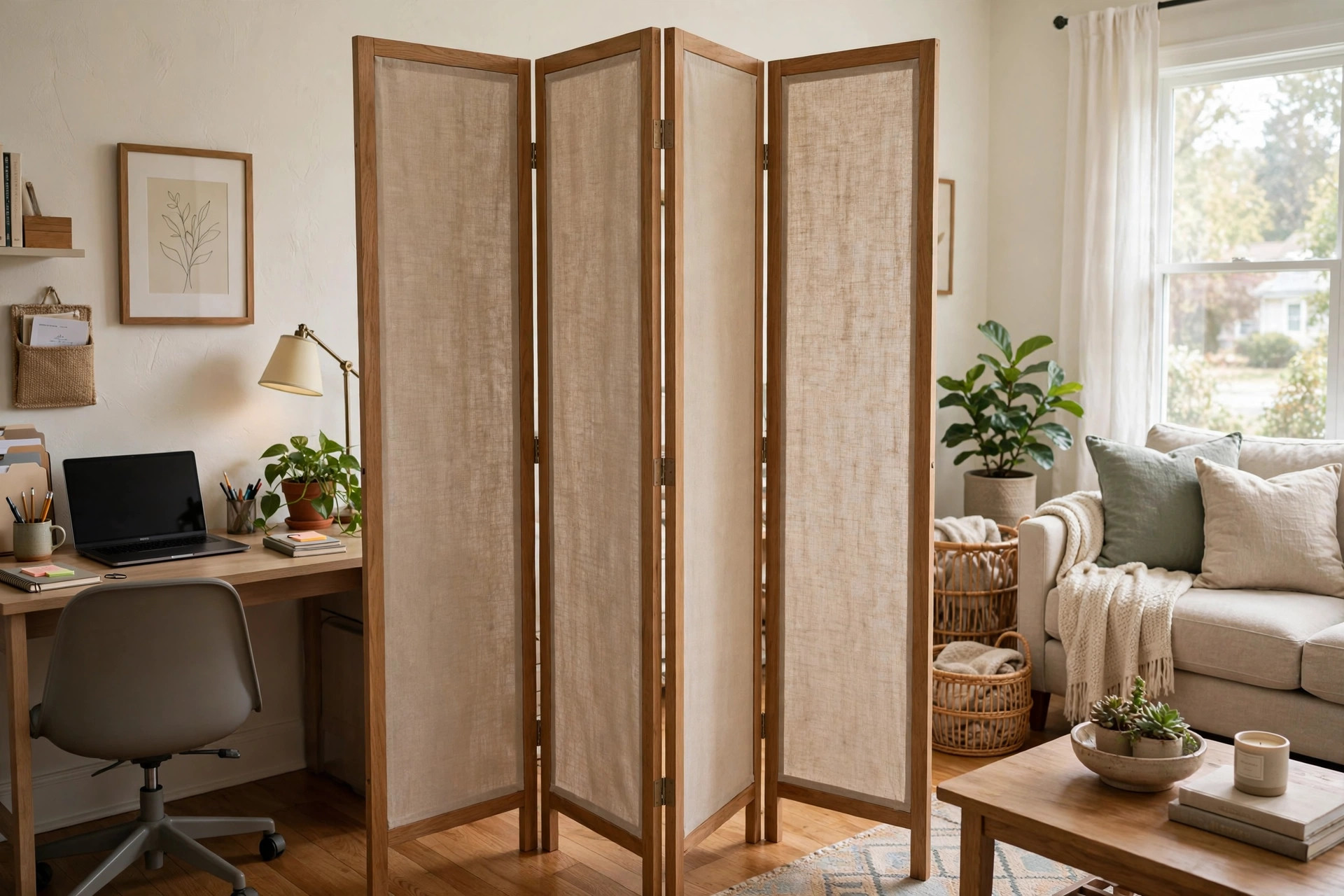

Many workers now do their jobs from home. They share the room with a partner, a child, or a roommate. The desk sits in a bedroom or a living room. Calls mix with talk and play. A home office partition divider for shared room use can fix this. It splits one room into two parts without a wall. One side is for work. The other side is for rest.
Why a Divider Matters
A shared room has two jobs at once. One job is work. The other job is life. These two jobs fight each other. A video call needs quiet. A small child needs noise and play. A partner may watch television in the same room. Nobody is at fault. The room is simply doing too much.
A partition divider gives the room clear zones. The eye sees a border. The mind follows the border. When you sit behind the divider, you feel at work. When you step out, you feel at home. This simple trick helps focus. Many home workers say their output rises when the desk has its own zone.
A divider also protects privacy on camera. Clients and bosses can see your room on video calls. A plain divider behind you hides a bed or a toy box. It looks neat and calm. You do not need to clean the whole room before a call. You only need to keep the work zone tidy.
Noise is the hard part. A light screen will not block all sound. It can still help. Fabric panels and thick boards take the edge off talk and play. They break up sound waves so the room feels less sharp. With the divider near the desk, calls sound better and the brain feels less stress.
What to Look for When You Choose: Home Office Partition Divider for Shared Room
Start with the size of your room. Measure the floor where the divider will stand. Most folding dividers are six to eight feet wide when open. Make sure the open width fits your floor plan with room to walk past. Also check the height. A divider of five to six feet hides a seated worker but keeps the room feeling open. A taller divider gives more privacy but can darken the room.
Weight and build come next. A divider should stand firm when a door slams or a child runs past. Look for wide feet, strong hinges, and a solid frame. Light panels are easy to move but can fall over. Heavy boards stand well but are hard to fold and store. Pick what fits your daily use.
Think about sound and light. If your main trouble is noise, pick thick fabric or acoustic panels. Makers such as Steelcase publish notes on how office panels cut sound, and guides from Bob Vila explain how soft materials calm a room. If your main trouble is light, a solid screen can block glare from a window. If your room is dark, a screen with open slats or light cloth lets sun through.
Look at the look of the room. A divider is a big piece. It should match your walls and floor. Wood frames fit warm rooms. White or gray fabric fits cool rooms. A screen that clashes will annoy you every day. Many stores, from IKEA to Wayfair, show room scenes so you can judge the style before you buy.
Check how it folds and stores. A shared room changes through the day. You may want the divider up for work hours and down for family time. A folding screen that closes flat is best for this. Sliding panels on tracks fit rooms that need a fixed split. A bookcase or shelf divider gives storage but never folds away.
Types and Options
Folding Screens
The classic choice is the folding screen. It has three to six panels joined by hinges. You open it in a zigzag or a straight line. It needs no tools and no drilling. It folds flat behind a door when guests come. Many homes pick this first because it is cheap and simple. Reviews at Wirecutter and PCMag often list folding screens among the top small-space home office picks.
Acoustic Panels
Acoustic panels are made for sound. They use thick felt or foam that soaks up noise. They often hang from the ceiling or stand on feet. They cost more than plain screens. They pay back if you take many calls. Large office makers like Herman Miller build acoustic panels for open work floors, and smaller home versions now sell for shared rooms.
Shelf and Bookcase Dividers
A low bookcase or an open shelf can split a room and hold things. It works well between a desk and a bed. Books and boxes also block some sound and sight. The top must stay tidy, since it shows on both sides. This option suits people who need more storage in a small room.
Curtain and Track Dividers
A curtain on a ceiling track gives a soft, full-height split. It pulls back in seconds and washes well. It blocks sight but almost no sound. It is cheap and kind to renters, since one track mount leaves only small holes. It suits a room where privacy matters more than noise.
Freestanding Whiteboard or Pin Board Dividers
Some dividers double as work tools. A whiteboard panel lets you plan the week. A pin board holds notes and cards. These fit home workers who miss an office wall. They are heavier than fabric screens, so check the base before you buy.
Pair It With the Right Desk Setup
A divider works best when the desk behind it is right. Your chair, screen, and lamp should fit the small zone. An adjustable standing desk for tall person 6ft helps if you are six feet tall and work in a tight corner. A best desk accessories set for new home office keeps the small zone tidy and calm. An adjustable monitor arm for dual screen setup lifts screens off the desk and frees floor space behind the divider.
Good light matters too. A lamp on the desk side stops the divider from casting a dark mood over your work. A small rug under the desk marks the work zone for the eye. Uplift Desk and The Spruce both give clear tips on setting up small home work zones. Handyman guides at Family Handyman cover mounts, tracks, and small repairs that a divider may need.
Cost and Price
Prices run wide. A simple cloth folding screen costs little. Expect to pay in the low tens for a basic three-panel screen. A mid-range screen with a wood frame and thick panels runs into the low hundreds. Acoustic standing panels cost more, often several hundred each. Curtain tracks are cheap, though good fabric adds to the bill. A shelf divider costs what a bookcase costs.
Think in terms of use, not just price. A cheap screen that falls over each week is no bargain. A strong divider that stands for years is worth more. Check what the price includes. Some sets need extra feet, wall anchors, or track parts. Read the parts list before you order so the real cost is clear.
Used markets can cut cost a lot. Folding screens show up often at secondhand stores. Check the hinges and feet before you buy used. Wipe fabric panels clean. A used shelf divider is a safe buy if the shelves are level and the back board is firm.
Care and Upkeep
Care is simple. Dust the panels each week with a soft cloth. Vacuum fabric screens with a brush head once a month. Wipe wood frames with a damp cloth and dry them right away. Keep panels out of direct hot sun, which fades color and weakens glue.
Check hinges twice a year. Tighten loose screws. Oil stiff hinges with a drop of light oil. If a panel foot bends, fix it fast, since a bent foot makes the whole screen lean. A leaning screen falls more easily and looks bad.
For curtain dividers, wash the cloth as the label says. Most wash at home. Let the cloth dry fully before you hang it back, or it may stretch. For acoustic panels, do not soak them. Spot clean with a damp cloth and let them air dry.
Store a folding screen dry and upright. Do not pile heavy things on it. A bent panel never folds flat again. If you move house, wrap each panel in a blanket so the edges do not chip.
Safety
A tall divider can tip. This is the main risk, above all for homes with small children and pets. Set the screen in a wide zigzag, not a straight line. A zigzag stands far more firmly. Keep heavy panels away from play areas. If the maker offers wall straps or anchors, use them.
Mind the cords. Desk lamps and chargers often sit near a divider. Keep cords behind the desk and off the floor where feet pass. A tripped screen can land on a person. Tape cords flat or use a cord cover.
Check fire rules for your home. Fabric dividers should sit clear of heaters and radiators. Leave at least three feet between a screen and a hot surface. Never hang clothes to dry on a room divider near a heater.
Renters should check the lease before drilling for curtain tracks. Most leases allow small holes that you fill at move-out. Freestanding screens need no holes at all, which makes them the safest pick for rented rooms.
Frequently Asked Questions
Will a partition divider block noise from a shared room? It will cut some noise but not all. Thick fabric and acoustic panels soften talk and play. A thin screen blocks sight more than sound. For real quiet, add a rug, soft seats, and a closed door between you and the noise if you can.
How tall should a home office divider be? Five to six feet is right for most rooms. That height hides a seated worker and a desk on camera. Taller screens give more privacy but can make a small room feel dark. Short screens mark a zone but do little for privacy.
Can I use a divider in a rented room? Yes. Freestanding folding screens need no holes and no tools. They are the best pick for renters. Curtain tracks need small screw holes, which most leases allow if you fill them later. Check your lease first.
What is the best divider for video calls? A solid screen with a calm color works best. It hides the room behind you and looks neat on camera. Sit close to it so the frame shows the screen, not the room edges. Soft panels also cut echo, which makes your voice sound clear.
How do I keep a folding screen from falling over? Open it in a zigzag shape with wide angles. Keep it away from doors that swing into it. Set heavy shelves or feet low for balance. If children or pets bump it, move it to a corner or add wall straps.
Do dividers work in very small rooms? Yes, if you pick the right kind. A short folding screen or a curtain on a track fits a tight room. A low shelf splits the room without blocking light. Measure twice before you buy, and pick a screen that folds flat when you need the full floor.
A Final Word
A home office partition divider for shared room life is a small change with a big effect. It gives work a place and rest a place in one room. It helps focus, guards privacy on calls, and softens noise. Measure your floor, pick a firm build, and set it in a wide stance. Pair it with a right-sized desk and good light. The room will feel bigger, calmer, and ready for both work and life.
References
Bob Vila. (n.d.). Home improvement advice. https://www.bobvila.com Family Handyman. (n.d.). DIY home repair and maintenance. https://www.familyhandyman.com Herman Miller. (n.d.). Office furniture and ergonomic seating. https://www.hermanmiller.com IKEA. (n.d.). Home furnishings. https://www.ikea.com PCMag. (n.d.). Technology product reviews. https://www.pcmag.com Steelcase. (n.d.). Office furniture and workplace research. https://www.steelcase.com The Spruce. (n.d.). Home and garden advice. https://www.thespruce.com UPLIFT Desk. (n.d.). Standing desks and ergonomic office furniture. https://www.uplift-desk.com Wayfair. (n.d.). Furniture and home goods. https://www.wayfair.com Wirecutter. (n.d.). Product reviews from The New York Times. https://www.nytimes.com/wirecutter
Was this guide helpful?

About David Wilson
The My Garden US editorial team writes practical, in-depth home and garden guides for American homeowners — tested advice, no fluff.
You May Also Like
Best Standing Desk Mat for Concrete Floors: A Practical Guide
January 2, 2026 0 views
USB C Docking Station for Home Office Setup: A Plain Guide
May 8, 2026 0 views
Home Office Wall Clock With Silent Movement
May 7, 2026 0 views