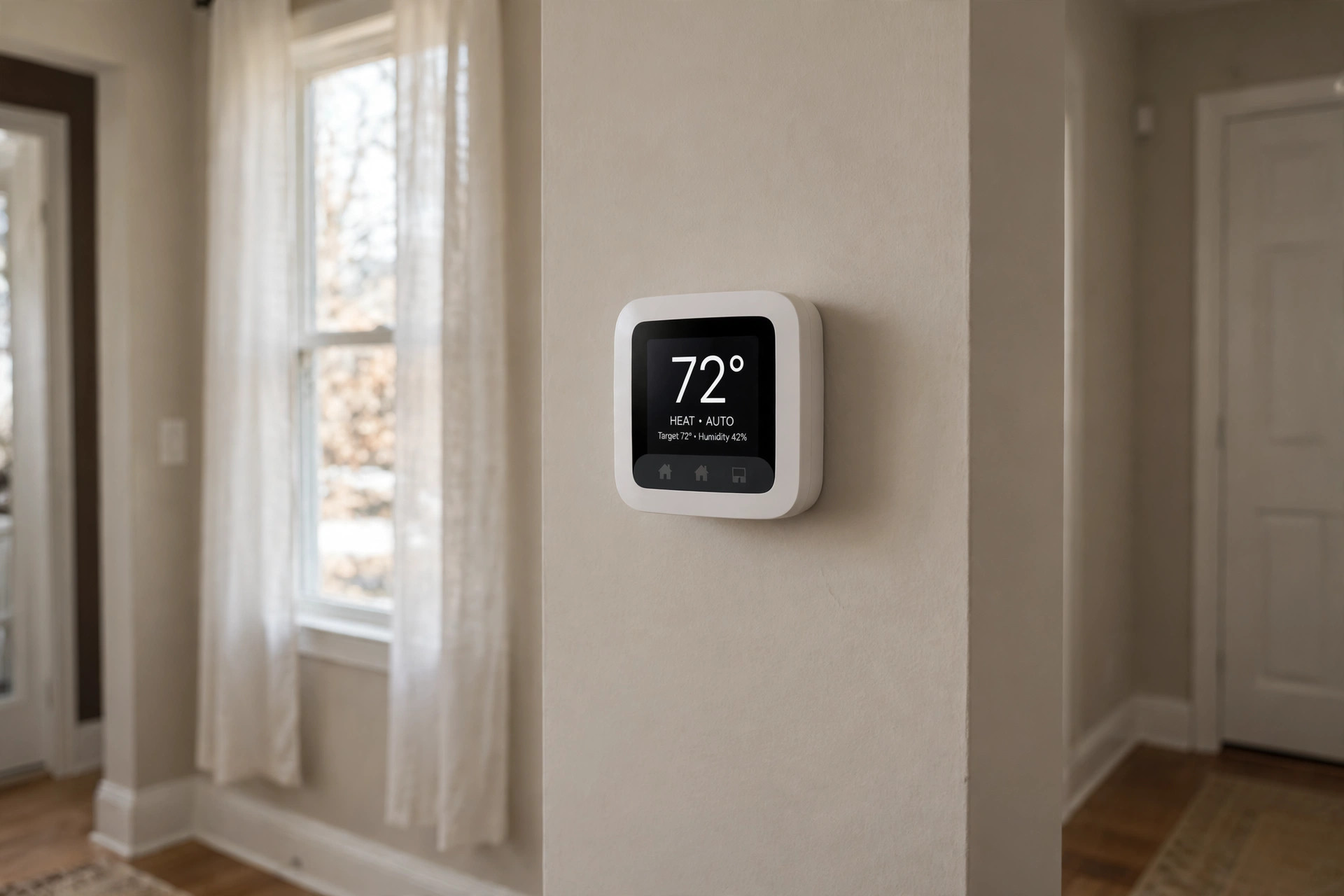

Many homeowners ask one plain question before they buy a new control for their heating and cooling system. They want to know the smart thermostat installation cost near me. They want a number they can trust. They want to know what a local technician will charge, what the device itself will cost, and whether the work is worth the money. This guide answers that question in plain terms.
The short answer is this. Most American homes pay between 170 and 450 dollars for a full smart thermostat installation when a local professional does the work. That range covers the device and the labor together. A simple swap on a system with good wiring sits at the low end. A home with old wiring, extra add-on features, or a complex two-stage system lands at the high end. The rest of this article breaks down every part of that price.
Why a Smart Thermostat Matters
A thermostat is the small control box on the wall that tells the furnace, the air conditioner, or the heat pump when to run. A smart thermostat does the same job with more skill. It learns the daily routine of the home. It turns the heat down when the house is empty. It cools the rooms before the family returns in the evening. Some models watch the weather and adjust on their own.
The United States Department of Energy reports that heating and cooling account for a large share of home energy use. A device that trims even a small part of that use can cut the monthly bill by a real amount. Many makers of these controls state that their devices can save around eight to ten percent on energy bills over a full year.
A smart thermostat also adds comfort. The rooms hold a steadier temperature. The owner can change the setting from a phone while at work or on a trip. Many power companies even offer rebates for homes that install one, which can lower the true cost of the job by fifty to one hundred dollars or more.
What the Smart Thermostat Installation Cost Near Me Usually Covers
When a local company gives a price, the number is rarely just for labor. It is a package. Understanding each part helps the homeowner judge whether a quote is fair.
First is the device itself. A basic smart thermostat from a well-known brand sells for about 130 to 180 dollars at retail. A mid-range model with a full color screen, room sensors, and strong learning software runs from 200 to 280 dollars. A premium model with advanced sensors and a sleek design can reach 300 dollars or more. Prices at national retailers such as The Home Depot and Lowe’s give a good sense of the market before the installer arrives.
Second is the labor. A licensed HVAC technician usually charges 75 to 150 dollars for a standard swap. The visit takes about one hour when the old wiring is sound and the new unit fits the same wall plate. In larger cities, where shop rates run higher, the labor charge can reach 200 dollars.
Third are the extras. If the wall needs a fresh C-wire for constant power, the technician may charge an extra 50 to 100 dollars to run it. Some companies add a service call fee of 50 to 90 dollars to the first visit. A good quote will list each item on its own line.
Typical Price Ranges at a Glance
For a standard one-zone home with modern wiring, the smart thermostat installation cost near me most often falls between 170 and 300 dollars. For a home that needs a new C-wire or minor electrical work, the range moves to 250 to 400 dollars. For a two-zone system, or a home with a heat pump plus backup heat, the job can run from 300 to 450 dollars. These are national averages. Prices in rural areas tend to run lower, while prices in coastal cities tend to run higher.
Types of Smart Thermostats and How They Affect Price
Not every smart thermostat costs the same to install. The type matters.
Learning models. These study the habits of the home for a week or two and then set their own schedule. They sit in the middle of the price range. Most homeowners choose this type.
Basic programmable smart models. These offer remote control through a phone app and simple schedules set by the owner. They are the least costly to buy. They need the same labor as any other model.
Premium sensor models. These come with remote room sensors that sit in bedrooms or upstairs halls. The sensors add 40 to 80 dollars each to the material cost.
Models made for heat pumps. A home with a heat pump needs a control that can manage the heat pump, the backup heat, and the defrost cycle. These units cost a little more to buy, and the setup takes more care.
The best thermostat for heat pump reviews usa roundup on this site covers which models work well with heat pump wiring. It is worth a look before a homeowner shops for a unit.
What to Look for When Choosing a Smart Thermostat
Before asking about the smart thermostat installation cost near me, the homeowner should choose the right device. The wrong device can raise the cost of the visit.
Check the wiring. Most smart models need a C-wire, which supplies steady power to the screen and the Wi-Fi radio. Older homes often lack this wire. A quick look behind the old thermostat shows the answer. If no C-wire is present, some models can use a power extender kit, which adds cost.
Check system compatibility. A furnace with a single stage is simple. A two-stage furnace, a heat pump, or a system with separate heating and cooling units needs a control rated for that setup. The package or the maker website usually lists the systems it supports. Makers such as Carrier and Trane publish clear compatibility charts for their equipment.
Check the Wi-Fi signal. The thermostat needs a steady Wi-Fi link to the home router. A weak signal in the hallway can cause drops. A cheap range extender or a move of the router can fix this.
Consider the display. Older adults or anyone with poor eyesight may prefer a large bright screen. Our guide on the best programmable thermostat for seniors usa discusses large-type models that are easy to read from across the room.
Look for rebates. The ENERGY STAR program keeps a rebate finder for the whole country. A homeowner can check ENERGY STAR and the local power company site. Some rebates apply only when a licensed pro does the install.
The “Near Me” Factor: How Location Changes the Price
The phrase “near me” matters. Labor rates vary widely across the United States.
In the Midwest and the South, where shop overhead runs lower, a standard install often costs 170 to 250 dollars. In the Northeast and on the West Coast, the same job often costs 250 to 400 dollars. Large metro areas such as New York, Los Angeles, and Seattle sit at the top of the range. Small towns in states with lower costs of living sit at the bottom.
Travel also plays a part. A technician who must drive far outside the service area may add a trip fee. Getting three local quotes remains the best way to find a fair price.
Season matters too. Heating companies are busiest in late fall and early winter. Cooling companies are busiest in early summer. Booking a thermostat install in a slow month, such as early spring, can sometimes bring a lower labor rate.
Hiring a Local Installer: What to Ask
A good installer earns the fee. A poor one can create trouble. These questions help the homeowner choose well.
1. Are you licensed and insured? The tech should hold a current HVAC license for the state and carry liability insurance. Ask to see both. 2. Does the quote include the device? Some quotes bundle the unit. Others quote labor only and expect the homeowner to supply the thermostat. 3. Will you test the full system? A proper install ends with a test of heat, cool, and fan modes. 4. Do you set up the app and Wi-Fi? The smart features only work when the app is linked. A good installer will connect the phone and set the first schedule. 5. What is the warranty? Most makers give a two to three year warranty on the device. Many shops add a one year labor warranty on the install.
Homeowners who are handy with tools sometimes do the job themselves. The device makers publish clear step by step guides, and sites such as This Old House and Family Handyman walk through the swap in plain language. But any home with odd wiring, a heat pump, or two zones is safer in the hands of a pro. One crossed wire can burn out a control board that costs far more than the labor saved.
Cost and Savings: Is It Worth the Money?
A smart thermostat is one of the few home upgrades that pays for itself in a short time.
Take a home with a yearly heating and cooling bill of 2,000 dollars. If the device cuts that bill by eight percent, the saving is 160 dollars a year. A 300 dollar installed job pays back in under two years.
The payback is faster where energy costs are high. It is faster in climates with long heating or cooling seasons. Homes with old, wasteful systems gain the most.
There are also less direct gains. The remote control means no more heating an empty house during a long weekend trip. The energy reports that many apps send each month show which weeks cost the most, and that knowledge alone often trims use. Some power companies pay a small yearly credit to homes that let the utility adjust the thermostat slightly during peak hours.
Homeowners planning larger efficiency work may also be looking at the whole system. Our guide on geothermal heat pump cost per ton usa covers the price of one of the most efficient heating choices available, for those thinking beyond the thermostat.
Care and Upkeep
A smart thermostat needs little care, but a few simple habits keep it working well.
Keep the screen and the vents on the unit free of dust. A soft dry cloth once a month is enough. Do not spray cleaner directly on the screen.
Check the batteries in the remote room sensors once a year. Most use common coin cells that are cheap to replace.
Keep the app updated. Makers add new features and fix small faults through software updates. Many units update on their own overnight.
Every year, when the furnace or air conditioner gets its regular service, ask the tech to glance at the thermostat wiring. A loose wire shows up early if someone looks.
Safety
A thermostat swap is low risk work, but it still touches household wiring. Safety rules are simple and firm.
Turn off power to the heating and cooling system at the breaker before touching any wire. Do not trust the wall switch alone. Test with the system off to be sure.
If the old thermostat has a small glass tube with silver liquid inside, stop. That is an old mercury switch. Mercury is a poison. Do not throw the old unit in the trash. Many states run free take-back programs for mercury thermostats. The U.S. Department of Energy energy pages and local waste offices list drop-off points.
Do not install a thermostat inside a room that gets strong direct sun for hours. The false high reading will make the air conditioner run too long. A shaded interior wall, about five feet off the floor, is the best spot.
Frequently Asked Questions
How long does a smart thermostat installation take?
A standard swap takes about one hour. The tech removes the old unit, checks the wires, mounts the new base, connects the wires, and sets up the software. A job that needs a new C-wire or sensor placement can take two hours.
Can I install a smart thermostat myself?
Many owners do. If the home has a C-wire and a simple single-stage system, the job is a careful but easy task. The maker app walks through each step. Homes with heat pumps, two zones, or old cloth-covered wiring are better left to a licensed tech.
Will a smart thermostat work with my old furnace?
In most cases, yes. Most smart models support gas furnaces, oil furnaces, boilers, and heat pumps. Very old systems with only two wires may need an adapter. Check the compatibility tool on the maker site before buying.
Do I need Wi-Fi for a smart thermostat to work?
The basic heating and cooling control works without Wi-Fi. But the smart features, such as phone control and energy reports, need a steady Wi-Fi link. Without it, the device is just a costly programmable thermostat.
How much can a smart thermostat save on energy bills?
Most studies and maker reports point to savings of about eight to ten percent on heating and cooling costs. A home with a 2,000 dollar yearly bill might save 160 to 200 dollars a year. Actual results vary with climate and habits.
Are there rebates for smart thermostat installation?
Yes, in many areas. Power companies and some gas utilities offer rebates of 50 to 100 dollars or more. The ENERGY STAR rebate finder and the local utility website list what is available. Some rebates require a licensed installer, so check the rules before booking.
A Short Final Word
The smart thermostat installation cost near me is not a mystery once the parts are laid out. The device costs 130 to 300 dollars. The labor costs 75 to 200 dollars. The total for most homes lands between 170 and 450 dollars. A short payback through lower energy bills makes it one of the soundest small upgrades a homeowner can buy.
Get three local quotes. Choose the right unit for the system in the home. Make sure the tech tests every mode before leaving. Do those three things, and the new thermostat will pay its way for many years to come.
References
Carrier. (n.d.). Heating and cooling systems. https://www.carrier.com ENERGY STAR. (n.d.). Energy efficient products. https://www.energystar.gov Family Handyman. (n.d.). DIY home repair and maintenance. https://www.familyhandyman.com Lowe’s. (n.d.). Home improvement products. https://www.lowes.com The Home Depot. (n.d.). Home improvement products. https://www.homedepot.com This Old House. (n.d.). Home renovation guidance. https://www.thisoldhouse.com Trane. (n.d.). Heating and air conditioning. https://www.trane.com U.S. Department of Energy. (n.d.). Energy efficiency and renewable energy. https://www.energy.gov
Was this guide helpful?

About Emily Rodriguez
The My Garden US editorial team writes practical, in-depth home and garden guides for American homeowners — tested advice, no fluff.
You May Also Like
High Efficiency Furnace Pros Cons USA: What Homeowners Should Know
September 25, 2026 0 views
Cool Roof Shingles Cost vs Regular Shingles in the USA
October 4, 2026 0 views
Dyson vs Lasko Tower Fan Comparison USA: Which Is Best?
July 26, 2026 0 views