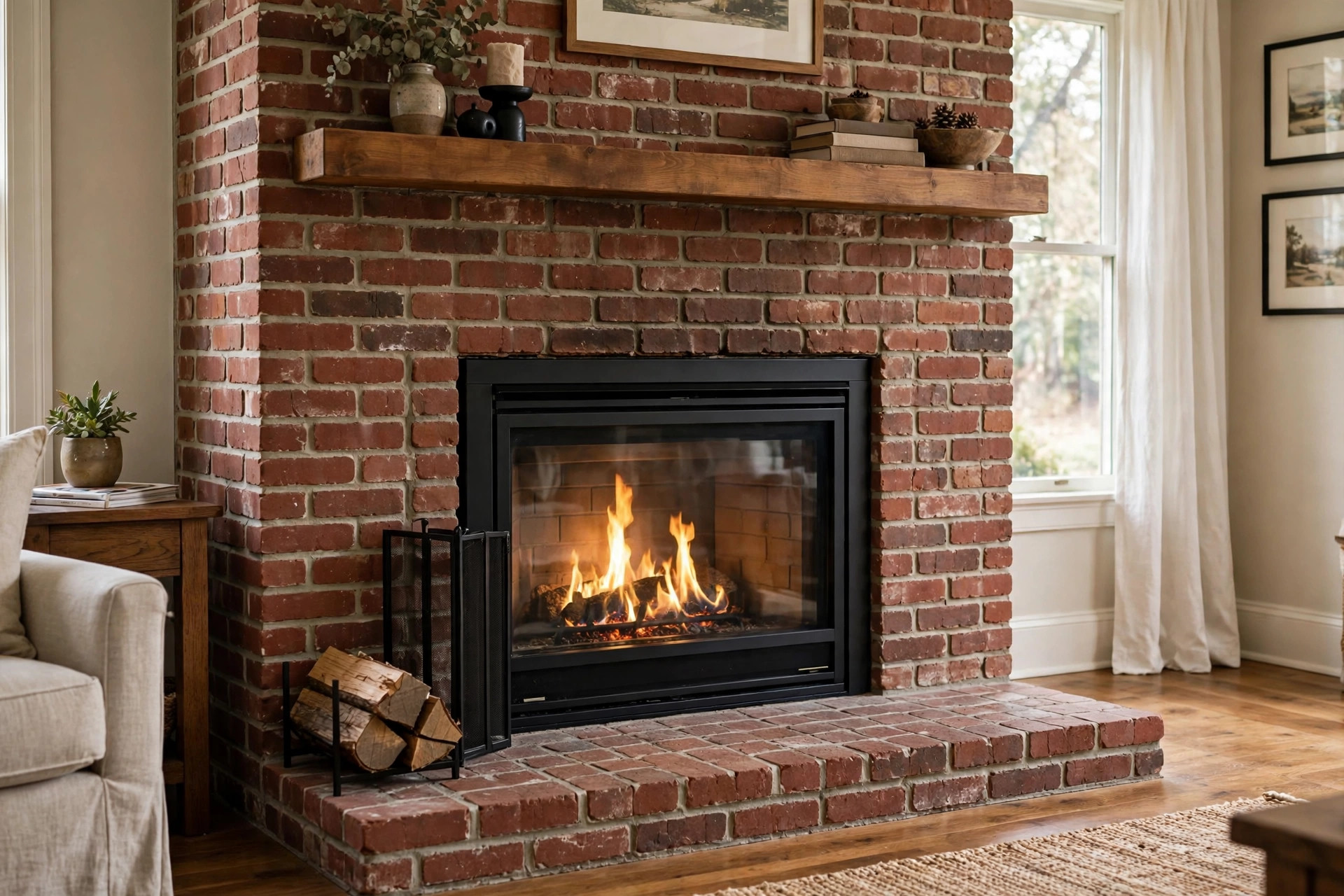
The gas fireplace insert installation cost USA homeowners face is one of the most common questions in home heating. A gas insert slides into an old wood-burning fireplace and turns it into a clean, efficient heater. It gives steady warmth at the push of a button. It also changes the look of the room. Before you buy, you should know the full price. This guide walks through every cost, from the unit itself to labor, venting, gas lines, and permits. It also covers how to choose the right model, how to care for it, and how to keep your home safe.
Why a Gas Fireplace Insert Is Worth the Cost
An open wood fireplace loses most of its heat up the chimney. Studies of home heating have shown for decades that open masonry fireplaces often return less than 15 percent of their fuel energy to the room. A sealed gas insert changes that math. Most units send 70 to 85 percent of their heat into the living space. That gap is the reason so many owners make the change.
A gas insert also saves daily work. There is no wood to haul, no ash to clean, and no chimney fire to fear. You flip a switch or use a remote, and the fire starts. When you are done, it shuts off in seconds. For older owners and busy families, that ease matters as much as the money.
The insert can lower heating bills too. Many owners use it as zone heat. They warm the living room or family room where they spend the evening, and they turn the main furnace down a few degrees. Heating one room instead of the whole house cuts fuel use. It does not replace a furnace in cold climates, but it takes a real share of the load off it. Readers who compare heating upgrades may also want to see how furnaces stack up in our two-stage furnace vs single-stage comparison before they decide where to put their money.
There is a comfort gain that numbers do not catch. A gas insert gives a steady, even flame. The glass front stays warm to the touch but never throws sparks. The room warms from the hearth outward. In the evening, that calm heat is simply pleasant to sit beside.
Types of Gas Fireplace Inserts and What Changes the Price: Gas Fireplace Insert Installation Cost Usa
Not every insert is built the same. Three main types sit on the market, and the type you pick is the biggest driver of gas fireplace insert prices.
Direct vent inserts are the most common. They pull combustion air from outside and send exhaust out through a sealed pipe. They are efficient and safe, and they work in almost any existing masonry fireplace. Most homeowners end up with this type.
Vent-free (ventless) inserts need no chimney at all. They burn very cleanly and send nearly all heat into the room. But many states and cities limit or ban them, and they add moisture to the air. Check local code before you even price one.
B-vent (natural vent) inserts use the existing chimney flue. They are cheaper to install in some homes, but they are the least efficient of the three. Few installers recommend them now.
Size matters as well. Inserts come in small, medium, and large fireboxes, roughly 18 to 42 inches wide. A unit that is too small will run hard and never quite warm the room. A unit that is too big will short-cycle and waste fuel. The right size depends on the room’s square footage and how open the floor plan is.
Brand and finish also move the price. A plain black steel face costs less than a cast-iron surround with a custom mantel trim. Options like a blower fan, thermostat, and remote control add a few hundred dollars. A blower is worth it in most homes, since it pushes warm air out instead of letting it rise.
How to Choose the Right Insert for Your Home
Start with the fireplace opening. Measure the width, height, and depth of the firebox, and the depth of the hearth. Bring those numbers to the dealer. An insert must fit inside the old box with room for the vent liner. A good dealer will confirm the fit before you pay.
Next, match heat output to the room. Manufacturers rate inserts in BTUs, usually from 20,000 to 40,000. A 25,000 BTU unit suits a room of about 500 to 1,000 square feet, depending on insulation and ceiling height. Open floor plans need more output, since heat spreads thin. If you are unsure, ask the installer to do a simple heat-load estimate. Guessing wrong is an expensive mistake.
Decide between natural gas and propane. Most city homes have a natural gas line, and hookup is simple if the line reaches the fireplace. Rural homes often run on propane, which costs more per unit of heat. Make sure the insert you buy is rated for your fuel. Many models come in both versions.
Look for efficiency ratings. ENERGY STAR certifies heating products that meet strict efficiency standards, and its ratings give a fair way to compare models. The U.S. Department of Energy also publishes guidance on efficient home heating that helps put insert efficiency in plain terms. A few points of efficiency may not sound like much, but over ten winters they add up to real money.
Finally, read the warranty. A good insert carries at least a multi-year warranty on the firebox and burner, and the dealer should service what it sells. Ask who handles warranty calls before the unit is installed, not after. Maker sites from Napoleon to Lennox list warranty terms in plain language, so compare a few before you commit.
Gas Fireplace Insert Installation Cost: Full Price Breakdown
Now the question at the heart of this guide: what is the cost to install a gas fireplace insert in the USA? The honest answer is that it varies widely. Most homeowners pay between $2,500 and $6,500 all in. A simple job can land near $2,000. A hard job with a new gas line and chimney work can pass $8,000.
The insert itself is the largest line item. Units run from about $1,500 for a basic small model to $4,000 or more for a large, high-efficiency unit with full trim. Direct vent models sit in the middle of the range. Vent-free units cost less but are restricted in many areas.
Labor usually runs $500 to $2,000. A straightforward swap in a clean masonry fireplace takes a crew half a day. Jobs that need liner work, hearth repair, or electrical wiring take longer. Rates vary by region, and cities on the coasts run higher than the Midwest and South.
Venting is the next big cost. A direct vent gas fireplace insert needs a stainless steel liner run up the old chimney, typically $500 to $1,500 installed. If the chimney is damaged, repairs can add $1,000 or more. A chimney sweep and inspection before the job often saves a surprise later.
The gas line costs $300 to $1,200 in most homes. If a gas pipe already reaches the fireplace, the installer only adds a short branch and a shutoff valve. If the line must come from across the house or up from the basement, the price rises fast. Propane conversions need a licensed technician and may need tank work too.
Permits and inspections run $50 to $300. Most cities require a permit for gas appliance work, and the inspector checks the gas connection and venting. Do not skip this step. Unpermitted gas work can void your insurance and your warranty.
Electrical is a small cost in most jobs, $100 to $400. Blowers and electronic ignition need an outlet near the fireplace. If one is already there, the cost is close to zero.
Surround and trim range from $200 to $1,500. The insert comes with a basic face plate. Stone, tile, or custom wood trim dresses it up but adds to the bill. Many owners do this work later, after the insert is running.
Put together, a typical middle-of-the-road job looks like this: $2,200 for the unit, $900 for labor, $800 for the vent liner, $400 for the gas line, $150 for the permit, and $200 for trim. That totals $4,650. Your quote may sit higher or lower, but every line on it should be one of these.
To keep the price down, get three written quotes. Ask each installer the same questions: what liner is included, who pulls the permit, and what the warranty covers. The cheapest quote is not always the best. A This Old House guide on fireplace upgrades notes that venting and liner work is where cut corners show up first, so make sure every bid lists it in detail. Homeowners comparing other heating projects, from window units to full cooling systems, can check our u-shaped window AC reviews and our Trane vs Carrier AC comparison for the same kind of line-by-line thinking.
Care and Upkeep After Installation
A gas insert needs little care, but it needs some. Once a year, have a technician service it before heating season. The visit usually costs $100 to $200. The technician cleans the glass, checks the burner and pilot, tests the safety switches, and inspects the venting. That one visit prevents most breakdowns.
You can handle small tasks yourself. Wipe the glass with a cleaner made for fireplace glass when it clouds. Keep the area around the insert clear of paper, drapes, and furniture. Vacuum dust from the blower vents so air moves freely. Never paint or seal the inside of the firebox.
Watch for warning signs between visits. A yellow, lazy flame instead of a crisp blue one can mean a dirty burner. A smell of gas means you should shut the unit off, leave the room, and call the gas company from outside the house. Soot on the glass or the wall above the fireplace is also a sign to call for service.
Keep the manual. It lists the model number, the service schedule, and the parts the warranty covers. If you sell the house, pass the manual to the new owner. It saves them a service call and shows the insert was cared for.
Safety Rules Every Homeowner Should Know
Gas inserts are safe when installed and used right. Still, a few rules matter. Only a licensed installer should run gas lines and connect the unit. Gas work is not a do-it-yourself project, and most local codes forbid it.
Install carbon monoxide detectors on every floor, especially near sleeping areas. The U.S. Consumer Product Safety Commission warns that all fuel-burning appliances can produce carbon monoxide if they malfunction, and a working alarm is the surest defense. Test the alarms twice a year.
Keep a three-foot clear zone around the fireplace. Rugs, toys, and paper can catch heat from the glass front. Small children should learn that the glass gets hot. A simple screen or gate works well in busy family rooms.
Never burn anything in the insert except its designed fuel. It is not a place for paper, trash, or kindling. Burning the wrong thing can damage the burner and void the warranty. Practical homeowner guides like Family Handyman and Bob Vila both stress this point in their fireplace maintenance articles.
Finally, know your shutoff valve. The installer should show you where it is and how to turn it. If you ever smell gas, shut the valve, leave the house, and call for help from a safe distance. Make sure everyone in the home knows the plan.
Frequently Asked Questions
How long does installation take? Most installs finish in one day, often in four to six hours. The crew removes the old damper, sets the insert, runs the vent liner, connects the gas, and tests everything. Jobs that need a new gas line or chimney repair can stretch to two or three days.
Can a gas insert heat a whole house? In a small, well-insulated home it can carry much of the load, but most inserts are zone heaters. They warm one or two rooms well. In very cold weather, your main heating system still does the heavy work. Think of the insert as a strong helper, not a full replacement.
Do I need a chimney for a direct vent insert? You need a path for the vent, and the old chimney is the usual one. The installer runs a sealed stainless liner up the existing flue. If your home has no chimney, a direct vent pipe can run straight out through an outside wall. That route is common in newer homes.
How much does it cost to run a gas insert each winter? A typical insert burns about 25,000 to 35,000 BTU per hour. At average U.S. natural gas prices, that is roughly 30 to 50 cents an hour. Running it four hours a night through a four-month winter lands near $150 to $250 for the season. Propane costs more, often double.
Will a gas insert raise my home’s value? A clean, working fireplace usually helps at resale. Buyers like the look and the lower heating cost. An insert in good condition with service records is a selling point. A neglected unit with a lapsed warranty is not, so keep up the yearly service.
Should I choose natural gas or propane? Choose the fuel your home already uses. Natural gas is cheaper per unit of heat and needs no tank. Propane works where no gas line runs, but fuel costs run higher. Make sure the insert is rated for your fuel before you buy, since the two are not interchangeable.
Final Word
The gas fireplace insert installation cost USA homeowners pay buys more than a new appliance. It buys an old fireplace made useful again, lower heating bills, and an evening fire at the touch of a button. Prices run from about $2,000 for a simple job to $8,000 or more when gas lines and chimney work are needed. Most owners land in the middle. Get three quotes, confirm the venting and permits in writing, and hire a licensed installer. Do that, and the insert will pay you back in comfort for many winters.
References
Bob Vila. (n.d.). Home improvement advice. https://www.bobvila.com ENERGY STAR. (n.d.). Energy efficient products. https://www.energystar.gov Family Handyman. (n.d.). DIY home repair and maintenance. https://www.familyhandyman.com Lennox. (n.d.). Heating and cooling systems. https://www.lennox.com Napoleon. (n.d.). Fireplaces, grills, and heating products. https://www.napoleon.com This Old House. (n.d.). Home renovation guidance. https://www.thisoldhouse.com U.S. Consumer Product Safety Commission. (n.d.). Product safety information. https://www.cpsc.gov U.S. Department of Energy. (n.d.). Energy efficiency and renewable energy. https://www.energy.gov
Was this guide helpful?

About Sarah Mitchell
The My Garden US editorial team writes practical, in-depth home and garden guides for American homeowners — tested advice, no fluff.