
Winter air is dry. Forced heat makes it drier. In many parts of the United States, indoor humidity falls to 15 percent in January. That is dry enough to crack wood floors, shrink door frames, and leave skin raw. This guide to the best whole house humidifier reviews 2026 USA covers what these systems do, how they work, and which type fits your home. A whole house humidifier ties into your furnace and ductwork. It adds moisture to the air in every room at once. One unit replaces five or six small tabletop models. There is no daily filling of tanks. There is no white dust on the furniture. If your winters are long and your home feels like a desert from December to March, read on.
Why a Whole House Humidifier Matters
Low humidity is more than a comfort problem. It is a home maintenance problem. Wood gives up moisture in dry air. Hardwood floors gap. Cabinet joints open. Grand pianos go out of tune faster. Paint can crack along trim. The U.S. Department of Energy notes that proper humidity also affects how warm a room feels. Moist air holds heat better than dry air. At 40 percent humidity, a room at 68 degrees feels about as warm as a dry room at 72 degrees. That difference can trim heating bills through a long winter.
Health is the other reason. Dry air dries the mucous membranes in the nose and throat. Many people wake with sore throats and nosebleeds in winter. Static shocks jump from every doorknob. Wood furniture creaks. Wallpaper edges curl. The ideal indoor range is 30 to 50 percent relative humidity. Below 30, damage and discomfort rise. Above 50, mold and dust mites thrive. A whole house unit with a humidistat holds that middle ground on its own. Set the dial and forget it.
A portable humidifier treats one room. It needs a refill every day, sometimes twice. Mineral scale builds up in the tank. Bacteria can grow in standing water. A duct-mounted unit uses your home water line. It drains automatically. Maintenance is a once-a-season job. For homes over 1,500 square feet, the math is clear. One installed unit does the work of many small ones with less labor.
How to Choose: What to Look For: Best Whole House Humidifier Reviews 2026 Usa
Square Footage and Capacity
Size the unit to your home. Most models state a coverage range, such as up to 2,500 square feet or up to 4,200 square feet. Match the rating to your floor area. An undersized unit will run all winter and never reach the target. Manufacturers like Lennox publish sizing charts that tie capacity to home size and air tightness. A tight, well-sealed home needs less capacity than a drafty one of the same size. If your home sits between two sizes, step up to the larger model. The extra cost is small. The comfort gain is real.
Also check the gallons-per-day rating. Bypass units may put out 12 to 18 gallons per day. Fan-powered units reach 18 to 20. Steam units can deliver 20 to 35 gallons per day. Higher output matters in very dry climates and in large, open floor plans. Read our related guide on blown in vs batt insulation cost comparison if you plan to seal the house first. Tighter insulation lowers the humidity load.
Ductwork Compatibility
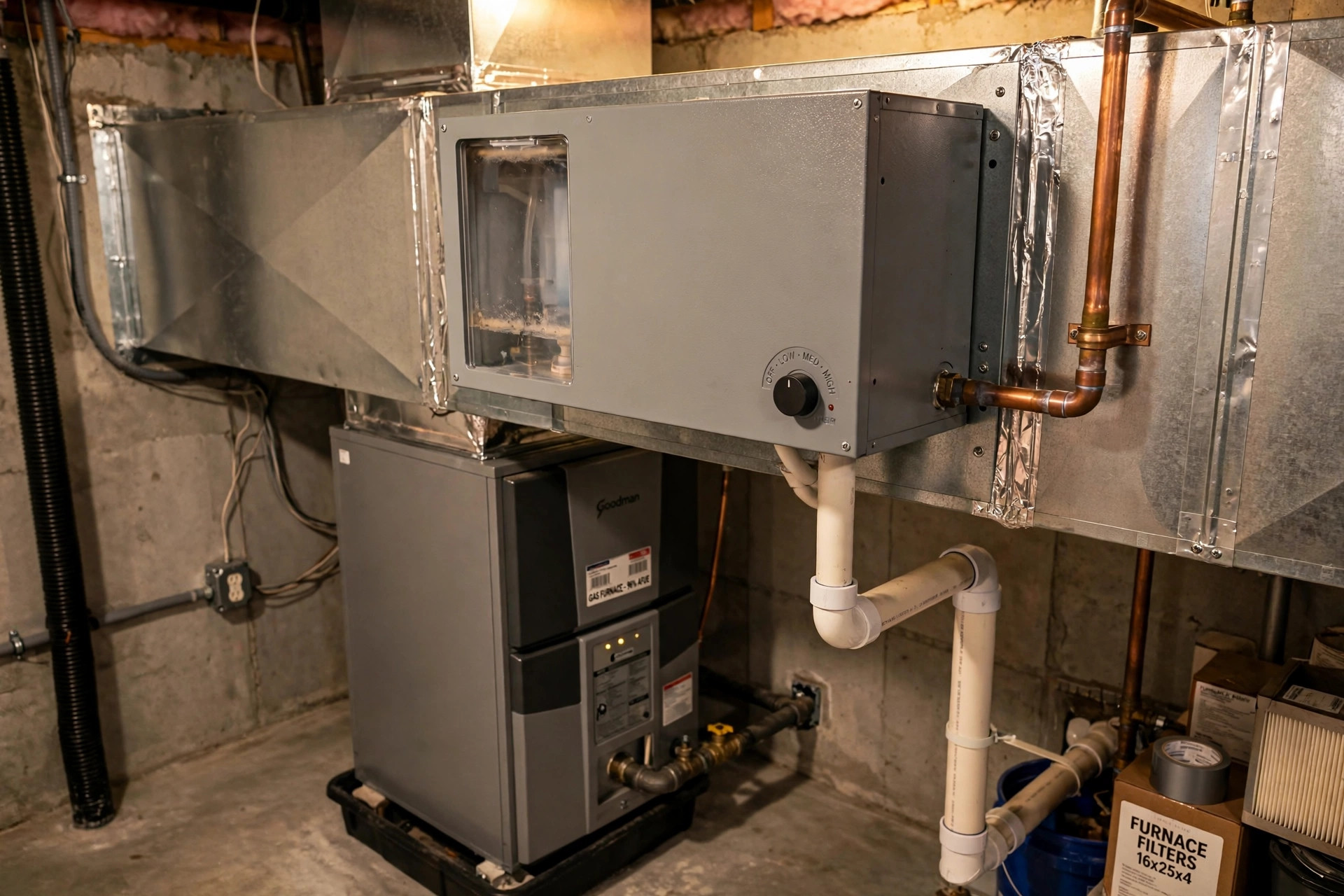
A whole house humidifier mounts on the furnace plenum or the return duct. You need a forced-air heating system with sheet metal ductwork. Homes with baseboard heat, radiators, or ductless mini splits cannot use these units. There must be room on the duct for the cut-in. The furnace room needs a cold water line nearby and a floor drain or condensate pump for drainage. Most installs take a technician two to four hours. Brands such as Carrier design their units to bolt onto standard residential plenums. If your ducts are old and leaky, seal them first. Moist air escaping into a crawl space does no good.
Controls and the Humidistat
Every unit needs a humidistat. This is a small control that reads indoor humidity and starts the unit when the level drops. Manual humidistats have a simple dial. Automatic models pair with an outdoor temperature sensor. They lower the target humidity as the outdoor air gets colder. This prevents condensation on cold windows. Automatic control costs more. It is worth the money in northern states. Condensation on window frames can rot wood sills over a few seasons. A smart control avoids that harm without daily adjustment.
Types of Whole House Humidifiers
Bypass Humidifiers
The bypass type is the oldest and the cheapest. Warm air from the supply plenum passes through a bypass duct and flows across a water panel. The panel is a coated metal screen that wicks water from a reservoir. Air picks up moisture as it crosses the wet screen. Then it re-enters the return duct and circulates through the house. There is no fan and no heating element. The furnace blower does all the work.
Bypass units use the least water and the least electricity. They cost 150 to 300 dollars for the unit itself. Installed cost runs 400 to 700 dollars in most markets. The downside is output. They only work when the furnace is heating. In mild weather, when the heat cycles off for hours, humidity falls. They also lower furnace efficiency a touch, since some heated air loops back through the bypass. For small to mid-size homes in moderate climates, a bypass unit is a fair value. This Old House has covered these simple units for decades. They last a long time because they have almost no moving parts.
Fan-Powered Humidifiers
Fan-powered units add their own blower. The fan pulls warm air across the water panel, so the unit does not depend on furnace duct pressure. Output is higher than a bypass of the same size. They work on the supply plenum and can run even when the furnace blower is off, as long as the control calls for it. Units cost 200 to 400 dollars. Installed cost runs 500 to 900 dollars.
The trade-off is noise and power use. The small fan hums when it runs. In a quiet basement furnace room, you will hear it. The fan draws modest current, so operating cost is still low. Fan-powered models suit mid-size to large homes where a bypass cannot keep up. They pair well with high-efficiency furnaces that run long, gentle cycles. Technicians at Rheem and other makers note that fan-powered units hold humidity more steadily through shoulder seasons. That is the main reason buyers step up from bypass.
Steam Humidifiers
Steam units are the top tier. An electric heating element boils water in a canister. The steam injects directly into the duct through a dispersion tube. Output is the highest of the three types. Steam units work with any call from the humidistat, even when the furnace is idle. They are the right pick for large homes, tight modern construction, and very dry climates like the Mountain West.
Units cost 700 to 1,400 dollars. Installed cost runs 1,200 to 2,500 dollars, since most need a dedicated 240-volt circuit. Operating cost is higher too. Boiling water takes real electricity. Expect 100 to 300 dollars per winter in power, depending on rates and climate. The canister needs replacement every one to two seasons. It scales up with minerals and cannot be cleaned well. Many owners keep a spare canister on the shelf. Family Handyman rates steam units as the most effective option for homes above 3,500 square feet. The comfort is excellent. The bills are honest. Weigh both.
Cost and Price
Total cost has three parts: the unit, the install, and the running cost. Unit prices run 150 to 1,400 dollars by type. Professional install adds 250 to 1,100 dollars. A simple bypass swap on an existing plenum is quick. A steam install with new wiring and a drain line takes longer. Get two quotes. Prices vary by region and season. Late summer is often cheaper than November.
Running cost is modest for bypass and fan-powered types. Water use is a few gallons per day. Electricity is near zero for bypass and small for fan-powered. The main yearly cost is the water panel, 15 to 40 dollars, replaced once per season. Steam units cost more to run, as noted above, plus 80 to 150 dollars for a new canister. Over ten years, a bypass unit may cost 1,000 dollars all in. A steam unit may cost 4,000. Both protect floors and furnishings worth far more. Check Energy Star resources on home humidity and heating efficiency before you buy. Balanced humidity lets you set the thermostat a degree or two lower.
Related projects add up fast in winter. A bathroom fan with humidity sensor reviews usa guide helps with spot moisture in wet rooms. Whole house humidity and bath exhaust work as a team. One adds moisture in winter. The other removes it after showers.
Care and Upkeep
Maintenance is simple and seasonal. At the start of each heating season, replace the water panel or evaporator pad. Minerals crust it over one winter. A scaled pad cuts output sharply. Shut off the water and power. Slide out the old panel. Slide in the new one. The job takes fifteen minutes. Also clean the orifice and the drain line. A clogged drain can spill water onto the furnace. Check the humidistat reading against a cheap room hygrometer. Recalibrate or replace the control if the numbers drift.
At the end of the season, turn the unit off. Close the bypass damper for summer. Some owners shut the water valve too. This stops any slow drip during air conditioning months. Steam owners should descale or swap the canister yearly. Hard water shortens canister life. A water softener helps but is not required. Makers like Trane and Goodman publish owner manuals with clear seasonal checklists. Follow the manual for your model. Fifteen minutes of care each fall prevents most service calls.
Watch for white dust on vents and furniture. It means minerals are blowing through. A scaled pad or a failed drain can cause it. Replace the pad and check the water flow. If dust persists, test your water hardness. Very hard water may need a filter on the supply line. This is a small add-on that protects the unit.
Safety
Water and electricity sit close together in these units. Install per code. A steam unit needs a dedicated circuit with proper grounding. A leaking supply line can soak a furnace control board. Use a quality saddle valve or, better, a proper tee fitting. Route the drain to a floor drain or a condensate pump. Never drain into a crawl space. Standing water breeds mold.
Keep humidity under 50 percent. Over-humidifying grows mold inside ducts and on cold surfaces. The automatic humidistat with an outdoor sensor is the best guard. It dials back the target as temperatures fall. Check window sills in deep winter. Beads of water on glass mean the setting is too high. Lower it five points and check again the next day. If anyone in the home has mold allergies, stay near 35 to 40 percent. Comfort and safety meet in that range.
Change pads on schedule. A slimy old pad can harbor bacteria. The air stream passes over it all winter. Fresh pads cost little. Skipping them costs air quality. During install, keep the unit clear of the furnace flue and hot surfaces. Leave service clearance per the manual. A cramped install makes next year’s pad change a chore.
Frequently Asked Questions
How much does a whole house humidifier cost installed?
A bypass unit installed runs 400 to 700 dollars. A fan-powered unit runs 500 to 900 dollars. A steam unit runs 1,200 to 2,500 dollars. Prices include the unit and labor. Complex installs with new wiring or long drain runs cost more. Get quotes in late summer for the best rates.
Do I need a plumber or an HVAC technician?
An HVAC technician is the right call. The work ties into furnace ductwork and low-voltage controls. Some steam installs need an electrician for the 240-volt circuit. A handyman can handle a simple like-for-like swap, but most owners are better served by a licensed HVAC contractor.
Will it work with a heat pump?
Yes, with limits. Bypass units need hot supply air to evaporate well. Heat pumps run cooler than gas furnaces. A fan-powered or steam unit is the better match for a heat pump home. Steam works best of all, since it does not depend on duct air temperature. Tell your contractor what heats the house before you pick a type.
How often do I replace the water panel?
Once per heating season. Start each fall with a fresh panel. Homes with hard water may need a mid-season check. A white, crusty pad is done. Replace it. Panels cost 15 to 40 dollars. Keep a spare so a January failure does not wait on shipping.
Can humidity get too high?
Yes. Above 50 percent, mold and dust mites gain ground. Condensation forms on cold windows and can rot wood frames. Use a humidistat and keep the target between 30 and 45 percent. An automatic control with an outdoor sensor manages this for you. Check sills during the coldest weeks.
Does it raise my water bill much?
Very little for bypass and fan-powered types. They use a few gallons per day during heating season. That adds a few dollars per month. Steam units use more water and much more electricity. Budget for the power draw if you choose steam. The comfort and floor protection still pencil out for most owners.
A Final Word
The best whole house humidifier reviews 2026 usa point to a simple truth. Match the type to your home and climate. A bypass unit serves a modest home in a mild winter region. A fan-powered unit steps up output for larger floor plans. A steam unit masters big homes and dry mountain air. Size it right. Control it with a good humidistat. Change the pad each fall. Your floors will stay tight. Your skin will thank you. And the furnace will not have to work as hard to keep the house feeling warm. If you are also planning kitchen ventilation upgrades, see our under cabinet range hood reviews 2026 usa guide. Whole home comfort is a system, and humidity is one of its quiet pillars.
References
Carrier. (n.d.). Heating and cooling systems. https://www.carrier.com ENERGY STAR. (n.d.). Energy efficient products. https://www.energystar.gov Family Handyman. (n.d.). DIY home repair and maintenance. https://www.familyhandyman.com Goodman. (n.d.). Heating and cooling equipment. https://www.goodmanmfg.com Lennox. (n.d.). Heating and cooling systems. https://www.lennox.com Rheem. (n.d.). Heating, cooling, and water heating. https://www.rheem.com This Old House. (n.d.). Home renovation guidance. https://www.thisoldhouse.com Trane. (n.d.). Heating and air conditioning. https://www.trane.com U.S. Department of Energy. (n.d.). Energy efficiency and renewable energy. https://www.energy.gov
Was this guide helpful?

About David Wilson
The My Garden US editorial team writes practical, in-depth home and garden guides for American homeowners — tested advice, no fluff.
You May Also Like
Best Smart Ceiling Fan Reviews 2026 USA
July 27, 2026 0 views
Cold Climate Heat Pump Reviews 2026 USA: A Practical Guide for Cold-Region Homes
June 28, 2026 0 views
Best Through the Wall AC Reviews USA: A Plain Buyer’s Guide
September 21, 2026 0 views