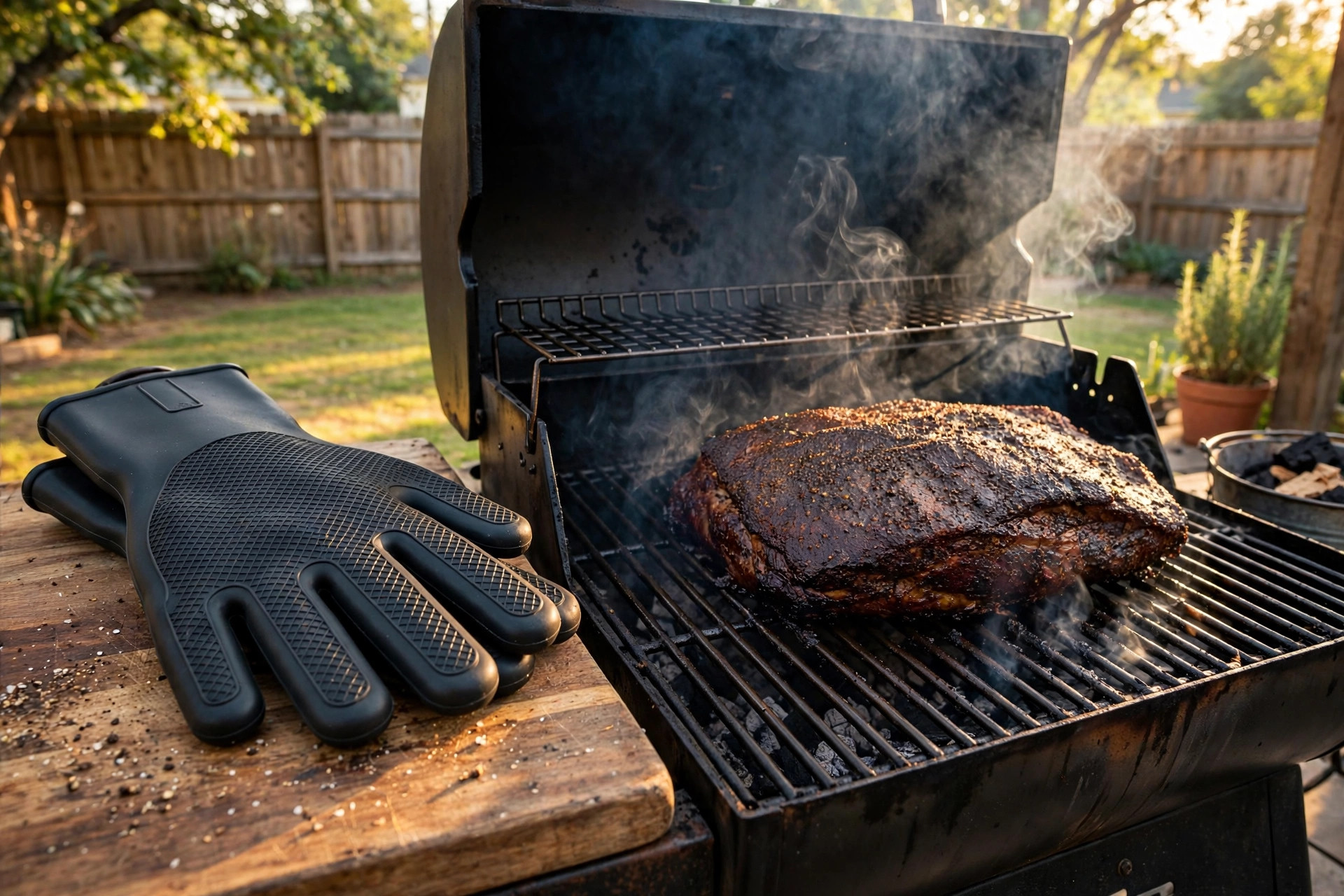
Any cook who has lifted a whole brisket knows the fear of a bad grip. The best bbq gloves for handling hot meat solve that problem. They let you hold hot brisket, pork shoulder, ribs, and chicken with calm hands. A good pair protects your skin from heat, steam, and grease. It also gives you the grip you need to turn and lift large cuts without dropping them.
This guide explains how these gloves work. It covers the materials used to make them, the features worth paying for, and the ones you can skip. You will also find advice on price, care, and safety. By the end, you will know exactly what to buy for your own grill.
Why Good Gloves Matter
Heat is the first reason to wear gloves. A grill grate can reach temperatures far above what bare skin can stand. A brisket fresh from the smoker is no better. It holds deep heat for many minutes. Without gloves, you are forced to use tongs for every move. Tongs are fine for small cuts, but they fail on a fifteen-pound brisket or a full rack of ribs. The meat slips. The fat runs. The risk of a drop grows with every turn.
Gloves give you control. You can cradle a hot pork shoulder in both hands. You can lift a whole chicken off the spit. This control leads to better results. The bark stays on the meat instead of tearing.
Steam is the second reason. When you open a smoker lid, a wave of hot steam hits your hands. A cotton pot holder soaked with juice will not help. In fact, a wet cloth is worse than no cloth at all. Water carries heat to your skin fast. Gloves made for BBQ resist both dry heat and hot steam. They keep a barrier between your skin and the heat.
Grease is the third reason. Hot fat splashes during a long cook. It runs off ribs. It spits from a hot grate. Good gloves wipe clean or rinse clean. They do not soak through the way an old kitchen towel does.
Many cooks who buy quality grills, such as those sold by Weber and Char-Broil, still treat gloves as an afterthought. That is a mistake. Gloves are safety gear. A burn can end a cookout and send you to the sink with cold water instead of to the table with a full plate.
What to Look for When You Choose: Best Bbq Gloves for Handling Hot Meat
Heat Rating
The heat rating tells you the highest temperature the glove can stand for a short time. Most BBQ gloves are rated between 450 and 932 degrees Fahrenheit. For handling hot meat, aim for at least 500 degrees. A smoker runs at 225 to 275 degrees, but the meat surface and the grate are much hotter. A glove rated for 500 degrees gives you a margin of safety.
Pay attention to how the rating is measured. Some brands rate for five seconds of contact. Others rate for fifteen. Longer is better. You want time to get a firm grip before you set the meat down.
Material
Silicone is the most common material. It grips well when wet or greasy. It cleans with soap and water. It does not soak up fat. Many silicone gloves have a cloth lining for comfort. The weak point of cheap silicone is thickness. Thin silicone passes heat fast. Look for a thick, firm shell.
Aramid fiber is another choice. Aramid is the fiber used in firefighter gear. It resists very high heat. It feels like cloth, so it is comfortable. It does not grip as well as silicone when wet. Some gloves pair an aramid shell with a silicone coating for the best of both worlds.
Leather welding gloves are a third option. They handle high heat well. They are stiff at first and soften with use. They are not waterproof, and grease soaks in over time. Many pitmasters love them for the feel. They are a fair pick for dry heat but a poor pick for wet, greasy meat.
Neoprene shows up in some designs. It resists grease and water. It can feel bulky. Check the heat rating before you buy, since not all neoprene is built for grill heat.
Fit and Length
A glove should fit close to your hand. Extra room at the fingertips makes you clumsy. Most brands offer medium, large, and extra large. Measure your hand across the knuckles and compare it with the size chart.
Length matters as much as fit. A good BBQ glove runs well past the wrist, often to mid forearm. This extra length protects you when you reach deep into a smoker or over a hot firebox. Short oven mitts leave your forearms bare. That is where many burns happen.
Grip
Test the grip in your mind before you buy. A brisket weighs fifteen pounds. A pork shoulder is heavy and slippery. The glove must hold it. Silicone patterns with raised ridges grip best. A smooth cloth surface slides on grease. If the glove is meant for pulling pork, make sure the fingers can bend enough to shred.
Types of BBQ Gloves
Silicone gloves look like oven mitts with fingers or mittens with textured palms. They are the easiest to clean. You can rinse them in the sink. They resist grease and steam. Their heat rating is often lower than aramid, so check the label.
Aramid cloth gloves feel like work gloves. They breathe better than silicone. They handle high heat. They need a silicone coating or a rubberized palm to grip wet meat. Without that coating, they slide.
Leather pit gloves are the classic choice of serious pitmasters. They are often sold as welding gloves. They handle dry heat well. They last for years. They absorb grease and smoke, which some cooks see as character and others see as a hygiene problem.
Cotton-lined mitts are the weakest option for meat handling. They soak up juice and fat. Once wet, they lose all heat protection. They are fine for lifting a cool lid but not for holding hot meat.
For most backyard cooks, a thick silicone glove or an aramid glove with a silicone grip is the best balance. Reviews and testing resources like Consumer Reports remind buyers to check independent test results before trusting a claim on the package.
Cost and Price
BBQ gloves cost less than most grill tools. A basic pair of silicone gloves runs about ten to twenty dollars. These work for light use. They may lack the length and heat rating you need for a long smoke.
Mid-range gloves cost twenty to forty dollars. This is where the best value sits. You get a long cuff, a real heat rating of 500 degrees or more, and a strong grip. Most home cooks will be happy here for years.
High-end gloves cost forty to eighty dollars. They use thick aramid shells, quilted linings, and food-safe silicone coatings. They are built for cooks who run a smoker every week. The extra money buys comfort during long cooks and a longer service life.
Pair your gloves with the right tools for the rest of the job. A clean grate is easier and safer to work on, so read our guide on the best grill brush for cast iron grates before your next cook. A wireless probe lets you watch the meat temperature without opening the lid, which cuts down on steam burns. See our picks for the best bbq thermometer wireless for grilling to find one that fits your budget.
Care and Upkeep
Clean your gloves after every cook. Grease left on the surface breaks down the material over time. It also turns rancid and smells bad. Silicone gloves are the easiest. Wash them with hot soapy water. Rinse well. Let them air dry with the fingers pointing down so water runs out.
Aramid gloves need gentler care. Hand wash them in warm water with mild soap. Do not use bleach. Let them dry in the open air. Keep them away from direct heat while they dry. High heat from a dryer can weaken the fibers.
Leather gloves need a wipe down after use. Use a damp cloth to remove grease. Let them dry at room temperature. Never put leather near a fire to dry it. That dries out the leather and cracks it. A light coat of leather conditioner once or twice a year keeps the hide supple.
Inspect your gloves before each long cook. Look for thin spots, holes, and melted patches. A damaged glove gives false confidence. That is more dangerous than no glove at all, because you will hold the meat longer than the glove can protect you. Replace any glove that shows damage. Even good gloves wear out after two to three years of steady use.
Store gloves where they can breathe. A closed plastic bag traps moisture and breeds odor. A hook near the grill or a ventilated drawer works well. Keep a spare pair on hand during a long smoke. If one pair gets soaked with juice, you can switch to the dry pair and keep cooking.
Safety
Gloves are protection, not armor. Every glove has a limit. Know yours. A glove rated for 500 degrees will not protect you from a 700-degree firebox. Keep your hands clear of direct flame. Flames damage gloves fast, and a damaged glove fails fast.
Never use a wet cloth glove to handle hot meat. Water turns to steam inside the glove and burns the skin. If your glove gets soaked, change it. This rule applies to cotton mitts most of all. Silicone gloves shed water, which is one reason they are safer.
Keep children away from the grill while you work. Gloves protect the cook, but they do not make a hot smoker safe to touch. Tell guests, especially children, to stand back from the grill and the smoker.
Have cold water or a burn kit nearby. Even careful cooks get a small burn now and then. Cool the burn under running water for ten minutes. Cover it with a clean bandage. Seek care for any burn larger than a coin or any burn that blisters badly.
Food safety matters too. Gloves that touch raw meat should be washed before they touch cooked meat. Cross contamination is a real risk during a long cook. Many cooks keep two pairs: one for raw prep and one for the finished product. Guides from Amazing Ribs and The Spruce Eats both stress clean handling between raw and cooked stages of a cook.
Frequently Asked Questions
Can I use regular oven mitts to handle hot BBQ meat? Oven mitts are too short for grill work. They leave your forearms bare. They also soak up grease and juice, which destroys their heat protection. BBQ gloves run longer and resist grease. Use the right tool for the job.
Are silicone BBQ gloves food safe? Most are. Look for gloves labeled food grade or FDA compliant. This means the silicone is safe for direct contact with food. Avoid gloves with a strong chemical smell out of the package. A good food-grade glove has almost no smell.
How long should BBQ gloves be? Aim for at least fourteen inches from fingertip to cuff. That length covers your forearm when you reach into a smoker or over a firebox. Short gloves force you to reach with bare wrists near hot metal.
Can BBQ gloves go in the dishwasher? Some silicone gloves can. Check the label first. High heat and harsh detergent wear down the material over time. Hand washing is gentler and takes only a minute. Cloth and leather gloves should never go in the dishwasher.
How do I clean the smell out of my gloves? Wash them well with soap and hot water. For stubborn smoke smell, soak silicone gloves in a mix of warm water and baking soda for an hour. Rinse and air dry. Leather gloves hold smell longer. Air them out in a breezy spot for a day or two.
Should I buy gloves or claws for pulling pork? They serve different jobs. Gloves let you lift and hold hot meat. Claws shred it. Many cooks use both: gloves for lifting the pork shoulder off the smoker, then claws for shredding. If you must pick one, pick gloves. They protect your hands for every task.
A Final Word
The best bbq gloves for handling hot meat are the ones that fit your hands, reach your forearms, and hold a heavy cut without slipping. Pick a thick silicone pair or an aramid pair with a silicone grip. Check the heat rating. Clean them after every cook. Replace them when they show wear.
Good gloves change the way you cook. You stop fearing the lift. You handle the meat with care instead of with tongs and hope. The bark stays crisp. The juices stay in. Your hands stay safe. That is money well spent for any cook who loves the grill.
For more on gear that keeps your cook safe and smooth, see our review roundup of the best grill gloves heat resistant reviews. Brands with long experience in outdoor cooking, from Traeger and Napoleon to Big Green Egg and Broil King, all treat proper hand protection as part of safe grilling. Good tools and good habits together make every cookout better.
References
AmazingRibs.com. (n.d.). Barbecue and grilling science. https://www.amazingribs.com Big Green Egg. (n.d.). Kamado grills and outdoor cooking. https://www.biggreenegg.com Broil King. (n.d.). Gas and charcoal grills. https://www.broilkingbbq.com Char-Broil. (n.d.). Gas and charcoal grills. https://www.charbroil.com Consumer Reports. (n.d.). Product reviews and ratings. https://www.consumerreports.org Napoleon. (n.d.). Fireplaces, grills, and heating products. https://www.napoleon.com The Spruce Eats. (n.d.). Recipes and cooking guides. https://www.thespruceeats.com Traeger. (n.d.). Wood pellet grills. https://www.traeger.com Weber. (n.d.). Grills and outdoor cooking. https://www.weber.com
Was this guide helpful?

About Robert Taylor
The My Garden US editorial team writes practical, in-depth home and garden guides for American homeowners — tested advice, no fluff.