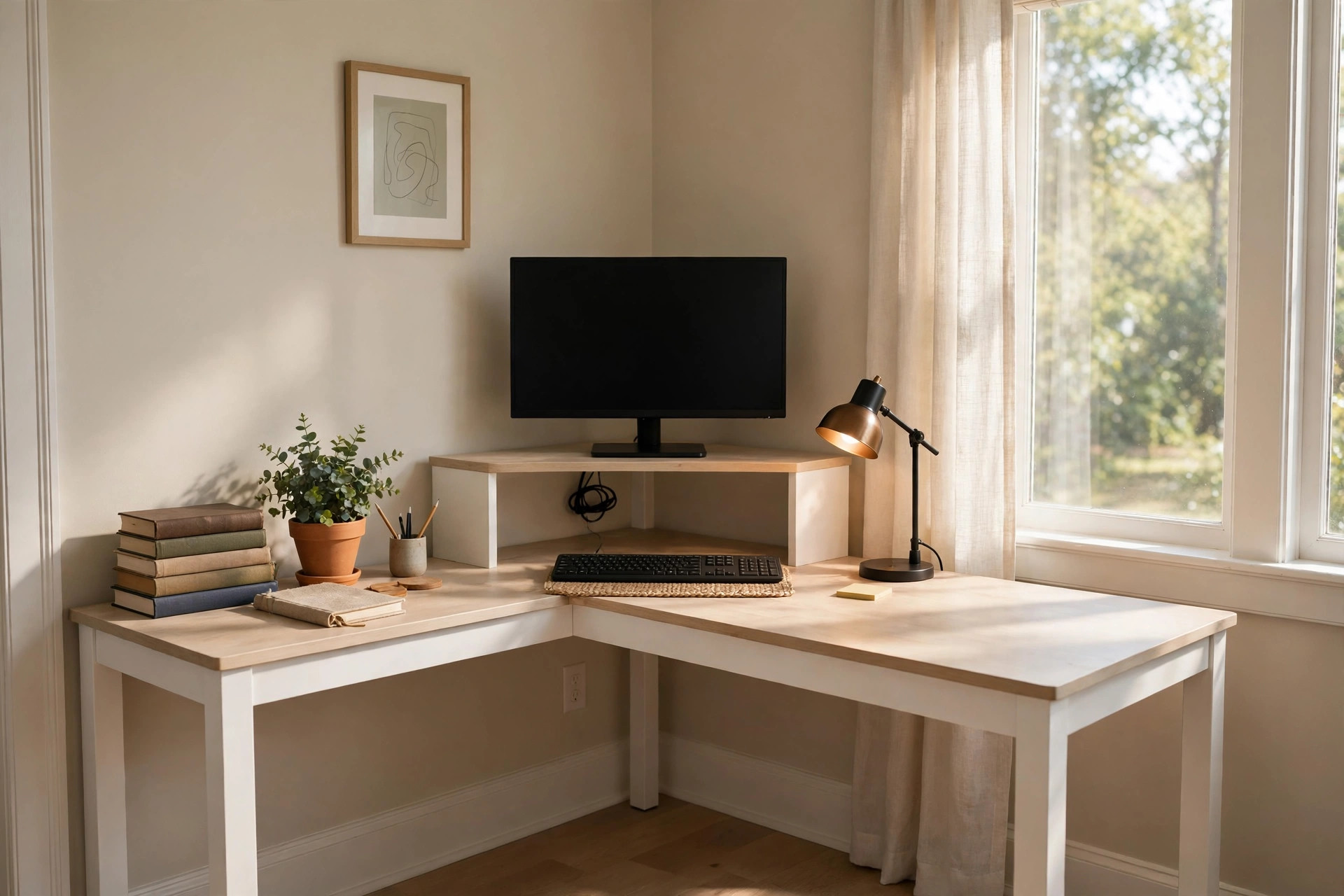

A small l shaped desk with monitor shelf is one of the most practical pieces of furniture for a home office. It fits into a corner. It gives you two work surfaces. And the raised shelf lifts your monitor to a height that is kinder to your neck. Many people who work from home now choose this kind of desk because their rooms are small. They want more desk space without buying a large table.
This guide explains what to look for. It covers sizes, shelf designs, materials, prices, setup, and care. It also answers common questions from first-time buyers. Whether you work full time from home or just need a study corner, the right desk makes the room work harder.
Why It Matters
Space is short in most home offices. Bedrooms, spare rooms, and living room corners must hold a desk, a chair, and storage. A straight desk often wastes the corner. An L-shaped desk uses it. The return wing gives you a place for papers, a printer, or a notebook while your main area stays clear for typing.
The monitor shelf is the second benefit. A monitor that sits flat on a desk is usually too low. You bend your neck down for hours. A shelf raises the screen to eye level. Your posture improves. Many doctors and office planners agree that a higher screen reduces neck and shoulder strain. For more on good desk posture, see the office guides at Steelcase.
An ergonomic standing desk for small home office takes a different approach by letting you stand, but the shelf idea is the same: keep the screen at the right height.
What to Look for Before You Buy: Small L Shaped Desk with Monitor Shelf
Size and Fit
Measure your corner before you order. Write down the length of each wall. Leave at least two feet of walking space in front of the chair. Most small L-shaped desks run from 40 to 55 inches on the long side. The short wing is often 20 to 30 inches deep.
Check the depth too. A desk that is 20 inches deep gives your keyboard room. A desk that is 24 inches deep gives you room for a monitor on a shelf and papers in front. Deeper tops also keep the screen farther from your eyes, which is kinder on long days. Retailers such as IKEA and Wayfair list full measurements on every product page. Use them.
The Monitor Shelf
Not all shelves are the same. Some desks have a fixed shelf. Others have a shelf you can move or remove. A fixed shelf is sturdy. A movable shelf lets you change the layout later.
Look at shelf height. A shelf that is four to six inches above the desk is common. That is enough to store a keyboard underneath. Some shelves are wider than others. A wide shelf holds two monitors. A narrow shelf holds one. Measure your monitor base before you order so the shelf is deep enough.
Weight Capacity and Build
A monitor, a laptop, and books weigh more than you think. Check the stated weight limit for the desk and the shelf. Solid wood and steel frames hold the most. Particle board is lighter and cheaper but needs care with heavy loads. Reviews at PCMag and Wirecutter often test how sturdy desks feel under daily use.
Types and Options
There are a few common styles.
Reversible L desks. The short wing can be mounted on the left or the right. This helps when your corner is unusual. Many buyers choose this style because it keeps their options open if they move the desk later.
Corner desks with a hutch. A hutch adds shelves above the desk. It gives storage but can make a small room feel crowded. Hutch models suit people who keep many books and files within reach.
Floating or wall-mounted styles. A wall mounted folding desk with chalkboard is a different idea for very tight rooms. It folds away when you are done.
Gaming L desks. These have the same shape but often add LED lights and cup holders. The shelf design is the same. Gamers like the wide shelf because it fits a large curved screen.
Material choices matter. Laminate tops clean easily. Wood tops look warm. Glass tops look light but show dust. Steel legs last longer than plastic ones. For inspiration on finishes and room layouts, browse the room ideas at The Spruce.
How to Set It Up
Placing the Desk
Put the desk in the corner first, then add the chair. Face the main screen toward the room, not toward a window. A window behind the screen causes glare. A window in front of you also causes glare. Side light is best.
Leave space for the return wing. Do not push the short side against a radiator or a heat vent. Heat dries out wood and can harm electronics.
Monitor Height and Distance
Sit in your chair. Close your eyes. Open them. Your eyes should land on the top third of the screen. If you look down too far, raise the shelf or add a riser. The screen should sit about an arm’s length away. This distance feels natural and keeps your eyes from straining.
Cables and Power
A clean setup is safer and easier to clean. Run cables down the back of the desk leg with clips. Plug everything into one surge protector. Label the cords with small tags so you know what is what. Many desk guides at Wayfair show cable trays that bolt under the top. These are cheap and worth buying.
Mistakes to Avoid
The most common mistake is buying too big. People guess the size of their corner and guess wrong. Measure twice. Cut a paper template if you must. A desk that blocks a doorway or a closet is a daily annoyance.
The second mistake is ignoring weight. A shelf rated for 20 pounds will not hold a 32-inch monitor and a speaker. Check the numbers. If the manual does not list a limit, ask the seller.
The third mistake is skipping assembly steps. Cross braces and back panels add strength. Do not leave them out to save time. The desk will wobble within a month.
A fourth mistake is placing the desk on a thick rug without checking stability. Thick rugs can make the desk rock. Use a firm mat under the chair instead.
Prices vary by size, material, and brand. A small particle board model with a fixed shelf can cost as little as 80 to 150 dollars. These are a good first buy for a dorm room or a temporary setup. Mid-range desks in wood finish or with steel frames usually run 150 to 350 dollars. They look better and carry more weight. Solid wood or designer models can cost 400 dollars or more. These suit a permanent home office where looks matter.
Think about what you use daily. If you run two monitors and a printer, do not buy the cheapest model. The shelf will sag. Spend more on a frame that lists a clear weight limit. If you only use a laptop, a light model is fine.
Watch for extra costs. Delivery fees, assembly services, and matching storage can add up. Check return policies before you buy. Large stores such as IKEA and Wayfair publish these policies online. If you need storage to go with the desk, a home office storage cabinet with locking doors keeps papers safe for a modest extra cost.
Care and Upkeep
A desk lasts longer with simple care. Wipe the surface with a soft damp cloth each week. Avoid strong cleaners on laminate and wood. Keep drinks in cups with lids or on coasters. Heat marks and rings are hard to remove.
Check the screws every few months. Desks loosen with daily use. A quick tightening keeps the frame firm. If the shelf starts to wobble, take the monitor off and inspect the brackets. Replacement brackets are cheap at most hardware stores.
Keep the shelf clear. Extra books and gadgets add weight. A tidy shelf also makes your work area calmer. Clear the top of dust while you wipe. Dust builds up fast around warm electronics.
Safety
Safety is simple but worth a thought. Place the desk against two walls when you can. This stops it from tipping. If the desk is tall or narrow, use an anti-tip strap into a wall stud.
Keep cables tidy. Loose cords on the floor are a trip risk. Cable clips and a short power strip under the desk solve most of the problem. Keep the monitor shelf clear of small objects that can fall behind the desk. Do not run power cords under rugs where heat can build up.
If children are in the home, keep small drawers locked and avoid sharp glass edges. Guides on office design from Herman Miller often stress rounded edges and stable frames for shared family spaces.
Frequently Asked Questions
How much room do I need for a small l shaped desk with monitor shelf? Measure the two walls of your corner. Add at least 24 inches in front for your chair to pull out. Most small models need a corner of about four feet on the long side.
Can the monitor shelf hold two monitors? It depends on the shelf width and the weight limit. A shelf that is at least 40 inches wide and rated for 40 pounds or more can usually hold two standard monitors. Check the manual.
Is the shelf removable? On some desks yes, on others no. Removable shelves are common on modular desks. Fixed shelves are common on budget models. Product pages usually say which it is. The brand UPLIFT Desk lists shelf options clearly for its desk lines.
What is the best material for a small home office? Laminate over engineered wood is the most popular choice. It is light, cheap, and easy to clean. Solid wood costs more but lasts longer. If you move often, a light frame is easier to carry. If the desk will stay in one place for years, solid wood is a sound buy.
Can I assemble it alone? Most models take one person one to two hours. You will need a screwdriver and patience. Ask a friend to help hold panels during assembly. Large panels are hard to hold and screw at the same time.
Will it fit in a bedroom? Yes, if the room has a free corner. Small models fit bedrooms, dorm rooms, and apartments. Measure first and check that the door still opens fully.
A Short Final Word
A small l shaped desk with monitor shelf does three jobs at once. It uses a corner well. It gives you two work areas. And it lifts your screen to a healthy height. Choose the right size, check the weight limit, and buy from a seller with a clear return policy. Take time on assembly and do not skip the braces. With simple care, the desk will serve you for years. A good desk is a quiet tool. It holds your work steady while you get on with your day.
References
Herman Miller. (n.d.). Office furniture and ergonomic seating. https://www.hermanmiller.com IKEA. (n.d.). Home furnishings. https://www.ikea.com PCMag. (n.d.). Technology product reviews. https://www.pcmag.com Steelcase. (n.d.). Office furniture and workplace research. https://www.steelcase.com The Spruce. (n.d.). Home and garden advice. https://www.thespruce.com UPLIFT Desk. (n.d.). Standing desks and ergonomic office furniture. https://www.uplift-desk.com Wayfair. (n.d.). Furniture and home goods. https://www.wayfair.com Wirecutter. (n.d.). Product reviews from The New York Times. https://www.nytimes.com/wirecutter
Was this guide helpful?

About Jennifer Lee
The My Garden US editorial team writes practical, in-depth home and garden guides for American homeowners — tested advice, no fluff.
You May Also Like

Home Office Storage Ottoman With Lid: A Practical Buying Guide
September 12, 2026 0 views
Home Office Printer Paper Storage Organizer: A Complete Guide
August 18, 2026 0 views
The Best Small Desk for Chromebook and Homework
June 2, 2026 0 views