
Aluminum patio furniture is one of the most common sights in American backyards. It is light, it is strong, and it does not rust the way iron does. Yet many owners are unsure about how to clean aluminum patio furniture the right way. Dirt builds up over a summer. Pollen leaves a yellow film. Grease from the grill splashes onto the armrests. If you leave it all alone, the finish turns dull and tired. This guide explains, in plain steps, how to clean aluminum patio furniture so it lasts for many seasons.
The method is simple. You need warm water, a mild dish soap, soft cloths, and a little patience. Most jobs take less than an hour. Harder stains need a paste made from baking soda or a gentle metal polish. You do not need harsh chemicals, and you do not need special machines. By the end of this article you will know what supplies to gather, what order to work in, how to handle tough spots, and how to keep the furniture clean through the year.
Why It Matters
Aluminum does not rust like steel, but it is not carefree. A thin layer of aluminum oxide forms on the metal and protects it. Dirt, salt air, and bird droppings eat at that layer over time. When the protective coat fails, the metal turns chalky and gray. Painted aluminum can chip and fade in hard sun.
Regular washing keeps that from happening. Clean furniture also looks better when guests come over. A dining set that gleams in the afternoon light makes the whole patio feel cared for. And there is a practical point. Chairs that are wiped down move better at the joints. Tables that are rinsed do not stain the food that sits on them.
People who care for teak patio sets follow the same idea. Any outdoor furniture lasts longer when it is washed on a schedule. Aluminum is simply easier than most kinds.
What You Will Need: How to Clean Aluminum Patio Furniture
Gather everything before you start. A full list saves you from running back inside with wet hands.
– Two buckets, one for soapy water and one for rinse water – Mild liquid dish soap, the kind used for hand washing – A garden hose with a spray nozzle – Soft cloths, sponges, or an old cotton towel – A soft-bristle brush for textured areas and crevices – Baking soda for light stains – White vinegar or a store-bought aluminum polish for hard spots – Car wax or a clear spray protectant, optional but helpful – Rubber gloves to protect your skin
Do not use steel wool, wire brushes, or scouring pads. They scratch the metal and leave marks that cannot be buffed out. Avoid bleach and strong oven cleaners. They can pit the surface and strip the paint.
Step-by-Step: How to Clean Aluminum Patio Furniture
Work on a mild day if you can. Direct hot sun dries soap too fast and leaves streaks. Morning or late afternoon is best.
1. Clear and Rinse
Take cushions off the chairs and set them aside. You can learn how to clean outdoor furniture cushions in a separate guide. Brush loose leaves, dirt, and spider webs off the frames with a dry cloth. Then rinse each piece with the garden hose. A steady stream knocks off dust and bird droppings that would otherwise scratch the finish when you rub.
2. Wash With Soap and Water
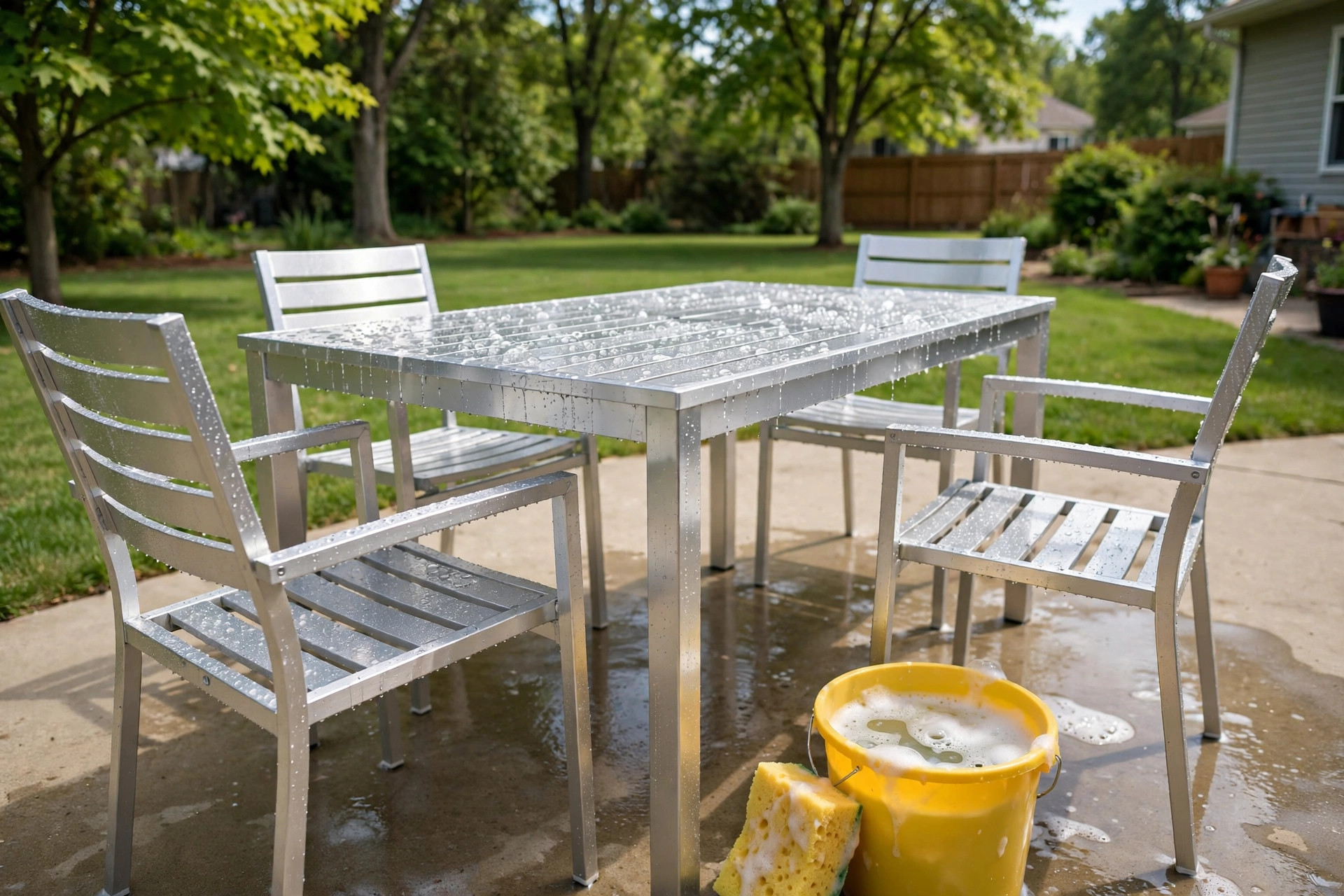
Fill a bucket with warm water and add a squirt of dish soap. Dip a soft sponge in the water and wash one piece at a time. Use long, even strokes. Work from the top down so dirty water runs off the clean parts, not onto them.
Pay extra attention to the spots where arms meet legs. Dirt hides in those joints. A soft-bristle brush reaches into woven panels and slatted backs. Do not press hard. The soap does the work if you give it a moment.
3. Rinse Well
Rinse each piece with clean water from the second bucket or the hose. Soap left on the metal dries into a film that attracts more dirt. Take your time here. A full rinse now saves you from doing the job twice.
4. Dry the Pieces
Wipe each piece dry with a clean towel, or let it air dry in the shade. Drying matters more than most people think. Water spots form when drops dry on the metal, especially in areas with hard water. A quick towel pass keeps the finish even and bright.
5. Add a Light Wax Coat
Once the furniture is fully dry, rub on a thin coat of car wax with a soft cloth. Buff it off after a few minutes. The wax fills tiny pores in the finish and makes the next cleaning easier. Water beads up instead of clinging. This one step can double the time between deep cleanings.
Dealing With Stains, Oxidation, and Tough Spots
Most dirt comes off with soap and water. Some marks need more work.
Chalky gray patches. This is oxidation, the dull film that forms when the protective layer wears down. Mix baking soda with a little water to make a thick paste. Rub it on the patch with a soft cloth in small circles. Wipe clean and rinse. The mild grit of the paste lifts the film without scratching the metal.
Grease from the grill. Rub the spot with a cloth dipped in undiluted dish soap. Let it sit for five minutes. Then wash and rinse as normal. For heavy grease, a degreaser made for outdoor use works well. Rinse it off fully so no chemical residue stays on the arms where people rest their hands.
Water spots and mineral marks. Dampen a cloth with white vinegar and lay it over the spot for a few minutes. Rub gently, then rinse. The mild acid dissolves the minerals. Do not let vinegar sit on painted finishes for long, or it may dull the color.
Tree sap and bird droppings. These are acidic and can stain if left alone. Soak a cloth in warm soapy water and lay it over the spot to soften it. Then wipe it away. Never scrape with a knife or hard tool.
Deep scratches in paint. Touch them up with outdoor paint that matches the frame. Clean the area first, let it dry, and apply a thin coat. This stops moisture from reaching the bare metal underneath. Retailers such as IKEA and Wayfair often sell touch-up kits and care products for the patio lines they carry.
Types of Aluminum Patio Furniture and What Changes
Not all aluminum sets are built the same. The cleaning steps stay the same, but a few details change with the type.
Cast aluminum. This is heavy, with thick ornate frames. It often has a painted or powder-coated finish. It cleans well with soap and water. Check the ornate curves for trapped dirt, since grime hides in the scrollwork.
Tubular aluminum. This is light, with hollow tube frames. It is common in dining sets and loungers. The joints where tubes meet are the weak points. Rinse them well so grit does not grind inside and loosen the bolts.
Aluminum with woven panels. Some sets mix aluminum frames with wicker-look or fabric panels. Clean the metal as described here and the panels with a soft brush. Do not scrub woven panels with a hard brush, or the weave can fray.
Anodized aluminum. This has a hardened colored finish, often bronze or champagne. It resists scratches well. Use only soap and water on it. Skip the baking soda paste on anodized surfaces, since the mild grit can dull the sheen.
For all types, the rule on metal patio furniture rust prevention still applies to the screws and hardware. Screws are often steel, even on aluminum frames, and steel does rust. A drop of outdoor oil on each screw once a year keeps them turning freely.
Cost and Price
Cleaning aluminum patio furniture costs very little. A bottle of dish soap, a bag of baking soda, and a few sponges run under ten dollars. A gallon of white vinegar costs about the same as a cup of coffee. A can of car wax costs eight to fifteen dollars and lasts through many seasons.
Special cleaners for outdoor metal sell for ten to twenty dollars a bottle. Independent product testers such as Consumer Reports often compare cleaning products, and their findings can help you decide whether a special cleaner is worth the price. For most households, soap and water do the job just as well. Spend your money on good covers instead. A cover that fits well keeps dirt off the furniture and cuts your cleaning work in half.
Care and Upkeep Through the Year
One deep cleaning each spring sets you up for the season. After that, a quick wipe every two or three weeks keeps dirt from building up. Hose the pieces down after storms, since wind carries dust and pollen that settle into every crease.
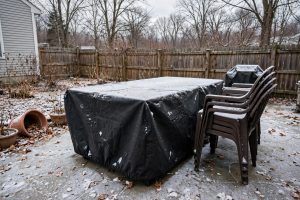
In fall, wash the set once more before storage. Store chairs upside down or on their sides so water drains out of the frames instead of pooling inside. If you keep the furniture outside all winter, cover it with breathable covers. Plastic tarps trap moisture underneath and can do more harm than good.
Check the hardware each spring. Tighten loose bolts and oil the screws. Look at the feet and glides. Worn glides let the metal scrape on concrete, which wears through the finish fast. Replacement glides cost a few dollars at a hardware store.
Salt air near the coast is hard on every kind of metal. If you live by the ocean, rinse the furniture monthly during the season. Salt speeds up corrosion, and a quick rinse is the cheapest defense you have.
Safety
The job is safe, but a few cautions help. Wear rubber gloves if your skin reacts to long soaks in soapy water. Keep the work area clear so you do not trip over the hose. Lift with your legs, not your back, when you turn heavy cast aluminum chairs over.
If you use any chemical cleaner, read the label first. Work in open air, never in a closed garage. Keep cleaners away from children and pets until the furniture is rinsed and dry. Vinegar and baking soda are mild, but they can still sting the eyes, so rinse your hands before touching your face.
Frequently Asked Questions
Can I use a pressure washer on aluminum patio furniture? You can, but keep it gentle. Use the widest fan setting and hold the wand at least two feet away. A narrow jet can strip paint and force water into joints. For most dirt, a garden hose is enough and far safer.
Will dish soap damage the finish? No. Mild dish soap is the standard cleaner recommended by furniture makers. It cuts grease without harming paint or powder coating. The danger comes from bleach, ammonia, and abrasive powders, not from plain soap.
How often should I clean my aluminum patio set? Wash it fully twice a year, once in spring and once before winter storage. Wipe it down every few weeks in between. If you live near the sea or under trees that drop sap, wash it more often.
What removes the chalky white film on old aluminum? That film is oxidation. A paste of baking soda and water, rubbed gently with a soft cloth, usually removes it. For heavy cases, a polish made for aluminum works well. Wax the surface after polishing to slow the film from coming back.
Can I leave aluminum furniture out all winter? Yes, aluminum handles cold well and will not crack. The risk is dirt, moisture, and freeze-thaw cycles at the joints. Wash the set, dry it, cover it with breathable covers, and it will come through winter in good shape.
Is aluminum patio furniture really rust-proof? The aluminum itself does not rust, since rust is iron oxide. But screws, bolts, and brackets are often steel, and those can rust. Stains can also form where aluminum touches other metals. Check the hardware yearly and treat any rust on steel parts promptly.
A Short Final Word
Learning how to clean aluminum patio furniture takes one afternoon and pays back for years. Soap, water, and a soft cloth handle nearly everything. A little wax at the end keeps the finish bright and makes the next wash faster. Keep to a simple schedule, treat stains early, and mind the hardware. Your patio set will look good and serve you well for a long time.
References
Consumer Reports. (n.d.). Product ratings and reviews. https://www.consumerreports.org IKEA. (n.d.). Outdoor furniture and patio. https://www.ikea.com Wayfair. (n.d.). Outdoor furniture and patio. https://www.wayfair.com
Was this guide helpful?

About Lisa Anderson
The My Garden US editorial team writes practical, in-depth home and garden guides for American homeowners — tested advice, no fluff.
You May Also Like
Outdoor Hammock Stand for Two People: A Complete Buying Guide
April 10, 2026 0 views
Best Patio Chair Cushions Thick Reviews: A Buyer Guide
August 12, 2026 0 views
Best Patio Umbrella for Wind Reviews: A Plain Guide to a Shade That Stays Put
August 6, 2026 0 views