A good front door light does more than greet guests. It keeps steps clear, it deters strangers, and it makes a house feel safe after dark. This sensor porch lights American homes guide explains how these lights work, what kinds you can buy, and how to pick one that suits your door and your budget.
The idea is simple. A sensor porch light watches its patch of yard and steps. When it detects movement or the fall of night, it switches on by itself. When all is quiet again, it switches off. You never touch a switch.
Millions of American homes use them now. Builders put them on new homes. Owners add them to old ones. They cost little to run, they last for years, and they answer one of the oldest worries a homeowner has: what is happening outside the door at night.
Why a Sensor Porch Light Matters
A dark porch is a problem in three ways. First, it is a safety risk. Guests and family members must find steps, rails, and locks by feel. A sudden light at the door removes that guesswork. Second, it is a security risk. Thieves and prowlers prefer dark entry points. A light that snaps on when someone moves across the yard tells an intruder he has been seen. Third, it is a matter of comfort. Coming home late to a lit door feels very different from coming home to a black house.
A sensor light answers all three needs at once, and it does so without wasting power. A plain porch bulb burns all night whether anyone is near the door or not. A sensor model lights up only when there is reason to. Over a year, that difference shows on the electric bill. For safety guidance on outdoor electrical products, the U.S. Consumer Product Safety Commission is a useful place to start.
The sensor also spares the bulb. Fewer hours of burn time mean the bulb lasts longer. Many owners find that a good LED sensor fixture runs for a decade with no bulb change at all.
Types of Sensor Porch Lights: Sensor Porch Lights American Homes Guide
Not every sensor porch light works the same way. Three main types fill the shelves at most Www.homedepot.com.
Motion Sensor Porch Lights
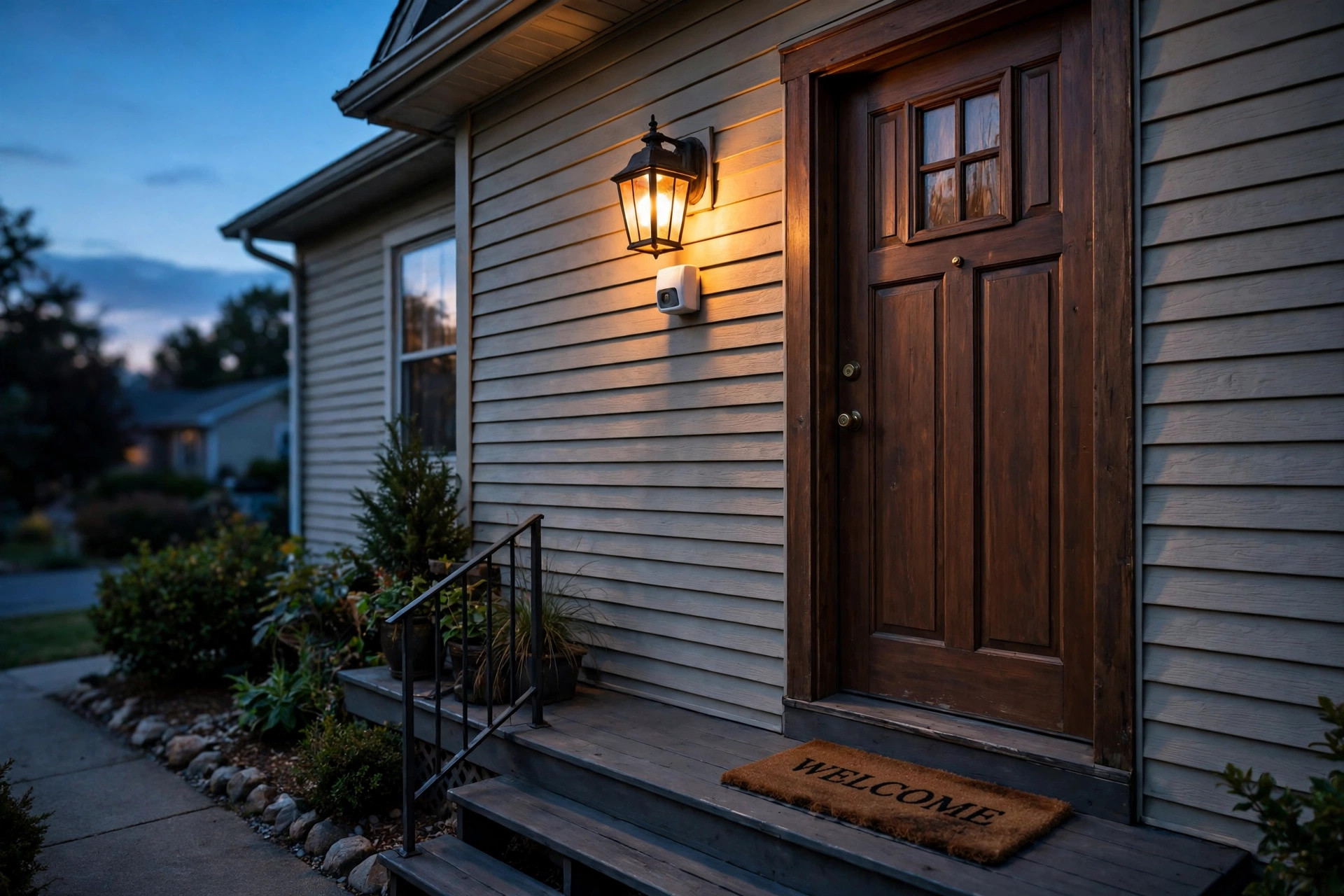
These are the most common. A small sensor sits under the fixture or beside it. It detects body heat and movement across its field of view. When someone walks within range, the light turns on. After a set time with no motion, it turns off.
Most models let you set three things: how far the sensor sees, how sensitive it is, and how long the light stays on. A typical range is ten to seventy feet. A typical on-time is one to twenty minutes. If you live on a busy street, you may want a short range so passing cars do not wake the light. If your porch sits far from the walk, a longer range is better.
Motion sensor porch lights are the top choice for front doors that see real traffic. They also pair well with Motion flood lights buying guide usa mounted higher up on the garage or eaves, which cover the wider yard while the porch light handles the door itself.
Dusk-to-Dawn Sensor Porch Lights
These use a photo cell instead of a motion eye. The photo cell reads the level of daylight. When the sun sets, the light turns on. When the sun rises, it turns off. It stays lit all night, steady and low, without any motion needed.
Dusk-to-dawn porch lights suit homes on dark country roads and homes where someone is often away. The constant glow tells the world the house is lived in. It also marks the door for anyone who arrives late without forcing them to walk up dark steps to trip a sensor.
The trade is power. A dusk-to-dawn light burns longer hours, so the bill is higher. An LED version keeps that cost small. The Www.energy.gov notes that LED bulbs use far less energy than old incandescent ones, which matters most for lights that run all night.
Combination and Smart Models
The newest fixtures mix both sensors. They burn at low power all night, then jump to full brightness when the motion eye detects movement. Some connect to a phone app or a home hub. With those, you can change the brightness, set schedules, and get a notice when the light turns on.
Smart models cost more up front. They suit owners who want control from inside the house or from far away. Big brands like Www.philips.com make smart outdoor fixtures that pair with their home lighting systems, and Www.energystar.gov are tested for low power use.
How to Choose the Right One
A porch light should fit the door, the house, and the way the family lives. Work through these four points before you buy.
Size and Brightness
A porch light that is too small looks lost on a wide door. A fixture that is too big crowds a narrow one. As a rule, the fixture should stand about one third as tall as the door. For double doors or wide entries, hang one fixture on each side.
Brightness is measured in lumens. A porch light needs roughly 450 to 1,200 lumens. That is enough to read a lock and see the steps, but not so much that it blinds visitors or annoys the neighbors. Warm white light, near 2700 to 3000 Kelvin, feels welcoming. Cool daylight tones suit security lights on a garage better than a front door.
Lighting retailers such as Lumens and Www.lampsplus.com list the lumen output and color temperature on every fixture, so you can compare models side by side.
Style and Finish
The fixture is part of the face your house shows the street. Match it to the home. A colonial or farmhouse looks right with a lantern style in black or bronze. A ranch or modern home suits clean lines in nickel or matte black. If you already have Outdoor wall lanterns buying guide usa by the garage, choose a porch light in the same family so the house reads as one design.
Finish matters for weather too. Coastal homes need fixtures rated for salt air. Northern homes need ones that handle deep cold. Check the packaging for an outdoor rating before you buy.
Power Source
Most porch lights wire into the house current. They replace the old fixture using the wires already in the wall. This is the most reliable setup, and it costs nothing to run beyond the power itself.
Some models run on solar power or batteries. A solar sensor porch light needs no wiring at all, which makes it handy for a shed, a back gate, or a door with no existing fixture. It needs several hours of direct sun each day to charge. Battery models work anywhere but ask you to change batteries every few months.
Sensor Quality
A cheap sensor is a loud one. It fires at cats, at wind-blown branches, at every passing car. A good sensor lets you narrow the field and lower the sensitivity. Look for a sensor head that tilts, so you can aim it down the walk and away from the street. Dual sensors, which read heat and movement together, cause fewer false alarms than single ones.
Cost and Price
Prices run wide. A basic motion sensor porch light starts near fifteen dollars. A solid mid-range fixture costs forty to ninety dollars. High-end smart models run one hundred to two hundred dollars and more.
The fixture is only part of the cost. If you hire an electrician to install it, add seventy-five to two hundred dollars for labor, depending on your area. Replacing an existing fixture is a quick job. Running a new wire to a spot that never had a light costs more.
Running costs are small. An LED sensor light may add only a few dollars a year to the electric bill. Compare prices and read owner reviews at large retailers like Www.lowes.com before you settle on a model. The Www.thespruce.com also break down what different price tiers buy you in plain language.
Installation
Many homeowners install a sensor porch light themselves. The job is much like changing any wall fixture, with one extra step: aiming and testing the sensor.
First, cut power at the breaker. Never work on a live wire. Remove the old fixture and note how the wires connect: black to black, white to white, ground to ground. Mount the new bracket, connect the wires with the caps provided, and fasten the fixture to the wall. Seal the top and sides with a thin bead of outdoor caulk so rain cannot get behind the plate.
Then comes the sensor setup. Most manuals walk you through a test mode. In test mode the light turns on the moment it sees motion, day or night, so you can walk the yard and check the coverage. Aim the sensor head slightly downward and away from heat sources like dryer vents. A vent can trick the sensor into thinking it sees a person.
Set the range so the light covers the walk and the steps but not the street. Set the timer for five to ten minutes. Set the sensitivity to medium at first. Live with it for a week, then fine tune. Advice columns at Family Handyman and Bob Vila cover the wiring steps in detail with clear diagrams for beginners.
If the box holds more wires than you expect, or the wall is stone or brick that needs drilling, call a licensed electrician.
Care and Upkeep
A sensor porch light asks little. Wipe the fixture and the sensor lens with a soft damp cloth once or twice a year. Dust and spider webs on the lens can block the sensor or make it fire at nothing. Trim bushes and branches that grow into the sensor’s view. A branch swaying in the wind will turn the light on and off all night.
Check the caulk seal each spring. If it cracks, water can reach the wiring. A fresh bead of outdoor caulk takes five minutes and stops most moisture problems.
LED fixtures need no bulb changes. If your model takes replaceable bulbs, write the date on the base of the new bulb with a marker.
For homes that also light the garden beds and paths, Landscape spot lights buying guide usa need the same basic care: clear lenses, trimmed plants, and sealed connections.
Safety
Outdoor wiring and water are a poor mix, so treat the install with care. Always cut power at the breaker before you touch a wire. Use only fixtures rated for outdoor use, marked as damp or wet location rated. The rating is printed on the box and on a sticker inside the fixture.
Mount the fixture high enough that it lights the steps but out of easy reach of vandals. Six to eight feet above the porch floor is right for most doors. Keep the light aimed at your own property, not at the neighbor’s windows or the road. Many towns have rules about light trespass, and a courteous aim keeps good relations on the street.
Check local code before you start. Some areas want a permit for new outdoor wiring. Some want the circuit on a ground fault protector. When in doubt, ask an electrician for a quick look before you buy.
Frequently Asked Questions
How far should a sensor porch light reach? For most front doors, twenty to thirty feet is enough. That covers the walk, the steps, and the porch. A longer range pulls in the street and the neighbor’s yard, which causes false alarms and complaints.
Why does my sensor light turn on and off all night? The usual causes are a heat source in view, a swaying branch, or the sensitivity set too high. Aim the sensor away from vents and cars, trim plants in the field of view, and lower the sensitivity one step. If the problem persists, the sensor may be aimed at a reflective surface that bounces heat.
Can a sensor porch light work in winter? Yes. Good fixtures are rated for cold weather. Snow can be a problem if it piles against the lens, so brush the sensor clear after a storm. Extreme cold may shorten the range a little, which is normal.
Do sensor lights work with LED bulbs? Most modern ones are built for LEDs and ship with the diodes built in. If your model takes screw-in bulbs, use LEDs marked as suitable for enclosed fixtures if the housing is sealed. Old motion sensors made for incandescent bulbs can flicker with LEDs, so check the manual.
How long should the light stay on after motion? Five to ten minutes suits a front door. That gives a visitor time to find keys and step inside. Shorter times save power but may leave the porch dark while someone is still there. Longer times suit doors where people wait, such as a side door near the driveway.
Is a sensor porch light enough for home security? It is a strong first layer, not the whole answer. Pair it with solid locks, a clear view of the door from the street, and, if you want more, a camera or an alarm. Light takes away the cover of darkness, which is what most prowlers count on.
A Final Word
A sensor porch light is a small purchase with an outsized payoff. It greets you on dark nights, it steadies the footing of every guest, and it tells strangers the house is watched. Pick a fixture that fits the door, aim the sensor with care, and give the lens a wipe now and then. Do that, and this quiet little device will serve your home faithfully for years.
Related guides on this site include led recessed lights installation guide usa, dining room chandeliers buying guide usa, and kitchen island pendants buying guide usa.
References
ENERGY STAR. (n.d.). Energy efficient products. https://www.energystar.gov Lamps Plus. (n.d.). Lighting and home decor. https://www.lampsplus.com Lowe’s. (n.d.). Home improvement products. https://www.lowes.com Lumens. (n.d.). Lighting and ceiling fans. https://www.lumens.com Motion flood lights buying guide usa. (n.d.). Home and garden information. https://www.motion-flood-lights-buying-guide-usa/ Outdoor wall lanterns buying guide usa. (n.d.). Home and garden information. https://www.outdoor-wall-lanterns-buying-guide-usa/ Philips. (n.d.). Lighting products. https://www.philips.com The Home Depot. (n.d.). Home improvement products. https://www.homedepot.com The Spruce. (n.d.). Home and garden advice. https://www.thespruce.com U.S. Consumer Product Safety Commission. (n.d.). Product safety information. https://www.cpsc.gov U.S. Department of Energy. (n.d.). Energy efficiency and renewable energy. https://www.energy.gov Www. (n.d.). Home and garden information. https://www
Was this guide helpful?

About Jennifer Lee
The My Garden US editorial team writes practical, in-depth home and garden guides for American homeowners — tested advice, no fluff.