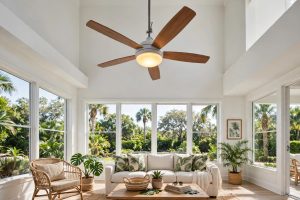

Many homes in Florida have plants indoors. The sun is strong outside, but inside the house the light is often too weak. Window glass blocks some light. Curtains and blinds block more. Most rooms get only a few hours of good light each day. That is not enough for many plants.
Indoor grow lights florida homes usa shoppers search for solve this problem. A grow light gives plants the light they need when natural light falls short. It can keep herbs alive through the summer. It can help seedlings grow strong in spring. It can keep a tropical plant green all year long.
This guide explains what grow lights are, which types work well, what they cost, and how to use them with care. The words are plain. The advice is practical.
Why Grow Lights Matter in Florida Homes
Florida is known as the Sunshine State. People expect plants to thrive there. But indoor conditions tell a different story.
First, windows face many directions. A north-facing window may never get direct sun. An east-facing window gets only morning sun. A south-facing window gets the most light, but screens and overhangs cut it down. The U.S. Department of Energy notes that efficient lighting choices change how much power a home uses each day, and grow lights are no different (energy.gov).
Second, Florida summers are brutal. Outdoor heat can top 95 degrees. Many owners move delicate plants inside for July and August. Once inside, those plants may sit in a dim corner. A grow light bridges the gap.
Third, winter days are short even in Florida. The sun sets early in December. Short days slow plant growth. A grow light adds the extra hours plants need.
Fourth, apartment living is common in cities like Miami, Tampa, and Orlando. Balconies face the wrong way. Windows are few. A grow light turns a small shelf into a growing space.
Grow lights do not replace the sun. They support plants when the sun cannot reach them.
How Grow Lights Work: Indoor Grow Lights Florida Homes Usa
Plants use light to make food. The process is called photosynthesis. It needs certain colors of light most of all: blue light for leaf growth and red light for flowering and fruit.
A normal household bulb makes mostly yellow and green light. It is weak in blue and red. It is also too dim at plant level. A grow light is built to be different. It gives off more blue and red light. It is brighter where the plant sits.
Modern grow lights list their strength in terms like PPFD or watts. Shoppers do not need to learn these units in depth. A simple rule works: stronger light reaches further down into the plant. Weaker light only covers a small area near the bulb.
Color temperature also matters. Lights near 6,500 Kelvin look cool and white. They help leaves grow. Lights near 3,000 Kelvin look warm and yellow. They help flowers and fruit. Full-spectrum lights mix both. Most beginners do best with a full-spectrum light.
Types of Indoor Grow Lights
Fluorescent Grow Lights
Fluorescent tubes are the old workhorse of indoor growing. They are cheap. They run cool. They come in long shop-light shapes or compact twist shapes.
Standard T8 tubes work for low-light plants like pothos and snake plants. T5 high-output tubes are stronger and fit small grow tents and shelves. Many starter kits from gardening suppliers include these tubes for seed starting (gardeners.com).
Their weakness is reach. Fluorescent light fades fast with distance. Tubes must hang two to four inches above seedlings. For tall plants, they are a poor fit.
LED Grow Lights
LED lights are now the most popular choice. They use far less power than older types. They last for years. Many models let the owner switch between growth and bloom settings.
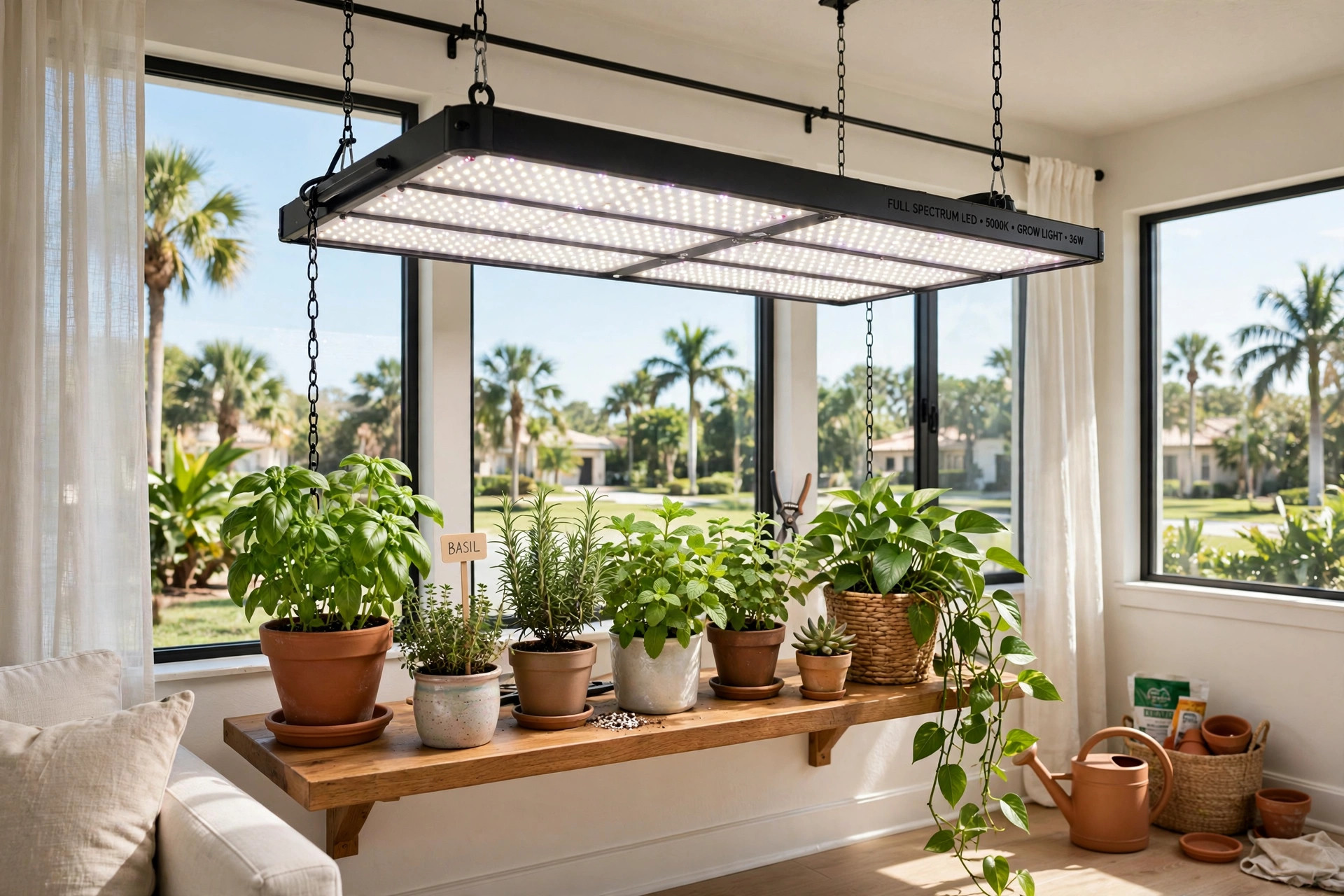
LED grow lights come in many forms. Panel lights hang over wide areas. Bar lights line a shelf. Clip-on gooseneck lights fit one small pot. Bulb-shaped LED grow bulbs screw into any standard lamp socket, which makes them the easiest choice for beginners. Philips offers consumer LED growing options for home gardeners (philips.com).
Their strength is efficiency. A 20-watt LED can match the plant light of a much larger fluorescent tube. Look for lights with an Energy Star label when possible, since certified products meet strict efficiency rules (energystar.gov).
HID Grow Lights
HID stands for high-intensity discharge. These are the big lights used by commercial greenhouses. They give off very strong light. They also give off a lot of heat.
Metal halide bulbs give blue-rich light for leafy growth. High-pressure sodium bulbs give red-rich light for flowering. Both need a ballast and a reflector. Both raise the room temperature.
For a normal Florida home, HID lights are usually too much. They run hot in an already warm climate. They use much more power than LEDs. They suit serious hobbyists with a dedicated grow room, not a living room shelf.
How to Choose the Right Light
Choosing a grow light is simpler when the buyer answers four questions.
What plants will grow under it? Herbs and leafy greens need moderate light. Fruiting plants like tomatoes and peppers need strong light. Low-light houseplants need only a little help. Match the light to the plant.
How much space needs light? One small herb pot needs one clip-on light or one LED bulb. A four-foot shelf needs a bar light or two tubes. A large plant collection needs a panel light hung from the ceiling.
Where will the light sit? Some lights hang from chains. Some clip to a shelf. Some screw into lamps. Measure the space before buying. Check that the chosen form fits the room and looks acceptable in the home. Good home lighting design treats grow lights like any other fixture, planned alongside recessed lights and wall sconces so the room still looks like a home, not a laboratory.
What is the budget? Prices range from under twenty dollars to several hundred. A beginner with two pots does not need a commercial panel. Start small. Upgrade later if the hobby grows.
Retailers like Home Depot and Lowe’s carry a wide range in stores across Florida, so shoppers can see sizes before buying (homedepot.com, lowes.com). Specialty lighting shops such as Lumens and Lamps Plus list detailed specifications online for comparison (lumens.com, lampsplus.com).
Cost and Price
Grow light prices fall into clear groups.
Basic LED grow bulbs cost fifteen to thirty dollars each. Clip-on gooseneck lights cost twenty to forty dollars. Fluorescent shop-light fixtures with tubes cost thirty to sixty dollars.
Mid-range LED panels and bar lights cost sixty to one hundred fifty dollars. These cover larger shelves and small tents.
High-end full-spectrum panels cost one hundred fifty to four hundred dollars or more. These suit serious growers with many plants.
Running costs matter too. Electricity in Florida averages around fourteen to sixteen cents per kilowatt-hour. A 20-watt LED running twelve hours a day uses about nine cents of power per day. That is under three dollars per month. A 400-watt HID light running the same hours costs about sixty-seven cents per day, or twenty dollars per month. Over a year, the LED saves real money.
Replacement costs also differ. LED diodes last 25,000 to 50,000 hours. Fluorescent tubes last about 20,000 hours and grow dim with age. HID bulbs need replacement every one to two years of heavy use.
Setting Up Your Grow Lights
Setup takes less than an hour in most cases. These steps cover the basics.
Pick the spot. Choose a shelf, table, or corner near an outlet. A spare room works well. A garage works if it stays cool. Keep plants away from air vents that blow hot or cold air on them.
Hang or mount the light. Follow the maker’s instructions. Use chains or adjustable hangers so the height can change as plants grow. For seedlings, keep lights two to four inches above the tops. For mature plants, six to twelve inches is normal. LED panels often need twelve to eighteen inches of space.
Add a timer. Plants need dark hours too. Most houseplants do well with twelve to fourteen hours of light and ten to twelve hours of dark. A simple outlet timer costs under fifteen dollars and removes the need to remember. Some growers use smart bulbs with built-in scheduling for the same job.
Watch the plants. Leaves tell the truth. Pale, stretched stems mean the light is too weak or too far away. Brown, crispy leaf edges mean the light is too strong or too close. Adjust the height and watch for a week.
Mind the heat. Florida homes already run warm. LED lights add little heat. Fluorescent tubes add some. Keep a small fan nearby if the area feels warm. Good air flow also keeps mold away, which matters in Florida humidity.
Care and Upkeep
Grow lights need little care, but a few habits keep them working well.
Clean the fixtures. Dust builds up on bulbs and panels. Dust blocks light. Wipe fixtures with a dry cloth every month. Unplug the light first.
Check the height monthly. Plants grow. A light that was perfect in January may be too far away by March. Raise or lower the fixture as needed.
Replace aging tubes. Fluorescent tubes dim long before they burn out. Mark the install date on the fixture. Replace tubes once a year for best results.
Inspect cords and plugs. Look for frayed cords, loose plugs, or scorch marks. Replace damaged parts at once. Do not use extension cords as a permanent setup.
Rotate the plants. Turn pots a quarter turn each week. This keeps growth even on all sides. The Spruce offers clear guides on rotating and caring for common houseplants (thespruce.com).
Track the seasons. Florida planting calendars shift through the year. The Old Farmer’s Almanac lists frost dates and planting windows that help owners time seed starting under lights (almanac.com). Seed suppliers like Burpee also give indoor-start dates on each packet (burpee.com).
Safety
Grow lights are safe when used with care. A few rules protect the home.
Buy lights with a UL or ETL safety listing. Cheap unlisted lights can overheat. Check the box or the product page before buying.
Keep lights away from water. Do not hang them where a watering can may splash them. Keep them away from curtains and paper.
Do not stare into bright LED panels. The light can hurt the eyes. Look away when working under the lights. Wear sunglasses if the setup is very bright.
Unplug lights before cleaning or moving them. Let hot fixtures cool first.
In a home with children or pets, mount lights out of reach. Secure hanging lights with strong hooks, not weak adhesive strips.
Frequently Asked Questions
How many hours per day should grow lights run? Most indoor plants do well with twelve to fourteen hours of light each day. Seedlings may want fourteen to sixteen hours. Give plants at least eight hours of dark. A timer makes this easy.
Can grow lights replace sunlight completely? For many houseplants and herbs, yes. With the right strength and hours, plants can live their whole lives under grow lights. Fruiting plants like tomatoes need stronger lights and more care, but it can be done.
Do grow lights raise the electric bill much? LED grow lights add very little cost. A small LED setup may add two to five dollars per month. Older fluorescent and HID lights cost more to run. Choosing efficient LED models keeps the bill low.
Which is better, LED or fluorescent grow lights? LED lights win for most home users. They use less power. They last longer. They run cooler, which helps in Florida. Fluorescent tubes still work well for seed starting on a tight budget, but LED is the better long-term buy.
How far should the light hang above the plants? It depends on the light. Fluorescent tubes sit two to four inches above seedlings. LED panels usually hang twelve to eighteen inches above plants. Check the maker’s guide, then watch the plants and adjust.
Can I use a normal LED bulb instead of a grow light? A normal LED bulb gives some light, but it lacks the blue and red bands plants use most. Plants under normal bulbs often grow weak and pale. A true grow bulb costs little more and works far better.
A Final Word
Indoor grow lights turn a dim Florida room into a place where plants can thrive. The choice does not need to be complex. Pick a full-spectrum LED that fits the space. Hang it at the right height. Put it on a timer. Watch the plants and adjust.
Start with one light and a few plants. Learn what works in the home. Add more later if the interest grows. With steady light and simple care, indoor plants in Florida can stay green and healthy all year long.
References
Burpee. (n.d.). Seeds, plants, and gardening supplies. https://www.burpee.com ENERGY STAR. (n.d.). Energy efficient products. https://www.energystar.gov Gardener’s Supply Company. (n.d.). Gardening tools and supplies. https://www.gardeners.com Lamps Plus. (n.d.). Lighting and home decor. https://www.lampsplus.com Lowe’s. (n.d.). Home improvement products. https://www.lowes.com Lumens. (n.d.). Lighting and ceiling fans. https://www.lumens.com Philips. (n.d.). Lighting products. https://www.philips.com The Home Depot. (n.d.). Home improvement products. https://www.homedepot.com The Old Farmer’s Almanac. (n.d.). Gardening calendars and advice. https://www.almanac.com The Spruce. (n.d.). Home and garden advice. https://www.thespruce.com U.S. Department of Energy. (n.d.). Energy efficiency and renewable energy. https://www.energy.gov
Was this guide helpful?

About Jennifer Lee
The My Garden US editorial team writes practical, in-depth home and garden guides for American homeowners — tested advice, no fluff.
You May Also Like
Ceiling Fans Lights Buying Guide USA: What Shoppers Should Know
April 6, 2026 0 views
WiFi Smart Bulbs for Florida Homes: A Practical Guide
March 14, 2026 0 views
Outdoor Wall Lanterns for Florida Homes in the USA: A Plain Buyer’s Guide
August 31, 2026 0 views