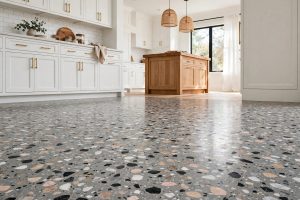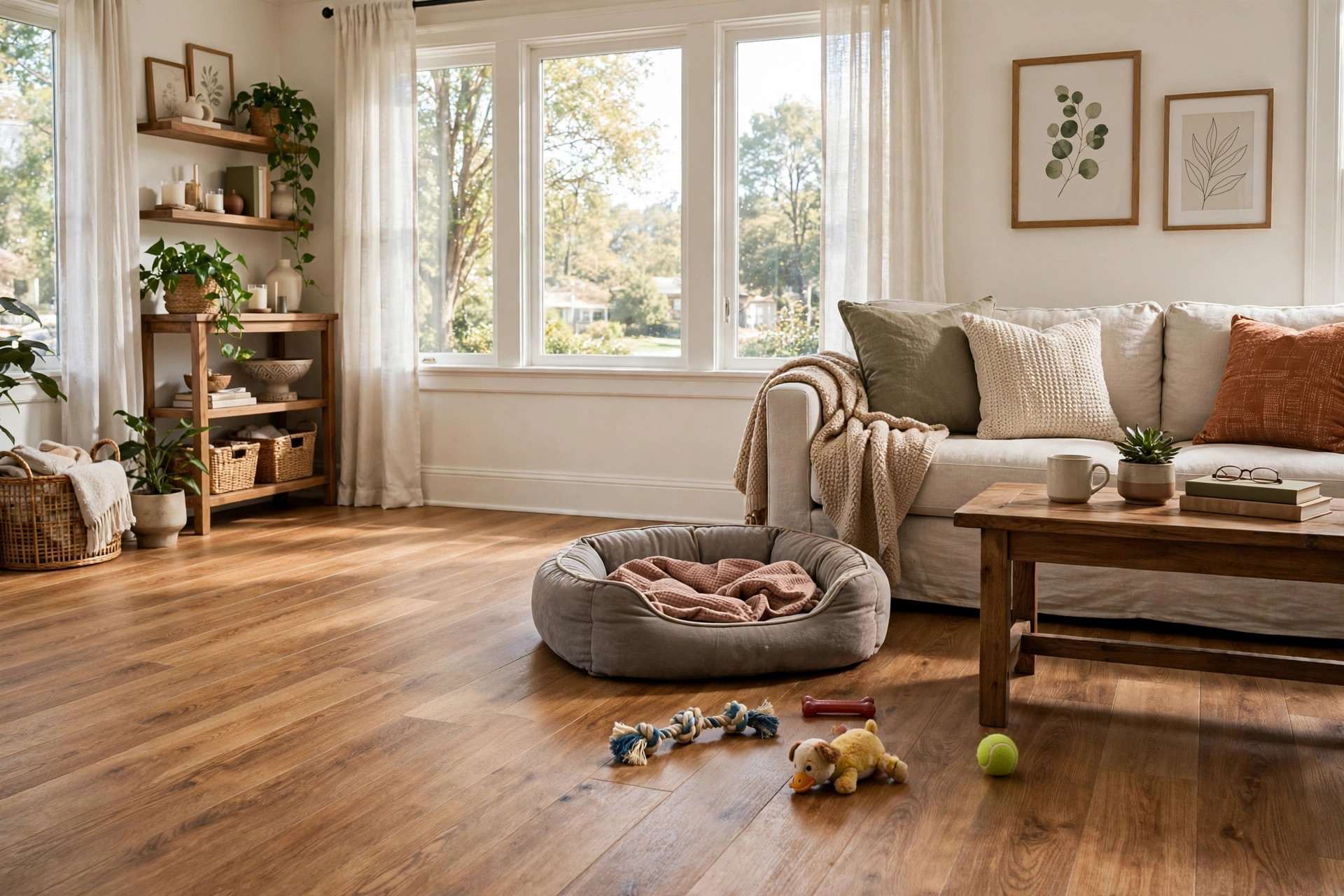

A dog or a cat changes a home. The floors feel it first. Claws click across the surface. Muddy paws leave their mark. A dropped food bowl tests every finish. That is why pet friendly flooring options for usa homes matter so much to families. The right floor stands up to daily wear and still looks good after years. This guide explains what to look for, which materials hold up best, what they cost, and how to keep them in good shape.
Why Pet Friendly Flooring Matters
Floors take more punishment in a home with pets than almost anywhere else. A large dog can scratch a soft wood finish in a single season. Cat litter tracked through the house acts like sandpaper underfoot. Water bowls spill. Accidents happen, especially with puppies and older animals. The wrong floor stains, warps, or traps smells. Once urine soaks into a porous surface, the odor is very hard to remove.
The right floor protects the house and keeps life simple. It resists scratches and moisture. It cleans with a quick mop. It does not hold pet odors. For many families, it also affects resale value. Buyers with pets look for homes where the floors already suit animals. A durable surface throughout the main rooms shows that the house was built for real life.
Comfort counts too. Older dogs need traction on slippery floors. Hard tile can be tough on their joints. A floor with some grip helps pets move safely. The goal is a floor that serves both people and animals.
What to Look for When Choosing: Pet Friendly Flooring Options for Usa Homes
Several traits separate a true pet friendly floor from one that only looks tough.
Scratch resistance. Claws are the main enemy of floors. Large dogs put real force through their nails when they run or turn. Choose materials rated for heavy wear. Wear layers are measured in mils on vinyl products. A 20-mil wear layer or higher suits most homes with pets.
Water and stain resistance. Spills, drool, and accidents are part of pet ownership. Waterproof or highly water-resistant floors stop moisture from reaching the core. Solid hardwood can survive spills if they are wiped fast, but standing water damages it. Laminate and vinyl handle water far better.
Easy cleaning. Look for smooth surfaces that sweep and mop quickly. Deep texture traps hair and dirt. Micro-bevel edges on planks can catch grime, so tighter seams are better. The American market offers many guides on floor care through retailers like Home Depot and Lowe’s, where product pages list cleaning rules.
Slip resistance. Pets run on floors all day. A slick gloss finish looks fine but sends dogs sliding. Textured or matte finishes give paws something to grip. This matters most for older dogs and on stairs.
Odor control. Porous floors absorb pet smells. Sealed, non-porous surfaces do not. If a floor cannot be sealed well, odor will build over time.
Durability under weight. A 90-pound dog jumping off a sofa is a load test. Thin or soft floors dent. Denser materials and thicker products handle the impact.
Types of Pet Friendly Flooring
Luxury Vinyl Plank and Tile
Luxury vinyl plank is the most popular of all pet friendly flooring options for usa homes today. It is fully waterproof in most product lines. The wear layer resists scratches better than almost any wood product. It is warm underfoot and quieter than tile. Many lines mimic oak, walnut, or stone very well. Rigid core vinyl, often called SPC, is extra dense and handles heavy pets with ease. Prices run from about three to eight dollars per square foot for materials. Brands sold by LL Flooring and Shaw offer long warranties, and Mohawk publishes detailed pet warranties on many lines.
Tile and Stone
Ceramic and porcelain tile are nearly indestructible under claws. They do not scratch, they do not absorb water, and stains wipe away. They are the top choice for mudrooms, kitchens, and laundry rooms where wet paws are common. The trade-off is hardness. Tile is cold and hard on animal joints. Large dogs may slip on polished tile, so pick a matte or textured finish. Grout lines can stain unless sealed. Daltile offers a wide range of textured porcelain that suits pet homes. Tile costs more to install, but it can last the life of the house.
Laminate
Modern laminate is much tougher than the thin products of years past. Top brands now sell waterproof laminate with dense cores. The hard surface layer resists scratches from claws well. Laminate feels more like wood than vinyl does, and it costs less than engineered hardwood. Check the warranty for pet coverage. Some budget laminate still swells at the seams if water sits too long. Mid-range waterproof lines solve that problem. Guides from This Old House and The Spruce compare laminate lines in plain terms.
Engineered Hardwood with Hard Finishes
Many families want real wood. Engineered hardwood with a very hard finish can work for calm pets. Choose harder species like hickory or white oak over soft pine. A matte aluminum-oxide finish resists scratches better than oil or wax. Site-finished floors can be recoated later, which is a real advantage. Still, wood is never the most pet proof choice. Expect some marks over time. Runners and area rugs in high-traffic paths protect the wood. A rug placed under the dining table catches food spills and claw traffic in one of the busiest spots in the house.
Cork and Bamboo
Cork is soft, warm, and quiet, which pets like. It resists some impact and is naturally resistant to mold. But claws can gouge it, and it needs sealing against water. Strand-woven bamboo is much harder than cork and resists dents well. It is a grass, not a wood, and quality varies by maker. Buy only from established brands with real warranties.
Carpet: Use with Care
Wall-to-wall carpet is the least pet friendly choice. It traps hair, holds odors, and stains fast. If you want softness, choose low-pile carpet tiles instead. Tiles can be pulled up and replaced one by one when a single square is ruined. That keeps the cost of pet damage low. Outdoor-rated carpet tiles in a mudroom work well for drying paws.
Cost and Price
Flooring cost has two parts: materials and installation. Here are honest ranges for the United States in 2026.
– Luxury vinyl plank: $3 to $8 per square foot for materials, $2 to $4 more for professional installation. – Porcelain tile: $4 to $12 per square foot for materials, $5 to $10 for installation, since tile labor is slow work. – Waterproof laminate: $2 to $6 per square foot for materials, $2 to $4 for installation. – Engineered hardwood: $5 to $12 per square foot for materials, $3 to $6 for installation. – Carpet tiles: $2 to $5 per square foot for materials, $1 to $3 for installation.
A 500-square-foot living space in vinyl plank might run $2,500 to $6,000 all in. The same space in tile can reach $5,000 to $11,000. Labor prices vary by state and by season. Always get three written quotes. Watch for pet-specific extras: moisture barriers, better underlayment for sound, and stair nosing that matches the floor. When budgets are tight, many families floor the main living areas in vinyl and use tile only in wet zones.
Care and Upkeep
Good care keeps a pet floor looking new for years.
Sweep or vacuum often. Pet hair and grit act like sandpaper. A soft broom or a vacuum with a hard-floor setting works best. Turn off the beater bar on wood and vinyl so it does not scratch the finish.
Mop with the right cleaner. Most vinyl and laminate makers sell their own cleaner, or approve a simple mix. Avoid steam mops on laminate and wood. Steam forces moisture into seams and can void the warranty.
Wipe spills at once. Even waterproof floors do best when water does not sit. Keep a towel near the water bowl. Use a mat under bowls to catch splashes.
Trim nails regularly. Short claws scratch less. This is the single cheapest way to protect any floor. Many groomers trim nails for a small fee, and the American Kennel Club offers guidance on safe nail care at home.
Place rugs and runners in traffic lanes. Hallways, stairs, and the path from the back door take the most abuse. Washable runners catch mud before it spreads. This is also where a well-chosen rug under the dining table earns its keep.
Reseal grout and stone once a year. Sealed grout resists stains from muddy paws. Unsealed grout absorbs everything. A small bottle of sealer and an hour of work protect a tile floor for months.
Safety for Pets and People
Floors should be safe for the whole family. Some finishes and adhesives release fumes after installation. Look for products certified low in volatile organic compounds. Air out the room well during and after installation, and keep pets out until the fumes clear.
Slip risk is a real concern. Puppies, seniors, and large breeds can injure hips or knees on slick floors. If your current floor is too slippery, add runners or use pet-safe grip socks. Never use human rug pads with rubber backing that can trap heat or break down into crumbs pets might chew.
Watch for small hazards during a flooring project. Nails, staples, and sharp scraps hide in old subfloors. Keep pets in a closed room while work goes on. The U.S. Consumer Product Safety Commission lists common home hazards worth reviewing before any remodel.
Radiant heat under tile feels wonderful to pets in winter. It also dries paw moisture fast. If you are already replacing floors, ask about adding it in the kitchen or bath. For natural stone care specifics, including marble polishing costs when stone floors need professional help, check local service rates before you commit.
FAQ
Which floor is best for large dogs? Luxury vinyl plank with a thick wear layer is the best all-around pick for large dogs. It resists scratches, handles water, and gives better grip than polished tile. Porcelain tile is tougher against claws but harder on joints.
Is vinyl flooring safe for pets? Yes. Modern vinyl floors are tested for indoor air quality. Choose products with low-VOC certification. Let the room air out after installation. Once installed, vinyl is non-porous and easy to keep clean, which the Spruce Pets care guides also note as a plus for allergy-prone homes.
Can pet urine ruin laminate? Standard laminate can swell if urine sits at the seams. Waterproof laminate with sealed edges handles accidents far better. The key is fast cleanup. Blot, clean with an enzyme cleaner, and dry the area fully.
Does pet-friendly flooring cost more? Sometimes. Waterproof vinyl and quality tile cost more than basic carpet or thin laminate. But they last longer under pets and need fewer repairs. Over ten years, the durable floor usually costs less.
How do I stop my dog from scratching the floor? Trim nails every two to four weeks. Add rugs in run paths. Choose matte finishes over gloss. For very active dogs, luxury vinyl or tile is the safest bet.
Should I refinish or replace a scratched wood floor? Light scratches can be screened and recoated. Deep gouges through the finish need sanding, which solid wood allows only a few times. If the damage is wide, replacement with a tougher material may cost less than repeated refinishing.
A Short Final Word
The best pet friendly flooring options for usa homes share three traits: they resist scratches, they shrug off water, and they clean in minutes. Luxury vinyl plank leads the pack for most families. Tile wins in wet rooms. Waterproof laminate gives a wood look on a budget. Match the floor to your pet, your budget, and your home, and the floors will serve you both well for years. If a bathroom remodel is on the list too, compare curbless shower pan installation costs before you finalize the tile work so the whole project stays on budget.
References
American Kennel Club. (n.d.). Dog care and training resources. https://www.akc.org Daltile. (n.d.). Ceramic and porcelain tile. https://www.daltile.com LL Flooring. (n.d.). Hardwood, vinyl, and tile flooring. https://www.llflooring.com Lowe’s. (n.d.). Home improvement products. https://www.lowes.com Mohawk Flooring. (n.d.). Flooring products. https://www.mohawkflooring.com Shaw Floors. (n.d.). Flooring products. https://www.shawfloors.com The Home Depot. (n.d.). Home improvement products. https://www.homedepot.com The Spruce. (n.d.). Home and garden advice. https://www.thespruce.com The Spruce Pets. (n.d.). Pet care guides and product reviews. https://www.thesprucepets.com This Old House. (n.d.). Home renovation guidance. https://www.thisoldhouse.com U.S. Consumer Product Safety Commission. (n.d.). Product safety information. https://www.cpsc.gov
Was this guide helpful?

About James Carter
The My Garden US editorial team writes practical, in-depth home and garden guides for American homeowners — tested advice, no fluff.
You May Also Like
Best Carpet for Stairs With Dogs USA: What to Buy and Why
July 30, 2026 0 views
Electric Radiant Floor Heat for Tile Reviews: A Plain Guide
July 20, 2026 0 views
Cracked Tile Repair Kit Reviews USA: What Really Works
June 1, 2026 0 views