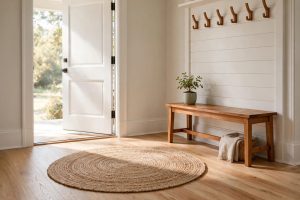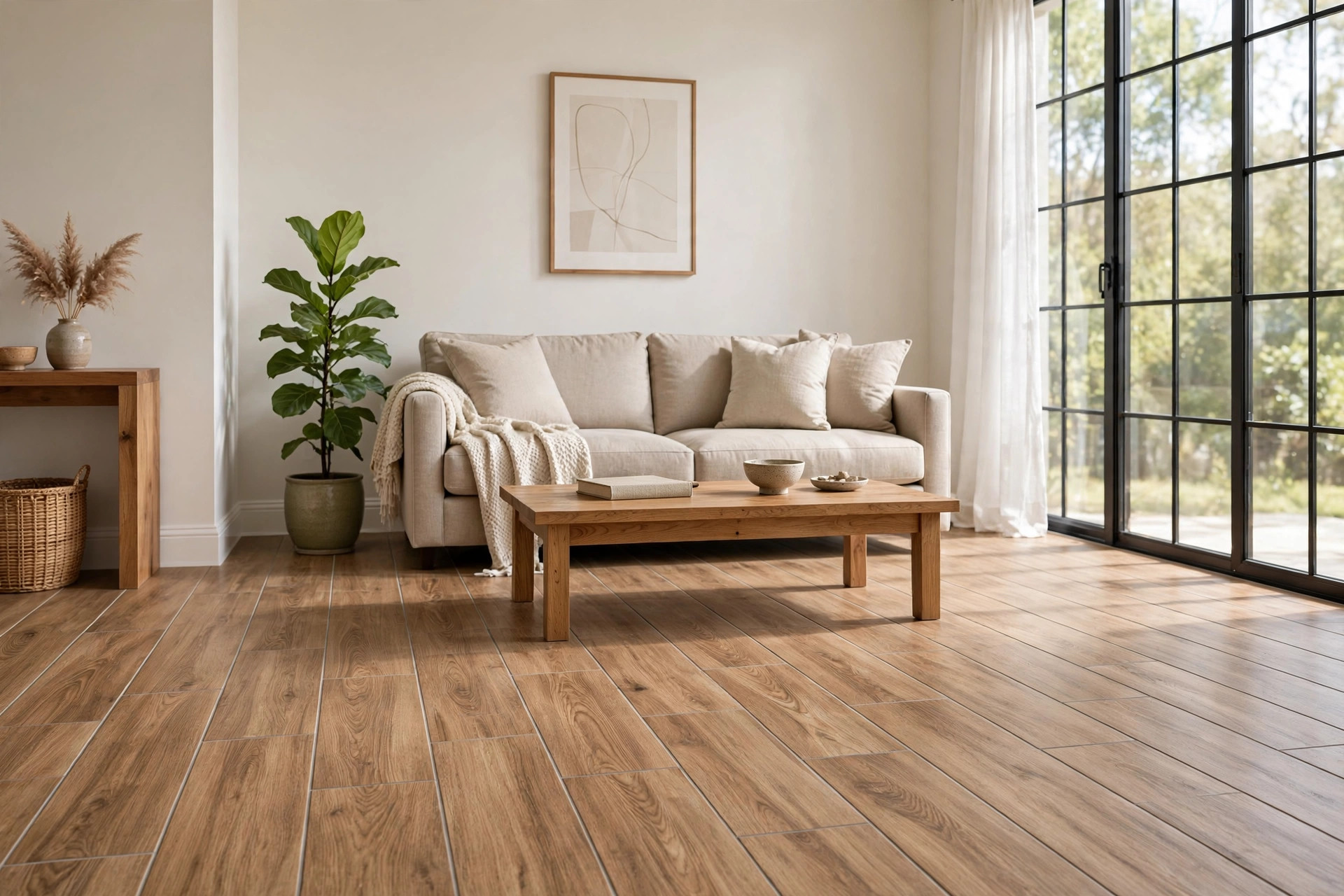

Many home owners want the warm look of wood floors without the hard work that real wood needs. That is why so many of them now read wood look tile pros and cons reviews before they shop. Wood look tile is porcelain or ceramic tile that copies the grain, color, and texture of real wood planks. From a few feet away, the better tiles look just like oak, walnut, or gray washed pine. The best way to judge this floor is to weigh what it does well against what it does not. The reviews below draw on common home owner reports, builder notes, and plain product facts, with no favor to any brand.
Why It Matters
A floor is not a small choice. It shapes how a room looks, how it feels under your feet, and how much work you will do to keep it clean for the next twenty years. Real hardwood has charm, but it costs more and asks for more care. Wood look tile tries to split the difference. It offers the beauty of wood with the toughness of tile, which matters most in busy rooms like kitchens, entry halls, and baths, where water and mud are daily facts. When you read wood look tile pros and cons reviews, you see the same theme again and again: people love the look and the low care. But some also learn that a tile floor feels cold and hard, and a few wish they had known that before they paid for the job.
The stakes rise when you think about resale. A well done wood look tile floor in a kitchen or bath can please buyers. But in main living rooms, some buyers still want real hardwood. Knowing both sides before you buy keeps you from paying twice.
What to Look For: Wood Look Tile Pros and Cons Reviews
Buying wood look tile is not like buying a rug. You will live with it for years. Reviews point to a few traits that matter most.
First, look at the print quality. Cheap tile repeats one grain pattern every few inches, and the eye catches the repeat fast. Better tile uses many different plank faces, sometimes forty or more in one line. Ask the dealer how many faces a pattern has. The more faces, the more natural the floor looks. Shoppers who also compare the best wood look tile brands usa 2026 often say this one detail sets the good brands apart from the poor ones.
Second, check the wear rating. Tile wears on the PEI scale from class I to class V. For floors, class III and up is the normal pick. Class V suits shops and busy halls. A home does fine with class III or IV. Glazed porcelain with a strong glaze will keep its color for decades.
Third, feel the surface texture. Some wood look tiles are flat smooth. Others carry a light wood grain texture you can feel under your shoe. The textured kinds look more real and hide dust. But they can be a bit harder to mop. Decide which you want before you order, because the whole room will carry that feel.
Fourth, check the plank size and the grout line. Long planks, like six inches by thirty six inches, look more like real boards. Narrow grout lines, an eighth of an inch or less, help the floor read as wood. Rectified tiles, cut sharp at the edges, allow those tight lines.
Fifth, ask about the glaze and the water rating. Porcelain absorbs less than one half of one percent of water. Ceramic absorbs more. For baths and laundry rooms, porcelain is the safe pick.
Finally, bring home a sample box. Floor stores lend samples for a small fee. Lay four or five planks on your own floor in daylight and lamplight. What looks rich in the showroom can look flat at home. Trust your eyes, not the brochure.
Types and Options
Wood look tile comes in a few clear types. Each has its fans and its faults.
Porcelain Wood Look Tile
This is the most common and the most reviewed type. Porcelain fires at high heat, so it is dense and hard. It stands up to drops, claws, and chair legs. Most porcelain wood tile lines run from two to ten dollars a square foot for the tile alone. Home owners say the best porcelain planks fool even close friends. Major tile makers like Daltile and Shaw Floors sell wide porcelain plank lines with many face variations. The con is weight and cost. Porcelain is heavy to ship and harder to cut, so the labor bill climbs.
Ceramic Wood Look Tile
Ceramic fires at lower heat and costs less. It works fine for walls, backsplashes, and light-use rooms. Reviews are fair on ceramic but less warm for full floors. It chips more easily than porcelain, and the glaze wears faster in busy halls. If your budget is tight and the room gets light foot traffic, ceramic is a fair pick.
Glazed Versus Matte Finish
Glazed wood look tile has a shine that wipes clean with ease. Matte tile reads more like real wood and hides footprints. Families with dogs and kids often pick matte. People who want a crisp look pick glaze.
Plank Size Choices
Most lines sell planks from four by twenty four inches up to nine by forty eight inches. Small rooms do fine with narrower planks. Long planks cost more per box and need a flatter floor under them. A floor that waves will telegraph through long tile and crack the bond.
Cost and Price
Cost is where many wood look tile pros and cons reviews spend the most ink. Here are the plain numbers.
Tile alone runs two to twelve dollars per square foot for the tile. Simple ceramic lines sit at the low end. Premium porcelain planks with many faces sit at the high end. Most home owners land between four and seven dollars per square foot for a good tile.
Labor is the big second bill. A tile setter often charges four to ten dollars per square foot, based on the job size and the market, and long planks cost more to set because the floor must be leveled with care. A typical kitchen of two hundred square feet can run three thousand to five thousand dollars all in. A full main floor of one thousand square feet can run eight thousand to fifteen thousand dollars.
Extras add up. Old floor removal runs one to three dollars per square foot. Self-leveling underlayment runs one to two dollars. Trim, transitions, and grout sealer add a few hundred dollars more.
Set against real hardwood, tile wins on price in most cases. Solid hardwood runs eight to fifteen dollars per square foot installed, and engineered wood runs six to twelve. Tile can cost less up front and far less to keep. Set against laminate or vinyl plank, tile costs more up front but lasts longer and adds more resale value in wet rooms.
Care and Upkeep
This is where wood look tile shines in almost every review. The care list is short.
Sweep or vacuum once or twice a week. Damp mop with warm water and a mild tile cleaner. That is the whole routine. There is no wax to buff, no oil to renew, and no board to refinish. Spills wipe up with a rag. Pet nails do not scratch the glaze. Sun does not fade the color the way it fades real wood.
A few cautions belong here. Use a cleaner made for tile, not one made for wood, since wax-based wood cleaners leave a film on grout. Rinse the mop often so dirt does not settle back into the grout lines, and seal cement grout once a year in wet rooms. Do not drag heavy furniture across the floor; lift it or use felt pads. Keep one or two spare boxes of tile in the garage so a setter can swap a cracked plank from the same dye lot.
Compared with real wood, the upkeep gap is wide. Wood floors ask for refinishing every seven to ten years at three to six dollars per square foot. Tile asks for soap and water. Families with big dogs almost always rank tile the easier floor in reviews.
The Pros
Let us lay out the strengths in plain terms.
Water does not hurt it, so you can mop all you want and steam from a hot shower will not swell a plank. It lasts a very long time; a good porcelain floor can serve fifty years or more, and the color sits in the glaze and does not fade. Pets and kids are no match for it: claws, toys, and dropped cups leave no mark on a sound glaze. Allergies improve because tile holds no dust in its surface the way carpet does. It suits radiant heat well, and buyers like a kitchen floor that cannot rot.
The Cons
Now the honest faults.
It feels hard and cold. Tile has no give. Standing on it for an hour of cooking can tire the legs. In winter it can feel cold to bare feet unless the home has in-floor heat. Area rugs and cushioned mats fix this in kitchens.
It can be loud. Tile bounces sound around a room. A dropped spoon rings. Homes with tile through many rooms gain an echo that carpet would have soaked up.
Install costs more than vinyl or laminate. The labor is skilled work, and a bad install shows forever. Shoppers who learn whether you can install LVP over hardwood often take that cheaper route instead. Lippage, where one tile edge sits proud of the next, is the most common complaint in poor jobs. Hire a setter with tile references, not a general handyman.
It is hard to change. If your taste shifts in ten years, tile is a bear to remove. It takes a jackhammer and a day of dust. Vinyl and laminate come up in an afternoon.
Repairs are visible. Swapping one cracked plank is possible, but the grout color may not match the aged grout around it. And in main living rooms, some buyers still prefer real hardwood.
Safety
Tile safety comes down to slip and to falls. A smooth glazed tile can be slick when wet. For baths and entries, pick a tile with a slip rating of DCOF 0.42 or higher, as noted in the CPSC home safety guidance. The rating is printed on the box or in the spec sheet. Matte and textured finishes grip better than high gloss. Put a bath mat by the tub and a rug by the sink.
Falls on tile hurt more than falls on wood. If an elder lives in the home, think about where you lay tile: a bath with grab bars and a good mat is fine, but a long hard hall may call for a runner rug.
Grout lines should sit flush and even. A ridge can catch a toe. A sound install keeps lines low and smooth. If you hire out, ask the setter how they guard against lippage and what grout they use in wet rooms.
FAQ
Does wood look tile really look like real wood? The best lines do, at normal viewing distance. From across the room, most guests cannot tell. Up close and under the hand, tile feels cool and hard, and the grain is printed, not cut. Buyers who pick lines with many plank faces report the most natural look.
Is wood look tile good for kitchens? Yes. Kitchens are where it earns its keep. Water, grease, and dropped pans meet a surface that shrugs them off. Pair it with a soft mat at the sink and stove for comfort.
Can you lay wood look tile over an old floor? Sometimes. Tile needs a stiff, flat base. Some setters lay new tile over old tile if the old floor is sound and level. Wood floors bounce too much and must come up first. Ask your setter to test the floor flatness before you sign.
How long does wood look tile last? Decades. A well set porcelain floor can last fifty years or more. The weak points are grout and glaze, not the tile body. Seal grout in wet rooms and clean with mild products, and the floor will outlive most other parts of the room.
Is wood look tile cold? It can be. Tile pulls heat from bare feet faster than wood does. In-floor radiant heat solves it well, and in mild climates it is a small issue. In cold states, plan rugs or heat, or keep tile to the kitchen and baths.
A Short Final Word
It is at its best in kitchens, baths, mudrooms, and busy family rooms where life is rough on floors. It is a weaker pick where you prize soft warmth underfoot or where local buyers expect real hardwood. Pick a line with many plank faces, hire a true tile setter, and you will get a floor that looks like wood and works like stone. If your home joins tile to real hardwood in another room, study flooring transition from tile to wood ideas to pick trim that hides the seam. For price checks and spec sheets, large retailers like Home Depot and Lowes carry wide lines with printed ratings. Project guides from This Old House and The Spruce walk through layout and grout choices in plain steps. Brand research at LL Flooring, Mohawk Flooring, Floor and Decor, and The Tile Shop helps you compare finishes before you buy.
References
Daltile. (n.d.). Ceramic and porcelain tile. https://www.daltile.com Floor & Decor. (n.d.). Tile, wood, and stone flooring. https://www.flooranddecor.com LL Flooring. (n.d.). Hardwood, vinyl, and tile flooring. https://www.llflooring.com Lowe’s. (n.d.). Home improvement products. https://www.lowes.com Mohawk Flooring. (n.d.). Flooring products. https://www.mohawkflooring.com Shaw Floors. (n.d.). Flooring products. https://www.shawfloors.com The Home Depot. (n.d.). Home improvement products. https://www.homedepot.com The Spruce. (n.d.). Home and garden advice. https://www.thespruce.com The Tile Shop. (n.d.). Tile inspiration and buying guides. https://www.tileshop.com This Old House. (n.d.). Home renovation guidance. https://www.thisoldhouse.com U.S. Consumer Product Safety Commission. (n.d.). Product safety information. https://www.cpsc.gov
Was this guide helpful?

About Lisa Anderson
The My Garden US editorial team writes practical, in-depth home and garden guides for American homeowners — tested advice, no fluff.
You May Also Like
Radiant Floor Heating Installation Cost in the USA: A Complete Guide
February 26, 2026 0 views
Best Spacers for Large Format Tile USA: A Full Guide
October 2, 2026 0 views
Travertine Pavers for Pool Deck Cost USA: A Full Price Guide
February 19, 2026 0 views