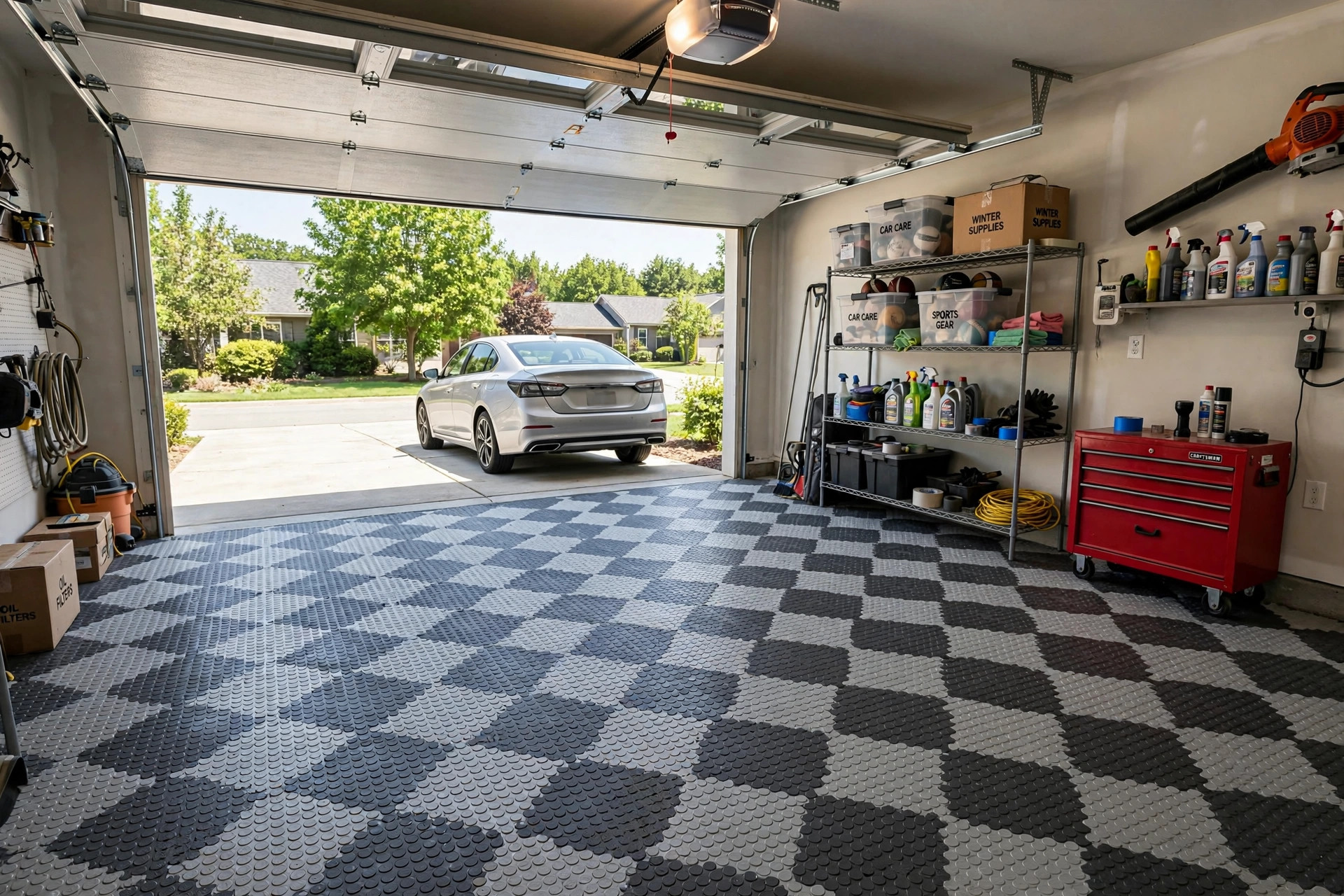

American homeowners spend many hours each week in the garage. They park cars there. They fix bikes there. They store tools and boxes there. A bare concrete floor can look dull and tired after years of oil spots and tire marks. That is why garage floor tiles interlocking reviews usa matter to so many shoppers. These reviews tell the true story of how the tiles hold up. They show which brands keep their color. They show which tiles stay tight under heavy trucks. And they show which tiles crack in cold weather. This guide gathers the lessons from buyer reviews across the country. It explains why interlocking tiles are popular. It covers how to choose them. It looks at types, cost, care, and safety. By the end, you will know how to read reviews with a sharp eye and pick tiles that last.
Why Interlocking Garage Tiles Matter
The garage floor takes hard use. Hot tires roll over it. Oil drips on it. Water melts off cars in winter. Salt and sand grind into bare concrete. Over time, concrete stains. It cracks. It gives off dust. Interlocking tiles cover this worn surface with a tough new layer. Reviews from buyers in the United States point to the same top reasons for the switch.
First, the floor looks clean and bright. A gray concrete slab can feel dark. Light gray or blue tiles reflect light. The whole garage feels larger. Many buyers say guests notice the change at once.
Second, the floor is easy to clean. Oil and grease wipe off plastic tiles. Spills do not soak in the way they soak into raw concrete.
Third, the tiles give comfort underfoot. Concrete is cold and hard. Interlocking tiles have a small give. They feel warmer in winter. Many buyers who stand in the garage for hours praise this softer feel.
Fourth, installation needs no glue. The tiles snap together like puzzle pieces. Most buyers install a one-car garage in one afternoon. Renters and new homeowners like this. The tiles can come up again if you move.
Fifth, damage stays small. If one tile cracks or stains, you lift that one tile and snap in a new one. Reviews often call this the best feature of all.
What Reviews Tell You to Look For: Garage Floor Tiles Interlocking Reviews Usa
Reading reviews well is a skill. Star ratings help, but the written words help more. Here is what careful buyers watch for in garage floor tiles interlocking reviews usa.
Tile thickness is a common topic. Thicker tiles stand up to heavy vehicles. Thinner tiles work fine under light cars and foot traffic. Buyers with pickup trucks warn against the thinnest tiles.
Locking strength gets much attention. Buyers push tiles together and test the seam. Good tiles lock tight. They do not shift when a car turns on them. Weak locks let tiles drift apart. Reviews with photos of gapping seams are a clear warning sign.
Material type shapes the review. Most interlocking garage tiles are PVC or polypropylene. PVC tiles feel soft and quiet. Polypropylene tiles are harder and very tough. Reviews often compare the two materials side by side.
Edge finish matters at doorways. Looped edge pieces give a smooth ramp from the driveway onto the tile floor. Reviews say these edges keep tires from catching. They also cut down trip risk.
Color fastness shows up in long term reviews. Some dark tiles fade in sun near the garage door. Light tiles can show tire marks over time. Buyers who posted reviews a year after install give the most honest notes on color.
Drainage and venting appear in reviews from wet regions. Some tiles have small holes or channels under them. Water and melted snow flow out instead of pooling. Buyers in the north praise vented tiles. They say the floor dries fast after winter drives.
Types of Interlocking Garage Tiles
Shoppers meet several main types. Each has its own strength. Reviews help sort them out.
PVC Interlocking Tiles
PVC tiles are the most common in buyer reviews. They are soft vinyl tiles that snap together. They resist oil and many chemicals. Many reviews rate them high for comfort and looks.
Polypropylene Interlocking Tiles
Polypropylene tiles are hard and rigid. They carry heavy loads without denting. They snap together with strong peg locks. Reviews praise them for garages that hold trucks and SUVs. They can feel hard underfoot. Some buyers add anti fatigue mats at work benches. They are often priced below PVC tiles.
Rubber Interlocking Tiles
Rubber tiles give the softest feel. They grip well when wet. They are quiet. Many gym owners use them. In garages, reviews note they can mark under hot tires. They also cost the most. Buyers who park motorcycles and work on projects like the soft surface.
Coin and Diamond Plate Patterns
Tile surface patterns change grip and looks. Coin pattern tiles have raised circles. Diamond plate tiles have raised bars. Both give good shoe grip. The choice is mostly about taste.
How to Choose the Right Tiles
Start with the weight in your garage. A small car weighs about 3,000 pounds. A full size pickup can weigh over 6,000 pounds. Check the tile’s load rating in the reviews. Buyers with heavy trucks often name the exact tiles that held up and the ones that failed.
Measure your floor with care. A one car garage is often about 200 square feet. A two car garage is often about 400 square feet. Buy five to ten percent extra tiles. Reviews warn that color can vary slightly between batches. Extra tiles from the same batch save trouble later.
Think about your climate. Cold winters bring road salt and slush. Vented tiles let water drain. Hot summers bring soft asphalt tire marks. Harder polypropylene tiles resist marks better than soft PVC. Reviews from your region are the most useful. A tile praised in Arizona may fail in Minnesota.
Check the garage door edge. The floor meets the driveway at the door. Looped edge ramps ease this step. Some kits include them. Some sell them apart. Reviews remind buyers to count how many edge pieces they need before they order.
Read the warranty in the reviews. Buyers often quote the warranty length. A ten year warranty on a mid priced tile is a good sign. A one year warranty on a costly tile raises questions. Real buyer photos after two or three years matter more than any ad claim.
Cost and Price
Price runs wide. Budget polypropylene tiles often cost one to three dollars per square foot. Mid range tiles run three to six dollars per square foot. Premium PVC tiles can reach seven dollars or more per square foot. Most reviews say a two car garage floor costs between 800 and 2,500 dollars in tiles alone.
Watch for hidden costs. Some buyers need a concrete patch first. Deep cracks and high spots should be fixed before tiles go down. Reviews note that tiles hide stains but do not fix a broken slab. A leveling patch costs far less than a full concrete repair.
Shipping adds cost too. Tiles are heavy. A full garage order can weigh several hundred pounds. Many buyers report free shipping from large stores. Check the shipping terms before you click buy. Store pickup can save money if a store is near you. Sites like Home Depot and Lowe’s show pickup options by zip code in many reviews.
Compare cost per year, not just cost today. A cheap tile that cracks in three years costs more over time than a good tile that lasts ten. Reviewers who post updates after years give the best cost picture.
Installation the Simple Way
Clean the floor first. Sweep the concrete. Mop up oil with a degreaser. Let the floor dry fully.
Start in a front corner. Lay the first tile with the loop edges facing the walls. Snap the next tiles into it. Work in rows. Use a rubber mallet to tap tiles tight.
Cut edge tiles with a utility knife or jigsaw. Mark the cut line. Score PVC tiles and snap them. Saw polypropylene tiles with a fine blade. Wear gloves when cutting. Many reviews suggest cutting a test tile first to learn the feel.
Leave a small gap at the walls. Concrete walls shift with heat and cold. A quarter inch gap lets the tile field float. Cover the gap with edge pieces if you like a clean look.
Roll a car over the floor last. Park slowly. Check that no tiles lift. If a tile pops up, reset it and tap it firm. Reviews say most floors settle in after a few days of normal use.
Care and Upkeep
Interlocking tiles need little care. Regular upkeep keeps them bright for years.
Sweep often. Dust and sand grind the surface. A quick sweep each week stops wear. A leaf blower works fast in a big garage.
Mop with mild soap. Warm water and dish soap lift most grime. Avoid harsh solvents. Strong chemicals can dull some tiles. Reviews warn that brake fluid and gasoline should be wiped at once.
Handle oil spills fast. Lay cat litter or absorbent pads on fresh oil. Let it soak. Sweep it up. Then mop the spot. Tiles do not absorb oil, so fast action keeps the floor clean.
Wash once a season. A garden hose and a deck brush clean the whole floor in an hour. Lift a few tiles each year to check for trapped water under the floor.
Replace single tiles when needed. Keep a few spare tiles from your first order. A cracked tile lifts out with a putty knife. The new tile snaps in place in seconds. This easy fix is a top praised point in buyer reviews.
Safety in the Garage
Safety reviews cover several points. Grip is first. Wet tiles can be slick. Coin and diamond patterns give better footing than smooth tiles. Place a mat at the entry door where wet shoes land.
Fire safety matters near work areas. Keep tiles clear of hot metal and welding sparks. PVC tiles can melt under extreme heat.
Chemical spills need care. Gasoline, oil, and antifreeze make any floor slick. Clean spills right away. Keep a bag of absorbent near the workbench. Good habits matter more than the tile brand.
Edge ramps cut trip risk. The loop edge pieces give a smooth slope at the door. Reviews from families with kids note this as a real plus. Nobody wants a stubbed toe in the dark garage.
Ventilation helps when cleaning. Open the garage door when using strong cleaners. Fresh air keeps fumes low.
Frequently Asked Questions
Do interlocking garage tiles work over cracked concrete? Small cracks and stains are fine. The tiles bridge minor flaws. Deep cracks, loose chunks, and big height gaps need repair first. Reviews say tiles hide looks but do not fix structure.
Will the tiles slide when I turn the car? Good tiles stay put. Reviews report little movement with quality locks. Cheap tiles with weak locks can drift. A rubber mat under the parking spot adds grip if your tiles shift.
Can I park a heavy truck on interlocking tiles? Yes, with the right tiles. Check the load rating. Polypropylene tiles and thick PVC tiles handle trucks well. Thin tiles may dent under heavy loads over time. Buyer reviews with truck photos give the best proof.
Do the tiles make the garage colder or warmer? Tiles feel warmer than bare concrete. They add a thin layer of insulation. They do not replace real insulation. Many buyers in cold states notice the floor feels less icy in winter.
How long do interlocking garage tiles last? Quality tiles last eight to fifteen years in home garages. Heavy shop use shortens life. Sun near the door can fade color. Reviews with photos after five years show how brands age.
Are interlocking tiles hard to remove? No. They lift by hand or with a putty knife. Most buyers remove a two car garage floor in under an hour. This easy removal is why renters choose them. You can take your floor with you when you move.
Reading Reviews Like a Pro
Not all reviews carry the same weight. Long term reviews beat first day reviews. A buyer who posts photos after two winters tells you more than a buyer who posts on install day. Verified purchase marks add trust. Reviews with photos show real wear, real seams, and real color.
Watch for patterns across many reviews. One bad review may be bad luck. Twenty reviews that mention weak locks point to a real flaw. Twenty reviews that praise edge ramps point to a real strength. Read the three star reviews. They often give the fairest view. They praise what works and note what fails.
Check the review date. Tile designs change. A review from 2019 may cover an old version. Recent reviews reflect the current product.
For a wider view, guides at The Spruce and This Old House explain garage floor options in plain terms. Test labs such as Consumer Reports publish independent ratings that pair well with buyer reviews. Hands on project help appears at Family Handyman, which walks through many garage upgrades step by step.
A Short Final Word
Interlocking garage floor tiles turn a tired concrete slab into a clean, bright workspace. Buyer reviews across the United States agree on the main points. Choose tiles thick enough for your vehicles. Pick a lock style that stays tight. Count your edge pieces before you order. Read long term reviews with photos. Do these things and your garage floor will serve you well for many years.
Related reading: best flooring nailer for diyers reviews usa, white grout maintenance tips for showers, waterproof laminate flooring for bathrooms usa. Brand and retailer pages that buyers cite include LL Flooring, Shaw Floors, Mohawk Flooring, and Daltile.
References
Consumer Reports. (n.d.). Product reviews and ratings. https://www.consumerreports.org Daltile. (n.d.). Ceramic and porcelain tile. https://www.daltile.com Family Handyman. (n.d.). DIY home repair and maintenance. https://www.familyhandyman.com LL Flooring. (n.d.). Hardwood, vinyl, and tile flooring. https://www.llflooring.com Lowe’s. (n.d.). Home improvement products. https://www.lowes.com Mohawk Flooring. (n.d.). Flooring products. https://www.mohawkflooring.com Shaw Floors. (n.d.). Flooring products. https://www.shawfloors.com The Home Depot. (n.d.). Home improvement products. https://www.homedepot.com The Spruce. (n.d.). Home and garden advice. https://www.thespruce.com This Old House. (n.d.). Home renovation guidance. https://www.thisoldhouse.com
Was this guide helpful?

About Robert Taylor
The My Garden US editorial team writes practical, in-depth home and garden guides for American homeowners — tested advice, no fluff.
You May Also Like
Can You Install LVP Over Hardwood? A Full Guide for USA Homeowners
March 5, 2026 0 views
Curbless Shower Pan Installation Cost in the USA: A Plain Guide
August 26, 2026 0 views
Travertine Tile for Bathroom Floor Reviews: What Homeowners Say
January 20, 2026 0 views