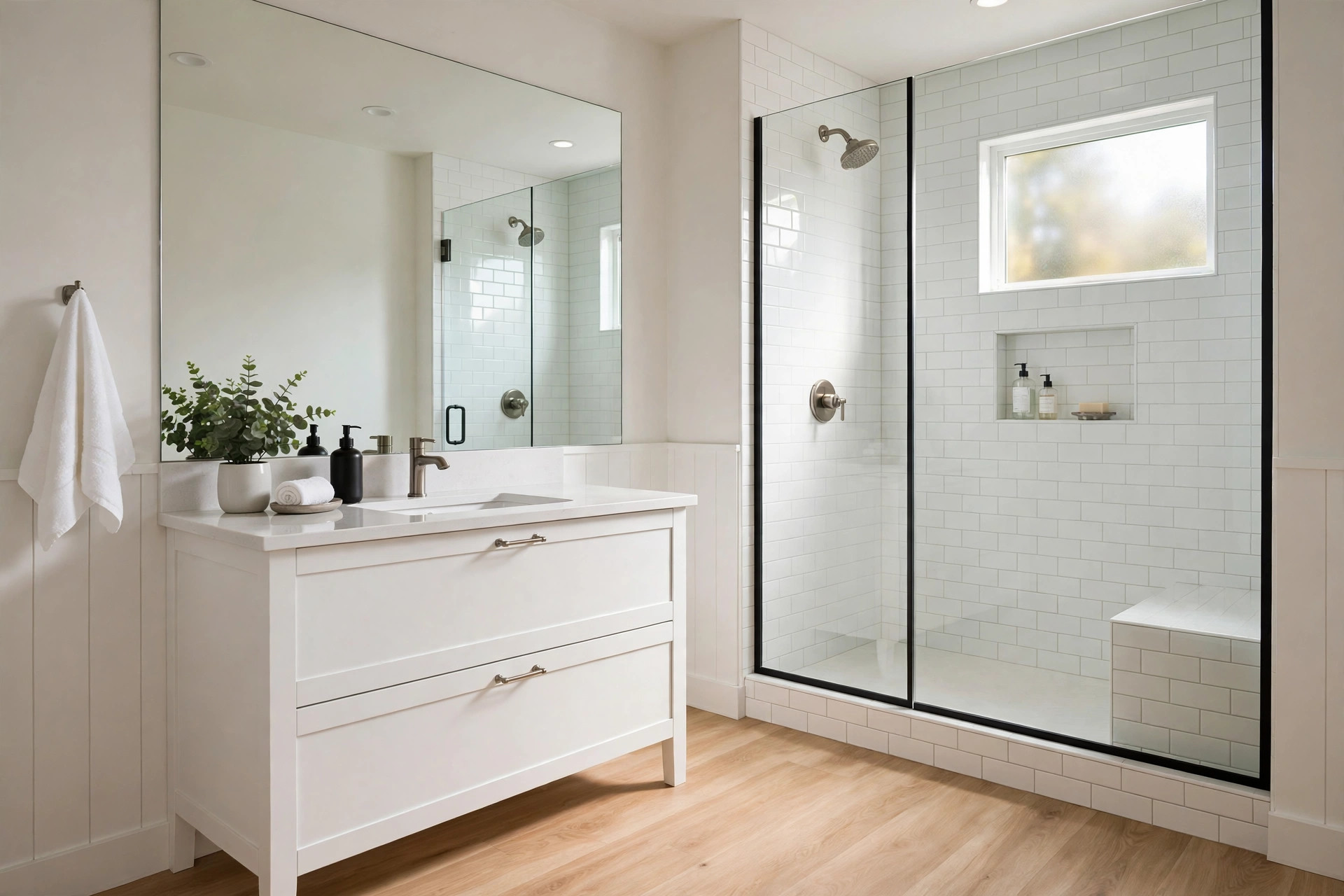

Water changes everything in a bathroom. It drips from wet feet. It splashes from the tub. It gathers in corners near the shower. For this reason, many homeowners across the country now search for waterproof laminate flooring for bathrooms usa. They want the warm look of wood without the fear of swelling, warping, or rot. The good news is that the modern market offers real answers. Laminate has changed a great deal since the early years. Some products now carry a waterproof core and tight click-lock joints. These floors stand up to daily moisture far better than the laminate of a decade ago. This guide will walk through the choices in plain language. It will cover why these floors matter, how to choose one, what they cost, how to care for them, and what to ask before you buy.
Why It Matters
The bathroom is the hardest room in the house for any floor. Steam rises from a hot shower. Water runs over tile seams. Mops leave small pools behind. A floor that fails in this room causes trouble fast. Swollen boards lift at the edges. Dark stains spread under the finish. In bad cases, the subfloor underneath begins to rot. Repairs are costly and messy. They often require pulling the toilet and the vanity.
Traditional laminate did poorly in bathrooms. It had a fiberboard core. When water reached that core, the board expanded like a sponge. The damage was permanent. Many floor installers warned against it. That warning was fair at the time. But makers have answered with new designs. Today, waterproof laminate flooring for bathrooms in the USA uses a dense core made from materials that resist water. Some use a rigid polymer core. Others use a treated high-density board with sealed edges. The click-lock joints fit so tight that standing water has a hard time seeping through.
This matters for three reasons. First, the look. Laminate can copy oak, walnut, hickory, and even stone. It costs far less than real hardwood or real tile. Second, comfort. Laminate feels warmer under bare feet than cold ceramic tile. Third, speed. A click-lock floor goes down fast, often in a single weekend. For a busy family, that counts.
Buyers should still be careful. The word waterproof on a box is not a promise of magic. It has limits. Standing water must be wiped up. The floor must be installed with care. Perimeter gaps must be sealed with the right products. When these rules are followed, the floor can serve for many years. When they are ignored, even the best product will fail. The pages that follow will help you tell the difference between a solid choice and a sales pitch.
What to Look For: Waterproof Laminate Flooring for Bathrooms Usa
Start with the core. The core is the thick middle layer of each plank. It decides how the floor handles water. Two main kinds appear in stores. The first is a stone-plastic composite core, often called SPC. It is made from limestone powder and PVC. It does not absorb water. The second is a wood-plastic composite core, called WPC. It is softer and quieter to walk on, and it resists water well. Both are better than the old fiberboard core. If the box says nothing about the core, ask. If the sales clerk cannot answer, walk away.
Next, look at the water rating. Some makers test their floors in standing water for a set number of hours. A floor rated for 24 hours of standing water is common. A few claim longer. These ratings come from lab tests. They show how long the joints can hold out before water finds a path. No floor should sit in water for days. But a long rating gives peace of mind for a bathroom, where spills are wiped up within minutes.
Check the joints. Click-lock systems come in several designs. The best ones snap together with a clean click and show no gap. Run your finger along the seam in the store sample. It should feel smooth. Loose joints invite water. Also ask about the warranty. Many makers offer a waterproof warranty for a set number of years. Read the fine print. Most warranties require exact installation steps, including sealing at the tub and toilet.
Look at the wear layer. This is the clear top coat that takes foot traffic. It is measured in mils. A wear layer of 12 mil or more suits a bathroom that gets daily use. Thicker wear layers resist scratches from bath mats and dropped bottles. Also check the finish. A textured finish hides dust and feels less slippery than a glossy one.
Color and plank size matter too. Wide planks with light oak tones make a small bath feel larger. Narrow planks give a classic look. The catalog at The Home Depot shows many of these options side by side, which helps to compare tones before you buy.
Types and Options
Several product families fall under the waterproof laminate label. It helps to know what each one is.
Waterproof laminate with SPC core. This is the stiffest type. The boards barely bend. They hide small bumps in the subfloor. They are fully plastic, so water cannot swell them. They can feel hard underfoot and sound hollow without a good underlayment. Most installers recommend a quiet underlayment pad to cut the echo.
Waterproof laminate with WPC core. This type is softer and warmer. It is kind to feet on cold mornings. It also absorbs sound better. It resists water well but is not fully plastic. Heavy furniture can dent it more easily. It suits bathrooms in homes where comfort matters more than maximum strength.
Water-resistant laminate with sealed edges. Some older lines carry this label. The edges are coated with wax or resin. They slow water for a while. They are not truly waterproof. They belong in powder rooms or half baths where splashes are rare. Do not put them around a tub or shower.
Laminate over tile-look prints. Not all waterproof floors copy wood. Some print the look of slate, marble, or cement tile. These give a bath a stone feel at a laminate price. The seams stay tighter than real grout lines, so there are fewer places for mildew to grow.
Shoppers who want to compare whole product lines can browse the ranges at Lowe’s, where filters sort by core type, thickness, and water rating. Those who prefer a specialty floor store can study the detailed specs at LL Flooring, which lists wear layer and joint test data for many planks. And makers like Shaw Floors and Mohawk Flooring publish installation guides that show exactly how their waterproof lines must be sealed at the tub and toilet.
For related projects around the home, you may also enjoy reading about temporary flooring for renters reviews usa, which covers floor choices that do not disturb a lease.
Cost and Price
Prices for waterproof laminate run from about three dollars to eight dollars per square foot for the material alone. The wide range comes from real differences. Thicker boards cost more. Stronger wear layers cost more. Fancy printed designs cost more. A mid-grade floor for a standard bath, say five by eight feet, may need only a few boxes. That keeps material cost low compared with a full tile job.
Add the extras. Underlayment runs from twenty to fifty cents per square foot. Some brands include an attached pad, which saves money. Trim and quarter-round add a modest sum. Silicone sealant for the tub and toilet base costs little but is vital. Door transitions may be needed if the bath meets a hall floor at a different height.
Labor changes the math. A professional installer may charge three to six dollars per square foot, plus a flat fee to move the toilet and vanity. A small bath can still cost a thousand dollars or more in labor. Many homeowners choose to install the floor themselves. The click-lock design suits careful beginners. A saw, a tape measure, spacers, and a tapping block cover most jobs. Plan a full weekend for a first attempt.
One cost buyers forget is the subfloor. The old floor must come up. Any soft or rotted spots in the subfloor must be replaced. If water has been leaking under the old floor for years, the repair adds time and money. Pull up a corner of the old floor first to check. It is better to find a problem early than to cover it with new boards.
Total project cost for a small American bath often lands between five hundred and two thousand dollars with do-it-yourself labor. A contractor job runs higher. Get two or three quotes. Ask each installer if they have laid waterproof laminate in baths before. Experience with the sealing steps matters more than speed.
If you also plan patio work, our guide on a paver patio cost calculator for usa homes can help you budget that project too.
Care and Upkeep
A waterproof floor is easy to live with. Daily care is simple. Sweep or vacuum to pick up hair and grit. Grit acts like sandpaper underfoot. A soft dry mop keeps the finish bright. For deeper cleaning, use a damp mop with a cleaner made for laminate or vinyl floors. Wring the mop well. The floor should look barely damp after you pass, not wet.
Avoid steam mops. The hot steam can push moisture into joints over time. Avoid soaking the floor with a bucket. Wipe up standing water as soon as you see it. Waterproof does not mean flood-proof. A leak from the toilet base or a dripping supply line should be fixed at once. Check around the toilet every few months. A loose toilet wax ring is a common source of slow leaks.
Bath mats help. Place a mat with a soft backing, not rubber, in front of the tub and sink. Rubber-backed mats can trap moisture against the floor and stain the finish. Shake out mats weekly so trapped dampness can dry.
Scratches happen. Felt pads under a small stool or hamper stop most of them. Drop a heavy shampoo bottle and you may dent the board. Keep a spare box of planks from the same dye lot. A single damaged board can be pulled and replaced without redoing the room. The how-to library at This Old House includes clear guides for board replacement and bath repairs.
Every year or two, check the sealant lines. Run a finger along the silicone at the tub edge and the toilet base. If it has pulled loose or cracked, cut it out and lay a fresh bead. This small job is the main secret to a long floor life. The bathroom design ideas at The Spruce often stress the same point: the seal, not the plank, is what keeps water out in the end.
For shoppers comparing looks beyond wood tones, our piece on hand painted tile backsplash for sale usa shows how hand-made tile can pair with simple floors.
Safety
Bathrooms are slip zones. Choose a floor with a textured surface. Many makers print a slip-resistance rating. Look for words like slip resistant or a high score on the dynamic coefficient of friction. Rougher finishes grip better when wet. Glossy planks may look grand in the store but turn slick under wet feet.
Ventilation matters as much as the floor. Run the bath fan during showers and for twenty minutes after. Fans pull steam out before it settles. In older homes with no fan, open a window. Trapped steam feeds mold in corners and behind the toilet. Mold harms the air and stains the walls.
Lighting helps safety too. Dark floors hide puddles. Light or mid-tone floors show water so it can be wiped up. Night lights guide children and older adults during late trips to the bath. Grab bars near the tub give steady support. These small items cost little and prevent falls.
Read the product safety sheet. Some floors need forty-eight hours to settle in the room before installation. This lets the boards adjust to the home’s temperature and humidity. Skipping this step can lead to gaps later. Keep the room at normal living temperature during the wait. Cold rooms and hot rooms both cause trouble.
Frequently Asked Questions
Is waterproof laminate really safe for a full bathroom with a shower? Yes, if you choose a true waterproof product and install it right. Use an SPC or WPC core floor with a strong water rating. Seal every edge at the tub, shower, and toilet with silicone. Wipe up standing water. Floors installed this way serve well for years. Do not use old-style water-resistant laminate in a full bath.
Can I install it over my old tile floor? Often yes. The tile must be flat and firmly stuck down. Deep grout lines may need a leveling filler so the new planks do not rock. Check the maker’s rules. Some warranties demand a bare subfloor. When in doubt, pull the old tile up. It is extra work, but it gives the best result.
Will the seams open up in winter when the house is dry? Good floors allow for small movement. That is why installers leave a gap around the edges, hidden under the trim. Keep indoor humidity between thirty and fifty percent. A small humidifier in dry winter months helps. Large gaps usually mean the room was too cold or too dry at install time.
How long does waterproof laminate last in a bathroom? With care, ten to twenty years is common. Heavy use, poor sealing, and ignored leaks cut that short. The wear layer decides how long the surface looks new. Thicker wear layers last longer in busy family baths.
Does it add value when I sell the house? A clean, modern bath floor helps a sale. Buyers like the wood look and the low upkeep. It will not add as much value as real stone or tile. But it beats a worn, stained old floor by a wide margin. Keep your receipts and warranty papers for the buyer.
What should I avoid? Avoid soaking the floor. Avoid steam mops and wax polishes. Avoid dragging heavy items across the boards. And avoid trusting the word waterproof alone. Check the core, the water rating, the joints, and the warranty terms before you pay.
A Short Final Word
Waterproof laminate flooring for bathrooms in the USA has earned its place. It is not a cheap trick. It is a real product family with tested cores, tight joints, and fair warranties. It gives the warmth of wood in the wettest room of the house. It installs fast and costs less than tile. It asks only for honest care: wipe up water, seal the edges, and keep the fan running. Choose a solid core, read the warranty, and take your time with the install. Do that, and your bath floor will look fine for many years. For deeper product detail, the maker pages at Shaw Floors and Mohawk Flooring, and the project guides at Daltile, are worth a look before you buy.
References
Daltile. (n.d.). Ceramic and porcelain tile. https://www.daltile.com LL Flooring. (n.d.). Hardwood, vinyl, and tile flooring. https://www.llflooring.com Lowe’s. (n.d.). Home improvement products. https://www.lowes.com Mohawk Flooring. (n.d.). Flooring products. https://www.mohawkflooring.com Shaw Floors. (n.d.). Flooring products. https://www.shawfloors.com The Home Depot. (n.d.). Home improvement products. https://www.homedepot.com The Spruce. (n.d.). Home and garden advice. https://www.thespruce.com This Old House. (n.d.). Home renovation guidance. https://www.thisoldhouse.com
Was this guide helpful?

About Robert Taylor
The My Garden US editorial team writes practical, in-depth home and garden guides for American homeowners — tested advice, no fluff.
You May Also Like
Mexican Tile for Bathroom Floor for Sale: A Plain Buyer’s Guide
June 21, 2026 0 views
Water Based Polyurethane for Floors Reviews: An Honest Guide
September 20, 2026 0 views
Stair Nose for Vinyl Plank Reviews USA: A Buyer’s Guide
July 7, 2026 0 views