---
Table of Contents
Table of Contents
- Join Carpet and Tile Floors: Why the Transition Matters
- The Main Types of Carpet-to-Tile Transitions
- What You Will Need
- Step 1: Measure and Plan
- Step 2: Prepare Both Edges
- Step 3: Install the Tack Strip or Track
- Step 4: Set the Transition Strip
- Step 5: Stretch and Tuck the Carpet
- Step 6: Seal and Finish
- Common Mistakes to Avoid
- When the Floors Are Very Uneven
- References
Walk through most homes and you will cross the line where carpet meets tile. A hallway turns into a bathroom. A bedroom opens onto a tiled entry. That joint needs a proper transition. Without one, the carpet edge frays, the tile edge chips, and the seam collects dirt. With one, the two floors meet in a clean line that looks like it was always meant to be there. This article explains join carpet and tile floors in simple terms.
Joining carpet and tile is a classic do-it-yourself job. The materials are cheap and the tools are basic. The trick is picking the right transition for your situation and setting the heights correctly. Here is everything you need to know.
Join Carpet and Tile Floors: Why the Transition Matters
When it comes to join carpet and tile floors, getting the details right makes all the difference.
When it comes to join carpet and tile floors, getting the details right makes all the difference.


Many homeowners find that join carpet and tile floors is easier than they expected once they know the basics.
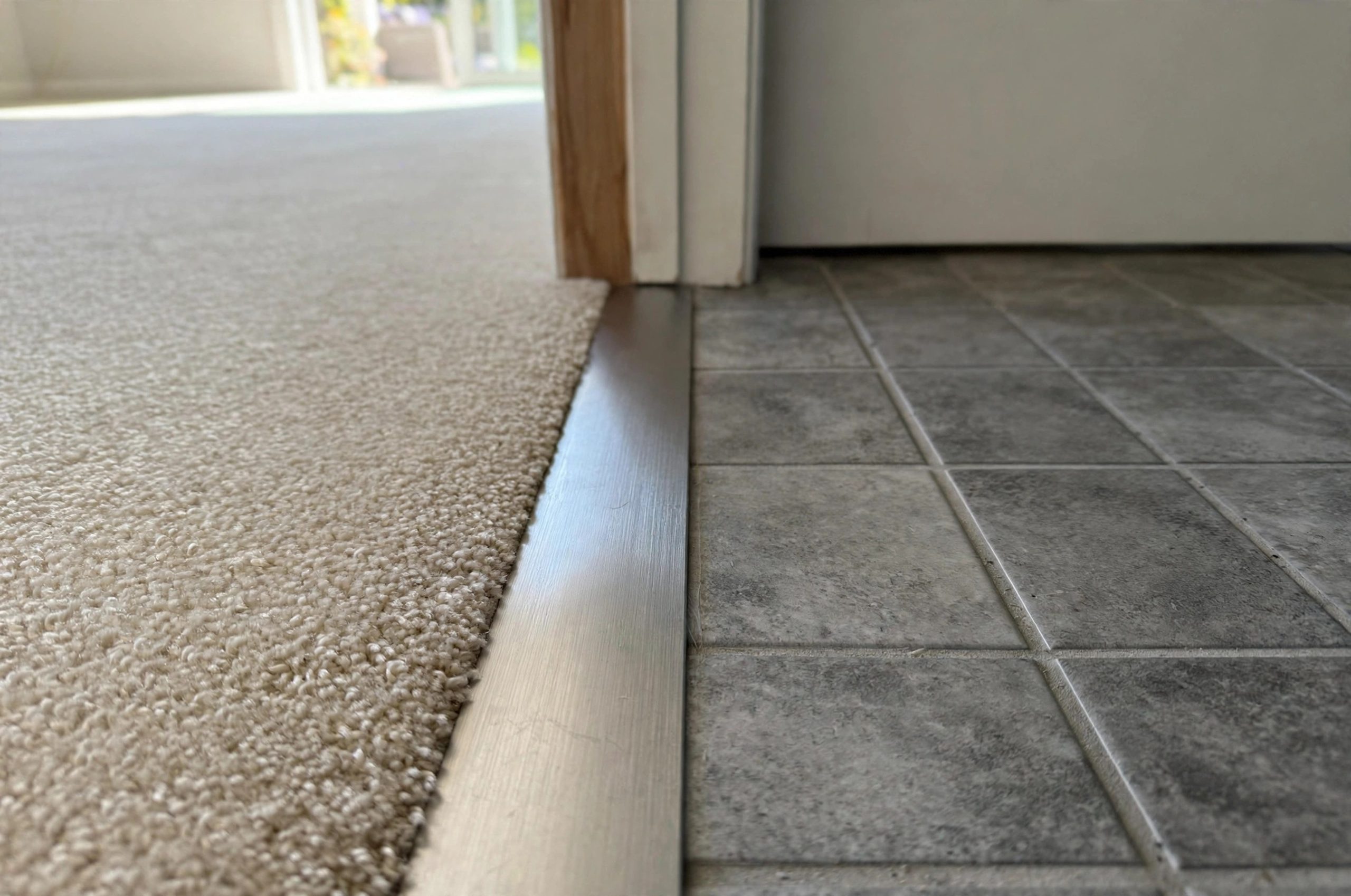
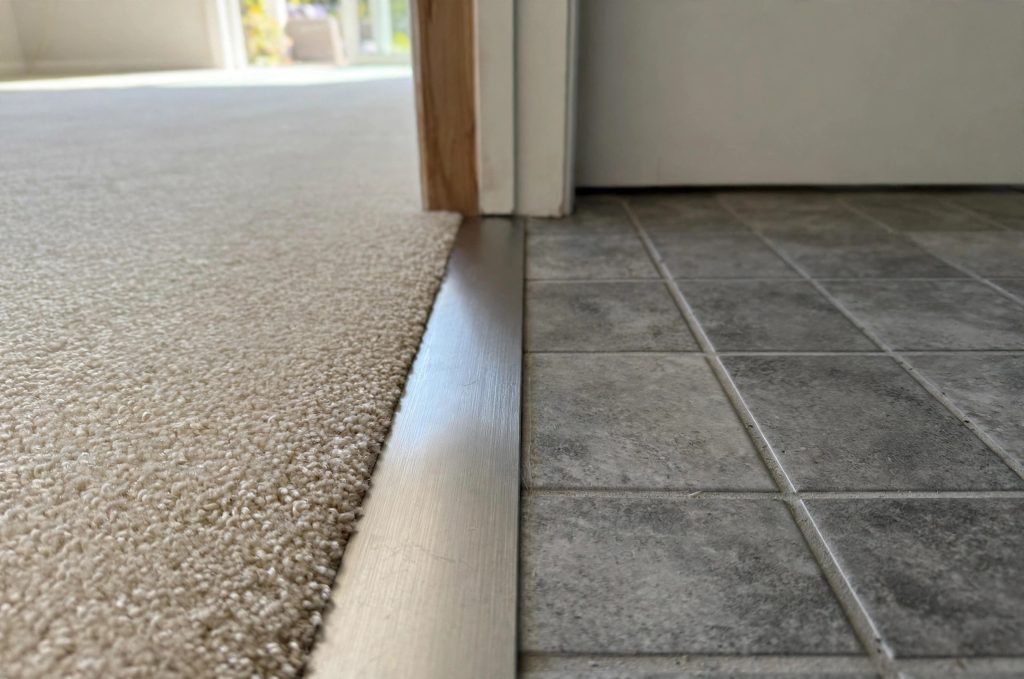
Carpet and tile are different heights. Carpet sits high on its pad. Tile sits low on thinset. The gap between them is a trip hazard if left open, and it is ugly. A transition strip bridges the height difference with a gentle ramp, covers the raw edges of both materials, and holds the carpet edge down so it cannot fray or pull loose.
There is also a moisture angle. In bathrooms and entries, water can wick from the tile side into the carpet edge. A well-set transition with a bead of sealant on the tile side slows that down.
The Main Types of Carpet-to-Tile Transitions
Many homeowners find that join carpet and tile floors is easier than they expected once they know the basics.
Many homeowners find that join carpet and tile floors is easier than they expected once they know the basics.
The key to join carpet and tile floors is choosing the right approach for your space and budget.
You have several good options. The right one depends on the height difference and the look you want.
Metal transition strips are the most common. They come in aluminum and brass finishes, usually in three-foot or six-foot lengths. The strip has holes for nails or screws. You lay it over the seam and fasten it to the subfloor. Simple, cheap, and durable.
Z-bars are the pro's choice for a clean, low-profile joint. A Z-bar is a strip of metal bent into a Z shape. One leg nails to the subfloor near the tile edge. The carpet wraps over the raised center and tucks into the groove. The result is a tight, tailored edge with almost no visible metal. A Z-bar installation guide walks through measuring, nailing the bar flat, and tucking the carpet for a seamless finish.
Tack strip plus tuck is the method most carpet installers use in doorways. A tack strip is nailed to the subfloor about a quarter to three-eighths of an inch from the tile edge, with the pins angled toward the tile. The carpet is stretched over the pins and the edge tucks down into the gap against the tile. A transition strip guide describes placing the tack strip close to the tile edge and kicking the carpet tight for a neat finish.
Snap-in track systems have a base channel that screws to the floor and a cap that snaps over it. They handle bigger height differences and look clean. They cost more than basic strips.
Reducer moldings are wood or vinyl ramps made for height differences. They work well when the carpet is much higher than the tile.
When you are weighing these options, think through the height difference, the strip material, and safety together. An overview of the planning considerations covers the same decision points in question-and-answer form.
What You Will Need
The key to join carpet and tile floors is choosing the right approach for your space and budget.
With a little planning, join carpet and tile floors can fit even a busy schedule.
- Transition strip, Z-bar, or tack strip, sized to your doorway width
- Tape measure and pencil
- Hacksaw or jigsaw with a metal-cutting blade for metal strips
- Hammer and nails, or drill and screws
- Knee kicker or carpet tucker for stretching carpet
- Utility knife with fresh blades
- Level
- Painter's tape
- Color-matched silicone sealant for the tile side
- Safety glasses and work gloves
Step 1: Measure and Plan
With a little planning, join carpet and tile floors can fit even a busy schedule.
Before you start, it helps to understand how join carpet and tile floors works in real homes.
Measure the width of the doorway or opening. Buy a transition strip slightly longer than you need so you can trim it to an exact fit.
Look at the height difference between the carpet surface and the tile surface. Press the carpet down with your hand to see its compressed height. That is the height the transition must meet. If the difference is more than about half an inch, a flat strip will look wrong and feel like a speed bump. Choose a reducer profile or a ramp-style transition instead.
Decide where the transition line will sit. In a doorway, the standard practice is to center it under the door when the door is closed. That way each room shows its own flooring with no overlap. A doorway transition walkthrough shows this placement in detail and covers the measuring and cutting sequence for a clean result.
Step 2: Prepare Both Edges
Before you start, it helps to understand how join carpet and tile floors works in real homes.
A good plan for join carpet and tile floors saves time, money, and frustration.
The tile edge should be clean and solid. If the last row of tile has a rough cut edge, that is fine. The transition will cover it. Make sure there is no loose thinset or grout hump that would keep the strip from sitting flat.
The carpet edge needs attention. If you are working with existing carpet, pull it back from the seam and trim it so it reaches just past the transition point with enough extra to tuck. A detailed transition tutorial recommends trimming the carpet edge neatly so it sits under the strip without bunching.
If the carpet edge is frayed, trim back to solid material and apply a little carpet seam sealer to the cut edge. This keeps it from unraveling after the job is done.
Take your time with join carpet and tile floors and the result will last.
Step 3: Install the Tack Strip or Track
A good plan for join carpet and tile floors saves time, money, and frustration.
For most people, join carpet and tile floors comes down to a few smart choices.
For the tack-strip method, position the strip on the subfloor about a quarter to three-eighths of an inch from the tile edge. The angled pins must point toward the tile. On wood subfloors, nail it down. On concrete, use concrete nails or construction adhesive made for tack strip. An experienced remodeler's walkthrough shows the strip set just off the tile edge with pins angled inward, which is the detail that makes the carpet grip properly.
For a Z-bar, nail the flat leg to the subfloor so the raised center sits right at the tile edge. The bar should lie perfectly flat. Any rocking will telegraph through the carpet.
For a snap-in track, screw the base channel to the subfloor centered on the seam, checking with a level as you go.
On concrete slabs, a concrete-specific transition guide advises using adhesive or concrete fasteners for the tack strip and double-checking that the strip sits level before the carpet goes over it.
Step 4: Set the Transition Strip
For most people, join carpet and tile floors comes down to a few smart choices.
If you are new to join carpet and tile floors, start with the simplest option and build from there.
Cut the metal strip to length with a hacksaw. Cut slightly long, test-fit, and trim again. A strip that is a hair short looks worse than one you trim twice.
Lay the strip over the seam. For nail-down strips, drive the provided nails through the holes into the subfloor. Keep the strip flat and straight as you fasten. Check with a level. A strip that rocks will work loose and catch feet.
For adhesive-set strips, apply the adhesive to the underside, press the strip firmly into place, and weight it or tape it down until the adhesive cures. Follow the adhesive's cure time before walking on it.
If you are using a snap-in system, press or tap the cap into the base channel along its full length. It should seat with an even click all the way across.
Step 5: Stretch and Tuck the Carpet
If you are new to join carpet and tile floors, start with the simplest option and build from there.
When it comes to join carpet and tile floors, getting the details right makes all the difference.
This is the step that separates a pro-looking job from a lumpy one.
Hook the carpet onto the tack strip pins starting at one end. Use a knee kicker to stretch the carpet tight across the doorway, working toward the other end. The carpet should be drum-tight with no wrinkles. Then tuck the excess edge down into the gap between the tack strip and the tile using a carpet tucker or a stiff putty knife.
For a Z-bar, wrap the carpet over the raised center of the bar and tuck the edge into the groove behind it. Trim any excess. The carpet should dive cleanly into the groove with no bunching.
Step back and look at the seam from both rooms. The carpet should meet the transition in a straight, even line. Press along the whole length with your hand. It should feel solid with no soft spots or lifted edges.
Step 6: Seal and Finish
When it comes to join carpet and tile floors, getting the details right makes all the difference.
Run a thin bead of color-matched silicone sealant along the tile side of the transition. This keeps mop water and spills from wicking under the strip and into the carpet edge. Smooth the bead with a wet finger and wipe away the excess.
Vacuum the seam to pick up any debris from the installation. Fluff the carpet fibers along the edge with your fingers so they stand naturally against the strip.
Check door clearance. Open and close the door fully. If the door drags on the new transition, you may need a lower-profile strip or a small trim of the door bottom.
Common Mistakes to Avoid
Many homeowners find that join carpet and tile floors is easier than they expected once they know the basics.
Setting the tack strip too far from the tile leaves a visible gap of subfloor. Too close and the carpet cannot tuck. The quarter to three-eighths inch zone is the sweet spot.
Using the wrong profile for the height difference is the most common error. A flat strip over a big step creates a trip hazard. Measure first, then buy.
Forgetting the sealant on the tile side invites water damage. It takes two minutes and prevents a real problem.
Cutting the strip too short. Measure twice, cut long, trim to fit. A gap at the door jamb looks sloppy and collects dirt.
Nailing through tile instead of the subfloor. Plan your fastener placement so nails land on wood or concrete, never on the tile itself.
When the Floors Are Very Uneven
The key to join carpet and tile floors is choosing the right approach for your space and budget.
Sometimes the height difference is too big for a standard strip. Old houses settle. A new tile floor over an old subfloor can sit much lower than the carpet in the next room.
In these cases, a reducer molding or a custom ramp is the answer. You can also build up the low side with a thin layer of self-leveling compound under the transition area to soften the step. For extreme differences, consider whether the carpet side should be replaced with a lower-profile flooring instead. Compare options in the high-traffic carpet guide and the carpet style comparison.
If the tile side is the problem, a tile installation cost guide helps you price a proper re-do. And if you are tiling a new area yourself, the large-format tile spacer guide covers the details that keep tile rows straight and even. A product roundup of transition strips can help you compare profiles and finishes before you buy. That is all it takes to handle join carpet and tile floors with confidence.
References
Answers.com. (n.d.). What considerations should be made when planning the transition from tile to carpet in a doorway? https://www.answers.com/Q/What-considerations-should-be-made-when-planning-the-transition-from-tile-to-carpet-in-a-doorway
HomeAdditionPlus.com. (n.d.). How to install carpet threshold transition strip. https://homeadditionplus.com/dev/flooring/how-to-install-carpet-threshold-transition-strip/
Mans.io. (n.d.). TrafficMASTER H5955 M 8 installation guide. https://mans.io/files/viewer/2051786/1
Sleepbloom. (n.d.). How to add a transition strip to floor tile carpet: A DIY guide for beginners. https://sleepbloom.com/how-to-add-transition-strip-to-floor-tile-carpet/
Sleepbloom. (n.d.). How to install carpet Z bar: The best way for a seamless transition to any flooring. https://sleepbloom.com/how-to-install-carpet-z-bar/
Sleepbloom. (n.d.). Seamless carpet to tile transition: A DIY guide for your doorway. https://sleepbloom.com/how-to-go-from-carpet-to-tile-in-door-way/
Storables. (n.d.). How to install a carpet to tile transition strip. https://storables.com/articles/how-to-install-a-carpet-to-tile-transition-strip/
Tile to carpet transition strip on concrete. (n.d.). https://cdn-cms.f-static.net/uploads/4407998/normal_6025bbdc9f0e4.pdf
Top5Best. (n.d.). Top 5 best carpet to tile transition strip. https://top5best.com/carpet-to-tile-transition-strip
Top5Best. (n.d.). Top 5 best floor transition strip carpet to tile. https://top5best.com/floor-transition-strip-carpet-to-tile
Was this guide helpful?

About My Garden US
The My Garden US editorial team writes practical, in-depth home and garden guides for American homeowners — tested advice, no fluff.