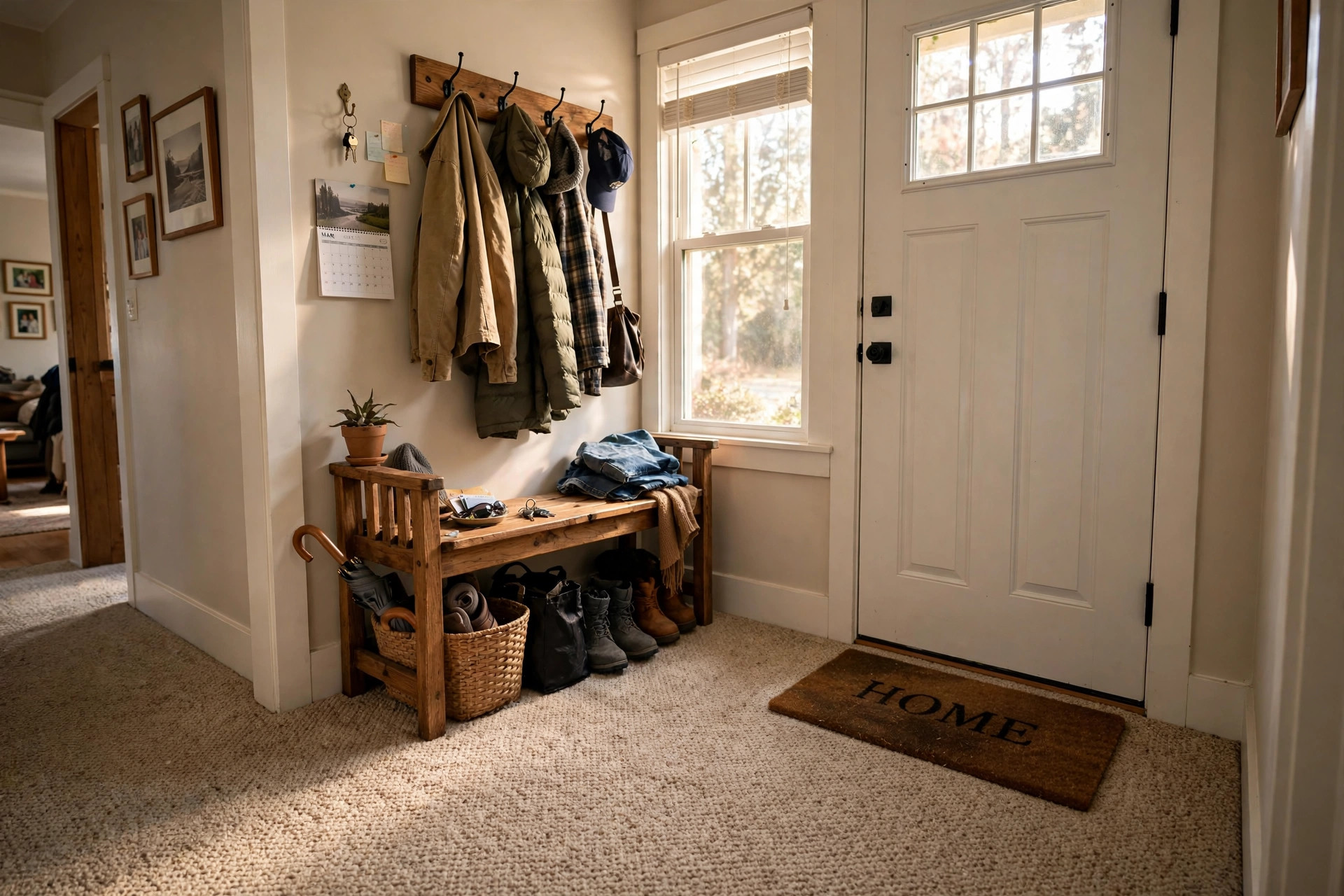

Every American home has one spot that takes a beating. It is the hallway by the front door. It is the stairs. It is the path from the kitchen to the living room. Shoes pass over it a hundred times a day. Dirt grinds in. Fibers flatten. Most carpets give up within a few years. The right carpet does not.
Finding the best carpet for high traffic areas usa shoppers can trust is a matter of knowing what holds up and what wears out. Fiber type matters. Pile density matters. Color and pattern matter. So does the pad under the carpet. This guide walks through each point in plain terms, so you can buy once and enjoy the floor for a decade or more.
Why the Right Carpet Matters in Busy Spots
A carpet in a low traffic bedroom lives an easy life. A carpet in a hallway does not. Feet press the fibers down. Grit from shoes acts like sandpaper. Over time the surface looks thin and tired, even when the backing is still sound. Cheap carpet in a busy spot looks old long before it is old.
The best carpet for high traffic areas usa homeowners buy holds its shape. Dense fibers bounce back after each step. The backing resists stretching. The face hides soil between cleanings. You spend less time vacuuming and less money replacing. In a family with kids and pets, the difference shows in the first year.
There is also a comfort point. Hard floors in a hallway can feel cold and loud. Footsteps echo. A well made carpet softens sound and warms the space. It makes the entry feel like part of the home, not just a passage. That is worth something every single day.
What to Look For When You Shop: Best Carpet for High Traffic Areas Usa
Fiber Type
Fiber is the first choice you make. Nylon is the workhorse of the carpet trade. It is strong. It springs back under weight. It takes dye well, so colors stay true. Most of the best carpet for high traffic areas usa sellers carry is made of nylon for this reason.
Polyester is the next common choice. It resists stains well, even without a treatment. It feels soft underfoot. But it does not bounce back as well as nylon. In a busy hallway it can look matted sooner.
Triexta is a newer fiber worth a look. It blends the spring of nylon with the stain fight of polyester. Wool is the old classic. It looks fine for years and cleans well. But wool costs more and needs care with moisture.
Pile Density
Density tells you how much fiber is packed into each square inch. More fiber means more support. The carpet resists crushing. A simple test works in the store: bend a sample back. If you can see the backing easily, the density is low. If the fibers hide the backing, the density is good. Choose the denser carpet for busy spots.
Pile Height
Short pile lasts longer in traffic. There is less fiber to bend and mat. Berber loops and level cut piles are short by design. Long shaggy piles look rich but fall flat fast in a hallway. Keep shag in the bedroom.
Twist
Twist measures how tightly each yarn strand is wound. Tight twist is better for traffic. Look for terms like “frieze” or “textured Saxony.” Both have a tight twist that resists footprints and vacuum marks.
Backing and Pad
Carpet is only half the system. The pad under it matters just as much. A firm, dense pad supports the carpet and absorbs shock. A soft, thick pad lets the carpet flex too much and can shorten its life. For high traffic areas, choose a pad with high density and a modest thickness. It should feel firm when you press it, not marshmallow soft.
Color and Pattern
Dark colors hide soil better than light ones. Mid-tone earth tones, grays, and tans are the safest picks. Pattern helps too. A subtle fleck or berber loop pattern breaks up footprints. Solid light carpet in a mudroom entry will show every mark. It is a matter of plain fact.
Types of Carpet That Hold Up Best
Berber
Berber carpet has small, tight loops. It comes from the woven rugs of North Africa, but modern berber is a machine made workhorse. The loops resist crushing. The texture hides dirt. It fits hallways, stairs, and playrooms. Note that looped carpet can snag on pet claws, so cat owners may want another style.
Frieze
Frieze has a high twist and a shaggy look. The tight twist keeps it from matting. It feels casual and hides footprints well. Many frieze carpets are made of nylon or triexta, both strong choices.
Textured Saxony
Textured Saxony is a cut pile with twisted yarns. It sits between formal and casual. It is a common pick for living rooms that see daily use. Choose a dense version for the best wear.
Carpet Tiles
Carpet tiles are squares of carpet, usually 18 or 24 inches. They are a smart pick for basements, playrooms, and home offices. If one tile stains, you lift it out and drop in a spare. They install with simple adhesive or peel and stick backing. Many styles now look like broadloom carpet once laid.
Indoor Outdoor Carpet
Indoor outdoor carpet is made to take abuse. It shrugs off moisture and sun. Use it in mudrooms, enclosed porches, and laundry rooms. It will not feel as soft as a bedroom carpet, but in a tough spot that trade is fine.
Cost and Price in the USA
Prices move with fiber, density, and brand. Basic polyester carpet for a spare room may run a few dollars a square foot installed. The best carpet for high traffic areas usa buyers install in main halls usually costs more, since nylon and dense weaves cost more to make.
Expect to pay for the pad too. A good dense pad adds to the bill but extends the carpet’s life by years. It is one of the best values in the whole job. Do not let a store talk you into the thinnest pad to cut the quote. That saving will cost you later.
Installation runs by the square yard or square foot, and stairs cost extra. Stair work is slow and skilled. Get three quotes. Check that the quote lists the carpet brand, style, fiber, and pad by name. A vague quote is a warning sign.
One more cost to weigh: replacement. A cheap carpet replaced every five years costs more than a strong carpet that lasts twelve. Figure the cost per year, not just the cost today.
Care and Upkeep for Busy Carpet
Even tough carpet needs care. Dirt is the enemy. Grit cuts fibers each time a foot presses it down. Frequent vacuuming is the single best habit. In a hallway, vacuum twice a week. Use a vacuum with a beater bar or rotating brush, and empty the bag or bin often.
Place mats at every door. A good mat catches the dirt before it reaches the carpet. Shake the mats out each week. This one habit can double the look life of an entry carpet.
Blot spills at once. Do not rub. Rubbing pushes the stain deeper and frays the fibers. Blot from the outside edge toward the center. Use plain water first. Keep a simple carpet cleaner on hand for spots that need more.
Have the carpet cleaned by a professional once a year in busy zones. Hot water extraction, often called steam cleaning, pulls deep soil out of the backing. Let the carpet dry fully before heavy foot traffic returns. Some carpet warranties require regular professional cleaning, so keep the receipts.
Pet owners should add one more step. Brush pets often. Loose hair and dander settle into carpet fast. A quick daily pass with a rubber broom or a pet rake keeps buildup down.
Rotate the workload when you can. In a long hallway, shift a runner rug every few months so wear spreads out. Small steps add years.
If your home also has hard floors, the care habits transfer. Readers comparing options may find our notes on hardwood floor scratch repair kits useful before they decide between carpet and wood in a busy room.
Safety Points for Stairs and Hallways
Carpet on stairs must be tight and secure. Loose carpet on a stair nose is a trip risk. Make sure the installer wraps each tread and staples or tacks the carpet well. The pile should be short on stairs. Long pile can hide the stair edge and make footing unsure.
Keep stairs clear of small rugs that can slide. If you use a runner, fasten it with proper stair rods or tack strips. Light the stairs well. A dark stairwell with patterned carpet is a hard place to see each step.
For homes with seniors or small children, choose a carpet with good grip and no loose threads. Loop carpet with a pulled loop can catch a toe. Inspect the carpet now and then and trim any snag with scissors. Never pull a snag. It can run down the row like a stocking.
Fire safety matters too. Most modern carpet is treated to slow flame spread. Check the label for a flammability rating. Keep heaters away from carpeted walls, and never place a hot iron on a carpeted floor.
Shopping Tips
Start with samples. Take them home. Lay them in the hallway for a few days. Walk on them. Spill a little coffee and see how it cleans. Store lighting lies. Your home light tells the truth.
Read the warranty. Most carpet comes with a wear warranty, a stain warranty, and sometimes a texture warranty. Note what voids each one. Some warranties require a specific pad. Some require professional cleaning on a schedule. Keep all papers in one folder.
Buy from a dealer with an install crew, or hire an installer with strong reviews. The best carpet in the world looks poor if it is installed loose. Seams should be tight and low. Pattern should match at the seams. The carpet should sit flat with no bubbles.
Time your purchase. Flooring stores run sales around holidays. You can save a fair amount by waiting for a sale event. Just do not let a sale push you into the wrong carpet. A discount on carpet that will not last is no bargain.
For entryways, a runner or large area rug can protect the wall to wall carpet beneath. If you want to compare budget options, see our guide to an 8×10 area rug under 200 dollars for ideas that layer well over new carpet.
Frequently Asked Questions
What is the best carpet for high traffic areas in the USA?
Dense nylon carpet with a tight twist is the top pick for most American homes. Look for frieze, textured Saxony, or berber in a mid tone color. Pair it with a firm, dense pad. This combination resists matting, hides soil, and lasts the longest.
Is nylon or polyester better for hallways?
Nylon is better for hallways and stairs. It springs back under foot traffic and resists crushing. Polyester stains less, but it mats down faster. In a spot that gets walked on all day, the spring of nylon wins.
How long should carpet last in a busy hallway?
A good quality nylon carpet can last 10 to 15 years in a hallway with proper care. Cheaper polyester may show wear in 3 to 5 years. Vacuuming often, using door mats, and cleaning yearly all add to the life.
What color carpet hides dirt the best?
Mid tone grays, tans, and browns hide dirt best. Patterned carpet hides soil even better than solid color. White and very light carpet shows every mark and is a poor pick for entries.
Should I use carpet tiles or wall to wall carpet?
Carpet tiles are best when you want easy spot replacement, as in a playroom or basement. Wall to wall carpet gives a smoother look and better sound softening for halls and stairs. Both can use the same strong fibers.
Can I put carpet over tile in an entryway?
You can, and it is a common fix for a cold tiled entry. The tile must be flat and clean first. Any cracked or loose tile should be repaired or covered. If you are weighing tile repairs too, our look at epoxy grout vs cement grout may help you decide.
A Final Word
The best carpet for high traffic areas usa families can buy is not a mystery. It is dense nylon or triexta. It is short pile with a tight twist. It sits on a firm pad. It wears a mid tone color that forgives daily life. Vacuum it often, clean it yearly, and put a mat at the door. Do these simple things and your busy floors will look fine for years to come.
For more background, see The Spruce, The Home Depot, and Lowe’s. For more background, see LL Flooring, Shaw Floors, and Mohawk Flooring. Buying guides are also published by Daltile and This Old House.
References
Daltile. (n.d.). Ceramic and porcelain tile. https://www.daltile.com LL Flooring. (n.d.). Hardwood, vinyl, and tile flooring. https://www.llflooring.com Lowe’s. (n.d.). Home improvement products. https://www.lowes.com Mohawk Flooring. (n.d.). Flooring products. https://www.mohawkflooring.com Shaw Floors. (n.d.). Flooring products. https://www.shawfloors.com The Home Depot. (n.d.). Home improvement products. https://www.homedepot.com The Spruce. (n.d.). Home and garden advice. https://www.thespruce.com This Old House. (n.d.). Home renovation guidance. https://www.thisoldhouse.com
Was this guide helpful?

About David Wilson
The My Garden US editorial team writes practical, in-depth home and garden guides for American homeowners — tested advice, no fluff.
You May Also Like
How to Use a Paver Patio Cost Calculator for USA Homes
June 4, 2026 0 views
Best Adhesive Tile for Laundry Room USA: How to Pick a Floor That Stands Up to Water
June 18, 2026 0 views
Kitchen Floor Tile Trends 2026 USA: Styles, Colors, and Costs
July 26, 2026 0 views