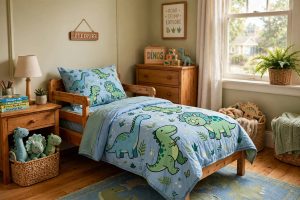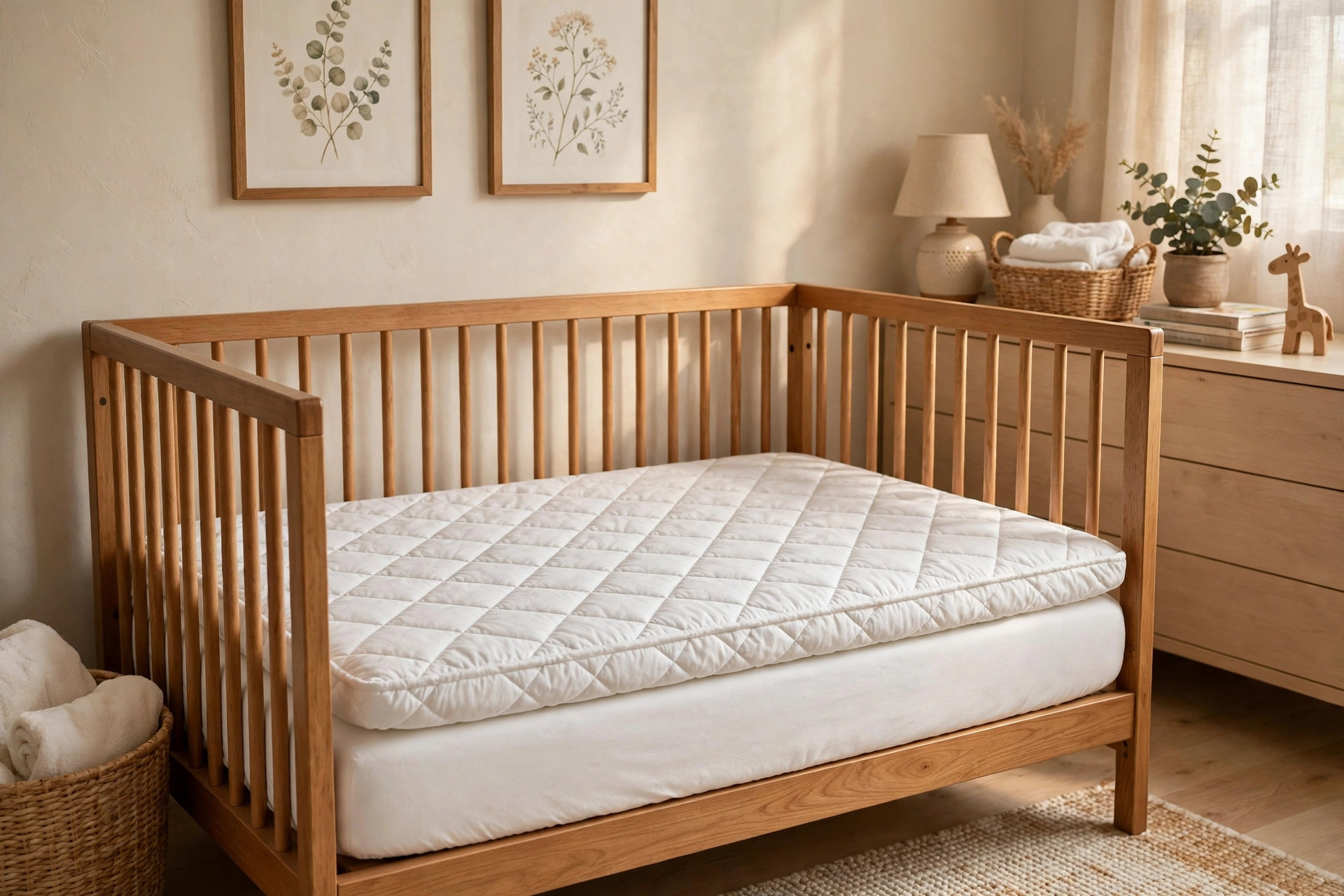

Many parents stand over a new crib and press a hand into the mattress. It feels hard. It feels too hard for a small baby. That feeling leads many mothers and fathers to search for a crib mattress topper for extra comfort support. A topper is a thin layer that sits on top of the crib mattress and under the fitted sheet. It is meant to add a small amount of softness to a firm sleep surface.
But this purchase is not as simple as it looks. A crib is not a grown-up bed. Safety rules for babies are strict, and for good reason. A topper that seems harmless can become unsafe if it is too thick or too soft. This guide explains what a crib mattress topper does, how to choose one, what types are sold, what they cost, and how to use one in a safe way.
Why Parents Consider a Topper
Crib mattresses are made firm on purpose. A firm sleep surface helps lower the risk of suffocation in young babies. Doctors and safety groups agree on this point. But firm can feel cold and hard to a parent’s hand. When a baby wakes often or cries at bedtime, parents wonder if the mattress is the cause.
A topper promises a middle path. It does not replace the mattress. It adds one or two inches of padding on top. Parents hope this small change will help the baby settle faster and sleep longer. Some parents also buy a topper to protect the mattress from leaks and spills. A waterproof topper can keep the main mattress clean and make night changes quicker.
There is another reason. A good crib mattress can be costly. If the mattress already in the crib is old or very hard, a topper costs far less than a new mattress. Many families on a budget choose this route. Parenting product reviews from groups like Good Housekeeping often point out that small add-ons like toppers can stretch the life of nursery gear.
Still, comfort is only one half of the story. The other half is safety. The American Academy of Pediatrics advises that young infants should sleep on a firm, flat surface with nothing soft in the crib. This is the single most important rule in this guide. Everything else flows from it.
What to Look For: How to Choose: Crib Mattress Topper for Extra Comfort Support
Shopping for a topper starts with one question. Who will sleep on it? If the answer is a baby under one year old, the safest choice is to skip the topper and keep the crib bare. Use a firm mattress and a snug fitted sheet, and nothing else. Many safety experts say this without exception.
If your child is a toddler who has moved past the highest-risk months, or if your pediatrician has approved a topper, then look at these features.
Thickness. Keep it thin. One inch is the most that most experts accept. Two inches is too much for a young child. A thick topper can let a small face sink in. That raises the risk of suffocation. Thin also means the topper stays flat and does not bunch up.
Firmness. The topper should feel supportive, not plush. Press your hand into it. Your hand should not sink deep. A firm topper holds its shape and keeps the sleep surface flat. Avoid anything marketed as extra-plush or cloud-soft for cribs.
Fit. The topper must match the crib mattress size. Most full-size cribs use a mattress about 52 inches long and 28 inches wide. The topper should sit flat with no gaps at the edges. Gaps are a danger. A baby can become trapped between the topper and the crib rail. Measure before you buy.
Material. Common materials are cotton padding, wool, natural latex, and memory foam. Cotton and wool are breathable and natural. Latex gives firm support and lasts long. Memory foam molds to the body, which some parents like, but it should be a thin, firm grade. Look for certifications such as CertiPUR-US for foam or GOTS for organic cotton. These marks show the product was tested for harmful chemicals.
Waterproofing. Some toppers have a waterproof layer. This is useful for toddlers who are toilet training. It protects the mattress and the topper itself. If you need waterproofing but prefer natural materials, a separate waterproof crib mattress pad is not the answer either, so look instead for guides on a crib mattress waterproof organic for newborns to compare safer options.
Breathability. A topper that traps heat can make a child sweat. Cotton and wool move air well. Some foam toppers run warm. If your nursery gets hot, choose a breathable fill.
Shopping guides from Wirecutter and Consumer Reports often test bedding for fit, heat, and durability.
Types and Options
Stores sell several kinds of crib toppers. Each has strengths and limits.
Thin cotton pads. These are quilted cotton layers, often about one inch thick. They are simple, washable, and cheap. They add mild softness without much sink. They are a common pick for parents who want a small change.
Wool toppers. Wool padding gives firm support and breathes well. It resists dust mites and stays cool in summer and warm in winter. Wool toppers cost more than cotton ones. They need gentle washing or airing, not hot machine cycles.
Natural latex toppers. Latex is springy and firm. A one-inch latex topper can make a hard mattress feel more even without letting a child sink in. Latex lasts many years. It is heavier than cotton and costs more. Check that the latex is natural and certified low in chemicals.
Memory foam toppers. These mold to the body. Parents who like memory foam in their own beds often look for a crib version. Choose only thin, firm grades made for children. Thick or soft memory foam is not right for a crib. Also note that memory foam can hold heat.
Waterproof toppers. These have a water-resistant layer inside. They guard against leaks during toilet training. The waterproof layer can reduce airflow, so look for brands that use breathable barriers.
Fiberfill pads. These are light and cheap. They flatten over time and may need replacing sooner. They work as a short-term fix.
No topper should make the sleep surface soft in a way that lets a small face press in. When in doubt, choose the firmer, thinner option. Nursery advice sites such as The Spruce carry many crib setup guides that stress the same point.
Cost and Price
A crib mattress topper for extra comfort support is not a big purchase. Most cost between 20 and 80 dollars. Simple cotton pads sit at the low end, often 20 to 40 dollars. Wool and latex toppers sit at the high end, often 60 to 120 dollars for crib sizes. Organic and certified materials add to the price.
Size matters. A mini crib topper costs less than a full-size one. Brand name adds a premium. Buying during nursery sales can save a good amount.
Where do parents shop? Large home stores and baby stores carry them. IKEA sells low-cost nursery items and simple mattress pads. Wayfair lists many brands with parent reviews. Pottery Barn Kids offers higher-end nursery bedding. What to Expect publishes buying guides that compare prices across stores.
One warning about price. A very cheap topper may use low-grade foam with a strong chemical smell. Air any new topper out for a day or two before use. If the smell does not fade, return it. A baby breathes close to this surface all night.
Also think about total cost. A topper plus a waterproof protector plus new sheets can add up. Sometimes a mid-range new crib mattress costs little more than all these layers together.
Care and Upkeep
A topper sits close to the child every night, so keep it clean.
Wash the topper as the maker directs. Many cotton pads can go in the machine on a gentle cycle. Wool often needs hand washing or a wool cycle with cool water. Latex should not go in the washer. Wipe it and air it out instead. Memory foam also stays out of the machine. Use a washable cover on foam toppers.
Always use a fitted sheet over the topper. The sheet must fit tight. A loose sheet over a topper can bunch and form folds. Buy sheets made for the combined depth of mattress plus topper, or check that your current sheets still fit snugly.
Air the topper often. Stand it up in fresh air now and then.
Check the fit every month. Children grow, and toppers shift. Make sure there are still no gaps at the edges and that the topper lies flat. Replace the topper when it thins out, tears, or starts to clump. A worn topper loses its support and can become lumpy, which is less safe.
Keep a spare fitted sheet ready. Night leaks happen. A quick sheet change is much easier when a clean spare is at hand. If spills are a regular issue, read about toddler bedding set with pillow for crib choices that make laundry simpler.
Safety Rules
This section matters most. Read it fully.
For babies under 12 months, the safest crib is a bare crib. Firm mattress, tight fitted sheet, baby on the back, nothing else. No pillows. No blankets. No bumpers. No toys. No toppers. This is the guidance of the American Academy of Pediatrics and the U.S. Consumer Product Safety Commission. Soft items in a crib raise the risk of suffocation and sudden infant death syndrome. A topper is a soft item.
Many parents ask why a thin topper would be a problem. The reason is simple. A baby’s face can press into soft padding and the baby may not be able to turn away. What feels like a small comfort to an adult can be a real danger to an infant.
So when is a topper acceptable? Most experts point to the toddler stage. After the first birthday, the risk falls. Many families add light bedding when the child moves to a toddler bed or a low bed. Even then, keep the topper thin and firm. Ask your own pediatrician. Your child’s doctor knows your child’s age and health and can give advice that fits.
Follow these rules if you use a topper at any age:
– Keep it one inch thick or less. – Keep it firm, not plush. – Make sure it fits the mattress with no gaps. – Cover it with a tight fitted sheet. – Keep the rest of the sleep space clear. – Stop using it if it shifts, bunches, or wears thin. – Never add a topper under a sleeping baby without a doctor’s approval.
Watch for recalls. The CPSC lists recalled nursery products. Check any topper you buy against the recall list, especially secondhand items. A used topper may have lost its firmness or may come from a recalled batch.
Secondhand toppers deserve extra caution. You cannot know how they were stored. Old foam breaks down and can release dust. If money is tight, a new basic cotton pad costs little and is safer than an old foam topper of unknown age.
FAQ
Is a crib mattress topper safe for a newborn? No. Safety groups advise against any topper, pad, or soft bedding for babies under one year. Keep the crib bare with a firm mattress and a fitted sheet. Talk to your pediatrician if you have questions.
Will a topper help my baby sleep longer? It might, or it might not. Babies wake for many reasons: hunger, growth, teething, and habit. A slightly softer surface is only one small factor. If sleep is a struggle, talk to your pediatrician before buying gear.
What thickness is safe? One inch or less, and only for toddlers with a doctor’s approval. Thicker toppers let a small face sink in and are not safe for young children.
Can I use a memory foam topper in a crib? Only a thin, firm grade, and only for a toddler, not an infant. Avoid thick or very soft memory foam. It molds around the body, which is the opposite of the flat, firm surface experts advise for babies.
How do I clean a crib mattress topper? Follow the maker’s label. Cotton pads usually wash in the machine. Wool needs gentle care. Latex and memory foam should be wiped and aired, not machine washed. Always protect foam with a washable cover.
Does a topper replace a waterproof mattress pad? Some toppers include a waterproof layer. Others do not. If leaks are your main worry, a waterproof pad under the sheet may be the simpler fix. Compare both options before you buy two products.
A Short Final Word
A crib mattress topper for extra comfort support can soften a hard mattress at a low cost. For toddlers, a thin, firm, well-fitted topper is a reasonable choice. For young babies, the answer is different. The safest crib stays bare. No topper is worth a safety risk.
Buy with care. Choose thin and firm. Check the fit. Keep it clean. And when in doubt, ask your pediatrician. A calm, safe nursery is built from small, careful choices, from the mattress up to the best nursery rug soft for crawling babies under the crib. Comfort matters, but safety comes first, every night.
References
American Academy of Pediatrics. (n.d.). HealthyChildren.org. https://www.healthychildren.org Consumer Reports. (n.d.). Product reviews and ratings. https://www.consumerreports.org Good Housekeeping. (n.d.). Product reviews and home advice. https://www.goodhousekeeping.com IKEA. (n.d.). Home furnishings. https://www.ikea.com Pottery Barn Kids. (n.d.). Kids furniture and decor. https://www.potterybarnkids.com The Spruce. (n.d.). Home and garden advice. https://www.thespruce.com U.S. Consumer Product Safety Commission. (n.d.). Product safety information. https://www.cpsc.gov Wayfair. (n.d.). Furniture and home goods. https://www.wayfair.com What to Expect. (n.d.). Pregnancy and parenting guidance. https://www.whattoexpect.com Wirecutter. (n.d.). Product reviews from The New York Times. https://www.nytimes.com/wirecutter
Was this guide helpful?

About Sarah Mitchell
The My Garden US editorial team writes practical, in-depth home and garden guides for American homeowners — tested advice, no fluff.
You May Also Like

A Toddler Bedding Set with Curtains Matching: A Calm Room for Your Little One
May 11, 2026 0 views
Crib Wedge for Reflux Sleeping Position Safe: What Parents Should Know
August 25, 2026 0 views
Nursery Storage Drawers Under Crib Space: A Practical Guide
August 15, 2026 0 views