
Water flows through every pipe in a home. It fills the kettle. It runs the shower. It feeds the washing machine. Many buyers read a whole house water filters reviews and buying guide before they spend money, and for good reason. A whole house system treats water at the point where it enters the home. Every tap then draws filtered water. This guide explains the main types, the costs, the upkeep, and the safety rules. It also answers common questions. The aim is simple. We want to help you choose a system that fits your water, your home, and your budget.
Why Filtered Water Matters for the Whole House
Most city water is treated at a plant. It meets legal standards. Still, many homes face small daily problems. Chlorine leaves a sharp smell. Old pipes shed rust and grit. Hard water leaves scale on fixtures and shortens the life of heaters. Well water brings its own set of worries, from iron to sulfur odor.
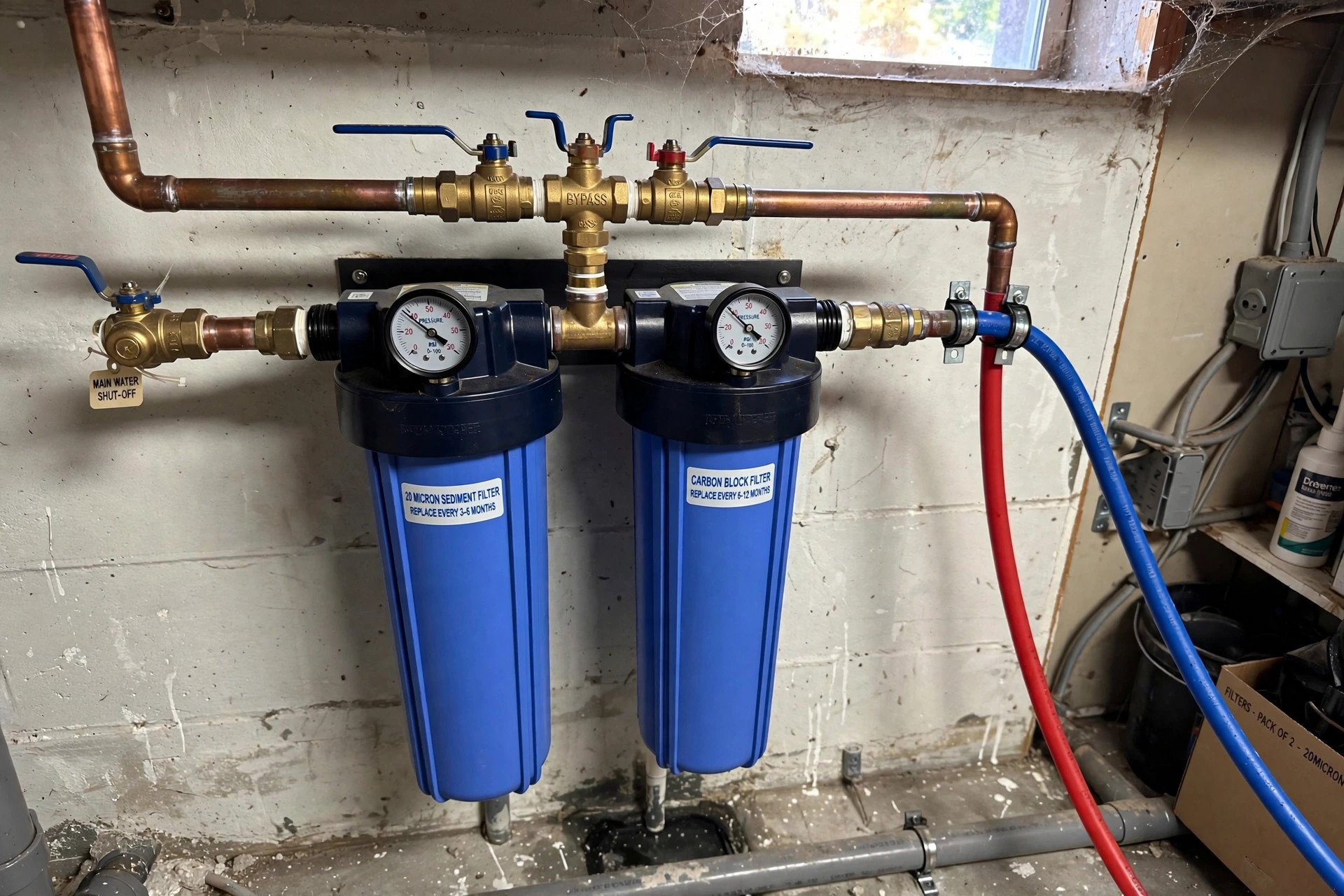
A point-of-entry system handles all of this at once. It sits on the main line. It filters before water splits to the kitchen, the baths, and the laundry. That means cleaner water for cooking and bathing, not just drinking. It also protects the parts of the home you cannot see. Water heaters last longer with less scale. Dishwashers and washing machines run with fewer mineral deposits. Shower heads clog less often.
The U.S. Environmental Protection Agency sets the rules for public water systems in America. Its standards cover dozens of pollutants. Even so, the water that leaves the plant can pick up taste and sediment on the way to your tap. A whole house filter is a second layer of care. It does not replace city treatment. It refines what arrives at your door.
What to Look For When You Buy: Whole House Water Filters Reviews and Buying Guide
Buying a filter is like buying any major home item. You need to match the tool to the job. The sections below cover the points that matter most.
Flow Rate and House Size
Flow rate is measured in gallons per minute. A small home may need six to eight gallons per minute. A large home with several baths may need twelve or more. If the filter is too small, pressure drops when two taps run at once. Check the peak demand of your home first. Then pick a unit rated above it. Independent testers such as Consumer Reports publish flow and pressure test results that help with this choice.
Micron Rating
Micron rating tells you how fine the filter is. A fifty-micron pre-filter catches sand and rust flakes. A five-micron filter catches finer silt. A one-micron filter can catch some cysts. Finer is not always better. A very fine filter clogs fast in dirty water. Many systems use stages. A coarse stage protects a fine stage. That design keeps water moving and spreads out the work.
Certifications
Look for marks from testing groups. NSF/ANSI 42 covers taste and odor. NSF/ANSI 53 covers health effects such as lead. NSF/ANSI 372 covers lead-free parts. NSF/ANSI 44 covers softeners. A certified claim has been tested by a lab. An uncertified claim is only a promise. Home guides at The Spruce explain these marks in plain terms for shoppers.
Filter Life and Running Cost
The sticker price is only part of the cost. A cheap unit with costly cartridges can cost more over five years than a dear unit with cheap cartridges. Ask how long each stage lasts. Ask the price of each replacement. Write down the yearly total. Then compare systems on that figure, not the box price alone.
Service Features
A bypass valve lets water flow around the unit during service. Pressure gauges show when a cartridge is clogging. Clear housings let you see dirt build-up. These small features make upkeep far easier. Advice from Bob Vila covers these installation details for first-time buyers.
Types of Whole House Water Filters
No single unit suits every home. The four main types are described below. Many homes combine two or more.
Sediment Pre-Filters
A sediment filter is the first line of defense. It catches sand, rust, and pipe scale. It is simple and low in cost. Cartridges last three to six months in most homes. In well systems with heavy silt, they may last less. A pre-filter also guards the finer stages behind it. Skipping this stage is a common and costly mistake.
Carbon Filters
Carbon is the workhorse of taste and odor control. It cuts chlorine, chloramine, and many organic chemicals. Two forms are common. Granular activated carbon is loose and cheap. Carbon block is pressed and finer. Catalytic carbon handles chloramine better than plain carbon. Tanks last three to five years. Drop-in cartridges last three to six months. If your main complaint is pool-like smell, carbon is the answer.
Water Softeners and Conditioners
Hard water is rich in calcium and magnesium. It leaves spots and scale. A salt softener swaps those minerals for sodium. It works well but adds some salt to the water. A salt-free conditioner does not remove minerals. It changes their form so they stick less. Makers such as Aquasana sell both styles on their homepages, with specs for sizing. The experts at This Old House note that very hard well water often needs a true softener, not a conditioner.
UV Purifiers
Ultraviolet light kills bacteria and viruses. It adds no chemicals. It changes no taste. It is common on well systems and on homes with cistern storage. A UV lamp needs clear water to work. So it usually sits after a sediment filter and a carbon stage. Lamps last about one year. The glass sleeve needs cleaning so light can pass through.
Cost and Price
Prices vary by type and size. A simple sediment pre-filter costs fifty to one hundred fifty dollars. A single-tank carbon unit costs three hundred to eight hundred dollars. A multi-stage system costs eight hundred to two thousand dollars. A UV purifier adds three hundred to six hundred dollars. A salt softener costs five hundred to two thousand five hundred dollars.
Installation adds more. A plumber may charge two hundred to eight hundred dollars. The price depends on pipe material and access. Copper work costs more than plastic work. A tight crawl space costs more than an open basement.
Yearly upkeep is the number to watch. Sediment cartridges run ten to forty dollars each. Carbon cartridges run thirty to one hundred dollars. UV lamps run sixty to one hundred twenty dollars. Salt for a softener runs five to ten dollars a bag. Big retailers like Home Depot and Lowe’s list current cartridge prices online, which makes yearly math easy.
Read reviews before you buy. User reviews show long-term flaws that spec sheets hide. Look for notes on leaks, pressure loss, and cartridge life. A unit with four stars across hundreds of buyers is a safer bet than a unit with five stars from twelve buyers.
Care and Upkeep
A filter only works if you care for it. The tasks are few but they matter.
Change Filters on Schedule
Mark the change dates on a calendar. Do not wait for bad taste to remind you. A spent carbon cartridge can harbor bacteria. A clogged sediment cartridge starves the home of pressure. Keep one spare set on hand. That way a change takes minutes, not a shopping trip.
Watch the Gauges
Note the normal pressure when filters are new. If the gauge after the unit reads ten pounds lower, a cartridge is clogging. Change it soon. If pressure drops fast after a change, check the pre-filter. It may be undersized for your water.
Sanitize the Housings
Each time you open a housing, rinse it well. A mild bleach soak kills slime. Rinse twice before you fit the new cartridge. Family Handyman offers step-by-step maintenance tips with photos for this job. Wear gloves. Keep the work area dry.
Guard Against Freezing
In cold zones, insulate pipes near the unit. A cracked housing floods fast. If the home sits empty in winter, drain the unit and remove the cartridges. Store them dry.
Safety
Water work has real risks. Follow these rules every time.
Turn off the main valve before you open any housing. Open a tap to release pressure. A housing under pressure can burst open and injure you. Keep a bucket and towels nearby. Small spills are normal. Large leaks mean a bad seal. Stop and refit the O-ring.
Never drink from a neglected system. A filter that sat unused for months can grow bacteria. Flush the lines well after any long idle period. Change all cartridges before use returns to normal.
Well owners should test water each year. A lab test shows bacteria, nitrates, and minerals. A filter choice based on a guess is a poor choice. Good Housekeeping reviews home test kits and lab services for readers who want to start with facts.
UV lamps hold a small amount of mercury. Do not break a lamp. If one breaks, air the room and sweep the pieces into a sealed bag. Follow local rules for disposal. Keep spare lamps out of the reach of children.
If taste changes all at once, or pressure falls to a trickle, do not ignore it. A burst cartridge or a cracked housing may be the cause. Shut the bypass valve and call a plumber if you are unsure.
Frequently Asked Questions
Do whole house filters remove fluoride?
Most carbon systems do not remove fluoride. Reverse osmosis does, but it is a point-of-use system for one tap. If fluoride removal is your goal, pair a whole house unit with an under-sink reverse osmosis tap.
How long do the filters last?
Sediment and carbon cartridges last three to six months. Carbon tank media lasts three to five years. UV lamps last about twelve months. Softener resin lasts many years with proper salt levels. Hard water and heavy use shorten every one of these spans.
Will a filter lower my water pressure?
A small drop is normal. One to three pounds is common. A large drop means the unit is undersized or a cartridge is clogged. Size the system to your peak flow. Then pressure stays steady even when the shower and the washer run together.
Can I install a system myself?
A handy owner can install a simple unit on plastic pipe. Sweating copper takes skill. Local codes may call for a permit or a licensed plumber. If you have doubts, hire a pro. A bad joint on the main line floods the home fast.
Do I still need a drinking water filter at the sink?
It depends on your water and your taste. Many families find whole house carbon enough for drinking. Others add a small carbon block tap for extra polish. Test your water after the install. Let the results guide you.
How do I pick between brands?
Compare certified claims, not slogans. Check filter life and cartridge cost. Read long-term user reviews. Make sure parts will still be sold in five years. A fine unit with dead parts is a future headache.
A Final Word
A whole house water filter is a quiet worker. It sits out of sight and serves every tap. Choose by facts, not by fear. Test your water. Size the unit to your home. Count the yearly cost. Keep up with changes. Do that, and the system will pay you back in better taste, cleaner fixtures, and longer-lived appliances.
If you keep a home maintenance library, you may also like our wet dry shop vacuums reviews and buying guide, our upholstery cleaning machines reviews and buying guide, and our cordless stainless steel appliance cleaners buying guide. Each one follows the same plain approach: test, compare, and buy with care.
References
Aquasana. (n.d.). Water filtration systems. https://www.aquasana.com Bob Vila. (n.d.). Home improvement advice. https://www.bobvila.com Consumer Reports. (n.d.). Product reviews and ratings. https://www.consumerreports.org Family Handyman. (n.d.). DIY home repair and maintenance. https://www.familyhandyman.com Good Housekeeping. (n.d.). Product reviews and home advice. https://www.goodhousekeeping.com Lowe’s. (n.d.). Home improvement products. https://www.lowes.com The Home Depot. (n.d.). Home improvement products. https://www.homedepot.com The Spruce. (n.d.). Home and garden advice. https://www.thespruce.com This Old House. (n.d.). Home renovation guidance. https://www.thisoldhouse.com U.S. Environmental Protection Agency. (n.d.). Protecting human health and the environment. https://www.epa.gov
Was this guide helpful?

About James Carter
The My Garden US editorial team writes practical, in-depth home and garden guides for American homeowners — tested advice, no fluff.
You May Also Like

Powerful Move Out Cleaning Services for Homeowners
February 2, 2026 1 views
Top Rated Chimney Sweep Services for Homeowners
May 8, 2026 0 views
How to Choose Professional Grade Pressure Washing Service Companies Near Me
March 17, 2026 0 views