
Introduction
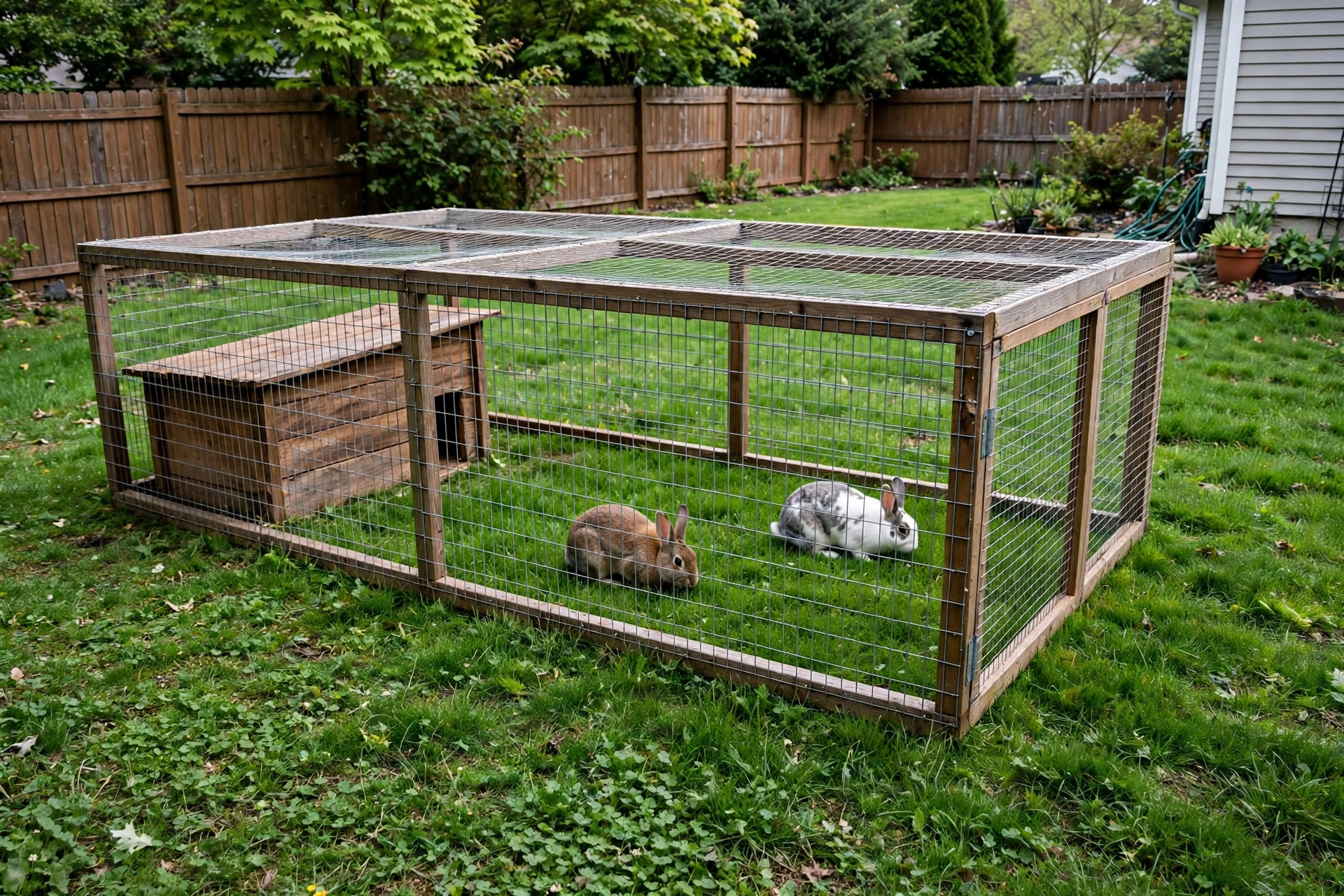
An outdoor rabbit run for grass grazing safety is a fenced pen that lets pet rabbits eat fresh grass outside while staying protected. Rabbits love to chew grass. It is good for their teeth and their digestion. But letting a rabbit roam free in the yard is risky. Dogs, hawks, and foxes can appear in seconds. An outdoor run gives the rabbit the best of both worlds. Fresh grass, room to hop, and a sturdy barrier between the rabbit and the dangers of the open yard.
Many owners keep rabbits in hutches or indoor cages most of the day. This is fine, but rabbits are active animals. In the wild, they graze for hours and run across open ground. A run set on the lawn for a few hours a day adds exercise, sunshine, and variety to a rabbit’s life. This article explains why a grazing run matters, how to choose one, what types exist, what they cost, how to care for the grass and the pen, and how to keep rabbits truly safe while they graze.
Why Grazing Outside Matters for Rabbits: Outdoor Rabbit Run for Grass Grazing Safety
Grass is the natural food of rabbits. Wild rabbits eat grass almost all day. The long chewing wears down their teeth, which never stop growing. If teeth grow too long, the rabbit can suffer pain and may stop eating. Fresh grass also carries fiber that keeps the gut moving. Hay does much of the same work indoors, but fresh grass adds moisture and new flavors that rabbits enjoy.
Outdoor time brings other benefits too. Sunlight helps rabbits make vitamin D, which keeps bones strong. A short spell in the sun each day is enough. Hopping and stretching in a larger space keeps muscles firm and joints healthy. Rabbits that move more tend to stay trim. This matters, because overweight rabbits can develop sore feet and liver trouble.
Mental health counts as well. A rabbit that sees new sights, smells new grass, and feels a breeze is a more curious and content rabbit. Indoor rabbits can grow bored. Bored rabbits may chew their cage bars or pull their fur. A daily session in an outdoor rabbit run breaks the routine and gives the rabbit something to look forward to.
What to Look for When Choosing a Run
Size comes first. A rabbit should be able to hop several times in a straight line. A run of at least six feet by two feet suits one small rabbit. Two rabbits need more. Bigger is always better. A cramped run defeats the purpose of outdoor exercise.
Mesh size matters for safety. The wire should have openings no wider than one inch by two inches. This keeps young rabbits from squeezing through and keeps the heads of curious cats from reaching in. Welded wire is stronger than chicken wire. Chicken wire can be torn by a determined dog or raccoon.
Height is the next point. Rabbits can jump higher than many people expect. A wall of at least two feet stops most jumps, but three feet is safer. Many owners add a cover or roof to the run. A cover blocks hawks and owls, which can strike from above without warning. A covered run also keeps the rabbit from climbing out.
The frame should be sturdy and sit flat on the ground. Gaps under the edges let rabbits dig out and let predators dig in. Some runs have skirt panels that extend outward along the ground. These skirts block digging from both sides. The American Society for the Prevention of Cruelty to Animals reminds pet owners that even small predators such as raccoons are strong and clever, so every weak point should be checked.
Ease of moving is practical to consider. Many owners shift the run to a new patch of grass each day. This gives the rabbit fresh grazing and stops one spot from being worn bare. Light panels that fold or lift make this simple.
Access doors should open wide enough for a person to reach in and lift a frightened rabbit. A small hatch is not enough in an emergency. The latch must be one that a raccoon cannot open. Simple slide bolts work well if they are fitted with a clip or pin.
Types of Outdoor Rabbit Runs
Wooden runs are the classic choice. They look pleasant in a garden and feel solid. Cedar or pressure-treated pine frames with welded wire sides last for years. They are heavy, so they suit owners who keep the run in one place. Many wooden runs include a small shaded hut at one end, which doubles as a hiding place. A rabbit that feels nervous can duck inside until it calms down.
Metal panel runs are lighter. They come as flat packs of wire panels that clip together. Owners can build many shapes, from rectangles to long lanes. Metal panels rust in time, so look for powder-coated steel. These runs are easy to move and easy to store in winter. They lack the built-in shelter of wooden runs, so owners should add a cardboard box or a small tunnel for cover.
Plastic and fabric runs are the cheapest and lightest. Some are pop-up tents made of mesh. They work for calm rabbits under direct watch. They do not stop a dog or a fox, and sharp claws can tear the mesh. Treat these as playpens for supervised time only, never as safe housing when the owner is away.
For owners who also keep other pets, the design ideas overlap. A covered dog run for the backyard follows the same safety rules, and a cat enclosure for safe garden roaming shows how mesh and covers can protect small animals outdoors.
Cost and Price
Prices vary with size and material. A simple pop-up mesh pen may cost between twenty-five and fifty dollars. A medium metal panel run of good quality usually runs between sixty and one hundred fifty dollars. Large wooden runs with a hut section can cost between one hundred fifty and four hundred dollars. The biggest combination hutch-and-run units can pass five hundred dollars.
Secondhand runs appear often in local listings and pet stores such as Chewy. Check every joint and every wire weld before buying. Replacing rusted mesh can cost almost as much as a new run.
Ongoing costs are small, and fresh grass is free. Plan to spend a modest sum each year on upkeep. Sites such as The Spruce Pets publish updated price ranges and buying guides for small pet housing.
Setting Up the Run for Safe Grazing
Place the run on level ground in a spot that gets both sun and shade. Full hot sun can overheat a rabbit in under an hour. Rabbits cool themselves through their ears, and heat stroke can be fatal. A spot under a tree or beside a fence gives natural shade. A cover with a light cloth also works.
Check the grass before the rabbit goes in. The lawn must not have been treated with weed killer, fertilizer, or insect spray. These chemicals can poison rabbits. The Environmental Protection Agency offers guidance on pesticide use around homes and pets. If the lawn was treated, wait as the product label directs, or skip grazing on that patch. A safe grazing area is one you know is chemical-free.
Walk the patch and pick up sticks, stones, and anything sharp.
Add water. A heavy crock that cannot tip over is best. Bottles hung on the run wall also work, but some rabbits drink more from a bowl. In warm weather, place a frozen water bottle in the run so the rabbit can lean against it to cool down.
Add a hiding spot. A simple wooden box with two doors, or a length of large pipe, gives the rabbit shelter. Rabbits are prey animals. Open ground frightens them. A hiding spot lets the rabbit relax and graze with confidence. PetMD notes that prey species stay calmer when they can retreat from perceived danger.
Care and Upkeep
Move the run to fresh grass often. Daily moves are ideal. Rabbits graze a patch bare in a day or two. Moving the run keeps the lawn healthy and gives the rabbit new ground to explore. It also breaks the life cycle of parasites in the soil.
Inspect the wire and frame each week. Look for rust spots, loose welds, bent panels, and chewed wood. Rabbits gnaw wood constantly. Chewed boards can develop sharp splinters. Sand them smooth or replace the board. Tighten any loose bolts.
Clean the run after each use. Pick up droppings and leftover hay. Droppings attract flies, and flies can lay eggs on a rabbit in warm weather. This can lead to fly strike, a serious condition. A quick sweep takes only a minute.
In wet seasons, avoid soggy ground. Rabbits that sit on wet grass for hours can develop sore feet and skin trouble. Wait for the ground to drain after heavy rain. In winter, when grass stops growing in many regions, reduce grazing time and rely more on hay. Store metal panel runs under cover to slow rust.
Wood needs care too. Stain or seal the frame once a year with a pet-safe wood treatment. Avoid creosote and strong chemical sealers. The U.S. Consumer Product Safety Commission warns that some wood treatments carry risks for children and animals, so choose products labeled safe for pets.
Safety: Predators, Escape, and Weather
Predators are the main danger. Hawks, owls, dogs, cats, foxes, raccoons, and even large snakes can harm a rabbit. A run with a cover handles birds of prey. Strong welded wire handles most ground animals. Raccoons can open simple latches, so use locking clips. The American Kennel Club, though focused on dogs, publishes useful notes on how determined predators behave around small-animal enclosures.
Never leave a rabbit in an open-topped run without watch. Even a few minutes alone can be enough for a hawk to strike. If you must step inside, bring the rabbit in first or have another person stand watch.
Digging is another risk. Rabbits dig. In soft soil, a rabbit can tunnel under a panel in minutes. Watch the rabbit and check the edges. A wire skirt or a run with a mesh floor stops digging. Some owners lay a sheet of wire flat under the run and let grass grow through it. This works well if the mesh is wide enough for grass blades.
Heat is a silent killer. Rabbits handle cold better than heat. Above eighty-five degrees Fahrenheit, grazing time should be short and shaded. Signs of heat stress include fast breathing, wet nose, and lying stretched out. Move the rabbit to a cool room at once if you see these signs.
Cold and wet weather need care too. A dry rabbit in a sheltered run can enjoy cool days. A wet rabbit in wind can chill fast. Bring the rabbit in during storms. Consumer Reports testing of pet products often covers weather resistance of outdoor enclosures, which can guide buying choices.
Supervision is the final rule. A run is a tool, not a babysitter. Stay within sight and earshot while the rabbit grazes. Most owners find that grazing sessions of one to three hours are plenty.
Fencing for the wider yard adds a second layer of safety. A sturdy dog fence for a large yard with no digging keeps stray dogs out of the garden entirely, which protects rabbits as well as other pets.
FAQ
How long can a rabbit stay in the run each day? One to three hours of grazing is enough for most rabbits. Start with thirty minutes and build up. Watch for signs of tiredness or fear. Young rabbits and older rabbits may need shorter sessions.
Is fresh grass better than hay? Both have a place. Fresh grass adds moisture and variety. Hay is available all year and keeps teeth worn in winter. Offer unlimited hay even on grazing days. The two foods work together, not against each other.
Can rabbits eat any lawn grass? Most common lawn grasses are safe. Avoid grass treated with chemicals. Do not let rabbits graze where other animals leave droppings, as this can spread disease. When in doubt, ask a veterinarian. Guidance from groups like the ASPCA can help new owners learn the basics of rabbit diet.
What if my rabbit digs out of the run? First, add a wire skirt around the base or place the run on flat wire mesh. Second, give the rabbit a digging box with soil inside the run. Many rabbits dig less once they have an approved spot. Third, shorten sessions and watch more closely.
Can two rabbits share one run? Yes, if they already live together peacefully. Bonded pairs enjoy grazing side by side. Make the run large enough for both. Never put strange rabbits together in a run. They can fight badly.
Do I need a cover on the run? A cover is strongly advised. It blocks hawks and owls, keeps rabbits from jumping out, and gives shade. A run without a cover should only be used with a person standing right beside it.
A Short Final Word
An outdoor rabbit run for grass grazing safety is one of the kindest gifts an owner can give a pet rabbit. It turns a patch of lawn into a place of joy. Fresh grass, open sky, and room to hop all feed the body and the mind. The rules are simple. Choose a sturdy run. Keep the grass clean and chemical-free. Watch for predators and weather. Stay close while the rabbit grazes. Follow these steps, and grazing time becomes the best part of the rabbit’s day.
References
American Kennel Club. (n.d.). Dog care and training resources. https://www.akc.org ASPCA. (n.d.). Pet care and animal welfare resources. https://www.aspca.org Chewy. (n.d.). Pet supplies. https://www.chewy.com Consumer Reports. (n.d.). Product reviews and ratings. https://www.consumerreports.org PetMD. (n.d.). Pet health information. https://www.petmd.com The Spruce Pets. (n.d.). Pet care guides and product reviews. https://www.thesprucepets.com U.S. Consumer Product Safety Commission. (n.d.). Product safety information. https://www.cpsc.gov U.S. Environmental Protection Agency. (n.d.). Protecting human health and the environment. https://www.epa.gov
Was this guide helpful?

About Sarah Mitchell
The My Garden US editorial team writes practical, in-depth home and garden guides for American homeowners — tested advice, no fluff.
You May Also Like

A Dog Car Seat for Small Dogs: The Console Booster Guide
January 21, 2026 0 views
Cat Door for Interior Door Installation Easy: A Simple Guide for Pet Owners
June 2, 2026 0 views
Cat Grass Growing Kit for Indoor Cats
May 1, 2026 0 views