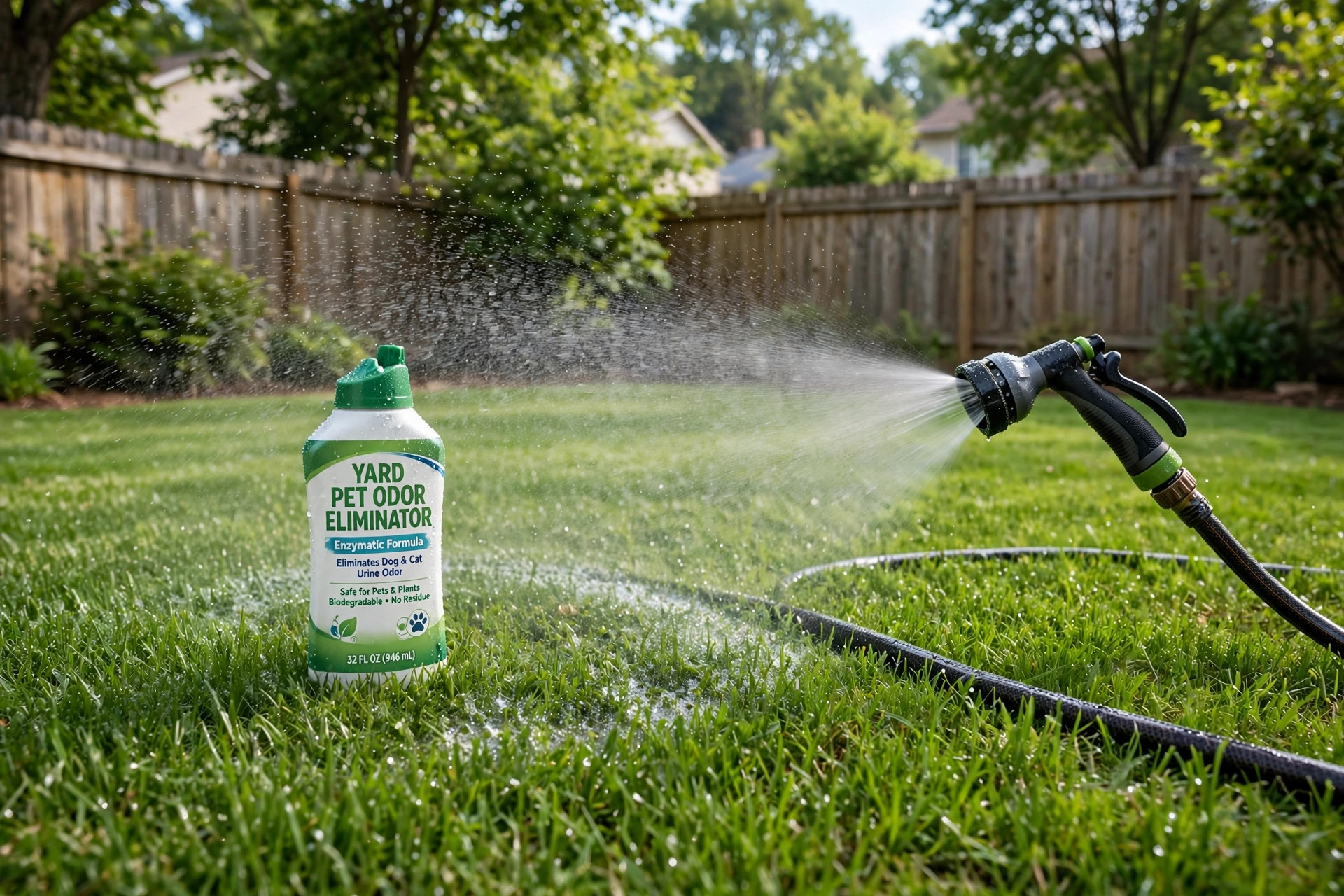

A yard should be a place to relax. A place for children to play. A place for dogs to run. But pet waste can leave a smell that hangs over the grass for days. This is why the best pet odor eliminator for yard and grass matters so much to dog owners. The right product removes the smell at its source. It does not just cover it with perfume. It breaks down the waste compounds in the soil. It keeps the grass alive. And it stays safe for the pets and children who use the yard every day.
This guide walks through the whole topic. It explains why yard odors persist. It shows what to look for in a product. It compares the main types of odor eliminators. It covers cost, care, and safety. By the end, you will know how to choose with confidence.
Why Yard Pet Odor Is So Hard to Remove
Pet urine contains urea, salts, and acids. When a dog uses the same patch of grass each day, these compounds build up in the soil. The urea breaks down into ammonia. Ammonia has a sharp, lasting smell. Rain can help, but heavy rain often pushes the compounds deeper into the soil. Then the smell rises again when the sun warms the ground.
Solid waste is another source. If it sits in the yard for a day or more, bacteria grow fast. The smell spreads beyond the spot where the waste sat. Warm weather makes it worse. Summer heat speeds up bacterial growth. That is why the smell is strongest in July and August.
Many owners reach for scented products. These often fail. A scented spray covers the smell for an hour. Then the real odor returns. What you need is a product that attacks the source. Enzyme-based formulas do this work. They use living enzymes to digest the waste compounds. Once digested, the compounds stop producing odor. This is the key difference between a real eliminator and a simple deodorizer.
Soil type plays a role too. Clay soil holds waste compounds near the surface. The smell stays strong. Sandy soil drains fast and carries odor deeper, but the smell can linger underground. Knowing your soil helps you pick the right form. Sprays suit clay soils. Granules suit sandy soils because they soak in deep.
Shade and air flow matter as well. A yard that stays damp and still will hold odor longer than a sunny, open yard. Trim bushes near the dog’s bathroom area. Let air move through. Sunlight also breaks down odor compounds over time. Small changes like these make your chosen product work much better.
What to Look for When You Choose: Best Pet Odor Eliminator for Yard and Grass
Enzyme-Based Formula
Look for products that list enzymes or “bio-enzymatic” action on the label. These break down urea and organic waste. They work slowly over several hours. The result lasts longer than any scent-based cover. For most lawns, enzyme formulas are the top choice. They are also gentle on grass.
Pet-Safe and Child-Safe Ingredients
Read the label with care. Avoid products with bleach, chlorine, or strong solvents. These can burn grass and harm pets. The best products state clearly that they are safe for pets and children once dry. Some even state that pets can use the yard right away. This matters if your dog goes out several times a day.
Form That Suits Your Yard
Liquid sprays attach to a garden hose. They cover large areas fast. Concentrates mix in a pump sprayer. They suit small yards and spot treatment. Granules spread with a spreader. They work well on big lawns and soak into the soil with rain. Think about the size of your yard before you buy. A hose-end spray is the easiest option for most homes.
Grass Compatibility
Some products work on all grass types. Others suit cool-season grasses or warm-season grasses best. Check the label for your region. If your lawn is new sod or young seed, choose a mild formula. Young grass roots are easy to damage.
Long-Lasting Effect
A good eliminator keeps working for weeks, not hours. Many enzyme products protect the yard for two to four weeks per treatment. Compare the stated coverage time. Longer coverage means fewer treatments per year. That saves both time and money.
Types of Pet Odor Eliminators for the Yard
Hose-End Enzyme Sprays
These are the most common choice. You attach the bottle to your garden hose. Turn on the water. The spray mixes the formula with the water stream. You walk the yard in steady rows. One bottle often covers up to 5,000 square feet. These sprays treat large lawns in under half an hour. They are a strong first choice for most dog owners.
Concentrated Liquid Sprays
Concentrates come in smaller bottles. You dilute them in a pump sprayer or watering can. They cost less per gallon of mixed solution. They suit spot treatment of heavy-use areas. Many owners use a concentrate for the dog’s favorite corner and a hose-end spray for the whole lawn. This combo works well.
Granular Odor Absorbers
Granules spread like lawn fertilizer. You walk the yard with a broadcast spreader. Then you water the lawn or wait for rain. The granules soak into the soil. They keep working for weeks. Granules are a good pick for very large yards. They also suit yards where the odor comes from soil deep under the grass.
Zeolite and Mineral Powders
Zeolite is a natural mineral that traps odor molecules. It does not kill bacteria. It absorbs the gases that cause the smell. It is non-toxic and safe around pets. Some owners spread it over problem spots between full treatments. It is a useful helper, not a full answer on its own.
DIY Home Mixes
Some owners try vinegar, baking soda, or hydrogen peroxide mixes. These can help with light odors on hard surfaces like patios. They are poor choices for lawns. Vinegar and peroxide can kill grass. Baking soda raises soil pH and harms the lawn over time. For grass, stick with products made for grass.
For related outdoor pet needs, you may also look at an outdoor dog shower for muddy paws cleaning to cut down on dirt tracked inside, a pet ramp for couch for small senior dogs for indoor comfort, or a dog backpack carrier for hiking small breeds if your pet joins you on trails.
Cost and Price
Prices vary by type and size. A hose-end enzyme spray costs about 15 to 25 dollars per bottle. Each bottle covers one large treatment of an average yard. A concentrate costs about 20 to 35 dollars. It mixes into many gallons. It is the cheapest option per treatment.
Granules cost about 25 to 40 dollars per bag. A bag covers a large lawn for one treatment. Zeolite minerals cost about 10 to 20 dollars per bag. Most owners treat the yard once a month in warm weather. The yearly cost runs from about 60 to 200 dollars. That is a fair price for a yard that smells clean.
Compare the cost per square foot before you buy. A cheap bottle that covers only 2,000 square feet may cost more than a larger bottle with better coverage. The label should state the coverage area. Use that number to plan your budget.
Care and Upkeep
Pick Up Waste Daily
No product can replace daily cleanup. Solid waste feeds bacteria every hour it sits. Pick it up each day. Use a pooper scooper or sturdy bags. This single habit cuts odor more than any spray.
Water the Lawn After Use
Urine spots burn grass and leave odor. A quick rinse with the hose dilutes the urine. It pushes salts below the root zone. Do this for the dog’s favorite spots each day. It takes one minute. It saves the lawn.
Train a Bathroom Area
Some owners set aside one corner of the yard for the dog. Mulch or gravel works well there. It is easy to clean. It keeps the rest of the lawn fresh. The dog learns the spot in a few weeks. This is the best long-term habit for odor control.
Treat on a Schedule
Apply the eliminator once every two to four weeks in summer. Stretch the gap in cooler months. Do not wait until the smell is bad. Regular treatment keeps odor from building up. Set a reminder on your phone or calendar.
Mow and Aerate
Tall grass traps odor. Mow on a regular schedule. Aerate the lawn once a year. Air flow helps the soil dry out. Dry soil holds less odor than damp, packed soil. A healthy lawn also fights off the damage from pet urine spots.
You can find more lawn care guidance from trusted names like Scotts and The Spruce, and general outdoor cleanup tips from Family Handyman.
Safety
Safety comes first. Always read the product label before use. Keep pets off the treated area until the label says it is safe. Most enzyme products are safe once dry. That usually takes 30 to 60 minutes. Store bottles out of reach of children and pets.
Never mix products together. Bleach mixed with other cleaners can create harmful fumes. If your dog eats any part of the product, call your vet right away. Keep the product label on hand for the vet.
Check the ASPCA and PetMD sites for general pet safety guidance, and the EPA for information on safe lawn chemical use. The American Kennel Club also offers helpful articles on yard safety for dogs.
FAQ
How fast does a pet odor eliminator for yard and grass work?
Enzyme sprays start working within hours. Full results come after one to three days. The enzymes need time to digest the waste in the soil. Be patient. Repeat the treatment if the smell is deep.
Will these products kill my grass?
Most enzyme products are made to be safe for lawns. They should not kill grass. Avoid products with bleach or strong acids. Always test on a small patch first. Wait two days. If the grass looks fine, treat the whole yard.
How often should I treat my yard?
Treat once every two to four weeks in warm months. In winter, once every six to eight weeks is enough. Treat more often if you have several dogs or a small yard. Daily cleanup matters more than the spray schedule.
Are these products safe for puppies?
Many enzyme products state that they are safe for puppies. Check the label. Keep young puppies off the lawn until it is dry. Puppies chew everything. Extra care is wise.
Can I use these on artificial turf?
Yes. Many enzyme sprays work on artificial turf. Rinse the turf first with plain water. Then apply the product. Let it soak in. Rinse again after the stated wait time. Do not use granules on turf. They can clog the backing.
What if the smell does not go away?
Deep odor may need several treatments. Start with daily cleanup. Water the spots well. Apply the enzyme spray. Wait three days. Apply again. If the soil is badly soaked with waste, you may need to remove the top few inches of soil in the worst spot and add fresh topsoil. In rare cases, a vet check for the dog may help. Some health issues change the strength of pet urine odor.
For product reviews and comparisons, see Chewy, The Spruce Pets, and Home Depot.
A Short Final Word
A clean yard is within reach. Pick up waste every day. Rinse the heavy-use spots. Apply an enzyme-based eliminator on a steady schedule. Choose products that are safe for pets, children, and grass. The best pet odor eliminator for yard and grass is the one that fits your yard size, your budget, and your routine. Start with one treatment this week. Your yard will thank you.
References
American Kennel Club. (n.d.). Dog care and training resources. https://www.akc.org ASPCA. (n.d.). Pet care and animal welfare resources. https://www.aspca.org Chewy. (n.d.). Pet supplies. https://www.chewy.com Family Handyman. (n.d.). DIY home repair and maintenance. https://www.familyhandyman.com PetMD. (n.d.). Pet health information. https://www.petmd.com Scotts. (n.d.). Lawn care products. https://www.scotts.com The Home Depot. (n.d.). Home improvement products. https://www.homedepot.com The Spruce. (n.d.). Home and garden advice. https://www.thespruce.com The Spruce Pets. (n.d.). Pet care guides and product reviews. https://www.thesprucepets.com U.S. Environmental Protection Agency. (n.d.). Protecting human health and the environment. https://www.epa.gov
Was this guide helpful?

About Michael Thompson
The My Garden US editorial team writes practical, in-depth home and garden guides for American homeowners — tested advice, no fluff.
You May Also Like
Best Pet Fence Indoor for Keeping Dogs Out: A Plain Guide for Pet Owners
April 5, 2026 0 views
The Best Dog Door for Storm Door Installation
February 1, 2026 0 views
How a Cat Water Bowl Fountain Combo for Hydration Helps Your Cat Drink More
April 14, 2026 1 views