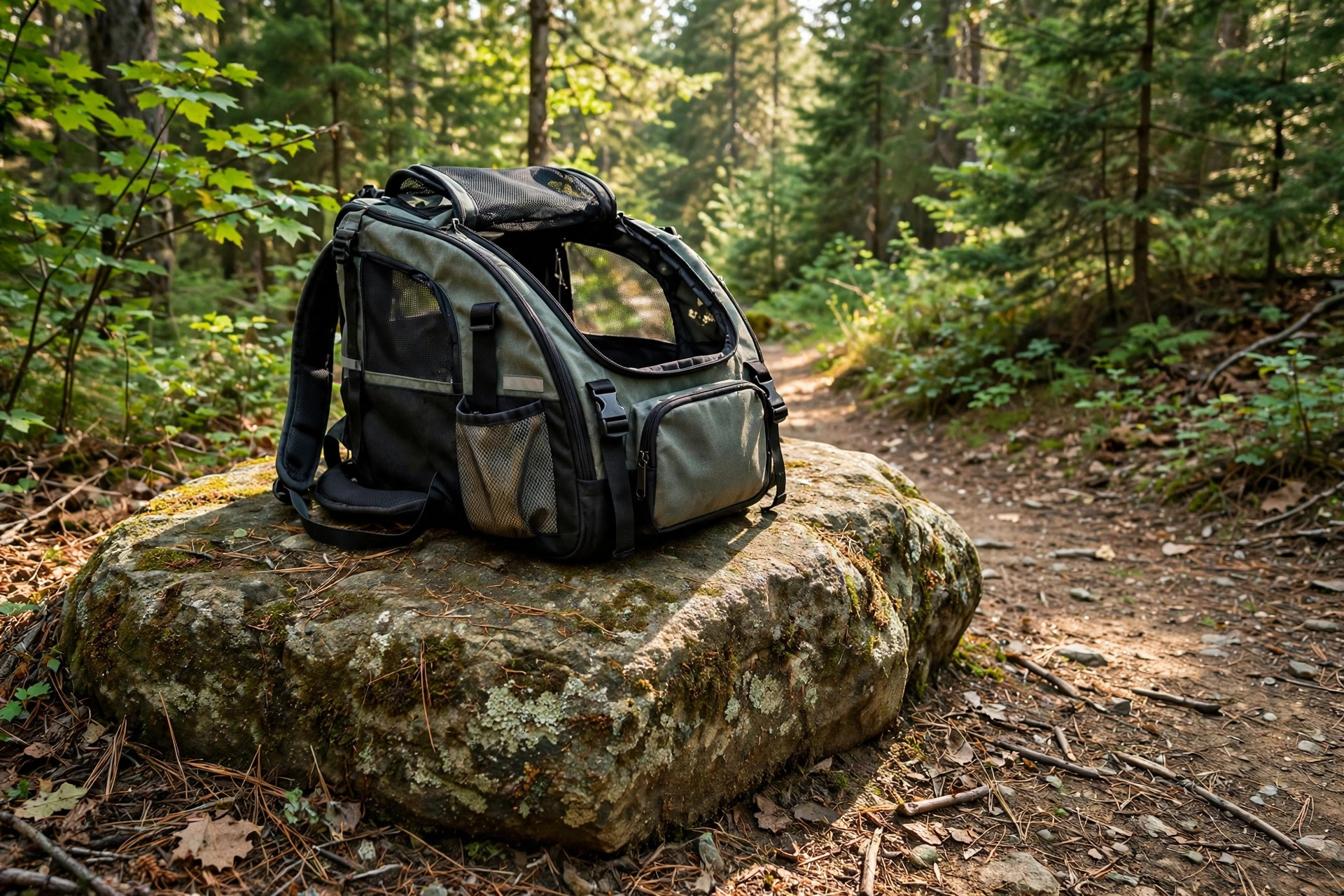

Why a Dog Backpack Carrier for Hiking Small Breeds Matters
Small dogs love the outdoors. They love the smells of the forest. They love the feel of the wind. Yet their legs are short. A trail that takes a large dog one hour can tire a small dog in twenty minutes. A dog backpack carrier for hiking small breeds solves this problem. It lets the little dog ride when the trail gets hard.
The carrier works like a front or back pack. The owner wears it. The dog sits inside, with its head out in the open air. The dog sees the world go by. It smells the trees. It feels part of the walk. When the trail is easy, the dog walks on its own leash. When the rocks get rough, or the path gets long, the dog climbs into the carrier.
This tool is not only for comfort. It is a matter of safety. Small dogs can overheat fast on hot days. They can get hurt on sharp rocks. A tired small dog may refuse to move, and then the owner must carry the dog in their arms for miles. That is bad for the owner’s back. It is also bad for the dog, which has no support. A dog backpack carrier for hiking small breeds gives both of them a better option.
Owners of small breeds such as Chihuahuas, Dachshunds, Pugs, and Yorkies find these carriers useful. Older small dogs with stiff joints use them too. Puppies that have not finished their shots can ride in a carrier and still enjoy the fresh air. The carrier makes the hike possible for dogs that could never finish a long trail on foot.
How to Choose a Dog Backpack Carrier for Hiking Small Breeds
Not every carrier fits every dog. The choice takes some care. Here are the points that matter most.
Size and Weight Limit
Measure the dog before buying. Check the dog’s weight. Check the length of its back. Most carriers for small breeds hold dogs between five and twenty pounds. The dog should be able to sit or lie down inside. It should not be folded like a blanket. Leave room for the dog to turn its head.
Ventilation
Good air flow keeps the dog cool. Look for mesh panels on at least two sides. The mesh should be strong enough that the dog cannot tear it with its claws. On warm days, the dog’s body heat builds up inside a closed pack. Wide mesh windows let the heat escape.
Weight of the Carrier Itself
The owner carries both the dog and the pack. A heavy pack adds to the load. Look for a carrier that weighs less than two pounds when empty. Light frames made of nylon or aluminum are best for long hikes.
Support and Padding
The straps must be wide and padded. Thin straps dig into the shoulders. A waist belt takes some of the load off the back. Chest straps keep the pack from swinging. Inside the pack, the floor should have padding. Some carriers have a small removable mat that can be washed.
Front or Back Design
Front carriers keep the dog close to the owner’s chest. The owner can see the dog at all times. This is good for nervous dogs. Back carriers spread the weight like a hiking pack. They are better for longer walks. Think about which style feels more natural to wear.
Leg and Head Openings
The openings must be soft. Hard edges rub the dog’s skin. Adjustable openings let the owner fit the carrier to the dog’s body. The head opening should let the dog look out without slipping through.
Safety Attachments
A leash clip inside the carrier keeps the dog from jumping out. This small strap can stop a bad fall. Check that the clip is strong and sewn into the pack, not just glued.
The team at the American Kennel Club notes that small breeds need extra care on rough ground, which is one reason many owners turn to carriers for longer hikes.
Types of Dog Backpack Carriers for Hiking
There are several designs on the market. Each one has its own strengths.
Front Chest Carriers
These carriers sit on the owner’s chest like a baby carrier. The dog faces forward or faces the owner. They are easy to put on. They give the owner a clear view of the dog. They are best for short walks and dogs under ten pounds.
Backpack Carriers
These look like hiking day packs. The dog rides on the owner’s back. The weight sits high and close to the body. This design works well for dogs up to twenty pounds. Many models have storage pockets for water and treats.
Legs-Out Carriers
In these carriers, the dog’s legs go through holes at the bottom. The dog stands or sits upright. Some dogs like this style. Others find it strange. The dog must be calm enough to stay in place.
Review sites such as Wirecutter often test pet carriers for comfort and build quality, which can help narrow the field.
Cost and Price Range
A dog backpack carrier for hiking small breeds costs between twenty and one hundred fifty dollars. Simple fabric front carriers sit at the low end. Full hiking backpacks with frames and storage cost more. Price rises with better padding, stronger zippers, and name brands.
Set a budget before shopping. A thirty-dollar carrier may work for short walks around town. For real trail hiking, most owners spend between sixty and one hundred dollars. The extra cost buys stronger straps and better air flow. These details matter on a long day. Independent testers such as Consumer Reports rate carriers and other pet gear for durability.
Watch for sales in spring. Many stores lower prices on outdoor pet gear before hiking season. Online shops such as Chewy carry a wide range of carriers at different price points.
How to Fit the Dog Into the Carrier
A bad fit makes the carrier useless. A good fit takes only a few minutes.
First, open all the panels. Let the dog sniff the carrier. Place a treat inside. Let the dog step in on its own. Do not push the dog. Fear at the start will make every trip harder.
Second, close the panels one at a time. Keep the voice calm. Give praise. Keep the first fitting short, only a few minutes.
Third, adjust the straps. The pack should sit high on the back, not sag near the waist. The dog’s head should rest above the rim of the pack. The dog should not slide to one side.
Fourth, walk around the house. Watch how the dog acts. A dog that pants hard or whines may be too hot or too tight. Loosen the straps and try again.
Fifth, take a short walk outside. Stay close to home. Build up to longer walks over a week. The dog will learn that the carrier means a fun trip.
The vets at PetMD remind owners to watch for signs of stress in dogs, and a slow training process helps the dog accept a new carrier.
Care and Upkeep
Clean the carrier after every few uses. Dirt and sweat build up fast on the trail.
Most fabric carriers can be washed in a machine on a gentle cycle. Use mild soap. Air dry the carrier. Heat from a dryer can warp the frame and shrink the straps.
Wipe the mesh with a damp cloth. Check the mesh for tears. A small tear can grow. Sew or patch it early.
Check the zippers. Trail dust can jam them. A drop of wax or soap on the zipper teeth keeps them moving.
Store the carrier in a dry place. Keep it out of direct sun. Sun breaks down fabric over time.
Replace the carrier when the straps fray or the frame bends. A worn carrier is not safe. Most good carriers last two to three years of regular use.
Safety on the Trail
A dog backpack carrier for hiking small breeds is a safe tool when used with care. Follow these rules.
Keep the dog hydrated. Carry water for both the owner and the dog. Offer water every thirty minutes on warm days.
Watch the dog’s breathing. Fast, heavy panting means the dog is too hot. Move to the shade. Let the dog walk in the open air for a while.
Secure the leash clip every time. A sudden jump can cause a fall. Even a calm dog may bolt at a squirrel or a loud noise.
Do not place the pack in direct sun while resting. Take the pack off and set it in the shade.
Check the dog’s paws after the parts of the walk done on foot. Small breeds have soft pads. Rough rock can cut them.
Avoid the hottest hours of the day. Early morning and late afternoon are best for hiking with small dogs.
The ASPCA publishes guidance on keeping pets safe in warm weather, which applies to trail outings as well.
Training the Dog to Love the Carrier
Some dogs take to the carrier at once. Others need time. Patience pays off.
Start with short sessions at home. Let the dog sit in the carrier for five minutes. Give a treat. End the session before the dog gets restless.
Add one step at a time. First the living room. Then the yard. Then a short street walk. Then a real trail.
Pair the carrier with good things. Put a favorite toy inside. Feed the dog its dinner near the carrier. The dog will link the pack with happy times.
Never use the carrier as a punishment. Never force a frightened dog inside. Trust builds slowly. A scared dog may panic and try to jump out, which is dangerous.
For nervous small breeds, a front carrier may work best at first. The owner can talk to the dog and give it a touch. When the dog feels safe, the move to a back carrier is easy.
When to Let the Dog Walk Instead
The carrier is a rest stop, not a cage. Let the dog walk as much as it can.
Short trails with soft ground are perfect for small legs. Let the dog sniff and explore. This is the joy of the hike for the dog.
Use the carrier for the hard parts. Steep climbs, loose rock, river crossings, and long flat stretches can go fast in the pack. Then let the dog down to walk the easy parts.
Watch the dog for signs of tiredness. A dog that lags behind, sits down, or pants hard needs a ride. Do not wait for the dog to collapse.
Senior dogs and puppies need more rest time. A good rule is ten minutes of walking for every twenty minutes of riding for older small breeds.
Related gear can make outings easier too. Some owners pair a carrier with a pet stroller for small dogs and cats travel for trips that mix trail and town, or keep a pet carrier backpack for small dogs hiking as a backup for multi-dog households. At home, pet stairs for high bed small dogs seniors help small breeds save their joints between adventures.
Packing for the Hike
A small dog needs its own kit. Pack these items:
– Water and a foldable bowl – A few small treats – A waste bag or two – A light blanket for cold weather – A basic first aid kit with bandages – The dog’s leash
Most backpack carriers have side pockets. Use them. Keep the weight balanced. Heavy items should sit close to the body. Gear shops such as REI sell trail packs and can show how a well-fitted pack should sit.
The Home Depot outdoor section stocks many of these small trail supplies in one place.
Traveling with the Carrier Beyond the Trail
The carrier has uses beyond hiking. It works at street fairs, farmers markets, and outdoor cafés. It keeps the dog safe in crowds where small dogs can be stepped on. It works on trips to the vet. It works on short flights as an under-seat carrier, if the airline rules allow it.
Some owners use the carrier on bike rides with a special bike mount. Others use it on canoes and kayaks, with a life vest on the dog. Check the rules of each activity before going.
For general advice on pet travel gear, The Spruce Pets covers carrier styles for different kinds of trips.
Frequently Asked Questions
What weight can a dog backpack carrier for hiking small breeds hold?
Most models hold dogs between five and twenty pounds. Always check the tag on the carrier. Do not exceed the stated limit. An overloaded pack can break a strap or hurt the owner’s back.
Is it safe for the dog’s back?
Yes, when the fit is right. The dog should sit or lie in a natural pose. The pack should support the dog’s weight evenly. Do not use a carrier that forces the dog into a curled or bent shape for long periods.
Can puppies use a backpack carrier?
Yes. Puppies that are too young for long walks can ride in a carrier. This gives them fresh air and new sights. Make sure the puppy’s shots are current if other dogs are on the trail.
How long can a dog stay in the carrier?
Take the dog out every one to two hours. Let it stretch, drink water, and relieve itself. On a full-day hike, plan several breaks. No dog should ride all day without a rest.
Front carrier or back carrier: which is better?
Front carriers give a better view of the dog. Back carriers carry weight better on long walks. For hikes longer than one hour, most owners pick a back carrier. For short walks and anxious dogs, a front carrier works well.
Can I wash the carrier in a machine?
Most fabric carriers allow machine washing on gentle. Remove any hard frame first. Air dry only. Check the care label before washing.
A Final Word
A dog backpack carrier for hiking small breeds opens the trail to dogs that could never walk it alone. It keeps them safe. It keeps them cool. It lets them share the adventure. Choose a carrier with good air flow, strong straps, and a proper fit. Train the dog with patience. Pack water and treats. Then hit the trail. The little dog will thank you with every mile.
References
American Kennel Club. (n.d.). Dog care and training resources. https://www.akc.org ASPCA. (n.d.). Pet care and animal welfare resources. https://www.aspca.org Chewy. (n.d.). Pet supplies. https://www.chewy.com Consumer Reports. (n.d.). Product reviews and ratings. https://www.consumerreports.org PetMD. (n.d.). Pet health information. https://www.petmd.com REI. (n.d.). Outdoor gear. https://www.rei.com The Home Depot. (n.d.). Home improvement products. https://www.homedepot.com The Spruce Pets. (n.d.). Pet care guides and product reviews. https://www.thesprucepets.com Wirecutter. (n.d.). Product reviews from The New York Times. https://www.nytimes.com/wirecutter
Was this guide helpful?

About Jennifer Lee
The My Garden US editorial team writes practical, in-depth home and garden guides for American homeowners — tested advice, no fluff.
You May Also Like
Dog Life Jacket for Small Breeds Pool Safety: A Simple Guide for Owners
June 27, 2026 0 views
Dog Swimming Pool for Backyard Summer Fun
September 9, 2026 0 views
Best Dog Brush for Short Hair Deshedding: What Every Owner Should Know
September 2, 2026 0 views