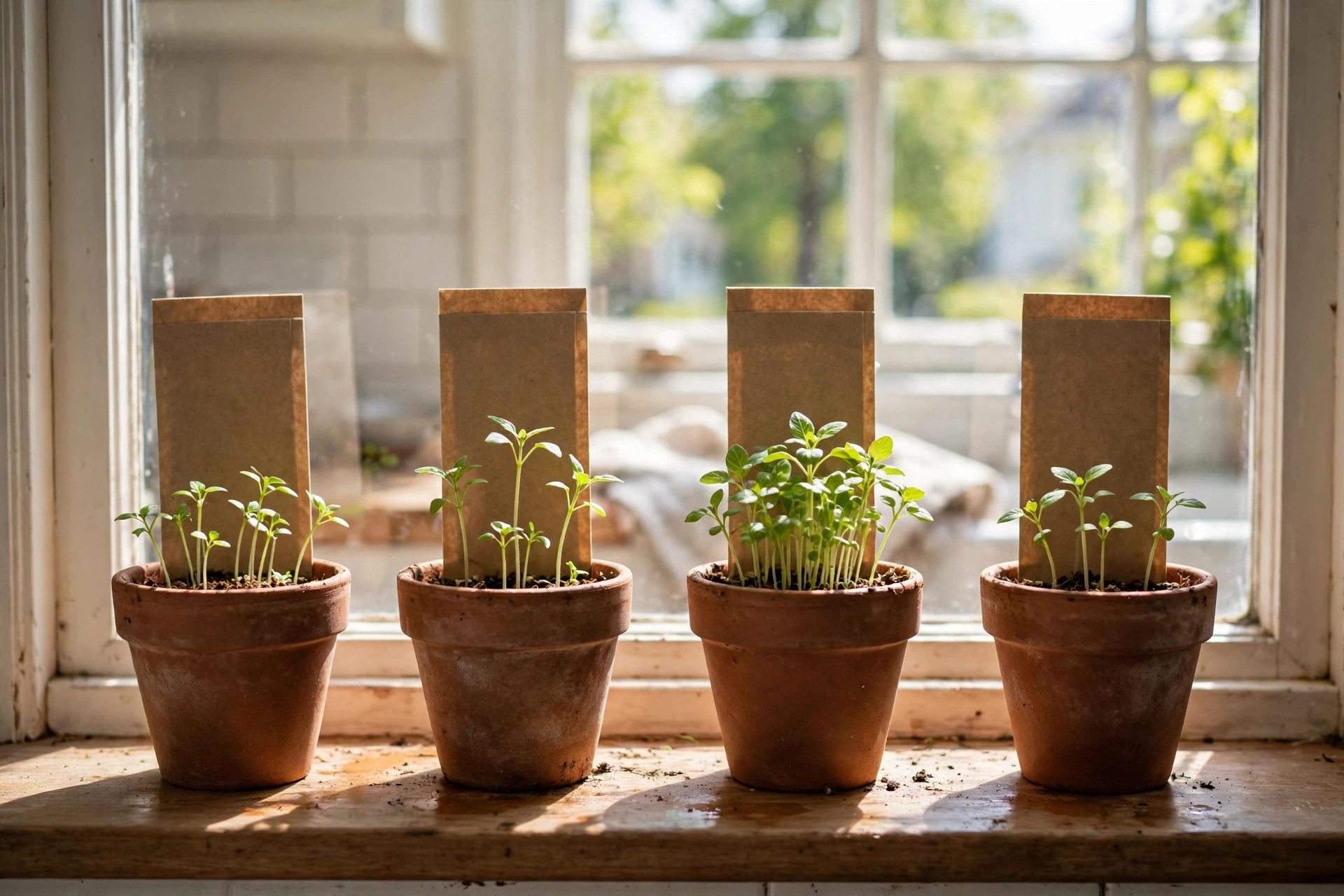

This organic herb seeds american homes guide is for the home gardener who wants fresh herbs without the use of chemical sprays. Herbs such as basil, parsley, thyme, and dill can grow on a kitchen windowsill, on a back porch, or in a small yard bed. They need light, water, and plain care. They do not need a large garden. Many American homes have all the space a small herb garden needs.
The interest in growing food at home has grown in recent years. The United States Department of Agriculture reports that home gardening remains one of the most common hobbies in the country, and herbs are among the easiest plants to start from seed (NIFA). Organic seed growers such as Burpee and Park Seed now sell wide lines of herb seeds grown without synthetic pesticides or chemical fertilizers. A Gurney’s catalog or a White Flower Farm guide will show many kinds of basil, cilantro, chives, mint, oregano, rosemary, and sage.
Why It Matters
Fresh Flavor At Your Door
A sprig of basil cut minutes before dinner tastes very different from a dried leaf bought in a jar. Fresh herbs give strong flavor to simple meals. A cook who grows his own herbs can pick exactly what he needs and leave the rest of the plant to keep growing.
Control Over What Goes On Your Food
The word organic has a plain meaning on a seed packet. It means the parent plants were grown without synthetic pesticides and without chemical fertilizers. A gardener who starts with organic seed knows the seed itself came from clean stock. The gardener then controls the soil, the water, and the feed for the rest of the plant’s life.
Low Cost For A Long Harvest
A packet of herb seed costs little and can fill several pots. One packet of basil seed can give a family fresh leaves from spring through fall. Compared with the price of fresh herb bundles at a store, a home herb garden pays for itself in a few weeks.
What To Look For When You Buy Organic Herb Seeds: Organic Herb Seeds American Homes Guide
The Organic Seal
Look for a seal from a certified body. The United States Department of Agriculture organic seal is the most common. It should appear on the packet. It tells you the seed passed the standards of the national organic program. Do not trust a packet that says “natural” or “untreated” alone. Those words are not the same as certified organic.
Freshness And The Packed Date
Seeds lose strength as they age. Check the packet for a packed-for date or a sell-by date. Most herb seeds stay strong for two to three years if they are kept cool and dry. Buy seed packed for the current season when you can. The Old Farmer’s Almanac notes that seed vigor drops with each year in storage, so fresh seed gives fuller, faster sprouts (The Old Farmer’s Almanac).
Clear Germination Information
A good packet lists the germination rate and the days to sprout. It should also list the depth to plant, the spacing, and the days to harvest. This information helps you plan your pots and your planting dates. Gardening Know How advises home growers to read these labels before they buy, since herb seeds vary more than most people expect (Gardening Know How).
Seed Size And Packet Size
Herb seeds are often very small. One gram of thyme seed holds thousands of seeds. Do not buy a large packet for a small windowsill garden. A small packet is enough for several seasons of indoor pots.
Types Of Organic Herb Seeds For American Homes
Annual Herbs
Annual herbs live for one season. Basil, cilantro, dill, and parsley belong to this group. They grow fast from seed. Sow them after the last spring frost. In warm states they can be sown again in late summer for a fall crop. If you want to compare seed buying options, see our guide to sunflower seed packs buying guide usa for the same label-reading rules applied to another popular seed.
Perennial Herbs
Perennial herbs live for many years. Thyme, oregano, sage, chives, and mint belong to this group. They grow more slowly from seed. Many gardeners start them early indoors and move them outside in spring. Once they are settled, they come back each year with little work.
Biennial Herbs
Biennial herbs live for two seasons. Parsley is the best known. It grows leaves in the first year and sets seed in the second. Many gardeners treat it as an annual and sow fresh seed each spring.
Heirloom And Open Pollinated Seed
Heirloom seeds come from plant lines kept true for many years. Open pollinated seeds grow true from the seed they make. Both are common in organic lines. Proven Winners sells plant stock selected for home garden performance, and their plant notes can help you choose strong varieties (Proven Winners). Monrovia also lists garden-proven herb plants with care notes that apply to seed-grown stock as well (Monrovia).
How To Choose The Right Herbs For Your Home
Match Herbs To Your Kitchen
Grow what you eat. If you cook with basil and oregano, plant basil and oregano. If you like tea, plant mint and chamomile. A small garden of five herbs you use every week beats a large garden of twenty herbs you never touch.
Match Herbs To Your Light
Light is the first limit in most homes. Most herbs want six hours of direct sun each day. A south facing window is best in the United States. If your windows are dark, choose shade tolerant herbs such as mint, parsley, and chives, or add a simple grow light. The Spruce has a clear primer on matching indoor plants to window light (The Spruce).
Match Herbs To Your Climate Zone
The United States has many climate zones. Perennial herbs that survive winter in one state may die in another. Check your USDA hardiness zone on the seed packet or on a zone map. Choose perennials rated for your zone. For buying sources matched to American growers, read our guide on organic herb seeds where to buy usa.
Planting Organic Herb Seeds Step By Step
Pots And Soil
Use clean pots with drainage holes. A four inch pot suits one basil plant or one parsley plant. Fill the pots with a seed starting mix, not heavy garden soil. Seed starting mix is light and clean. It lets tiny roots grow with ease.
Sowing Depth
Sow small seeds on the surface and press them in lightly. Many herb seeds need light to sprout. Sow larger seeds, such as dill and cilantro, about one quarter inch deep. Follow the packet depth. The packet is the best guide for the exact seed you hold.
Water And Warmth
Water the soil before you sow. Keep the soil moist but not wet. Cover the pots with a clear lid or a plastic sheet until the seeds sprout. Most herbs sprout in seven to fourteen days at room warmth. Remove the cover as soon as green shoots show.
Thinning The Seedlings
Thin the seedlings to the spacing on the packet. It feels wasteful to pull young plants, but crowded seedlings grow weak and thin. Keep the strongest one or two in each pot. If you like container growing, our notes on succulent variety packs california homes usa cover the same pot and spacing rules for indoor containers.
Moving Plants Outside
Harden off young plants before you set them in the yard. Give them a few hours outside each day for a week, in shade at first. Move them to full sun by the end of the week. Plant them out after the last frost date for your area.
Cost And Price
What Seed Packets Cost
A packet of organic herb seed usually costs between two and five dollars. Small packets hold enough seed for several pots. Large packets cost more and suit gardeners with beds to fill.
Soil And Pots
A bag of seed starting mix costs a few dollars and fills many pots. Plain clay or plastic pots cost little. You can also reuse clean yogurt cups with holes cut in the bottom.
Lights And Trays
A basic shop light or grow light costs twenty to forty dollars. A heat mat is not needed for most herbs but can speed sprouting in a cold house. A simple tray holds pots and catches water.
The Total For A First Garden
A first indoor herb garden of five pots costs about twenty to forty dollars in full. The seed is the smallest part of the cost. The pots and soil are the rest. In later years you may need only fresh seed, since the pots and lights last.
Care And Upkeep
Water
Water when the top of the soil feels dry. Herbs dislike wet roots. Empty the saucer under the pot after watering so the roots do not sit in water. In summer, outdoor pots may need water each day.
Light
Give indoor herbs as much sun as you can. Turn the pots a quarter turn each week so all sides get light. If stems grow long and pale, the plant needs more light. Move it closer to the window or add a grow light.
Feeding
Herbs are light feeders. A weak liquid feed once a month in the growing season is enough. Too much feed gives soft growth with weak flavor. An organic fish or kelp feed suits an organic garden.
Pinching And Harvesting
Pinch the tops of basil and mint often. Pinching makes the plants branch and grow thick. Never take more than one third of a plant at one cutting. The plant needs its leaves to make food.
Winter Care
Perennial herbs in pots can come inside before the first hard frost. Put them in a cool bright room. Water them less in winter. Annual herbs will die with the cold. Sow fresh seed in late winter for the next spring.
Safety
Keep Seed Away From Children And Pets
Seed packets look like candy packets to a small child. Store them on a high shelf. Some herb seeds, such as those treated with no chemicals at all, are still not food. Do not let children eat seed.
Handle Soil With Care
Bagged mixes are clean, but garden soil can carry germs. Wash your hands after you work with soil. Wear gloves if you have cuts on your hands. Keep potting mix damp when you open the bag so dust does not rise.
Mint Needs A Pot Of Its Own
Mint spreads fast by underground stems. In a bed it can take over in one season. Grow mint in its own pot, even outside. A pot sunk in the ground works well.
Check Local Rules
Some cities and homeowner groups have rules about front yard gardens. Check your local rules before you dig a bed in the front yard. Pots on a porch or back patio rarely cause trouble.
Frequently Asked Questions
How long do organic herb seeds take to sprout?
Most herb seeds sprout in seven to fourteen days at normal room warmth. Thyme and rosemary can take three to four weeks. Keep the soil moist and warm. Do not give up too soon on slow seeds.
Can I grow herbs from seed on a windowsill with no yard?
Yes. Basil, chives, mint, and parsley grow well in pots on a bright windowsill. Choose a south facing window when you can. Turn the pots each week. Harvest often so the plants stay compact.
Do I need special lights to start herb seeds indoors?
No. A bright window is enough for most herbs. A simple shop light hung close above the pots gives stronger, stockier seedlings. Keep any light a few inches above the tops of the plants.
How much sun do outdoor herb plants need?
Most herbs want six or more hours of direct sun each day. Mint, parsley, and chives accept light shade. If your yard is shady, grow herbs in pots and move the pots to the sunniest spots.
Should I start with seeds or with young plants?
Seeds cost less and give you more kinds to choose from. Young plants give a faster harvest. Many gardeners do both: they buy a few plants for quick use and sow seeds for the long season.
How do I save seed from my own herbs?
Let a few flower heads dry on the plant. Cut them into a paper bag. Shake out the seed. Dry it well and store it in a labeled envelope in a cool dry place. Do not save seed from hybrid plants, since it will not grow true.
A Short Final Word
An herb garden asks for little and gives much. A few packets of organic seed, some clean pots, and a bright spot are enough to start. Pick herbs you cook with. Read the packet. Give the plants light and steady water. Pinch them often. By midsummer you will cut fresh leaves a few steps from your stove. That short walk is the whole point of this guide.
References
Burpee. (n.d.). Seeds, plants, and gardening supplies. https://www.burpee.com Gardening Know How. (n.d.). Gardening guides and plant care. https://www.gardeningknowhow.com Gurney’s Seed & Nursery Co. (n.d.). Seeds, plants, and garden supplies. https://www.gurneys.com Monrovia. (n.d.). Plants for home gardens. https://www.monrovia.com National Institute of Food and Agriculture. (n.d.). Agricultural research and extension. https://www.nifa.usda.gov Park Seed. (n.d.). Seeds, plants, and gardening supplies. https://www.parkseed.com Proven Winners. (n.d.). Plants and gardening inspiration. https://www.provenwinners.com The Old Farmer’s Almanac. (n.d.). Gardening calendars and advice. https://www.almanac.com The Spruce. (n.d.). Home and garden advice. https://www.thespruce.com White Flower Farm. (n.d.). Plants, bulbs, and garden supplies. https://www.whiteflowerfarm.com
Was this guide helpful?

About Sarah Mitchell
The My Garden US editorial team writes practical, in-depth home and garden guides for American homeowners — tested advice, no fluff.
You May Also Like
Organic Herb Seeds Florida Homes USA: A Complete Planting Guide
January 8, 2026 0 views
How to Grow Tomatoes: Complete USA Guide
October 6, 2026 19 views
Garlic Bulbs Planting Texas Homes USA: A Complete Garden Guide
September 15, 2026 0 views