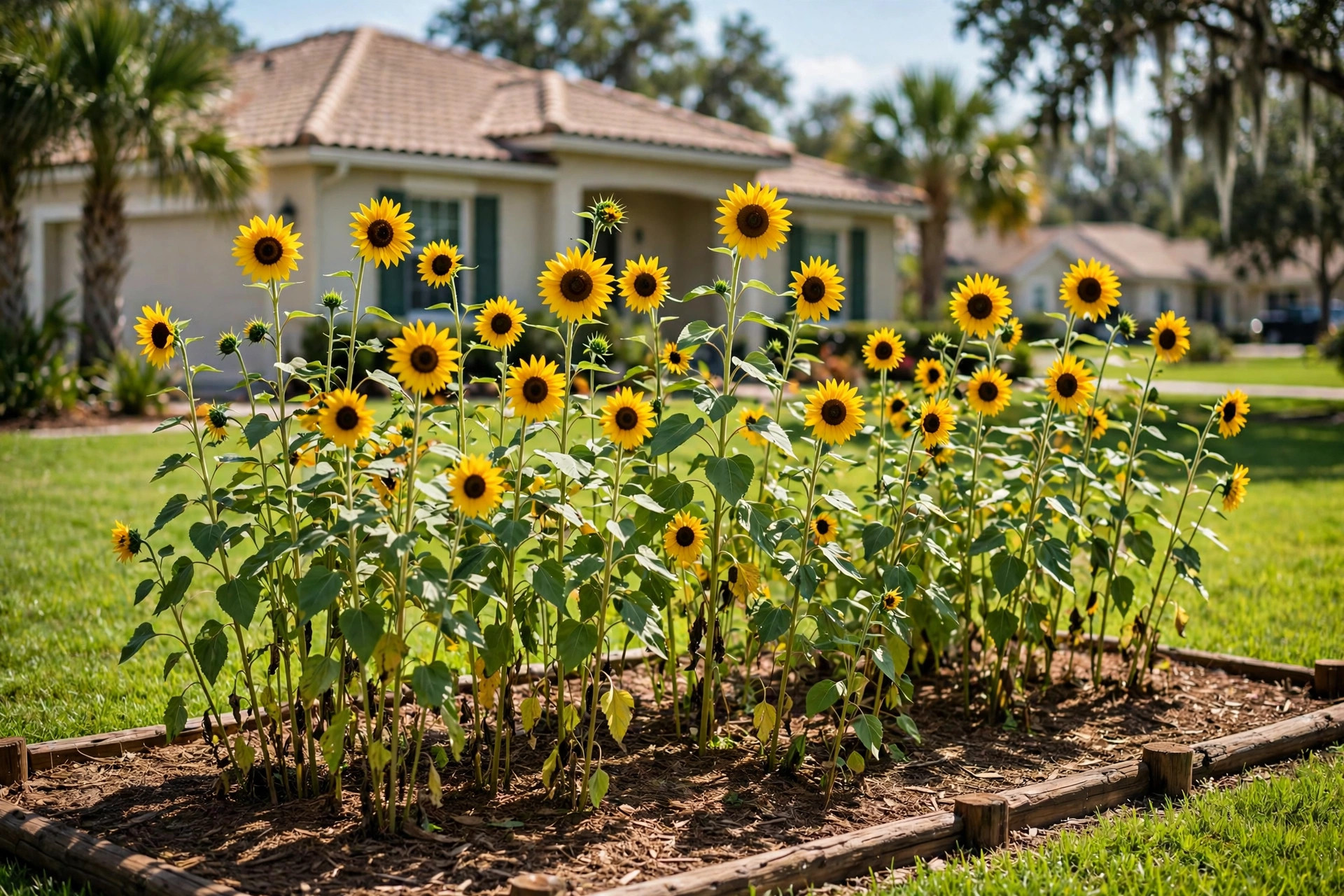

Few sights please the eye like a row of tall sunflowers in full bloom. For families looking at sunflower seed packs florida homes usa, the good news is plain: Florida soil and sun can grow fine sunflowers, if the gardener picks the right kinds and sows them at the right time. This guide walks through why these seed packs matter, what to look for on the packet, which types suit the Florida climate, what they cost, and how to care for the plants from sprout to seed head.
Why It Matters
Florida homes enjoy long growing seasons. Most of the state falls in warm plant hardiness zones, which means the ground stays warm enough for seeds to sprout for many months of the year. Sunflowers love heat and full sun. They need at least six hours of direct sun each day, and Florida yards rarely lack for sunshine.
Sunflowers also serve the garden well beyond their looks. Bees, butterflies, and other helpful insects visit the blooms. Birds eat the ripe seeds. A row of sunflowers can act as a quick windbreak or a living screen between the yard and the street. Children like to watch the flowers grow, and the plants grow fast enough to keep young gardeners interested. For these reasons, sunflower seed packs suit many Florida homes, from small city lots to large country yards.
What to Look for When Buying: Sunflower Seed Packs Florida Homes Usa
Not every packet on the store shelf fits the Florida climate. A few points on the label tell the buyer what matters.
Days to Bloom
Check the “days to maturity” or “days to bloom” line. Florida summers grow hot and wet. Varieties that bloom in 60 to 75 days do best because they finish before the worst heat and storm season arrive. Very slow types that need 90 days or more can still work, but the gardener should sow them early.
Heat and Disease Resistance
Look for words like “heat tolerant” on the packet. Florida heat can stress plants, and warm wet soil brings fungal trouble. Seed packs that mention disease resistance give the gardener a better chance. Well-known seed sellers such as Gurney’s Seed and Nursery and Park Seed describe these traits in their catalogs, which helps buyers compare packs side by side.
Pollen or Pollenless
Some sunflower types make heavy pollen that stains clothes and patio furniture. Pollenless types suit cut flowers for the kitchen table. Bees prefer pollen types. Home gardeners who want both can plant one row of each.
Height and Spread
Packets list mature height. Giant kinds can reach ten feet or more. Dwarf kinds stay under three feet and fit pots on a patio. Measure the planting spot before buying.
Types and Options for Florida
Sunflower seed packs come in several groups. Each group fits a different kind of Florida home.
Branching Garden Types
These plants grow several blooms per stalk instead of one big head. They flower over a long period, which keeps the bed colorful for weeks. They suit home gardens where the family wants steady color rather than one giant show.
Giant Single-Stem Types
These are the tall showpieces. They grow one large head per stalk and can reach the eaves of a one-story house. They need full sun and some shelter from strong wind, since their tall stems can lean or snap in a storm. In Florida, plant them near a fence or wall for support.
Dwarf and Container Types
For patios, balconies, and small yards, dwarf sunflowers grow well in pots. A twelve-inch pot holds one or two dwarf plants. They need daily water in Florida heat because pots dry out fast. They bloom in about two months from seed.
Cut-Flower Types
These grow long strong stems with medium heads in gold, orange, red, and bronze shades. They are the kind sold at farmers’ markets. Home gardeners who like fresh flowers indoors should pick a branching cut-flower mix.
Gardeners who want to learn more about bloom types can browse the plant pages at Monrovia or the growing guides at Gardening Know How, both of which describe many sunflower forms in plain terms.
When to Sow in Florida
Timing matters more in Florida than in many other states. The seed pack often gives one planting date for the whole country, but Florida needs its own plan.
– South Florida: Sow from February through May, and again in late August or September for fall bloom. – Central Florida: Sow from late February through April. A second sowing in late August works in most years. – North Florida: Sow after the last frost, usually late March through May.
Direct sowing works best. Sunflowers dislike having their roots moved, so place seeds right in the garden soil, about one inch deep and six to twelve inches apart depending on the type. Keep the soil damp until the seedlings appear, which usually takes one to two weeks. The Old Farmer’s Almanac publishes yearly planting calendars that confirm these windows for each part of the state.
Cost and Price
Sunflower seed packs cost little. A basic packet at a garden center or hardware store runs from one to three dollars and holds enough seed for a small bed. Larger packs, sold for big yards, run from four to six dollars. Some premium mixes with rare colors cost a bit more.
Buying in bulk saves money for large plantings. A pound of sunflower seed, enough for a long fence row, costs far less per seed than small packets. For most Florida homes, though, two or three packets give plenty of plants. Shoppers comparing sunflower seed packs for sale usa will find prices steady across sellers, since this is one of the least costly flower seeds on the market.
Extra costs stay low. Sunflowers need no special fertilizer. A bag of compost or garden soil for poor spots costs a few dollars. Simple twine and stakes for tall types add almost nothing to the bill.
Planting Step by Step
1. Pick a spot with full sun all day. Sunflowers point their faces toward the sun, so face the bed where it can be seen from the porch or window. 2. Loosen the soil to about a foot deep. Mix in compost if the soil is sandy or thin. 3. Sow seeds one inch deep. Space dwarf types six inches apart, medium types twelve inches apart, and giants twelve to eighteen inches apart. 4. Water gently after sowing. Keep the top of the soil damp, not soaked, until sprouts appear. 5. Thin the seedlings if they come up too thick. Leave the strongest plant at each spacing. 6. Water deeply once or twice a week once the plants are growing. In Florida sand, shallow watering every day is wasteful; deep watering builds stronger roots.
Care and Upkeep
Sunflowers ask little once they are up. Still, a few habits keep the plants strong through the Florida summer.
Watering
Young plants need steady moisture. Grown plants have deep roots and handle short dry spells, but they bloom better with regular water. Water at the base of the stem, not on the leaves, to keep fungal spots away.
Feeding
Rich soil grows leggy plants with weak stems. A light side dressing of balanced garden fertilizer halfway through the season is enough. Avoid heavy feeding, which gives more leaves than blooms.
Staking
Tie tall types to stakes with soft twine. Drive the stake into the ground before the plant grows tall, so the roots are not harmed. One stake per giant plant is enough.
Deadheading and Harvesting
Cut faded blooms to keep branching types flowering. Leave the last round of heads on the plant if the family wants to save seed or feed birds. When the back of the head turns yellow and the petals drop, the seeds are ripe. Cut the head, hang it in a dry shed for a week, then rub the seeds out by hand.
Common Pests and Problems
Florida gardens bring certain troubles that cooler states avoid. Knowing them ahead of time keeps small problems small.
– Damp-off: Seedlings rot at the soil line in wet soil. Sow in well-drained soil and avoid heavy watering. – Leaf spot: Dark spots on leaves come from fungal disease in humid weather. Space plants for air flow and water at the base. – Stalk borers and caterpillars: Watch for chewed stems and leaves. Pick off small pests by hand; larger problems can be treated with garden products labeled for flowers. – Birds: Birds love ripe sunflower seeds. Cover heads with light cloth bags if the family wants to save the seed. – Wind: Summer storms can flatten tall plants. Stake early and plant near fences or walls.
The plant health resources at the National Institute of Food and Agriculture explain these garden problems in depth for home growers across the country.
Safety
Sunflower plants are not poisonous to people or pets, which makes them a safe pick for family yards. Still, a few safety points deserve mention.
Seeds saved for eating should come from types grown for food, and the heads should be fully ripe and dry before harvest. Wash hands after handling garden chemicals, and store any pest control products away from children. Tall sunflowers near play areas should be staked firmly so a storm cannot knock them over. Gardeners with ragweed allergies should note that sunflowers belong to the same plant family; wearing gloves and washing hands after garden work keeps the itch away.
FAQ
How long do sunflowers take to bloom in Florida?
Most types bloom 60 to 80 days after sowing. Florida warmth speeds growth, so seeds sown in March often bloom by late May. Dwarf types bloom fastest. Check the packet for the exact days to bloom of each variety.
Can I grow sunflowers in pots in Florida?
Yes. Dwarf types grow well in pots of at least twelve inches across. Use good potting mix, place the pot in full sun, and water daily in hot weather. Pots dry out much faster than garden soil in the Florida sun.
Do sunflowers come back every year in Florida?
Most sunflowers are annuals that live one season. A few perennial types exist but are sold as plants, not in common seed packs. Many annual types drop seed that sprouts on its own the next season, which feels like the plant returning.
How much sun do sunflowers need?
At least six hours of direct sun each day, and eight or more gives the best blooms. Shade grows weak, leggy plants with small flowers. Place the bed where no building or tree shades it during midday.
What is the best month to plant sunflowers in Florida?
For most of the state, March is the surest month: the soil is warm, the rain is moderate, and plants bloom before peak storm season. South Florida gardeners can start in February. A second sowing in late August gives fall color in central and south Florida.
Where can I learn more about growing sunflowers?
Trusted garden sites carry full growing guides. The Spruce covers sunflower care in simple how-to form, and White Flower Farm offers detailed plant culture notes. New gardeners who want a full buying rundown can also read our sunflower seed packs buying guide usa and compare with wildflower seed mixes for sale usa for a mixed meadow bed.
A Short Final Word
Sunflower seed packs give Florida homes a great deal of color for very little money. Pick heat-tough types, sow at the right time for your part of the state, give them full sun and steady water, and the plants do the rest. By summer the yard stands full of tall gold blooms, the bees are busy, and the seed heads ripen for the birds. Few garden projects please a household so quickly for so small a cost.
References
Gardening Know How. (n.d.). Gardening guides and plant care. https://www.gardeningknowhow.com Gurney’s Seed & Nursery Co. (n.d.). Seeds, plants, and garden supplies. https://www.gurneys.com Monrovia. (n.d.). Plants for home gardens. https://www.monrovia.com National Institute of Food and Agriculture. (n.d.). Agricultural research and extension. https://www.nifa.usda.gov Park Seed. (n.d.). Seeds, plants, and gardening supplies. https://www.parkseed.com The Old Farmer’s Almanac. (n.d.). Gardening calendars and advice. https://www.almanac.com The Spruce. (n.d.). Home and garden advice. https://www.thespruce.com White Flower Farm. (n.d.). Plants, bulbs, and garden supplies. https://www.whiteflowerfarm.com
Was this guide helpful?

About Emily Rodriguez
The My Garden US editorial team writes practical, in-depth home and garden guides for American homeowners — tested advice, no fluff.
You May Also Like
Daffodil Bulb Packs Where to Buy USA: A Plain Guide for Fall Planting
August 5, 2026 0 views
How to Grow Chives: A Perennial Herb Guide
October 7, 2026 2 views
Pothos Plants Bulk Deals Near Me: A Plain Guide to Buying Well
July 9, 2026 0 views