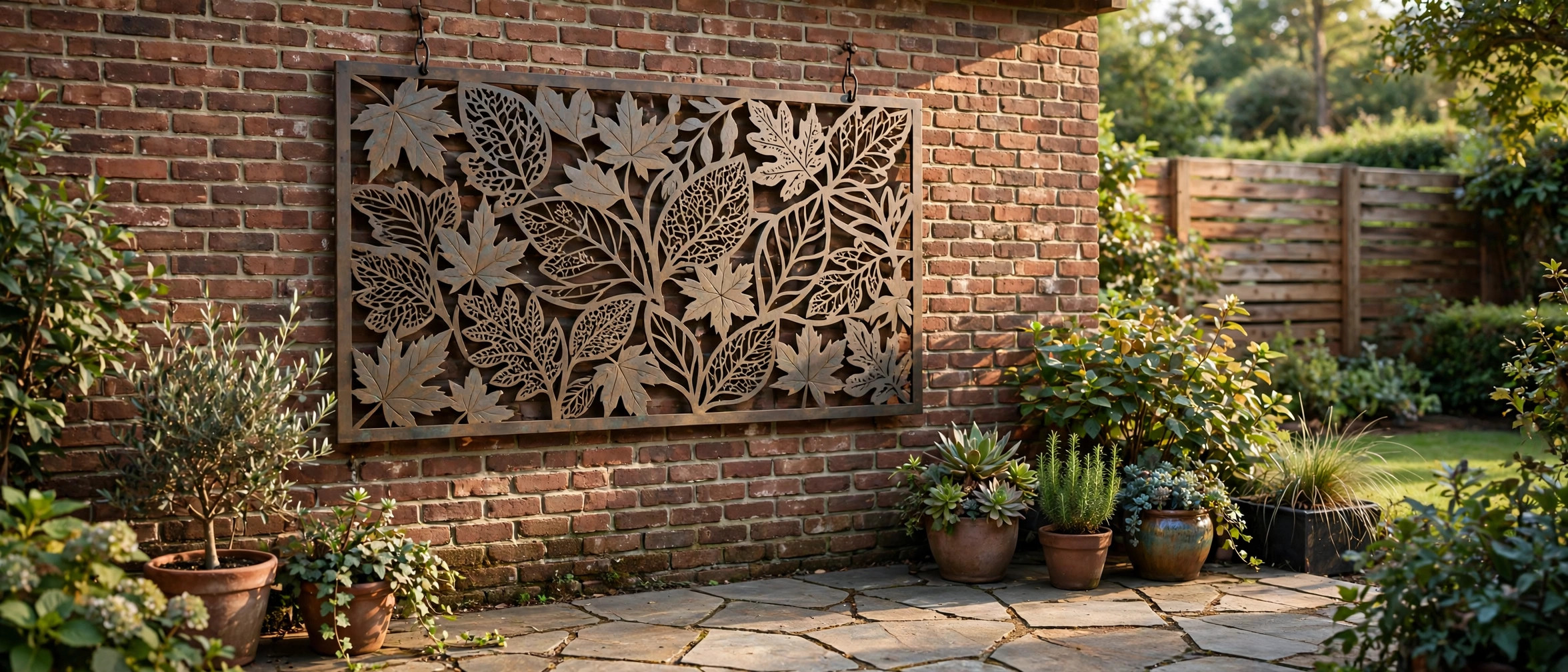

A bare wall can make a patio feel cold and dull. The best outdoor wall art for patio areas turns that wall into a point of interest. It adds color, shape, and life to a space that is often left plain. Many homeowners buy art made for indoor use and watch it fade or peel within a year. Outdoor pieces are built to stand up to sun, rain, and heat. This guide will help you pick the best outdoor wall art for patio walls that lasts for years.
Why Outdoor Wall Art Matters
A patio is a room without a ceiling. It deserves the same care as a living room. A wall that is left bare draws the eye to stains, cracks, and plain brick. A well-placed piece of art changes that. It gives guests something to look at. It makes the space feel warm and lived in.
Outdoor art also ties the whole yard together. It can pick up the colors of your cushions, your plants, or your trim. A round sun design in warm gold can echo the tones of a wooden fence. A deep blue wave panel can mirror the color of your pool or your planter pots. These small links make a patio feel planned and calm.
There is a practical side too. Art can cover an old vent, a stained patch of stucco, or a blank section of fence. It can mark a dining corner or a reading spot. For people who rent, a hanging panel is a way to add style without making changes to the wall itself.
What to Look for in Outdoor Wall Art: Best Outdoor Wall Art for Patio
Weather Resistance
Sun and water are the two main foes of outdoor art. Strong sun fades paint and weakens cheap plastic. Rain soaks into wood and fiberboard and causes them to swell. The best outdoor wall art for patio use is rated for outdoor display. Look for words like weatherproof, fade resistant, and rust proof on the label. These terms mean the maker has treated the surface or picked materials that can take the weather.
Powder-coated metal is a top choice. The coating seals the metal and keeps rust away. Sealed ceramic and treated canvas prints are also good. Avoid bare wood, plain paper prints, and any frame that is not sealed. They may look fine in the store, but they will not last a full season outside.
Size and Scale
Size matters more than most buyers think. A small piece on a large wall looks lost. A huge piece in a small corner feels heavy. Measure your wall before you shop. A good rule is to fill about two-thirds to three-quarters of the wall width with the art or a group of pieces. Leave at least six inches of space on each side.
For a narrow wall, a tall vertical panel works well. For a wide wall, a group of three panels or one wide piece looks best. Hold a piece of paper the size of the art up to the wall before you buy. This simple test saves many returns.
Material and Weight
Outdoor art comes in metal, wood, ceramic, stone, and treated canvas. Metal is light and strong. Wood has a warm look but needs care. Ceramic and stone are heavy and best for walls that can hold them. Treated canvas gives the look of a painting with better weather tolerance.
Weight matters for hanging. A light metal panel can hang from one or two hooks. A heavy stone piece may need wall anchors or a rail. Check the weight on the label and make sure your wall can take it. Brick, concrete, and stucco walls can hold heavy pieces with the right anchors. Vinyl siding needs special hooks that slide under the panels.
Types of Outdoor Wall Art
Metal Wall Panels
Metal panels are the most common choice for patio walls. They come in sun, moon, tree, flower, and wave shapes. Many are cut with a laser, which gives clean lines and fine detail. Powder coating keeps the color bright and stops rust. These pieces are light enough to hang alone and strong enough to last for years. They work well on brick, stucco, and fence boards.
Ceramic and Tile Art
Ceramic tiles and mosaic pieces bring color and texture. Hand-painted tiles from the Southwest and from Mexico are popular for patios. They can take sun and rain well when they are sealed. A row of tiles can act as a border along a wall. One large tile mural can serve as a center point. They are heavier than metal, so plan the hanging hardware with care.
Wooden Signs and Carvings
Wooden art has a warm, natural feel. Cedar and teak hold up best outdoors. Pine and plywood will rot unless they are sealed on all sides. Look for signs that are painted with outdoor-grade paint and sealed with a clear top coat. Carved wood panels with leaves, fish, or birds suit rustic and cottage patios. Recoat the sealant each year to keep them sound.
Treated Canvas Prints
Some makers sell canvas prints that are treated for outdoor use. These prints have a UV coating and a sealed back. They give the look of a framed painting at a low price. They do best in a covered patio where they get little direct rain. In a fully open yard, a metal or ceramic piece will last longer.
Wall Planters and Living Art
Wall planters mix art with green life. A metal frame with pockets for plants turns a wall into a garden. Living wall art suits shady patios where full sun pieces would fade. Pick plants that suit your light and water them often. These pieces need more care than other types, but they bring a fresh feel that no paint can match.
Sculptures and Relief Art
Three-dimensional relief art adds depth. Faces, animals, and sun designs in relief cast small shadows that change through the day. These pieces look best with solar patio lights placed nearby so they show up at night. Stone and cast metal reliefs are heavy, so use strong anchors.
How to Choose the Right Piece
Match Your Style
First, look at the style of your home. A modern home with clean lines suits simple metal panels and bold shapes. A farmhouse patio suits wooden signs with words or carved scenes. A Spanish-style home suits bright ceramic tiles. A coastal home suits shells, waves, and driftwood tones. The art should feel like it belongs with the house, not like an afterthought.
Pick a Color Plan
Outdoor art gets strong light, so colors can look washed out. Deep tones like bronze, cobalt blue, forest green, and warm red hold up best in bright sun. Pick two or three colors that repeat around your patio. Match the art to your waterproof outdoor throw pillows or your umbrella. This repeat of color makes the whole space feel tied together.
Plan the Placement
Think about where the eye goes. A piece above a bench or a dining table draws the eye up and makes the wall feel taller. A piece at the end of a walkway pulls visitors forward. Avoid spots where a door swings or where a grill gives off heat. Also avoid spots where a hose sprays. Keep art at eye level when viewed from your main seat. For most patios, that means the center of the piece sits about five feet off the ground.
Set a Budget
Prices range from under twenty dollars for a small metal sign to several hundred for a large hand-cut panel. Decide your budget before you shop. A mid-range piece often lasts longer than a very cheap one. If you want a large wall filled, a group of three smaller panels can cost less than one large piece and look just as full.
Cost and Price
Small metal signs and plaques cost about twenty to sixty dollars. Medium panels and tile sets run from sixty to one hundred fifty dollars. Large statement pieces, hand-cut metal panels, and custom wood carvings can cost two hundred to five hundred dollars or more. Wall planter systems start around fifty dollars for a small frame and rise past three hundred for a full living wall.
Shipping can add to the cost, since some pieces are large or heavy. Check the return policy before you order. A piece that looks right online may not suit your wall in person. Buying from a store like IKEA or Wayfair makes returns easier, since both have clear return terms for home goods. Online marketplaces often have a wide range of styles at low prices, but read the reviews to check for rust and fading reports.
Care and Upkeep
Outdoor art needs little care, but some care keeps it looking new. Wipe metal panels with a damp cloth two or three times a year. This removes dust and salt that can dull the coating. Check screws and hooks each spring. Wind and heat can loosen hardware over time. Tighten what is loose before the piece falls.
Reseal wooden art once a year with an outdoor clear coat. This takes less than an hour and adds years to the life of the piece. Check ceramic pieces for cracked glaze. A crack can let water in, which may split the tile in a hard freeze. If you see a crack, seal it or move the piece indoors for the winter.
When cold weather comes, you may want to take art down. Store pieces in a dry shed or garage. Read our guide to patio furniture storage ideas for tips that apply to wall art as well. Light metal pieces can often stay up all year. Heavy stone and wood pieces are better off stored.
Safety Tips
A falling piece of art can hurt someone or break a table below. Use hooks and anchors rated for more than the weight of the piece. In brick or concrete, use masonry anchors, not simple nails. In stucco, find a stud or use a toggle anchor. If you are not sure, ask at a hardware store. It is better to ask than to have a piece fall in a storm.
Keep art away from heat sources. Do not hang pieces above a grill or a fire pit. Heat can warp metal, crack tile, and peel paint. Keep a clear space of at least three feet between art and open flame. Also keep art clear of walkways where a head or shoulder might strike a low-hanging piece.
Some older metal pieces may have sharp cut edges. Run a finger along the back edge before you hang it. If it feels sharp, sand it lightly or cover the edge with clear tape. Keep small children from pulling on low pieces. A firm mount is the best guard against accidents.
Frequently Asked Questions
Can I use indoor wall art on my patio?
You can, but it will not last. Indoor art is not sealed against sun and rain. Paint will fade, frames will warp, and paper prints will spot. If you love an indoor piece, hang it in a fully covered patio where it gets no direct rain, and bring it in during the wet season. For a fully open wall, buy art made for outdoor use.
How do I hang outdoor wall art on brick?
Use masonry anchors and screws. Drill into the mortar joint when you can, since mortar is easier to patch than brick. Pick an anchor rated for the weight of your piece. For light pieces under five pounds, outdoor adhesive hooks may work, but they can fail in high heat. Screws are the safer choice.
Will outdoor wall art fade in the sun?
Some fading is normal over years, but good pieces resist it. Powder-coated metal and glazed ceramic hold color well. Cheap painted pieces fade fast. To slow fading, hang art on a north-facing wall or under a patio cover when you can. Pieces with UV-resistant coatings last the longest in full sun.
What is the best material for outdoor wall art?
Powder-coated metal is the best all-around choice. It is light, strong, rust proof, and holds color. Glazed ceramic is a close second for color and texture. Sealed cedar or teak suits a natural look but needs yearly care. Treated canvas is fine for covered patios at a low price.
How do I clean outdoor metal wall art?
Wipe it with a soft cloth and warm soapy water. Rinse with a hose on a gentle setting. Dry it with a clean cloth so water does not sit in the seams. Do not use harsh cleaners or steel wool. They can scratch the coating and let rust start. Clean twice a year, or more often near the sea.
Should I take outdoor wall art down in winter?
Light metal pieces can stay up in most climates. Take down wood, canvas, and living wall art before the first hard freeze. Store pieces in a dry place. If your area gets ice storms, take down glass and ceramic pieces too. A quick check each fall will save you from spring repairs.
A Short Final Word
The best outdoor wall art for patio walls is art that suits your home, fits your wall, and stands up to the weather. Measure first. Pick weatherproof materials. Hang it firm. With those three steps, a bare wall becomes the best seat in the yard. Start with one piece you love, then build around it as the seasons pass.
References
IKEA. (n.d.). Home furnishings and outdoor decor. https://www.ikea.com Wayfair. (n.d.). Furniture and outdoor decor. https://www.wayfair.com
Was this guide helpful?

About Michael Thompson
The My Garden US editorial team writes practical, in-depth home and garden guides for American homeowners — tested advice, no fluff.
You May Also Like
Best Deep Seating Patio Set Reviews
January 18, 2026 0 views
Outdoor Bar Stools for Patio Counter Height: A Practical Buying Guide
June 22, 2026 0 views
Outdoor Side Table with Umbrella Hole: A Practical Guide for Your Patio
October 1, 2026 0 views