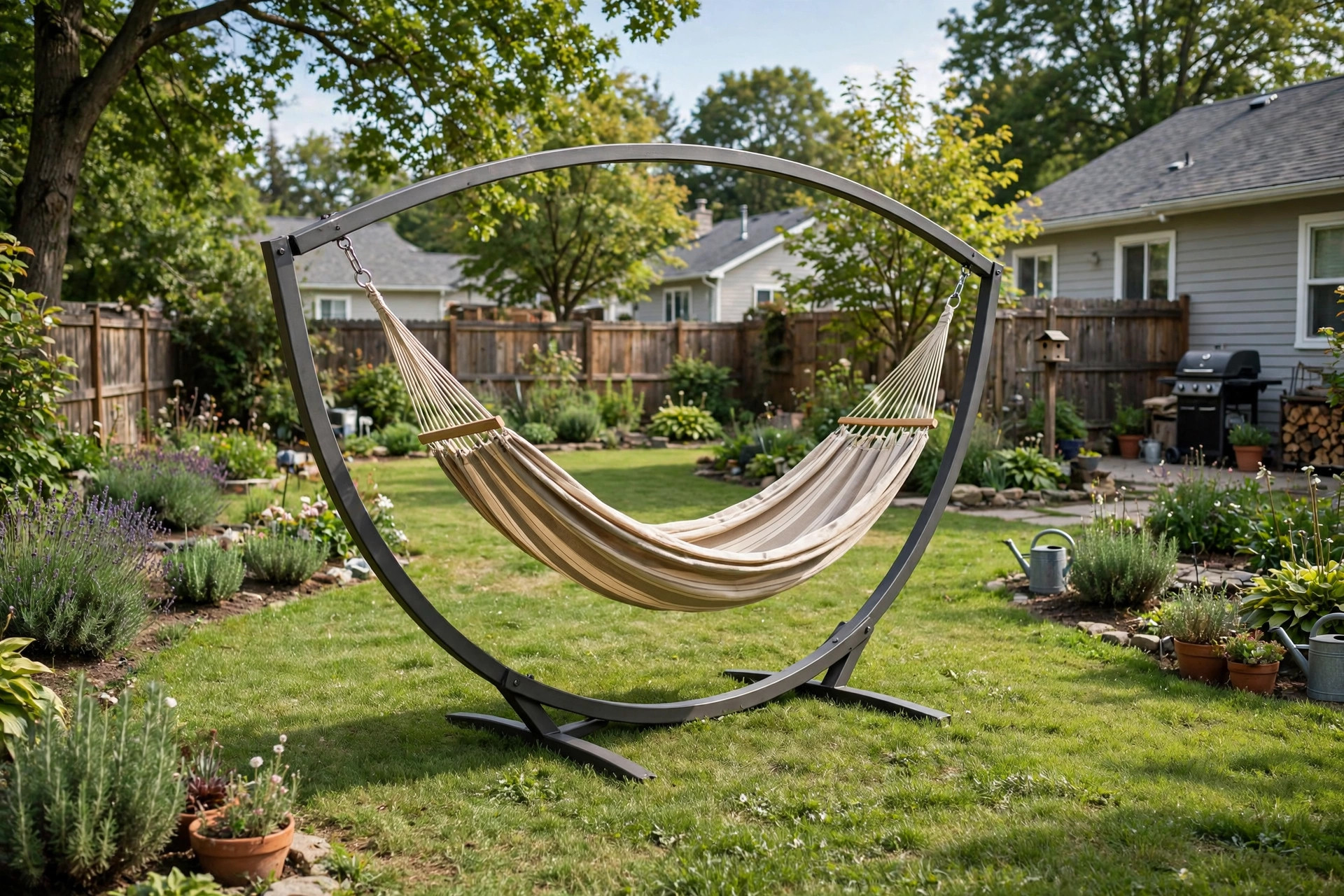

Few pleasures in life are as simple as resting in a hammock on a warm evening. An outdoor hammock stand for two people makes that pleasure a shared one. Two can read, talk, or simply watch the clouds move across the sky, and no tree is needed. Many American homes have yards without two strong trees set the right distance apart. A stand solves that problem at once. It holds the hammock steady, it moves where the shade goes, and it sets up in a single afternoon.
This guide walks through everything a buyer needs to know. It covers why a two-person stand earns its place on a patio, what to look for when choosing one, the main types on the market, the costs involved, and how to keep it in good shape for years. It also answers the questions most often asked by shoppers and points to trusted sources for deeper reading.
Why a Stand for Two Makes Sense
A hammock made for one person has its charm. But an outdoor hammock stand for two people opens the door to a different kind of rest. Couples, friends, and parents with small children can share the space. The hammock hangs wider, the fabric spreads more, and the gentle sway feels steadier with weight balanced on both sides.
There are practical reasons as well. A stand removes the need for trees or posts. Not every yard has the right pair of trees, and not every tree is strong enough to carry two adults. Drilling into trees can harm them, and some towns limit what can be done to street-side trees. A stand stands free. It can sit on a lawn, a deck, a patio, or beside a pool. When the season changes or the sun shifts, the whole setup can be lifted and carried to a better spot.
Compared with fixed patio seating, a hammock stand costs less and asks little of the owner. There is no concrete work, no digging, and no carpentry. The parts arrive in a box, the buyer follows the instructions, and the hammock is ready before dinner. Guides on outdoor living at The Spruce and HGTV often name a double hammock stand as one of the simplest upgrades a homeowner can make to a yard.
What to Look for When Choosing: Outdoor Hammock Stand for Two People
Buying an outdoor hammock stand for two people is mostly a matter of fit and strength. The details below are the ones that matter most.
Weight Capacity
The first number to check is the weight limit. A stand meant for two people should hold at least 450 pounds, and many good ones hold 550 pounds or more. The limit covers the weight of both people plus the hammock itself. Check the rating in the product description and do not guess. A stand with a higher limit will feel firmer and last longer than one run near its limit every day.
Size and Fit
The stand must match the hammock. Most double hammocks are 12 to 13 feet long from loop to loop, and the stand must be built for that length. Stands come in sizes from about 10 to 15 feet. Measure the hammock first, then choose a stand that matches or adjusts. Some stands have extendable arms or chain links that let the buyer fine-tune the hang. A good rule is that the hammock should hang with a gentle curve, not pulled flat like a drum. Product reviewers at Consumer Reports often remind buyers that size mismatch is the most common cause of a poor first experience.
Frame Material
Stands are usually made of steel, wood, or a mix of both.
Steel stands are the most common. They resist bending, they fold or come apart for storage, and a powder coat finish helps them fight rust. Look for a coat that is thick and even, with no bare spots at the joints.
Wooden stands cost more but look fine in a garden. Cedar and cypress stand up to weather better than pine. A wooden stand is heavier to move but often more handsome to look at. Reviews of solid outdoor furniture on Polywood and Article show that buyers who value looks often choose wood, while buyers who value ease of moving choose steel. Aluminum stands are light and will not rust, but they can feel less steady under two adults.
Stability and Design
The shape of the base matters. Arc-shaped stands, sometimes called c-frame or curved-beam stands, hold the hammock from a single long curve of steel. They take up less room and look clean on a patio. Traditional stands have two upright ends joined by a crossbar and use more floor space but spread the load widely.
Check that the feet have caps or pads. Bare metal feet can scratch a deck or patio. Wide feet or a broad base reduce rocking. Some owners add sandbags to the base in windy spots, though a well-built stand should not need them.
Ease of Setup
Most stands go together with a few bolts and an Allen key in under an hour. Read the manual before starting, lay out the parts, and work with a helper.
Weather Resistance
An outdoor hammock stand for two people lives outside. Rain, sun, and salt air all test the finish. Powder-coated steel resists rust well, but chips should be touched up with matching paint. Wood needs a fresh coat of sealer each year or two. Hardware stores such as Lowe’s and Home Depot sell touch-up paint and wood sealer made for outdoor furniture.
Types of Stands for Two
There is no single best design. The right type depends on the yard, the budget, and taste.
Steel arc stands. The modern favorite. One curved beam runs along the side, and the hammock hangs from chains at each end. The footprint is modest, the look is clean, and setup is simple. Prices are mid-range. They suit patios and decks where space is limited.
Traditional post stands. Two end frames joined by a long beam. Very steady, often with the highest weight ratings. The downside is size: they can stretch 14 feet or more and need a clear patch of lawn.
Wooden garden stands. Built from cedar, cypress, or treated lumber. They look at home among flower beds and trees. They are heavy, cost more, and need yearly sealing, but they age with grace. Home and garden writers at Bob Vila often favor wood for a natural yard style.
Hammock stand and hammock sets. Sold as a matched pair. The stand and hammock arrive together, sized to fit. This removes the guesswork of matching parts. Prices run from budget to high end. For a first-time buyer, a set is often the safest choice.
Shoppers comparing styles can browse large outdoor furniture selections at IKEA and Wayfair to see how each type looks in real backyard settings.
Cost and Price Ranges
An outdoor hammock stand for two people costs anywhere from about 80 dollars to over 500 dollars, depending on material and build.
Budget stands in the 80 to 150 dollar range are usually steel with a basic powder coat. They do the job, but the finish may be thin and the weight limit lower. They suit light use.
Mid-range stands from 150 to 300 dollars are the sweet spot for most buyers. Steel arc stands and better post stands live here, with weight limits of 500 pounds or more and sturdier joints. Many of the best-reviewed models fall in this band.
High-end stands from 300 to 500 dollars or more are usually wood, heavy-gauge steel, or designer pieces. They last longer and often carry longer warranties.
The hammock itself is a separate cost unless bought as a set. A good double hammock runs from 40 to 150 dollars. Quilted fabric hammocks are thick and padded. Brazilian-style cotton hammocks are soft and classic but need more care in rain. Mayan-style woven hammocks stretch and breathe in heat. Rope hammocks look traditional and dry fast.
Add small costs for extras: a rain cover or storage bag (15 to 40 dollars), touch-up paint (under 10 dollars), and perhaps replacement chains or hooks over the years.
Setup and Placement
Putting up an outdoor hammock stand for two people is straightforward work. Choose a level spot, since a slope makes the stand rock and the hang feel wrong. Allow about 2 feet of space around the stand so the hammock does not brush walls or rails. Assemble the frame on the ground, hand-tightening bolts first, then finishing with the wrench. Hang the hammock and adjust the chain links so it rests with a deep, relaxed curve. Sit in the center slowly the first time and check that all bolts are tight.
Think about sun and shade. Morning sun with afternoon shade is ideal in hot regions. Many owners move the stand a few times in the first month before it finds its true home.
Care and Upkeep
A little care goes a long way. With routine attention, an outdoor hammock stand for two people can last many seasons.
During the season. Wipe the frame with a damp cloth when dust or pollen builds up. Tighten bolts every few weeks, because daily sway slowly works them loose. Check chains and hooks for wear or rust.
After rain. Stand the hammock up or drape it so water runs off. Fabric that stays wet grows mildew. A cover helps, but covers can trap moisture too, so use one that breathes.
At season’s end. Take the hammock down and store it dry indoors. If the stand must stay outside, cover it or at least cap the open tube ends. Wooden stands should be cleaned and resealed before winter. A fresh coat of sealer each fall is cheap insurance.
Pairing the stand with weatherproof patio furniture covers heavy duty is a common way owners protect their whole seating area at once.
Safety Tips
A hammock stand is safe when used with common sense. Still, a few rules deserve stating.
– Respect the weight limit. Do not let the stand carry more than its rating. – Sit, do not stand, in the hammock. Standing up in a hammock is the most common cause of falls. – Keep the center of gravity low. Enter and exit from the middle, sitting down first, then swinging the legs in. – Supervise children. Kids love to spin and swing hard; set clear rules about gentle use. – Check hardware regularly. A loose bolt or worn chain is a warning, not a detail. – Place on firm ground. Soft, wet soil can let a leg sink and tip the frame. – Keep pets’ claws in mind. Dogs can scratch fabric; a blanket or pad protects the hammock.
Families with young children sometimes prefer a best porch swing for two people for a more fixed, rail-holding seat, while keeping the hammock for quieter hours.
Frequently Asked Questions
Can two adults really fit in one hammock? Yes, when both the hammock and the stand are made for two. A double hammock is typically 55 to 65 inches wide, enough for two adults to lie side by side. Check the weight rating of both the hammock and the stand, and stay under the lower of the two.
How long does it take to assemble a stand? Most buyers finish in 30 to 60 minutes with two people. The hardest part is lifting the long beams. Reading the manual first saves more time than any shortcut.
Can the stand stay outside all winter? Steel stands can survive winter in mild regions, but harsh freeze and thaw cycles wear the finish faster. Wooden stands do better with a cover. In snowy regions, take the stand apart and store it in a garage. The hammock itself should always come inside for winter.
Will a hammock stand damage my lawn? The feet press into soft ground over time and can leave marks or bare spots. Moving the stand every few weeks lets the grass recover. On a deck or patio, use foot caps to prevent scratches.
What size hammock fits a two-person stand? Most two-person stands fit double hammocks 12 to 13 feet long overall. Always match the stand’s stated hammock length range to the hammock’s total length, measured from loop to loop.
Is a set or a separate stand better? A matched set removes sizing risk and is best for beginners. Buying separately gives more choice of fabric and color, which suits buyers who know what they want. Either path works as long as the sizes match.
For more seating ideas around the hammock area, an outdoor loveseat with storage box reviews page can help round out a small patio set.
Final Word
An outdoor hammock stand for two people is one of those rare purchases that pays back every week it is used. It asks for a patch of level ground, an hour of setup, and a little seasonal care. In return it gives a quiet place built for two — for slow mornings with coffee, for evening talks after the day cools, for naps that run a little too long. Choose a stand with a strong weight rating, a finish made for weather, and a size that fits the hammock. Then sit down in the middle, swing your legs in, and let the stand do the rest.
References
Article. (n.d.). Modern furniture. https://www.article.com Bob Vila. (n.d.). Home improvement advice. https://www.bobvila.com Consumer Reports. (n.d.). Product reviews and ratings. https://www.consumerreports.org HGTV. (n.d.). Home and garden ideas. https://www.hgtv.com IKEA. (n.d.). Home furnishings. https://www.ikea.com Lowe’s. (n.d.). Home improvement products. https://www.lowes.com Polywood. (n.d.). Outdoor furniture. https://www.polywood.com The Home Depot. (n.d.). Home improvement products. https://www.homedepot.com The Spruce. (n.d.). Home and garden advice. https://www.thespruce.com Wayfair. (n.d.). Furniture and home goods. https://www.wayfair.com
Was this guide helpful?

About David Wilson
The My Garden US editorial team writes practical, in-depth home and garden guides for American homeowners — tested advice, no fluff.
You May Also Like
Outdoor Kitchen Prep Table Stainless Reviews
June 7, 2026 0 views
How to Hang Patio Curtains on Pergola: A Plain Guide for Homeowners
July 30, 2026 0 views
Patio Furniture for Rooftop Deck Ideas: A Complete Guide
September 29, 2026 0 views