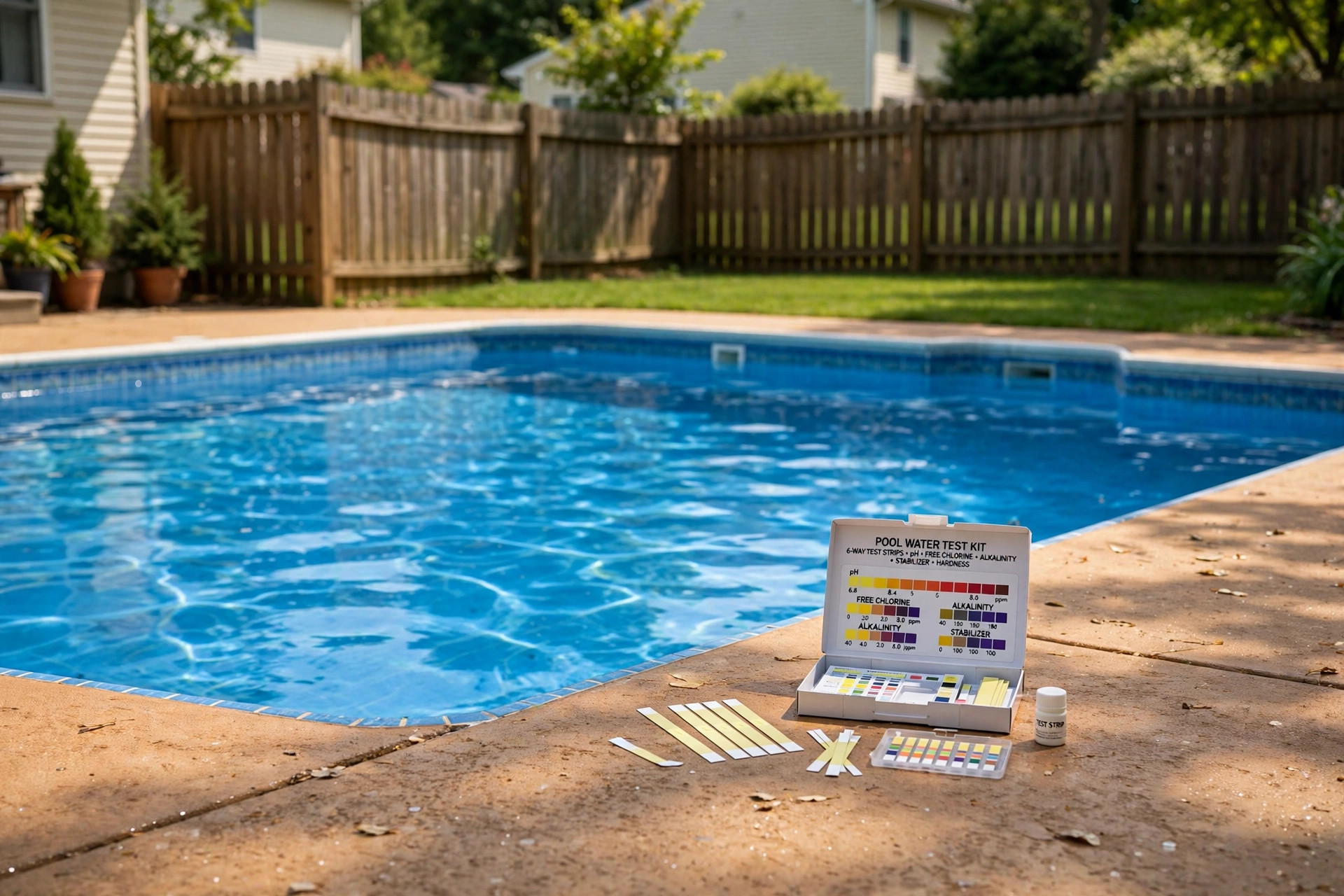
Every pool owner faces the same question at the start of the season. Learning how to balance pool water chemistry is the most important job in pool care. Clean water is not just a matter of looks. It protects the health of swimmers. It protects the pool surface. It protects the pump and the filter. Balanced water feels soft and clear. Unbalanced water can sting the eyes and turn green in days.
This guide explains the whole process in plain words. You will learn what to test. You will learn what each number means. You will learn how to adjust each level in the right order. With a little practice, you can keep your water safe and clear all season.
Why Balanced Water Matters
Pool water is a simple chemical system. Rain, sun, leaves, and swimmers change it every day. When the levels drift, problems follow. The water can turn cloudy. The walls can grow algae. The metal parts can rust or scale. Swimmers can get red eyes and itchy skin.
Balanced water kills germs fast. It keeps the sanitizer working at full strength. It also saves money. A balanced pool uses fewer chemicals over time. The liner lasts longer. The heater lasts longer. The filter does not clog as often. Pool care guides from The Spruce stress the same point. Small weekly tests prevent large costly repairs.
There is a safety angle too. Federal safety agencies such as the Consumer Product Safety Commission remind pool owners that clean water is part of a safe pool. Good chemistry goes hand in hand with good fences, good covers, and adult watch over children.
The Main Parts of Pool Water Chemistry: How to Balance Pool Water Chemistry
Five numbers make up the core of pool chemistry. Learn these five and the rest is easy.
pH
The pH scale runs from 0 to 14. Seven is neutral. Pool water should sit between 7.2 and 7.8. This range matches the human eye and skin. It also lets chlorine work well. If pH climbs too high, chlorine loses power and the water turns cloudy. If pH drops too low, the water turns harsh. It can eat away at metal parts. You can read more in our guide on how to lower pool pH levels safely.
Free Chlorine
Free chlorine is the sanitizer. It kills germs and algae. The safe range is 1 to 3 parts per million. Sunlight burns chlorine off fast. Heat and heavy swim days eat it up too. When chlorine falls below 1 part per million, the pool is not safe to swim in.
Total Alkalinity
Total alkalinity is the buffer. It keeps pH from swinging up and down. The target range is 80 to 120 parts per million. Low alkalinity makes pH bounce. High alkalinity pushes pH up and clouds the water.
Calcium Hardness
Calcium hardness measures dissolved minerals in the water. The right range is 200 to 400 parts per million. Too little calcium and the water pulls minerals from plaster and tile. Too much calcium and scale forms on the walls and in the heater.
Cyanuric Acid
Cyanuric acid is a shield for chlorine. It slows the burn-off from sunlight. The right range is 30 to 50 parts per million. Too little and chlorine dies fast in the sun. Too much and chlorine locks up and stops working. That is called chlorine lock.
How to Test Your Water
You cannot fix what you do not measure. Test your water two or three times a week. Test more often during heat waves and pool parties.
There are three main ways to test. Test strips are the fastest. Dip a strip, wait a few seconds, and match the colors to the chart. Reviews of the best pool test strips for accurate results can help you pick a trusted brand. Liquid drop kits are more exact. You fill a small tube with pool water, add drops, and read the color. Digital testers are the easiest to read. They show a number on a screen. Independent reviewers at Consumer Reports test pool gear and can help you compare options.
Take the sample the right way. Scoop water from elbow depth, away from the return jets. Do not test right after adding chemicals. Wait at least four hours. Write down your numbers each time. A simple notebook works well. Over a month you will see patterns. That record makes trouble easy to solve.
How to Balance Pool Water Chemistry Step by Step
Work in a fixed order. The order matters because each level affects the next. Always start with total alkalinity, then move to pH, then to chlorine, then to calcium hardness, then to cyanuric acid.
Step 1: Adjust Total Alkalinity
Test first. If alkalinity is below 80 parts per million, add sodium bicarbonate. This product is sold as alkalinity increaser. If alkalinity is above 120 parts per million, add muriatic acid in small doses. Add chemicals with the pump running. Wait a full water cycle, about four to eight hours, then test again. Do not rush this step. The rest of the work depends on a steady base.
Step 2: Adjust pH
With alkalinity in range, test pH. If pH is above 7.8, add a pH reducer such as sodium bisulfate. If pH is below 7.2, add soda ash, also called sodium carbonate. Add a little at a time. Wait and retest. Big single doses cause the very swings you are trying to stop. Step-by-step tutorials from Swim University walk through these small doses with photos.
Step 3: Adjust Free Chlorine
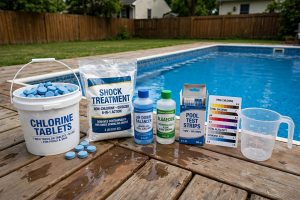
Now bring chlorine into the 1 to 3 range. If it is low, add chlorine in your chosen form. Liquid chlorine acts fast. Tablets in a feeder act slow and steady. If the level is too high, let the sun burn it off. Keep swimmers out until the number falls back into range. Many pool owners buy their sanitizer from large retailers such as Home Depot or specialty shops like Leslie’s Pool Supplies.
Step 4: Adjust Calcium Hardness
Test calcium hardness. If it is low, add calcium chloride. If it is high, the fix is harder. You must drain part of the pool and refill with fresh water. Do this in stages. Never drain a whole pool at once without advice from a pro. Some liners and shells can lift or crack when empty.
Step 5: Adjust Cyanuric Acid
Last, check cyanuric acid. If it is low, add stabilizer. If it is high, the only fix is to dilute. Drain a little and refill, then retest. High cyanuric acid is a common cause of a pool that eats chlorine but never clears. Equipment specialists at Pool Warehouse note that this problem is one of the top reasons owners call for help.
Step 6: Shock When Needed
Shocking means raising chlorine very high for a short time. Do it after storms, parties, or algae blooms. Do it at dusk so the sun does not burn the shock off. Run the pump all night. Retest in the morning. Do not swim until chlorine falls back under 5 parts per million.
Cost and Price of Balancing Chemicals
Balancing a pool is not free, but it is not costly if you test first. A basic test kit costs between 15 and 40 dollars. Digital testers cost more, often 60 to 120 dollars. They last for years.
A season of common chemicals for an average backyard pool runs about 200 to 500 dollars. Alkalinity increaser, pH adjusters, chlorine, and shock make up most of that. Specialty items like calcium products and stabilizer add a little more. Buying in bulk from pool stores or online sellers trims the bill. Prices change by region and brand.
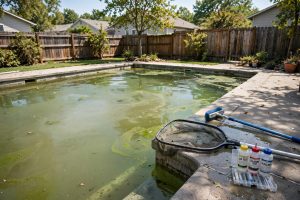
The costly mistake is guessing. Dumping chemicals without testing wastes money and can damage the pool. A 20 dollar test kit pays for itself in a single month. Cloudy water that needs a full cleanout costs far more than a steady weekly routine. For guidance on rescue jobs, see our piece on how to fix cloudy pool water.
Care and Upkeep Through the Season
Good chemistry is a habit, not a one-time job. Follow a simple weekly plan.
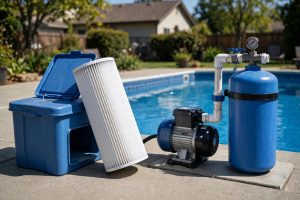
Run the pump eight to twelve hours a day in summer. Skim leaves each day. Brush the walls once a week. Empty the skimmer basket often. Backwash the filter when the pressure gauge rises eight to ten pounds above the clean mark.
Test two or three times a week. Add small doses as needed. Shock every one to two weeks in heavy use. After a storm, skim and test right away. Rain brings acid rain and dirt. Both push pH and alkalinity around.
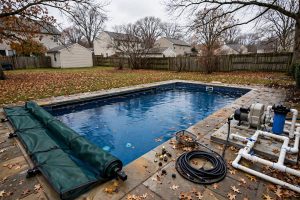
At season end, winter care matters. Balanced water protects the liner through cold months. Many owners add a winter closing kit before covering the pool. Spa owners follow the same rules in smaller bodies of water. Makers like Hot Spring Spas and Bullfrog Spas offer water care guides made for hot tubs. Federal resources on safe water, such as those from the Environmental Protection Agency, are worth a read too.
Safety Rules for Pool Chemicals
Pool chemicals are safe when handled with care. They are harsh when handled with none. Follow these rules every time.
Store chemicals in a cool, dry, locked place. Keep them away from children and pets. Keep each product in its own container. Never mix chemicals together. Never mix old and new brands in one bucket. Wear gloves and eye protection when you dose. Wash your hands after.
Add chemicals to water, never water to chemicals. Pour with care near the pool edge. Keep the bags and buckets away from the water. Sweep up spills at once. Read the label each time, even if you have used the product for years. Labels carry the exact dose for your pool size. If a product spills on skin, rinse with plain water and read the first aid panel.
Frequently Asked Questions
How often should I test my pool water?
Test two or three times per week in summer. Test every day during heat waves, after storms, and after large pool parties. Hot tubs need more testing because small water volume shifts fast.
What is the most important chemical level?
Free chlorine matters most for safety. Without enough chlorine, germs grow. But chlorine works best only when pH and alkalinity are in range. Think of the five levels as a team. No single one works alone.
Can I swim right after adding chemicals?
Wait until the levels return to safe ranges. Most products need the pump to run for at least four hours. Chlorine must fall back to 1 to 3 parts per million. Shock needs longer, often overnight. When in doubt, test again before you swim.
Why is my pool cloudy even though chlorine looks fine?
Cloudy water often comes from high pH, high alkalinity, or a clogged filter. Low sanitizer with early algae can also cloud the water. Test all five levels. Clean the filter. Our guide on how to fix cloudy pool water walks through each cause in order.
Is a salt water pool easier to balance?
Salt systems make chlorine from salt, so you buy less chlorine. You still test and adjust the same five levels. Salt cells need cleaning, and pH tends to drift up in salt pools. Many owners like the soft feel of the water.
What should I do if my levels will not hold?
Check for hidden causes. A dirty filter, heavy leaf load, or worn test reagents all skew results. Replace test strips each season. Make sure the pump runs long enough. If cyanuric acid is over 100 parts per million, dilute the water. If nothing works, bring a water sample to a pool store for a full lab test.
A Final Word
Learning how to balance pool water chemistry takes a little study and a steady routine. Test often. Adjust in small steps. Follow the right order. Keep chemicals stored safe. In a few weeks the process feels easy. Your water will stay clear, your swimmers will stay healthy, and your pool will give you years of good service. Clear water is not luck. It is a habit.
References
Bullfrog Spas. (n.d.). Hot tubs and spas. https://www.bullfrogspas.com Consumer Reports. (n.d.). Product reviews and ratings. https://www.consumerreports.org Hot Spring Spas. (n.d.). Hot tubs and spas. https://www.hotspring.com Leslie’s Pool Supplies. (n.d.). Pool supplies and equipment. https://www.lesliespool.com Pool Warehouse. (n.d.). Pool equipment and supplies. https://www.poolwarehouse.com Swim University. (n.d.). Pool and hot tub care guides. https://www.swimuniversity.com The Home Depot. (n.d.). Home improvement products. https://www.homedepot.com The Spruce. (n.d.). Home and garden advice. https://www.thespruce.com U.S. Consumer Product Safety Commission. (n.d.). Product safety information. https://www.cpsc.gov U.S. Environmental Protection Agency. (n.d.). Protecting human health and the environment. https://www.epa.gov
Was this guide helpful?

About Emily Rodriguez
The My Garden US editorial team writes practical, in-depth home and garden guides for American homeowners — tested advice, no fluff.