Introduction
Most people search for pool fence installation cost near me after they buy a home with a pool, or after they put one in. The fence is not a luxury item. In most towns it is a legal requirement. This guide lays out the numbers in plain terms so you can plan your budget with confidence.
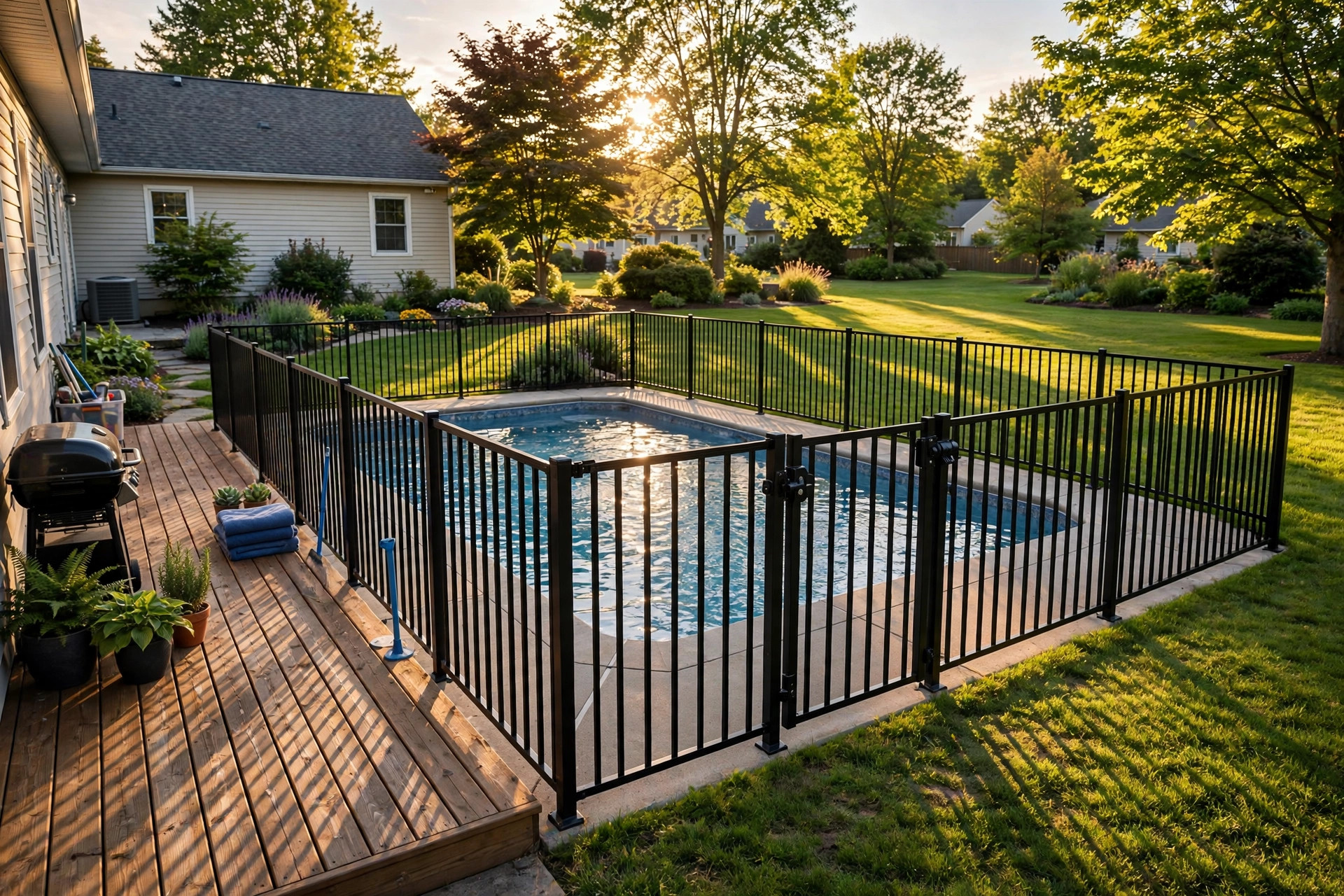
A pool fence is a barrier that stands between the water and the rest of the yard. It slows down small children and pets. It keeps neighbors out. It gives parents peace of mind. When homeowners ask about pool fence installation cost near me, they usually want two things: the total price and a fair deal. Both depend on the material, the length of fence, and local labor rates.
Prices change from city to city. A fence in a large suburb costs more than the same fence in a small town. Labor is the main reason. Materials cost about the same everywhere. This article gives you national ranges for 2026 and shows you how to get exact quotes for your own street.
Why a Pool Fence Matters: Pool Fence Installation Cost near Me
A pool fence is about safety first. Drowning is fast and quiet. Young children can slip through an open gate in seconds. A fence adds a layer of defense that did not exist before. Many insurance firms even require one before they will cover a home with a pool.
There is also the matter of the law. The U.S. Consumer Product Safety Commission publishes barrier guidelines for residential pools, and you can review the full set of rules on their safety standards page. Most local codes follow these rules. A fence must be at least 48 inches high. It must have a self-closing, self-latching gate. Openings must be small enough that a child cannot pass through.
Beyond safety, a fence protects your wallet. Without a proper barrier, you can face fines from the city. You can also face a claim if a neighbor’s child enters your pool. A fence shows that you took reasonable care. That matters in court. It also matters to buyers. When you sell the home, a well-kept fence adds to the curb appeal.
How to Choose a Pool Fence Installer
Search results for pool fence installation cost near me will show many firms. Not all of them are equal. Look for a firm that installs pool fences every week, not once in a while. Ask how long they have been in the business. Ask for photos of past work near your area.
Get at least three written quotes. Each quote should list the material, the total linear feet, the number of gates, and the labor cost. It should also list the permit fees. A vague quote is a red flag. A good firm will visit your yard, measure the pool area, and check the local code before they give you a price.
Check reviews on sites like The Spruce, which publishes homeowner guides and project advice. Ask the installer for references. Call two of them. Ask if the crew arrived on time. Ask if the final price matched the quote. Ask if the fence passed inspection on the first visit.
Also ask about warranties. The fence material should carry a maker warranty of at least five years. The labor warranty should be at least one year. A firm that stands behind its work will put this in writing. Avoid firms that ask for full payment before the work starts. A fair deposit is one third of the total.
Pool Fence Types and Options
The kind of fence you pick has the largest effect on the pool fence installation cost near me. Here are the common choices.
Removable Mesh Fences
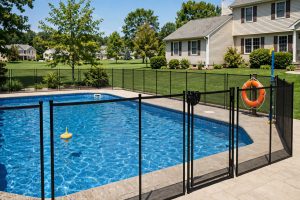
Mesh pool fences are a favorite of families with small children. The panels are made of strong woven fabric held by metal poles. They fit into sleeves set in the deck. You can take the panels out when the children grow up. Mesh fences cost less than most hard fences. They are also easy to store.
Aluminum Fences
Aluminum is the most common pool fence in the United States. It looks clean. It does not rust. It comes in black, white, bronze, and other colors. The pickets are spaced close together so a child cannot squeeze through. Aluminum costs more than mesh but lasts for decades with little care.
Glass Panel Fences
Glass fences give a clear view of the pool. They are popular around modern homes. The panels are thick tempered glass held by steel posts or clamps. They cost more than any other type. They also need more cleaning to look their best.
Wood Fences
A cedar or redwood fence gives privacy along with safety. Wood is warm and natural. It costs less than glass and about the same as aluminum. The downside is upkeep. Wood needs stain or sealant every few years, or it will gray and crack.
Vinyl and Chain-Link Fences
Vinyl fences are smooth, white, and low in upkeep. They cost a bit more than aluminum. Chain-link is the cheapest hard fence, but it looks plain. Some towns do not allow chain-link around pools, so check your code first.
A pool alarm for child safety can add one more layer of defense next to any fence type.
Pool Fence Installation Cost Breakdown
Now to the numbers. The average pool fence installation cost near me question has a simple answer range. Most homeowners in the United States pay between 15 and 70 dollars per linear foot, installed. The total for a typical backyard pool runs from 1,500 to 10,000 dollars.
Material prices drive the range. A removable mesh fence costs 15 to 25 dollars per foot. An aluminum fence costs 25 to 55 dollars per foot. A vinyl fence costs 40 to 60 dollars per foot. A wood fence costs 30 to 50 dollars per foot. A glass panel fence costs 100 to 600 dollars per foot, which is why it is a luxury choice.
Labor is the second part. Installers charge 5 to 15 dollars per foot for labor in most areas. A small crew can finish a mesh fence in one day. An aluminum or glass fence may take two or three days. Hard ground, rock, or a sloped yard adds to the labor time.
Gates add to the bill. A self-closing gate costs 200 to 500 dollars each, installed. Most pools need at least one gate. Some yards need two. The gate must swing outward, away from the pool. It must latch on its own. The latch must sit high enough that a small child cannot reach it.
Permits and inspections add 50 to 300 dollars in most towns. Your installer should pull the permit. The city inspector will check the fence height, the gate, and the spacing of the pickets. If it fails, the installer must fix it at no extra cost. Put that in the contract.
Here is a quick example. A 100-foot aluminum fence at 40 dollars per foot costs 4,000 dollars. One gate adds 350 dollars. A permit adds 150 dollars. The total comes to 4,500 dollars. The same fence in mesh would cost about 2,500 dollars. The same fence in glass could cost 12,000 dollars or more.
To compare material prices, browse fencing sections at The Home Depot and Lowe’s. Both sites list per-foot and per-panel prices for many fence types. For pool gear and upkeep products, Leslie’s and Pool Warehouse are useful sources. If you want general pool care advice, Swim University publishes clear how-to guides.
The season can change the price too. Spring is the busy season for pool work. Installers charge full price. Late fall and winter are slow months. You may get a discount of 10 to 15 percent if you book then. Planning ahead saves money.
If your pool shell also needs work, read our guide on pool liner replacement cost estimates before you plan the full budget. And if the deck is worn, pool deck resurfacing may be worth pricing at the same time as the fence.
Care and Upkeep
A pool fence needs little care, but not zero. Walk the fence line twice a year. Check each post for looseness. Push on each panel. Tighten bolts that have worked free. Test the gate. Let it swing shut from a half-open position. It should latch every time without help.
Clean the fence in spring. Wash mesh panels with mild soap and water. Hose off aluminum and vinyl. Wipe glass panels with a glass cleaner. Clear leaves and mulch from the base of the posts. Trapped mulch holds water and can rot wood posts or rust steel screws.
Oil the gate hinges once a year with a light spray. Check the latch for wear. If the latch sticks, replace it right away. A gate that does not latch is the same as no gate at all. Keep a spare latch in the garage if your gate model is common.
Mesh fences need one extra step. Pull each panel out of its sleeve once a year. Clean the sleeves. Look for cracks in the poles. A bent pole should be replaced before the next swim season. Store spare panels flat in a dry place.
Safety Rules and Codes
Pool fence rules exist to save lives. The federal guidelines from the Consumer Product Safety Commission are the starting point. Your town may add stricter rules. Always check with your local building office before you order a fence.
The main rules are simple. The fence must be at least 48 inches tall, measured on the side facing away from the pool. Vertical members must be spaced less than 4 inches apart. The gate must be self-closing and self-latching. The latch must be at least 54 inches above the ground, or it must be on the pool side of the gate where a child cannot reach it.
The fence must block the direct path from the house to the pool. A sliding door from the living room to the pool deck is not enough. The fence must stand between them. If your house wall forms one side of the barrier, the doors in that wall need alarms or self-closing locks.
Hot tubs and spas follow similar rules. A locking hard cover can serve as the barrier in some towns. Check the safety pages at Hot Spring Spas for cover options and lock kits.
The American Red Cross also offers water safety courses for parents and caregivers. A fence is a passive barrier. Swim skills and watchful eyes are the active layers. All three work best together.
Frequently Asked Questions
How long does pool fence installation take?
Most jobs take one to three days. A mesh fence around a small pool can be done in a day. An aluminum fence takes one to two days. A glass fence takes two to three days because each panel must be set with care. Rock in the ground or a permit delay can add time.
Can I install a pool fence myself?
You can, if you are handy and your town allows it. Mesh fence kits are made for do-it-yourself work. Aluminum panels are heavier and need level posts. Glass panels are best left to pros. Even with a do-it-yourself job, the fence must pass the same inspection. Many homeowners hire a pro because the gate and latch must be exact.
What is the cheapest pool fence option?
Chain-link is the cheapest hard fence, at 10 to 20 dollars per foot installed. But many towns ban it around pools. Removable mesh is the next cheapest safe choice, at 15 to 25 dollars per foot. It meets code in most places and looks tidy.
Does a pool fence lower my insurance?
Often, yes. Many home insurers give a discount or require a fence before they write the policy. Call your agent before you install. Ask what fence type they accept. Get the discount in writing. Some agents want photos of the finished fence and the gate latch.
How often should I replace a pool fence?
Mesh fences last 5 to 10 years. Aluminum fences last 20 years or more. Glass lasts as long as the panels stay unbroken. Wood lasts 10 to 15 years with good care. Replace any fence whose posts lean, whose panels tear, or whose gate will not latch.
Do I need a fence for an above-ground pool?
In most towns, yes. If the pool wall is at least 48 inches tall, the wall itself can count as the barrier. But the ladder or steps must be locked or removed when the pool is not in use. A small fence around the ladder area is the common fix. Check your local code.
A Final Word
The pool fence installation cost near me will vary, but the value does not. A fence is one of the few home projects that guards lives while it adds to the home. Get three quotes. Pick a proven installer. Choose a material that fits your budget and your style. Keep the gate latched. Then enjoy the pool with a clear mind.
References
American Red Cross. (n.d.). Swimming and water safety. https://www.redcross.org Hot Spring Spas. (n.d.). Hot tubs and spas. https://www.hotspring.com Leslie’s Pool Supplies. (n.d.). Pool supplies and equipment. https://www.lesliespool.com Lowe’s. (n.d.). Home improvement products. https://www.lowes.com Pool Warehouse. (n.d.). Pool equipment and supplies. https://www.poolwarehouse.com Swim University. (n.d.). Pool and hot tub care guides. https://www.swimuniversity.com The Home Depot. (n.d.). Home improvement products. https://www.homedepot.com The Spruce. (n.d.). Home and garden advice. https://www.thespruce.com U.S. Consumer Product Safety Commission. (n.d.). Product safety information. https://www.cpsc.gov
Was this guide helpful?

About Emily Rodriguez
The My Garden US editorial team writes practical, in-depth home and garden guides for American homeowners — tested advice, no fluff.