
A Plain Answer for a Common Question
Many owners of older houses ask for the best decorative window film for midwest homes. The Midwest has hard winters, hot and humid summers, and sudden spring storms. A good window film must look fine, last through these seasons, and protect the glass underneath. This guide explains what to buy, how to choose, and how to care for it. Every word here is written fresh for this page.
Decorative window film is a thin plastic sheet that sticks to glass. It comes in rolls or precut sheets. You press it on with water and a flat tool. Some types use glue. Others cling by static and peel off with no marks. Both kinds can look like frosted glass, stained glass, or etched glass. They cost far less than new windows. Many renters and owners in Ohio, Indiana, Illinois, Iowa, Michigan, Minnesota, and Wisconsin use them for privacy and style.
Why Midwest Homes Need Special Care: Best Decorative Window Film for Midwest Homes
Cold Winters Hurt Cheap Film
Midwest winters bring long stretches below freezing. Glass gets cold. Cheap film can shrink, crack, or pull loose at the edges. The best decorative window film for midwest homes uses thick vinyl or polyester that stays flat in cold air. Look for film rated for winter use. Read the box for the lowest service temperature. If the label says nothing about cold weather, pick another brand.
Hot Summers Test the Adhesive
Summer in the Midwest can reach the upper 90s with high humidity. Sun beats on south and west windows. Weak glue can bubble or slide in heat. Films sold by trusted home brands at places like The Home Depot or Lowe’s usually name their adhesive type. Static cling film has no glue at all, so heat causes fewer problems with it. Many owners prefer static cling for rental homes.
Storms and Bright Light
Hail and wind-driven rain strike the region each spring. Film does not protect glass from hail, but a strong film holds broken pieces together a bit longer. It also cuts glare from low winter sun. These small gains matter in a house with many old single-pane windows.
How to Choose the Right Film
Start With Your Goal
Ask one plain question: what should the film do? Three goals cover most cases.
First, privacy. Bathrooms, front doors, and street-facing rooms need it most. Frosted film blocks views but lets light in. It is the top seller for this reason.
Second, looks. A stained glass or etched pattern can turn a plain window into a focal point. Many Midwest homes have old glass that looks dull. A decorative pattern covers flaws and adds charm.
Third, light control. Some films dim bright sun. Others scatter it so a room glows softly. Note that most decorative films are not strong sun blockers. For heat control, look for a film that names a solar rating. Blinds.com and IKEA both carry films that list light and privacy ratings on the package.
Match the Film to the Room
Kitchens get grease and steam. Pick a smooth film that wipes clean with a damp cloth. Bathrooms need full privacy and strong grip in damp air. Bedrooms near the street need frosted film on the lower half of the window at least. Front doors with glass panels look best with a leaded-glass or bevel pattern. For ideas on style pairings, browse the room galleries at HGTV or The Spruce, then match the pattern to your trim and walls.
Types of Decorative Window Film
Frosted and Matte Film
Frosted film is the workhorse of the category. It turns clear glass into a milky pane. Light passes through but shapes do not. It suits bathrooms, garage windows, and side doors. Matte film works the same way with a softer finish. These are the easiest films to install. A beginner can finish a window in under an hour.
Stained Glass and Leaded Film
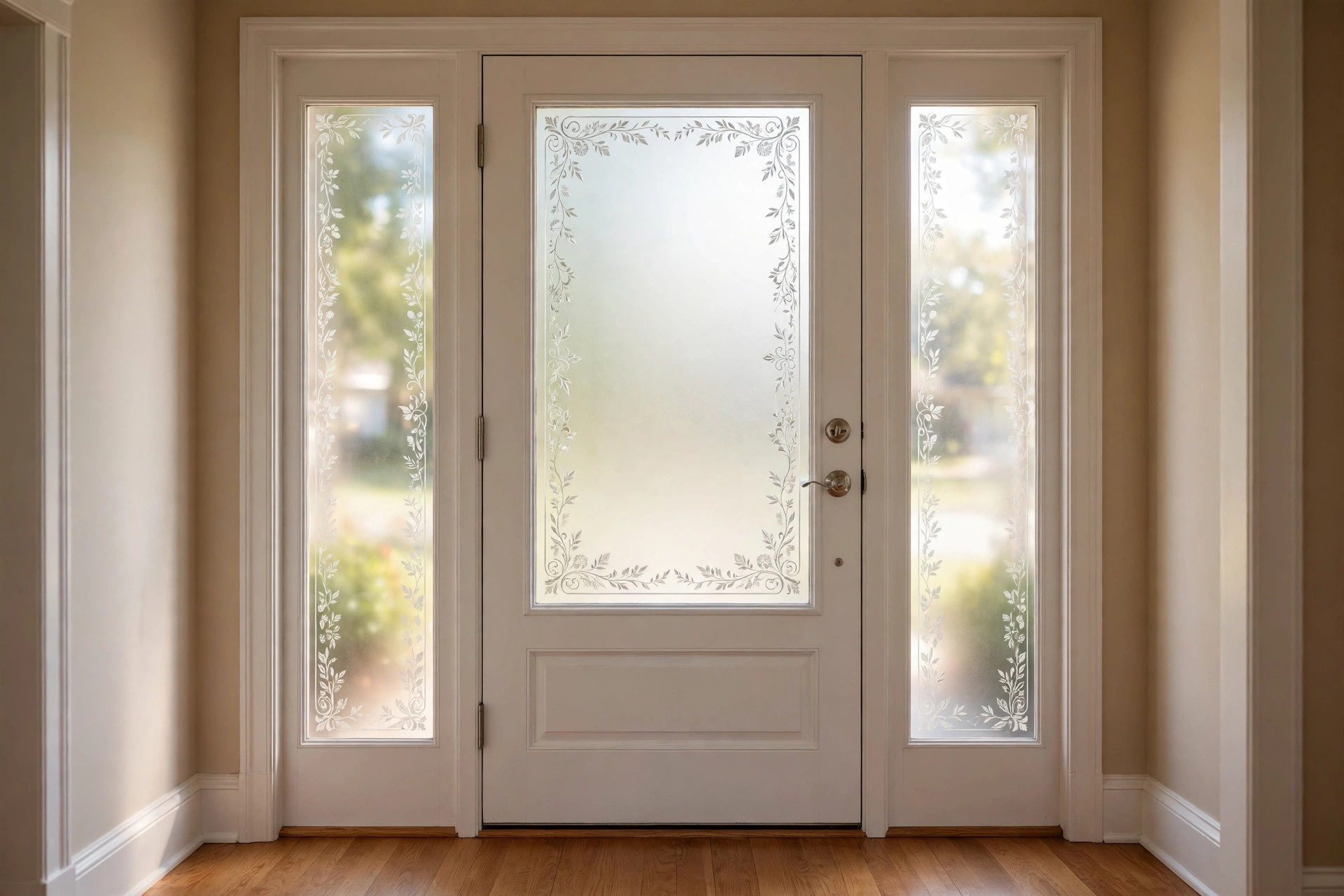
Stained glass film prints a colored pattern on clear plastic. It looks best on small panes and sidelights. Real stained glass costs thousands of dollars. Film gives the same feel for the price of a dinner out. Lead-gray lines divide the pattern like real lead came. Use it on entry doors and small accent windows. Avoid huge picture windows, where the printed pattern can look flat.
Etched and Sandblasted Look
Etched film copies the look of sandblasted glass. It often shows simple borders, scrolls, or floral bands on clear glass. This style suits older homes with wood trim. It looks hand-made and warm. Many Midwest farmhouses and bungalows carry this style well.
One-Way Mirror Film
One-way mirror film reflects by day and lets you see out. It gives strong privacy when the sun shines. At night, with lights on inside, people outside can see in. It is not a true decorative film, but many buyers add it with a pattern on top. If you want privacy after dark, frosted film is the safer pick. For safety notes on window coverings in general, the U.S. Consumer Product Safety Commission keeps plain guides on home window products.
What to Look for When You Buy
Thickness and Material
Film thickness is measured in mils. A mil is one thousandth of an inch. Decorative films run from 2 to 8 mils. Thicker film resists tears and lasts longer. Thin film tears when you trim it and bubbles more often. For the best decorative window film for midwest homes, choose at least 4 mils for large panes. Vinyl is the common material. Polyester holds up better in direct sun.
Adhesive Type
Three types exist. Self-adhesive film uses glue and stays put for years. It is hard to remove and can leave a sticky layer. Static cling film has no glue. It peels off clean, which suits renters. Reusable static film can move from window to window. Glue-free film also avoids fumes. Pick static cling for a first try. If you love the look, switch to adhesive film later for a longer hold.
UV Blocking
Good film blocks most ultraviolet light. UV fades wood floors, rugs, and art. Many films block 95 to 99 percent of UV rays. The label should say so. This matters in rooms with bright sun and old wood floors, common in Midwest houses. Independent test reports at Consumer Reports often cover window films and their UV claims.
Size and Pattern Repeat
Measure each pane before you shop. Add two inches on every side for trimming. Patterned film has a repeat, like wallpaper. A large repeat needs more film so the pattern lines up. Small bathrooms need one roll. A full patio door may need two. Count your windows and buy one extra roll. It is cheap insurance against a bad cut.
Ease of Install
Look for a kit with a spray bottle, a squeegee, and a trim tool. Some brands sell film with grid lines on the backing for straight cuts. These small aids save a lot of time. Reviews at Wayfair often mention how easy or hard a brand is to install. Read the low reviews first. They tell you the real problems.
Cost and Price
Decorative window film is one of the cheapest upgrades in the home. A roll that covers one normal window costs about 15 to 40 dollars. Premium brands run higher. A whole house of film may cost less than one new window. Tools add little. A spray bottle and squeegee cost under 15 dollars.
Professional install adds 50 to 100 dollars per window. Most owners do it themselves. The work is simple but slow. Budget one hour per window for a first attempt. Bob Vila’s site posts step-by-step install guides that match most brands.
Compare the cost with new glass. A frosted replacement pane can cost 200 dollars or more per window, plus labor. Film gives a close look for one tenth of the price. It will not add home value like real glass, but it buys privacy and style today.
Install Steps in Plain Order
Clean the Glass
Wash the glass with soap and water. Dry it fully. Any dust or hair shows under the film. Use a razor scraper on old paint spots. Wipe the frame edges too.
Cut the Film
Unroll the film on a flat table. Lay the pattern side down. Cut a piece two inches larger than the pane on all sides. The backing grid helps keep the cut straight.
Wet and Apply
Fill a spray bottle with water and a drop of dish soap. Spray the glass until it is wet. Peel the backing from the film. Spray the sticky side too. Lay the film on the glass. The water lets you slide it into place.
Smooth and Trim
Press from the center out with the squeegee. Push water and air bubbles to the edges. Wipe the water away. Trim the extra film with a sharp blade along the frame. Press the edges flat. Let it dry for a day before you clean it.
Care and Upkeep
Decorative film needs little care. Wait 30 days after install before the first wash. Clean with a soft cloth and mild soap. Never use ammonia cleaners like blue glass spray. Ammonia can cloud the film. Avoid rough pads. They scratch the surface.
Check the edges each spring and fall. Midwest seasons test the bond. Press down any lifting corner with a damp cloth. If a corner keeps lifting, add a small bead of clear silicone at the edge. Replace film that has yellowed or cracked. Most good films last five to eight years indoors. Sun-heavy windows may need new film sooner.
Static cling film can come down for cleaning. Peel it off, wash it in the sink, and press it back on while wet. This is a real plus in kitchens, where grease builds up fast.
Safety Notes
Keep Egress Clear
Bedroom windows must open in a fire. Film does not stop a window from opening. Still, keep the locks and cranks working. Do not tape film over a window that must break open in an emergency. Check local rules on bedroom egress if you are unsure.
Choose Non-Toxic Materials
Some cheap films smell of chemicals when new. Buy film that lists its material and meets basic product standards. The U.S. Consumer Product Safety Commission tracks recalls of home products. Check the film brand there if you buy an unknown name.
Watch for Lead in Old Homes
Many Midwest homes were built before 1978 and may have lead paint on window frames. Do not scrape or sand old paint without care. Use a damp cleaning method. If you plan to strip old frames, learn lead-safe steps first from trusted sources such as This Old House.
Where to Buy
Home centers carry the widest stock. The Home Depot and Lowe’s sell rolls in store and online. Online sellers like Wayfair and IKEA carry decorative patterns that stores may not stock. Specialty shops like Blinds.com cut film to exact window sizes, which helps with odd old panes. Read return rules before you buy. Pattern color can look different on a screen than on your glass.
How It Compares With Other Window Coverings
Film is not the only answer. If you are weighing options, read our guide to thermal energy efficient window treatments for sale for choices that cut heating bills. Our window film privacy tint reviews and buying guide compares tint films in more depth. For a full replacement option, see how to buy plantation shutters online in florida and decide if shutters suit your rooms better.
Curtains add softness and insulation but need rods and hems. Blinds give exact light control but collect dust. Film gives privacy and pattern with no hardware and little upkeep. Many owners mix them. Film on the bathroom glass plus a short curtain gives both privacy and style.
Frequently Asked Questions
Does decorative window film work on old wavy glass?
Yes. Many Midwest homes have old wavy glass. Film follows the surface. Small waves do not matter. Deep ripples can trap air. Press them out with extra water and a soft squeegee. Frosted film hides old flaws better than clear patterns.
Will film damage my windows when I remove it?
Static cling film leaves no marks. Self-adhesive film may leave a sticky layer. Warm the film with a hair dryer on low, peel slowly, and wipe the rest with soapy water. Test a corner first on old wood frames, where finish may lift.
Can I install film in winter?
Yes, but work in a warm room. Cold glass slows the drying bond. Heat the room to at least 60 degrees. Keep the window closed for two days after install. Avoid install on days below freezing if the room cannot stay warm.
Does film block heat from the sun?
A little. Most decorative films cut glare and block UV. They do not block much heat. If heat is your main worry, buy a film with a stated solar heat rating or add shades. Decorative film is for looks and privacy first.
How long does decorative window film last?
Five to eight years is normal indoors. Bathrooms and kitchens may wear faster from steam and grease. South-facing windows fade faster from sun. Buy a spare roll of your pattern so a future patch matches.
Is window film safe for double-pane windows?
Most decorative films are safe on double-pane glass. Very dark heat-absorbing films can stress the glass seal in strong sun. Check the brand’s guidance for insulated glass. When in doubt, pick a light frosted film, which adds little heat load.
A Short Final Word
The best decorative window film for midwest homes is thick, simple to install, and made for real weather. Frosted film wins for privacy. Stained glass film wins for charm. Static cling wins for renters and first-timers. Measure well, buy a spare roll, and take your time on the install. A quiet afternoon of work can change how a whole room feels.
References
Blinds.com. (n.d.). Window blinds, shades, and shutters. https://www.blinds.com Bob Vila. (n.d.). Home improvement advice. https://www.bobvila.com Consumer Reports. (n.d.). Product reviews and ratings. https://www.consumerreports.org HGTV. (n.d.). Home and garden ideas. https://www.hgtv.com IKEA. (n.d.). Home furnishings. https://www.ikea.com Lowe’s. (n.d.). Home improvement products. https://www.lowes.com The Home Depot. (n.d.). Home improvement products. https://www.homedepot.com The Spruce. (n.d.). Home and garden advice. https://www.thespruce.com This Old House. (n.d.). Home renovation guidance. https://www.thisoldhouse.com U.S. Consumer Product Safety Commission. (n.d.). Product safety information. https://www.cpsc.gov Wayfair. (n.d.). Furniture and home goods. https://www.wayfair.com
Was this guide helpful?

About Sarah Mitchell
The My Garden US editorial team writes practical, in-depth home and garden guides for American homeowners — tested advice, no fluff.
You May Also Like

Best Light Filtering Roller Shades for California Apartments
June 14, 2026 0 views
Energy Efficient Blackout Roller Shades for Florida Homes
August 29, 2026 0 views
Thermal Sheer Voile Panels With Free Shipping: A Plain Buying Guide
March 1, 2026 0 views