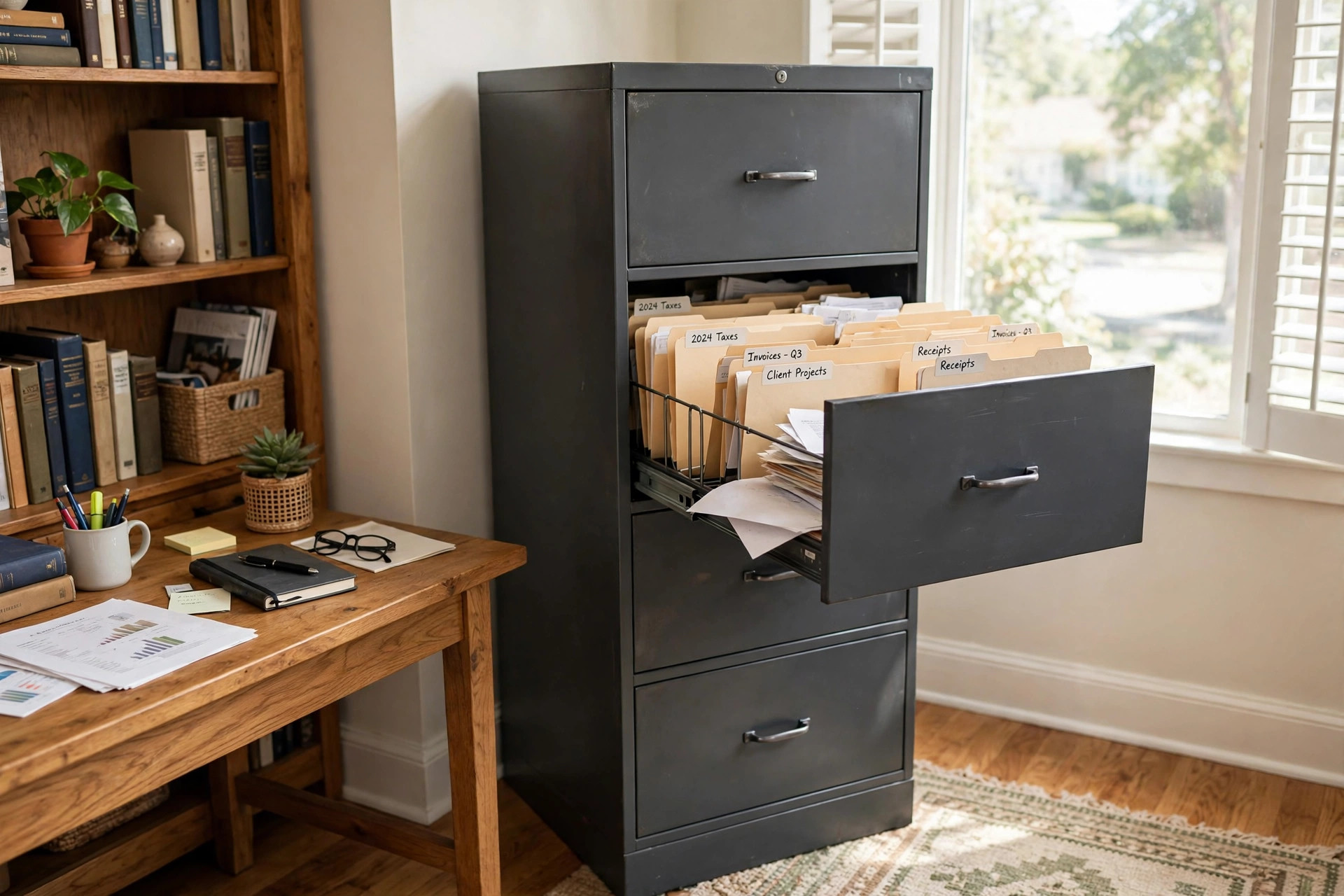

A first home brings a stack of paper. There are loan papers, tax forms, insurance bills, and repair receipts. The best vertical file cabinets for first time homeowners turn that stack into order. They stand tall instead of wide, so they fit in small rooms. They lock, so private papers stay private. They last for years, so a new owner can buy once and be done.
Why a Vertical File Cabinet Matters in a First Home
New owners often keep papers in boxes or piles. Piles get lost. Boxes get damp in the basement. A filing cabinet solves both problems. It gives every paper a home. The mortgage statement goes in one drawer. The tax return goes in another. When the plumber asks for a warranty, it takes two minutes to find.
A vertical cabinet also saves floor space. A first home is often small. Bedrooms double as offices. A vertical unit rises upward, like a bookshelf, and takes about the space of a kitchen chair. That matters when every square foot counts. Storage solutions for small home offices are in high demand for this very reason, and a tall cabinet is one of the simplest.
There is also the matter of value. A new homeowner has just made the largest purchase of a life. Paper records protect that purchase. The deed, the survey, and the inspection report are all worth keeping in one safe place. A good cabinet is a small price to pay for peace of mind.
How to Choose the Best Vertical File Cabinet: Best Vertical File Cabinets for First Time Homeowners
Shopping for a file cabinet is easier than it looks. A few points separate a good cabinet from a poor one.
Drawer Count
Most vertical cabinets have two, three, or four drawers. A two-drawer unit is enough for a light filer. It holds the basics: bills, insurance, and medical records. A four-drawer unit suits a family or a home business. It holds several years of tax returns and still has room to spare. First time owners should think about five years ahead. It is cheaper to buy one tall cabinet now than to add a second one later.
Paper Size
Letter size cabinets fit standard American paper. Legal size cabinets fit longer legal sheets. Most home papers are letter size. However, a mortgage deed or a survey can be legal size. Check the papers you already own before you buy. A cabinet that only takes letter size will not hold a legal-size closing package.
Steel Against Wood
Steel cabinets are the workhorses of home offices. They resist dents, they clean with a damp cloth, and they cost less than wood. Wood and wood-look cabinets cost more, but they look nicer in a living room or den. Some owners put a cabinet in a bedroom where guests can see it. In that case, a wood finish is worth the extra money. Either choice can last decades if it is built well.
The Lock
A lock is not a luxury. Tax returns carry Social Security numbers. Insurance papers carry account numbers. A cabinet with a single key lock on the top drawer usually locks all the drawers at once. Look for a lock that turns smooth and comes with at least two keys. Keep one key in a safe place away from the cabinet.
Drawer Slides and Weight
Full-extension slides pull the drawer all the way out. That matters, because back files are hard to reach on short slides. Check the weight limit too. Paper is heavy. A drawer full of files can weigh forty pounds or more. A cheap cabinet will sag under that load. A well-built cabinet will glide. Reviews at Consumer Reports often test drawer strength, and their home office guides are worth a look.
Types of Vertical File Cabinets
There are a few common types on the market. Each suits a different need.
Standard steel cabinets. These are the gray or black metal boxes seen in offices for a hundred years. They are plain, strong, and cheap. Brands sold at big retailers are fine for home use. The selection at Home Depot covers many sizes and colors, and Wayfair carries hundreds of models with customer reviews.
Fire-resistant cabinets. These cost more, but they protect paper from heat for a set time, often one hour. For a first time homeowner, the papers inside may be worth more than the cabinet. Deeds and insurance records are hard to replace. A fire-resistant cabinet is a serious option for anyone who wants full protection.
Wood-look cabinets. These have a laminate finish in oak, walnut, or white. They blend into home furniture. They are often lighter than steel, which helps when a room is upstairs. IKEA sells storage lines that pair well with home decor, and The Container Store stocks organizers that fit inside file drawers.
Mobile cabinets. Some vertical cabinets sit on wheels. They roll from room to room. This helps when one person works at the kitchen table and files in the den. Make sure the wheels lock. A cabinet full of paper should not roll on its own.
Lateral versus vertical. A lateral cabinet is wide and short. A vertical cabinet is narrow and tall. For first time homeowners with small rooms, the vertical shape almost always wins. It gives the same storage in half the floor space.
For those who prefer to shop online, it is worth doing a vertical file cabinet price comparison across several stores before buying. Guides at The Spruce and Apartment Therapy round up home office picks each year, and the buy vertical file cabinets online in texas page offers a state-level look at online options.
Cost and Price
Prices vary by size, material, and brand. A basic two-drawer steel cabinet often costs between forty and one hundred dollars. A four-drawer steel cabinet runs from one hundred to two hundred fifty dollars. Wood-look cabinets cost more, often two hundred to five hundred dollars. Fire-resistant models start around three hundred dollars and rise from there.
First time homeowners work on tight budgets. The good news is that a cabinet is not an item where the cheapest choice fails fast. Even a low-cost steel cabinet can last twenty years. Spend the money on smooth drawers and a good lock, not on a famous brand name.
Watch for hidden costs. Delivery of a heavy cabinet can add thirty dollars or more. Some stores charge extra to carry it upstairs. Assembly is usually simple, but a four-drawer unit is heavy, so plan for two people to move it. Office supply stores like Staples and Office Depot run frequent sales on filing cabinets, and their business desks can quote bulk prices for a full home office setup.
If money is very tight, consider a used cabinet. Offices close and sell furniture cheap. A solid steel cabinet from a closing office can cost twenty dollars and work like new. Just check the lock, the slides, and the drawer bottoms before paying.
Care and Upkeep
A file cabinet asks for little. A few habits keep it in good shape for decades.
Keep it dry. Steel cabinets can rust in damp basements. If the basement is the only spot, set the cabinet on a low platform and keep papers in plastic sleeves. Wood cabinets swell in damp air, so keep them on the main floor when possible.
Do not overload the top. A tall cabinet is top-heavy when the upper drawers are full and the lower ones are empty. Load heavy files low. This keeps the cabinet stable and easy to open.
Oil the slides once a year. A drop of household oil on each slide keeps drawers moving smooth. Wipe away dust first, then oil, then run the drawer in and out a few times.
Label every drawer. A strip of masking tape and a marker work fine. Labels save time and keep papers in the right place. When a drawer gets too full, it is time to shred old papers, not to force the drawer shut.
For help with what goes inside, Family Handyman publishes home organization guides that cover filing systems room by room.
Safety
A file cabinet seems harmless, but a few safety rules apply.
Anchor tall cabinets to the wall. A four-drawer cabinet can tip forward when several full drawers are open at once. Wall anchors or anti-tip straps cost a few dollars and take ten minutes to install. This is vital in homes with small children who may climb.
Keep the key away from the cabinet. A locked cabinet protects nothing if the key hangs on its handle. Store the spare key in a different room.
Shred what you no longer need. Old bank statements and expired warranties are a gift to identity thieves. A small shredder next to the cabinet makes it easy to destroy papers on the spot.
Keep fire safety in mind. Paper burns fast. If the cabinet is not fire-resistant, keep irreplaceable papers in a small fire safe inside the top drawer. It is a cheap second layer of protection.
Frequently Asked Questions
How many drawers does a first time homeowner need? Two drawers cover the basics for a single person or a couple. Four drawers give room to grow and suit families or home businesses. When in doubt, buy the taller cabinet. The price difference is small, and running out of space is a common regret.
Should I buy letter size or legal size? Buy letter size unless you own legal-size papers. Check your closing package from the home purchase. If the deed or survey is on legal paper, buy a legal-size cabinet. You cannot fold a deed into a letter drawer without damage.
Is a used file cabinet a good idea? Yes, if it is solid. Check that all drawers open smooth, the lock works, and the drawer bottoms are not bent. Steel cabinets from closed offices are often sold for a fraction of the new price and last for years.
Can I put a file cabinet in the garage? It is better not to. Garages are damp and hot. Damp air rusts steel and warps wood. Heat fades ink on paper. A closet or a corner of a bedroom is a far better spot. If the garage is the only choice, use a sealed cabinet and check it each season.
What papers should go in the cabinet first? Start with the home purchase papers: the deed, the survey, the inspection report, and the loan documents. Then add insurance policies, tax returns, and medical records. Keep a simple list of what is in each drawer taped inside the top drawer.
Do I need a fire-resistant cabinet? It depends on what you store. If the cabinet holds papers that cannot be replaced, such as a deed or a will, fire resistance is worth the cost. If everything inside exists somewhere else, such as a bank or a lawyer’s office, a standard cabinet is fine.
A Short Final Word
A first home is full of new jobs. Filing paper is one of the quiet ones. It takes an afternoon to set up and pays off for years. The best vertical file cabinets for first time homeowners are tall, strong, and simple. They fit in small rooms, they lock, and they keep the most important papers in the house safe and easy to find. Pick the right size, load the heavy files low, anchor it to the wall, and label the drawers. That is the whole job.
If you are still comparing models, pair this guide with a look at pegboard wall organizers price comparison usa for wall storage ideas and where to buy dresser drawer dividers in texas for keeping small items tidy. A tidy home office starts with one good cabinet and grows from there.
References
Apartment Therapy. (n.d.). Home design ideas and inspiration. https://www.apartmenttherapy.com Consumer Reports. (n.d.). Product reviews and ratings. https://www.consumerreports.org Family Handyman. (n.d.). DIY home repair and maintenance. https://www.familyhandyman.com IKEA. (n.d.). Home furnishings. https://www.ikea.com Office Depot. (n.d.). Office supplies and furniture. https://www.officedepot.com Staples. (n.d.). Office supplies and furniture. https://www.staples.com The Container Store. (n.d.). Storage and organization products. https://www.containerstore.com The Home Depot. (n.d.). Home improvement products. https://www.homedepot.com The Spruce. (n.d.). Home and garden advice. https://www.thespruce.com Wayfair. (n.d.). Furniture and home goods. https://www.wayfair.com
Was this guide helpful?

About James Carter
The My Garden US editorial team writes practical, in-depth home and garden guides for American homeowners — tested advice, no fluff.
You May Also Like

Affordable Toy Storage Bins for Sale: A Parent’s Guide
September 25, 2026 0 views
Where to Buy Garden Tool Organizers in Arizona
September 26, 2026 0 views
Nightstands With Storage Drawers Reviews and Buying Guide
March 1, 2026 0 views