
Shoppers who search for mexican tile for bathroom floor for sale usually want one thing: the warm, hand-made look of old Mexican tile in a bathroom that stays dry, safe, and clean. The tiles are clay. They are shaped by hand, fired in a kiln, and sold in colors that run from deep rust to pale honey. They bring a feeling no factory tile can copy. But clay tile in a wet room is not a careless purchase. A buyer should know what the tile is, what it costs, how it is sealed, and how it is kept over time. This guide walks through each point in plain terms.
Why Mexican Tile Suits a Bathroom Floor
A bathroom floor must do three jobs. It must carry foot traffic. It must stand up to water. It must look right for years. Mexican tile, most often the type called saltillo, handles the first job well. The tiles are thick. They are fired hard. Under normal home use they last for decades. Old homes in the Southwest still carry floors that are fifty years old and going strong.
The second job, water, needs attention. Clay tile drinks water. An unsealed tile in a wet room will stain and may grow mold in the grout. The fix is old and proven: seal the tile. A good penetrating sealer fills the pores of the clay. After that, water beads up and wipes away. Homeowners who seal on schedule find their floors as easy to clean as any other bathroom floor.
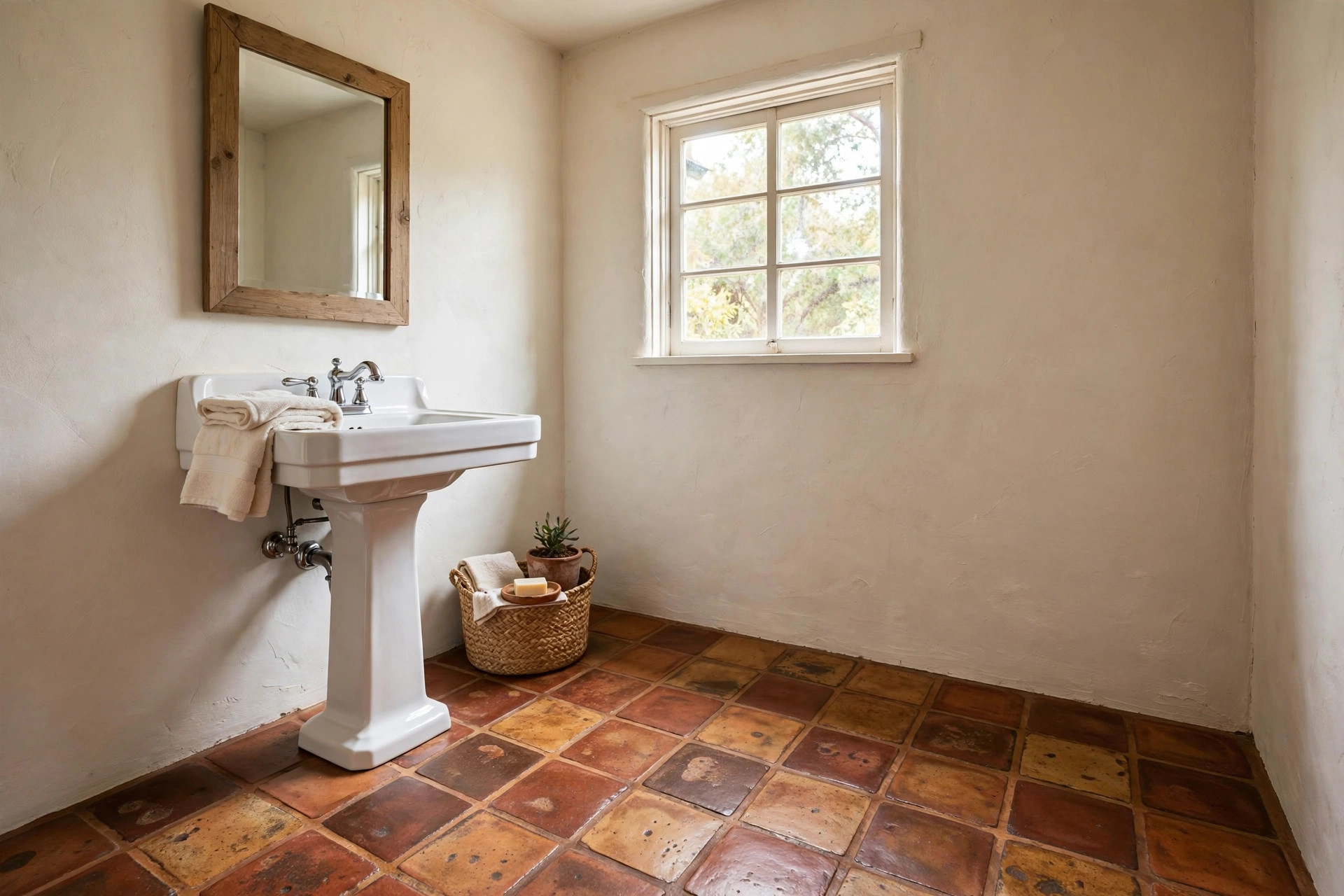
The third job is the reason people buy it. The color variation of handmade tile gives a room depth. Each tile differs a little from the next. Light moves across the floor in a way that machine-made tile never repeats. In a bathroom, where surfaces are usually plain white and chrome, that warmth changes the whole room.
What to Look For When You Buy: Mexican Tile for Bathroom Floor for Sale
Not all stock labeled as Mexican tile is the same. Some is true handcrafted saltillo from Mexico. Some is machine-made tile with a Mexican look. Both can work. The buyer should know which one is in the box before paying.
True Saltillo Tile
Real saltillo tile comes from quarried clay, most of it from the city of Saltillo in northern Mexico. Workers shape each tile by hand in wooden molds. They dry it in the sun. They fire it in kilns. The result is a tile with soft edges, a slightly uneven face, and color that shifts from piece to piece. Boxes will note the tile as handmade and may warn that shade variation is normal. This is the real thing.
Machine-Made Looks
Other stock is pressed by machine and printed with color patterns that mimic Mexican designs. These tiles are cheaper and more uniform. They are often called Mexican-style or saltillo-look tile. They resist water better out of the box because they are glazed. The trade-off is the look: the pattern repeats, and the floor can look flat under bright light.
Graded Quality
Both kinds are sold in grades. First quality has fewer chips and less warping. Seconds or rustic grade cost less but show more flaws. For a bathroom floor, first quality is the better buy. Chips and high corners make a wet floor harder to clean and less comfortable under bare feet.
When browsing tile listings, a buyer can compare options side by side at Home Depot or Lowe’s, where both genuine and look-alike stock is sold with clear grade labels. Shoppers who want to understand the wider floor market may also read our piece on flooring that increases home value most in the USA before they commit.
Types of Mexican Tile for Bathroom Floors
The phrase “Mexican tile” covers several products. Each one suits a different taste and budget.
Saltillo Terracotta
This is the classic floor tile. It comes in squares from six to twelve inches, in octagons, and in hexagons. The standard finish is a matte terracotta. A sealed saltillo floor glows with warm tones of rust, gold, and clay. This is the most common choice for a bathroom, and it is the easiest to find for sale.
Glazed Saltillo
Some makers glaze their saltillo tile. The glaze adds a soft shine and an extra layer of water protection. Glazed pieces still show handmade character, but the surface is smoother and simpler to wipe down. For a bathroom that sees heavy steam, glazed saltillo is worth the higher price.
Talavera Tile
Talavera is the painted, glazed tile with bright blue, green, and yellow patterns. It is made the same hand way, but it is glazed white first and then painted. Most buyers use talavera as accent tile on a bathroom wall or around a sink. It can be used on a floor, though the glaze will wear under heavy traffic. A small bath or powder room does well with it.
Mexican Pavers
These are thicker, rougher tiles meant for patios. A few lines are sold for indoor use. For a bathroom, they are too rough underfoot for most buyers. They are better left outside.
Flooring specialists at Dal-Tile carry extensive Mexican-style lines and explain the differences between grades in plain terms. Old-house restoration guides at This Old House show how these tiles age in real homes over decades.
Cost and Price: What the Floor Will Run You
Price is the reason many shoppers start with a for-sale search. Mexican tile is not the cheapest floor, but it is far from the most costly.
Material cost for genuine handmade saltillo runs about three to eight dollars per square foot at retail in the United States. Machine-made look-alikes run one to four dollars. Glazed saltillo and talavera run higher, often six to twelve dollars per square foot. Rustic seconds can drop to two dollars, but the quality trade-off is real.
Installation adds the next layer. A tile setter who has worked with handmade tile charges more than one who sets only machine tile, because the uneven pieces take more time to level. Expect labor to run five to twelve dollars per square foot, depending on the city. Sealing is often priced on its own, one to two dollars per square foot, or folded into the bid.
A small bathroom of forty square feet might cost six hundred to twelve hundred dollars in tile and labor. A larger master bath can run two thousand or more. These figures are rough. Local prices move with the market, and the buyer should get two or three bids before signing.
Buyers comparing long-term value often look at whole-home flooring choices too. Our review of bamboo flooring reviews for USA homes covers another popular natural floor, and price-comparison tools at LL Flooring and Shaw Floors help set a budget. Moisture protection guidance from Mohawk Flooring is also useful reading for any bathroom project.
Sealing and Care: The Work That Keeps It Beautiful
This is the section that decides whether the floor thrives or fails. Handmade clay tile must be sealed, and the seal must be renewed.
First Seal
After the tile is set and the grout has cured, the setter or homeowner applies a penetrating sealer. Two coats are standard. The sealer soaks into the clay and hardens inside the pores. The surface keeps its matte look. Some owners add a topical wax or finish for extra shine, but wax must be stripped and reapplied, so many skip it in a bathroom.
Ongoing Care
Day to day, the floor needs only sweeping and damp mopping with a mild cleaner. Harsh acids, bleach, and ammonia cleaners should stay in the cabinet. They eat at the sealer. A pH-neutral tile cleaner is the safe choice. Spills should be wiped up, not left to sit.
Resealing
In a bathroom, reseal every one to two years. A simple test tells when the time has come: drip a little water on the tile. If it beads, the seal holds. If it soaks in and darkens the clay, reseal. The job takes an afternoon and costs little in materials.
Grout lines need the same attention. Sanded grout between saltillo tiles is wide, often a quarter to a half inch. Wide grout collects soap film. A grout brush and mild cleaner keep it clean. Deep-cleaning tools reviewed in our article on steam cleaner for tile grout reviews in the USA can handle ground-in grime without harsh chemicals. Practical cleaning guides at The Spruce and project advice at Bob Vila walk through safe methods for clay and grout.
Safety: Slips, Sharp Edges, and Sealers
A bathroom floor gets wet. Safety is not a side note.
Slip resistance is the first concern. Unglazed saltillo has a naturally rough face, and most buyers find it sure underfoot. Glazed tiles can be slick when wet. The buyer should check the slip rating on the box. Tiles rated for floor use and wet areas are marked as such. When in doubt, buy one tile, wet it, and test it with a bare foot before ordering the whole floor.
Sharp edges are the second concern. Rustic-grade tile can carry chipped corners. In a bathroom where feet are bare, first-quality tile is the safer pick. A good setter also grinds down any high lip between tiles.
Sealers and cleaners bring the third concern. Apply sealer with the bathroom fan running and the window open. Some solvent-based sealers give off strong fumes. Water-based sealers are milder and suit most homes. Keep children and pets out of the room until the floor is dry.
Where to Find Mexican Tile for Bathroom Floor for Sale
Genuine stock is sold through several channels. Tile dealers in the Southwest carry the widest choice, since the style is native to the region. National home centers stock both real saltillo and look-alikes with nationwide shipping. Specialty importers sell direct, often at lower prices for large orders, though freight costs add up.
Online marketplaces list handmade tile from small producers. The buyer should read reviews, ask for a sample box, and confirm the tile is kiln-fired for floor use. Wall-grade tile is thinner and will crack underfoot.
A wise buyer orders samples first. Color on a screen never matches clay in daylight. Lay the samples in the bathroom, wet one to see the sealed color, and live with them for a few days. The small cost of samples saves the large cost of a floor that disappoints.
FAQ
Is Mexican tile too porous for a bathroom floor? No, once it is sealed. Unsealed clay does drink water. A quality penetrating sealer closes the pores. Resealed on schedule, the floor handles bathroom moisture as well as most other tile floors.
Does Mexican bathroom tile need a special underlayment? It needs a stiff, flat base like any tile floor. Cement backer board over a sound subfloor is the standard. The setter should also allow for the thickness of handmade tile, which runs thicker than machine tile, so doors and fixtures still clear.
Can I install it myself? A skilled do-it-yourselfer can set saltillo tile. The work is slower than machine tile because each piece varies in thickness. Leveling clips help. Sealing is simple. The main risk is a wavy floor if the setter rushes. First-timers should practice on a small area.
How does it compare to ceramic or porcelain for a bathroom? Ceramic and porcelain are harder, more uniform, and need no sealing. Mexican tile is warmer to the eye and softer underfoot. It asks more care. Buyers who love the look find the care a fair trade. Buyers who want zero upkeep should choose porcelain.
Will the color fade over time? Terracotta color runs through the clay, so it does not fade like a printed pattern. Sun from a window can lighten it slightly over many years. Glazed talavera patterns hold their color well indoors.
Is it a good choice for a shower floor? Most setters say no for the shower pan itself. Constant standing water is too much for clay tile, even sealed. Use Mexican tile on the bathroom floor outside the shower, and choose a different tile for the shower base.
A Short Final Word
Mexican tile for bathroom floor for sale is easy to find and easy to love. The floor it makes is warm, hand-made, and full of character. The price sits in the middle of the market. The care it asks is real but small: seal it well, clean it gently, reseal it on time. Buyers who do that get a floor that looks better with age and lasts for decades. Order samples, buy first quality, hire a setter who knows handmade tile, and the bathroom will carry the warmth of old Mexico for years to come.
References
Bob Vila. (n.d.). Home improvement advice. https://www.bobvila.com Daltile. (n.d.). Ceramic and porcelain tile. https://www.daltile.com LL Flooring. (n.d.). Hardwood, vinyl, and tile flooring. https://www.llflooring.com Lowe’s. (n.d.). Home improvement products. https://www.lowes.com Mohawk Flooring. (n.d.). Flooring products. https://www.mohawkflooring.com Shaw Floors. (n.d.). Flooring products. https://www.shawfloors.com The Home Depot. (n.d.). Home improvement products. https://www.homedepot.com The Spruce. (n.d.). Home and garden advice. https://www.thespruce.com This Old House. (n.d.). Home renovation guidance. https://www.thisoldhouse.com
Was this guide helpful?

About Sarah Mitchell
The My Garden US editorial team writes practical, in-depth home and garden guides for American homeowners — tested advice, no fluff.
You May Also Like

The Best Backsplash for Dark Cabinets USA: A Plain Guide for American Kitchens
March 10, 2026 0 views
Durable Flooring for Rental Properties in the USA: A Landlord’s Guide
January 22, 2026 0 views
Best Flooring for Home Gym Basement USA: A Practical Guide
January 12, 2026 0 views