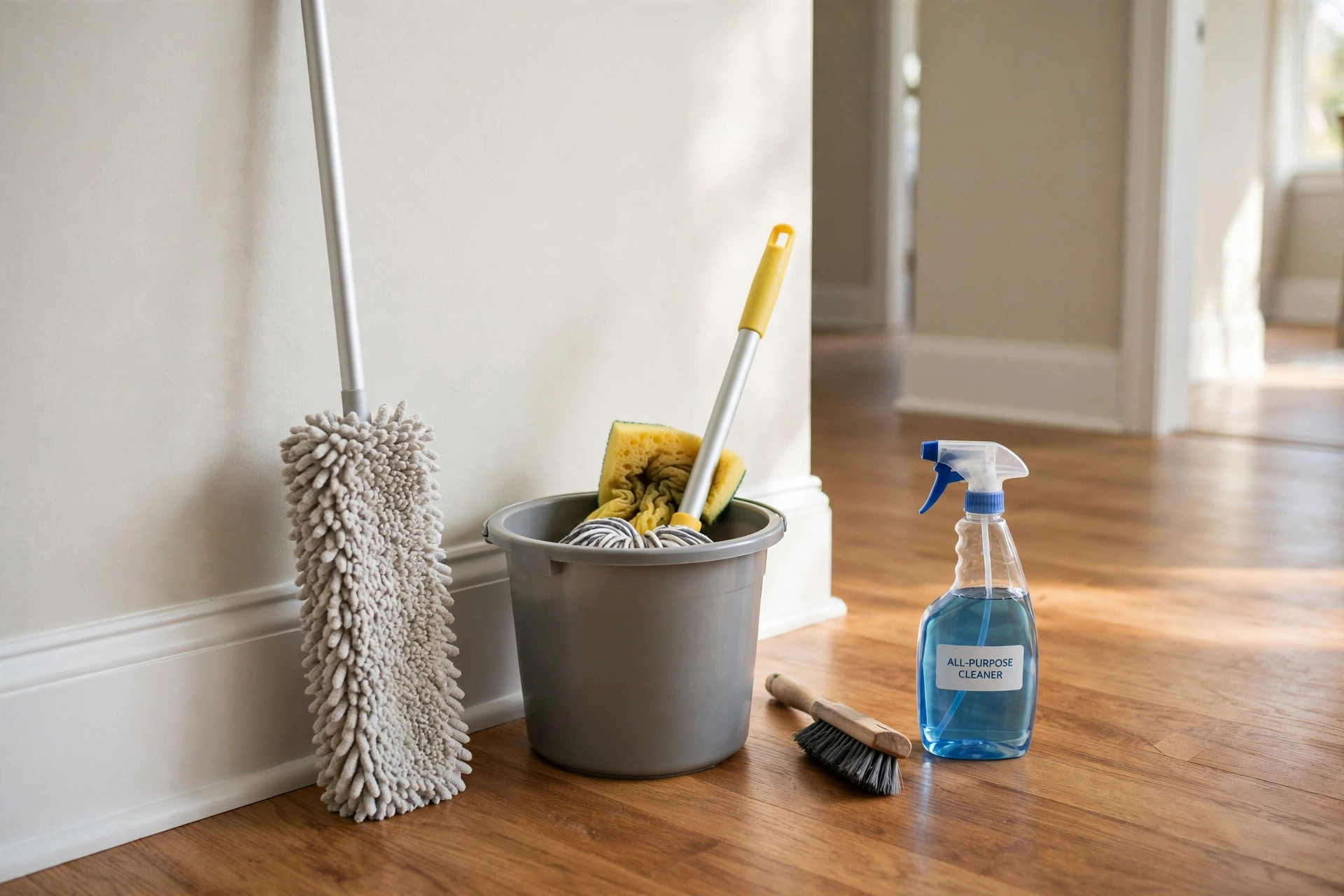

Baseboards catch everything. Dust falls and lands on the ledge. Mops fling dirty water against the trim. Pets brush past and leave hair along the wall. In humid climates, the problem grows worse. Moisture hangs in the air and feeds mildew on painted wood. The best baseboard cleaning tools for humid climates are made to fight that damp layer of grime without soaking the wood or bending out of shape.
This guide walks through why baseboards suffer in damp air, what to look for in a tool, the main types worth buying, what each costs, how to keep tools working, and how to stay safe while you clean.
Why Baseboards Matter Most in Humid Climates
In the South, along the Gulf Coast, and in the lowland states, indoor humidity runs high for much of the year. Air conditioners cool the air but often leave damp spots near walls and windows. Baseboards sit exactly where cold air meets the warm wall. Condensation forms on the paint. Over time, a thin film of moisture mixes with dust and turns into a gray crust.
Painted wood trim soaks up water slowly. Once moisture gets into the paint or the caulk line at the top edge, mildew starts to grow. Dark spots appear in corners and behind furniture. A baseboard that looks fine from the doorway can hide black specks along the bottom edge where the wall meets the floor.
Good tools matter here because ordinary cleaning fails. A quick wipe with a paper towel leaves moisture behind. A soaking mop feeds the mildew. Tools built for baseboards reach the tight ledge, scrub without scratching, and pick up moisture instead of spreading it.
What to Look for in a Baseboard Cleaning Tool: Best Baseboard Cleaning Tools for Humid Climates
Before buying, study the features that make a real difference in damp homes.
Reach and Shape
The tool must fit the narrow ledge of a baseboard. Wide mop heads skip over the top edge. Look for slim heads that ride along the trim and reach into the corner where the baseboard meets the floor. Long handles save your back. They also keep your hands dry.
Scrubbing Power Without Scratches
Humid grime sticks hard. It needs friction. But stiff bristles scratch paint and leave marks that trap more dirt later. The best tools balance both. Soft but firm fibers lift crust without gouging the paint.
Moisture Control
This is the key point in humid climates. A tool that leaves water sitting on the trim causes more harm than good. Microfiber pads wick water up and hold it. Wring-out handles let you squeeze a mop almost dry. Steam mops kill germs but add heat and moisture, so they need a light touch on painted wood.
Mildew Resistance
The tool itself lives in a damp house. Cheap foam heads grow mold in a closet. Heads that dry fast, rinse clean, and come off for the washing machine stay fresh longer.
Durability in Damp Air
Metal handles can rust. Wooden handles can warp. Sealed handles with rust-proof joints last longer in homes where the air never fully dries out.
Types of Baseboard Cleaning Tools
Each tool solves a different part of the job. Most homes need two or three of them.
Long-Handle Baseboard Brushes
These look like a flat broom head on a stick. Bristles angled at the edge sweep dust and spider webs off the ledge. Use them weekly for dry dusting. They take five minutes for a whole house. For a deeper clean, see a baseboard cleaning tools price comparison to weigh brush styles against powered options.
Microfiber Baseboard Dusters
Flat pads of microfiber slide along the trim and trap dust in the fibers. Many snap onto a handle. They work dry for dust and slightly damp for grime. Rinse them in the sink and they come back like new. In humid rooms, use them slightly damp, never wet, so the wood stays dry.
Crevice Brushes and Detail Tools
Corners behind doors, around vent covers, and along the caulk line need a small stiff brush. Toothbrush-style brushes with a long handle reach behind the toilet and under radiators. They cost little and last for years.
Steam Mops with Baseboard Attachments
Steam loosens the sticky film that humidity bakes onto paint. A steam mop with a narrow trim attachment passes quickly over the ledge and lifts grime. Keep the steam low and move fast. Holding steam in one spot can soften paint. Let the baseboard dry fully after each pass.
Cordless Electric Scrubbers
Small motorized scrubbers spin a round brush head and do the rubbing for you. They shine on the tough crust that forms near exterior doors and windows. A good cordless electric scrubbers price comparison helps you pick a model with a flat head that rides the baseboard edge. Choose one with sealed battery housing so damp air does not harm the motor.
Wet Mops and Wring-Out Mops
A small flat mop with a wring-out bucket cleans long runs of baseboard fast. Dip, wring until the mop feels nearly dry, and run it along the trim. The wringing step is what makes this method safe for humid homes. Never slop water onto the wood.
Mold and Mildew Removal Sprays
When dark spots have already formed, scrubbing alone may not cut it. Read a mold removal sprays reviews and buying guide before buying, since formulas vary. Spray, wait the time the label states, scrub with a brush, and wipe the area bone dry. Ventilation matters during use, which the safety section covers below.
Old-Fashioned Bucket and Sponge
For the budget-minded, a bucket of warm water with a drop of dish soap and a grout sponge still works. Wring the sponge until almost dry. Work in short sections. Dry each section with a towel as you go. Slow but effective.
Independent test labs such as Consumer Reports publish ratings of cleaning tools each year. Home guides like Good Housekeeping and The Spruce test how different brushes and mops handle painted trim.
Cost and Price
Prices for baseboard cleaning tools fall into clear bands. A crevice brush or detail tool costs three to eight dollars. A long-handle dusting brush runs ten to twenty dollars. Microfiber pads sold in packs of five or ten cost twelve to twenty-five dollars.
Steam mops with attachments cost forty to one hundred twenty dollars. The range depends on tank size and steam control. Cordless electric scrubbers run twenty-five to eighty dollars. Cheaper models use basic batteries. Costlier ones hold a charge longer and seal better against moisture.
Mold and mildew sprays cost five to twelve dollars a bottle. A flat wring-out mop set with a bucket costs twenty to forty dollars. Most households can outfit themselves fully for under sixty dollars with brushes, pads, and spray. Power tools push the total higher but cut cleaning time in half.
Retailers such as Lowe’s and The Home Depot carry most of these tools in store and online. Comparing prices across seasons pays off. Cleaning tools often go on sale in spring and fall.
Do not chase the cheapest plastic tool if you live in a humid state. A brush that warps or a handle that rusts costs you twice. Mid-range tools with replaceable heads give the best value over three to five years.
Care and Upkeep
Tools that fight damp grime need care themselves, or they become part of the problem.
Rinse brushes and pads after every use. Squeeze out the water and stand them bristle-up or hang them in open air. Never leave a damp pad on a closed shelf. In humid homes, a closed closet can grow mold on the tool in a day or two.
Toss microfiber pads in the washing machine weekly. Wash them warm with mild detergent. Skip fabric softener. It coats the fibers and ruins their grip. Hang pads to dry or use a low dryer setting.
Check wooden handles monthly. If the finish wears thin, rub in a coat of furniture wax or light oil. This seals the wood against the damp air. Wipe metal joints dry after each use and oil the hinge points twice a year to stop rust.
Replace scrub brush heads when the bristles bend flat. A bent brush smears dirt instead of lifting it. Store steam mop attachments apart so pads dry fully between uses.
Project guides at Family Handyman and Bob Vila show step-by-step ways to clean trim without harming paint. Restoration advice from This Old House covers how to spot early paint damage from moisture.
Safety
Cleaning baseboards looks harmless, but a few rules keep the work safe.
Ventilate the room. Open a window or run a fan when you use sprays, especially mold removers. The EPA advises keeping indoor air moving when using chemical cleaners.
Wear gloves. Rubber or nitrile gloves protect your skin from cleaners and from the grime itself. In humid climates, old mildew can irritate skin and lungs. A dust mask helps when brushing heavy dust off long-unused trim.
Read every label. Mold sprays carry warnings for a reason. Never mix bleach with ammonia-based cleaners. The fumes can be dangerous. Use the amount the label states. More is not better.
Watch the electrics. Keep cordless scrubbers and steam mops away from wall outlets. Wipe up drips near plugs at once. Let the baseboard dry before pushing furniture back against the wall. Trapped moisture behind a couch feeds mildew overnight.
Take it slow on old paint. Houses built before 1978 may have lead paint on the trim. If the paint chips or powders, stop and test before scrubbing harder. Damp wiping keeps dust down while you decide.
Frequently Asked Questions
How often should I clean baseboards in a humid climate? Dust them every one to two weeks with a dry microfiber tool. Do a damp wipe once a month. In rooms near the sea or in homes without strong air conditioning, check corners for mildew every month and treat spots early.
Will steam damage painted baseboards? Light steam used quickly is safe on sound paint. Problems start when steam sits in one spot or the paint is already peeling. Test a hidden section first. Keep the mop moving and dry the trim after.
What is the fastest tool for a whole house? A long-handle microfiber duster for weekly dust, plus a wring-out flat mop for monthly washing. Together they cover a full home in under an hour once you learn the rhythm.
Why do my baseboards keep getting moldy? Three causes top the list. Indoor humidity above sixty percent. Poor airflow behind furniture. And tools that leave water on the wood. Fix the moisture first with a dehumidifier or better ventilation. Then the cleaning holds.
Are disposable baseboard wipes worth it? They work for quick touch-ups but cost more per room than washable pads. In humid climates, washable microfiber wins on price and on waste. It also scrubs harder.
Can I use vinegar on baseboards? Diluted white vinegar cleans light grime and discourages mildew. Do not use it full strength on paint, and do not mix it with bleach. Rinse with plain water after and dry the trim.
A Final Word
Baseboards in humid climates ask for a little more care than baseboards in dry country. The air feeds mildew. Dust turns to crust. But the fix is simple. Pick tools that reach the ledge, scrub without scratching, and leave the wood dry. Clean on a steady schedule. Ventilate when you spray. Treat mildew early, before it spreads into the paint.
With the right brush, a good pad, and ten minutes a week, trim stays bright through the dampest season. The house looks fresher, the paint lasts longer, and the small details stop nagging at you every time you walk through the door.
References
Bob Vila. (n.d.). Home improvement advice. https://www.bobvila.com Consumer Reports. (n.d.). Product reviews and ratings. https://www.consumerreports.org Family Handyman. (n.d.). DIY home repair and maintenance. https://www.familyhandyman.com Good Housekeeping. (n.d.). Product reviews and home advice. https://www.goodhousekeeping.com Lowe’s. (n.d.). Home improvement products. https://www.lowes.com The Home Depot. (n.d.). Home improvement products. https://www.homedepot.com The Spruce. (n.d.). Home and garden advice. https://www.thespruce.com This Old House. (n.d.). Home renovation guidance. https://www.thisoldhouse.com U.S. Environmental Protection Agency. (n.d.). Protecting human health and the environment. https://www.epa.gov
Was this guide helpful?

About James Carter
The My Garden US editorial team writes practical, in-depth home and garden guides for American homeowners — tested advice, no fluff.
You May Also Like

Reliable Fireplace Ash Vacuums With Free Shipping
May 27, 2026 0 views
Best Same Day Appliance Repair Services Near Me
January 22, 2026 0 views
Reliable Deep Cleaning Service Packages in Texas: A Homeowner’s Guide
August 25, 2026 0 views