Window blinds gather dust faster than almost anything else in a home. In a small apartment, that dust shows more. There is less space, less storage, and usually no room for a closet full of cleaning gear. Reliable blind cleaning tools for small apartments must therefore earn their place. They must be small, simple, and strong enough to clean slat after slat without a struggle. This guide walks through the tools that meet that test, how to pick them, what they cost, and how to use them safely in a rental home.
Why Dusty Blinds Deserve Attention in a Small Apartment
A studio or one-bedroom apartment has fewer rooms, but the same number of windows. Dust that would spread across a large house settles in a tighter space. Blinds act like shelves turned on edge. Each slat catches a thin gray film of dust, cooking grease, and pet dander. When the heating or air conditioning runs, that dust lifts back into the air you breathe. The U.S. Environmental Protection Agency notes that indoor air quality in homes depends in part on controlling dust and particle buildup, and window coverings are one of the hidden reservoirs people forget.
Dirty blinds also change how a room feels. Sunlight coming through dusty slats looks hazy and dull. A small room can feel smaller still when the light is murky. Clean blinds let daylight in and make the whole apartment feel fresher and larger. Renters notice this too at move-out time. Landlords often check blinds during the final walk-through, and stained or neglected blinds can cost part of a deposit. Guides from This Old House remind homeowners and renters alike that regular upkeep of window coverings protects both health and the home itself.
The good news is that cleaning blinds in a small apartment takes only a few minutes a week once you have the right tool. You need one or two compact tools and a simple routine.
What to Look For in a Blind Cleaning Tool: Reliable Blind Cleaning Tools for Small Apartments
Not every cleaning gadget works well in a small space. Before you buy, judge each tool against three tests.
Size and Storage
In a small apartment, every tool must fit in a drawer, hang on a hook, or slide behind a door. Long poles and bulky machines are a poor match for a 500-square-foot home. Look for tools under two feet long, or tools with telescoping handles that collapse for storage. A brush that cleans three slats at once does the work of three single tools and takes up the same shelf space. The editors at Good Housekeeping regularly stress that the best cleaning tool is the one you can reach without digging through a crowded closet.
Gentle Grip on the Slats
Blinds come in several materials. Vinyl and aluminum slats are tough but scratch easily. Wood and faux wood slats dislike water. Fabric cellular shades need the softest touch of all. A reliable tool uses microfiber, soft bristles, or a gentle sponge surface that cleans without scratching or warping the slat. Hard plastic scrapers and wire brushes have no place here. If you own real wood blinds, choose a tool that works dry or nearly dry, and keep damp tools for vinyl only.
Speed of Use
The point of a purpose-built tool is to finish faster than a rag would. A slat brush that wraps each slat from both sides at once cleans in one pass. A flat microfiber wand that slides between slats can do a whole window in under a minute. Read reviews from sources like Consumer Reports to learn which tools hold up in real homes, not just in the store display.
The Main Types of Blind Cleaning Tools
Several kinds of tools do this job well. Most cost little and store easily.
Three-Pronged Slat Brushes
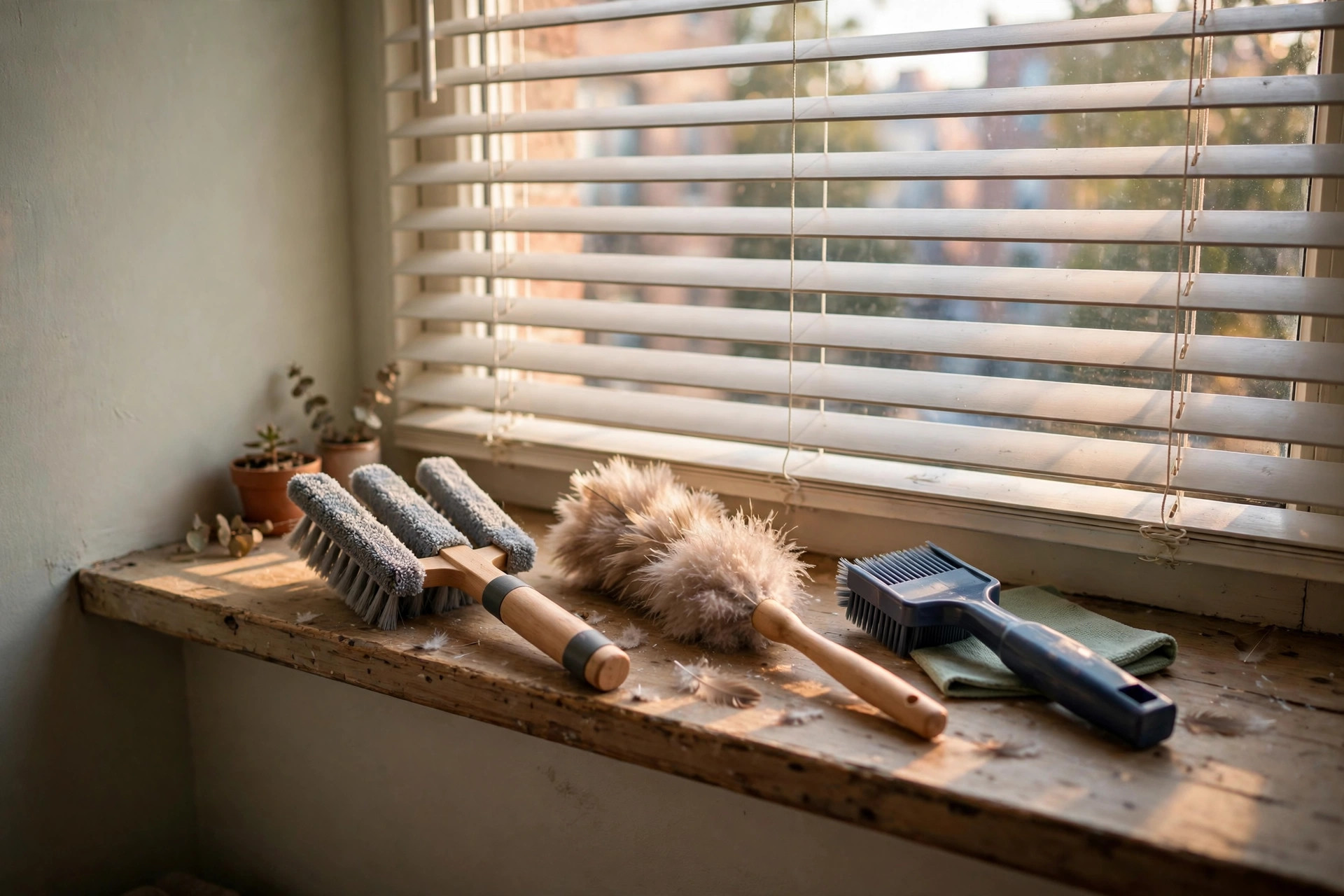
The classic choice is the three-pronged brush. It has three parallel arms covered in microfiber sleeves. You slide it over a slat so the arms clean the top, the bottom, and the edge at the same time. One slow pass down each slat removes a week of dust. These brushes cost only a few dollars, weigh almost nothing, and fit in a kitchen drawer. They are the single best pick for a renter who wants one tool and nothing more.
Microfiber Dusters and Wands
Microfiber dusters with long, fluffy heads reach across wide slats and into corners of the window frame. They attract dust through static charge, so the dust sticks instead of floating away. Some wands bend to clean the tops of blinds near the header rail. Microfiber heads rinse clean in the sink and last for many months. For whole-home dusting jobs, you may also want to look at microfiber cleaning cloth sets price comparison usa to keep your supply costs down.
Handheld Steam Cleaners
For greasy blinds near a kitchen window, steam works where dry dusting fails. A small handheld steamer sends hot vapor onto the slats and loosens sticky film in seconds. You then wipe with a microfiber cloth. Steam cleaners cost more and need a place to cool down after use, so they suit renters who already own one for other jobs. Never use steam on real wood blinds, since heat and moisture can warp the wood.
Vacuum Attachments
If you own a small vacuum with a brush attachment, you already own a blind cleaner. The soft brush head glides along each slat and pulls dust into the bag or canister instead of pushing it into the air. This method is fast and keeps dust from resettling on furniture. Keep the suction low on fabric shades so you do not stretch or tear them.
Simple Household Helpers
In a pinch, reliable blind cleaning tools for small apartments can come from items you already own. A sock pulled over your hand works as a dusting mitt for one slat at a time. Tongs wrapped with microfiber cloths and held with rubber bands make a passable double-sided slat cleaner. These tricks cost nothing and are useful while you decide which dedicated tool to buy. Step-by-step demonstrations of such methods appear regularly at Family Handyman, where readers share low-cost cleaning ideas.
How to Choose the Right Tool for Your Space
Start by counting your windows and checking the blind type. A renter with two windows and mini blinds needs only a slat brush. A renter with five wide windows may want a brush plus a microfiber wand for speed.
Think about your storage. If your cleaning supplies live in a single cabinet under the sink, pick the flattest tool that still cleans well. A flat slat brush slides into a drawer easily. If you have a broom closet, a telescoping duster can hang beside the mop.
Think about your dust level. Apartments near busy roads, construction sites, or with pets need more frequent cleaning, so durability matters more. A tool with washable microfiber sleeves will outlast disposable dusters and cost less over a year. Apartment dwellers in Texas can compare local options in the guide to where to buy blind cleaning tools in texas for store and shipping choices.
Think about noise and mess. Dry dusting is quiet and needs no setup, which matters when you clean early in the morning or late at night in thin-walled buildings. Vacuuming works faster but makes noise your neighbors will hear. For most renters, a dry microfiber tool is the calmest choice.
Finally, think about other cleaning jobs the tool could handle. A microfiber wand that cleans blinds can also dust ceiling fan blades, shelf tops, and the edges of a television. Multi-use tools earn their storage space faster. When you compare options, check price lists like baseboard cleaning tools price comparison usa to see how far a small budget stretches across several dusting jobs at once.
Cost and Price Ranges
Blind cleaning tools are among the cheapest household supplies you can buy. Typical prices in the United States fall into three bands.
Budget tools run from about three to eight dollars. This band includes three-pronged slat brushes, simple microfiber sleeves, and basic dusters. For most renters, a five-dollar brush does the job completely. Check the household aisle at The Home Depot or Lowe’s for these everyday picks.
Mid-range tools cost from about nine to twenty dollars. This band includes telescoping microfiber wands, larger multi-surface dusters, and vacuum brush attachments sold separately. These suit renters who clean more often or who have many windows.
Specialty tools cost from about twenty to sixty dollars. This band includes handheld steam cleaners and electric rotating blind brushes. Buy these only if you have a clear need, such as greasy kitchen blinds or very tall windows. Remember that a small apartment rarely needs the most expensive option.
Replacement sleeves and pads cost a few dollars per set. Washable parts keep long-term costs low. A single quality brush with washable sleeves can serve for years.
Care and Upkeep of Your Tools
A dirty cleaning tool spreads dirt instead of removing it. Rinse microfiber sleeves in warm water with a drop of dish soap after heavy use, then let them air dry. Shake out dusters outside or over a trash can before each use so loose dust does not fall back onto the slats.
Store tools in a dry place. Microfiber that stays damp can develop a musty smell, which is the last thing a small apartment needs. Hang wands or lay them flat so the heads keep their shape. Keep slat brushes out of direct sun, since long heat exposure can make plastic arms brittle.
Replace worn parts on time. When microfiber sleeves look flat and stop picking up dust, buy new ones instead of pressing harder. Pressing harder only risks scratching the slats. Good care stretches a five-dollar tool across many years of service.
Safety Notes for Renters
Cleaning blinds is low risk, but a few cautions keep the job trouble-free.
Mind the cords. Many blinds still have pull cords, and cord loops are a known hazard for small children and pets. The U.S. Consumer Product Safety Commission advises keeping cords out of reach and using cordless window coverings where children are present. When you clean, tuck cords aside rather than yanking on them.
Do not stand on furniture. In a small apartment it is tempting to climb on a chair or a stack of books to reach tall windows. Use a tool with a longer reach instead, or ask your landlord about safe step stools. A fall in a cramped room is easy and costly.
Use cleaning sprays sparingly. Most blinds need only dry dusting. If you use a spray, apply it to the cloth, never directly on the slat, and keep the room ventilated. Heavy fragrances linger in small spaces long after the job is done. General guides at The Spruce recommend starting with the gentlest method and adding products only if dusting alone fails.
Ask before altering blinds. Renters should not take blinds down, repaint them, or replace parts without the landlord’s permission. Cleaning is always allowed. Deep repairs are not always allowed.
Frequently Asked Questions
How often should I clean blinds in a small apartment? A light dusting once a week keeps buildup under control. Apartments near roads, with pets, or with cooking that uses oil may need dusting twice a week. A deep wipe of each slat once a month handles any film that dry dusting misses.
Can I use water on my blinds? It depends on the material. Vinyl and aluminum blinds tolerate a damp cloth well. Faux wood blinds handle light dampness. Real wood blinds should stay dry, cleaned with a dry microfiber tool only. Fabric cellular shades need only gentle dry dusting or low-suction vacuuming.
What is the fastest way to clean many slats at once? A three-pronged slat brush cleans both sides of a slat in one pass, which cuts the time roughly in half compared with wiping one side at a time. A vacuum with a soft brush attachment is also fast, since it collects dust as it moves.
Are disposable dusters a good choice for renters? They work in a hurry, but they cost more over time and create waste. A washable microfiber tool cleans just as well and lasts far longer. If you use disposable sheets, keep a pack small so it does not eat precious storage space.
How do I clean blinds without taking them down? You never need to remove them for routine cleaning. Close the slats flat, dust one side from top to bottom, then tilt the slats the other way and dust the second side. For a deeper clean on vinyl blinds, wipe each slat with a damp microfiber cloth while the blinds stay mounted. Tutorials at Bob Vila show this two-side method with photos.
Do I need special tools for vertical blinds? Vertical blinds clean the same way, but gravity helps: dust slides down each vane, so start at the top and work downward. A flat microfiber wand is easier to slide along vertical vanes than a pronged brush. Clean from the top down so fallen dust lands on the sill, where you can sweep it up last.
A Short Final Word
Reliable blind cleaning tools for small apartments are small, cheap, and easy to store. A five-dollar slat brush and a washable microfiber duster cover nearly every situation a renter will face. Add a weekly routine that takes five minutes, and your blinds will stay bright, your air cleaner, and your deposit safer at move-out. The best tool is the one you will actually use, so pick the simplest one that fits your drawer and put it to work this week.
References
Bob Vila. (n.d.). Home improvement advice. https://www.bobvila.com Consumer Reports. (n.d.). Product reviews and ratings. https://www.consumerreports.org Family Handyman. (n.d.). DIY home repair and maintenance. https://www.familyhandyman.com Good Housekeeping. (n.d.). Product reviews and home advice. https://www.goodhousekeeping.com Lowe’s. (n.d.). Home improvement products. https://www.lowes.com The Home Depot. (n.d.). Home improvement products. https://www.homedepot.com The Spruce. (n.d.). Home and garden advice. https://www.thespruce.com This Old House. (n.d.). Home renovation guidance. https://www.thisoldhouse.com U.S. Consumer Product Safety Commission. (n.d.). Product safety information. https://www.cpsc.gov U.S. Environmental Protection Agency. (n.d.). Protecting human health and the environment. https://www.epa.gov
Was this guide helpful?

About Emily Rodriguez
The My Garden US editorial team writes practical, in-depth home and garden guides for American homeowners — tested advice, no fluff.