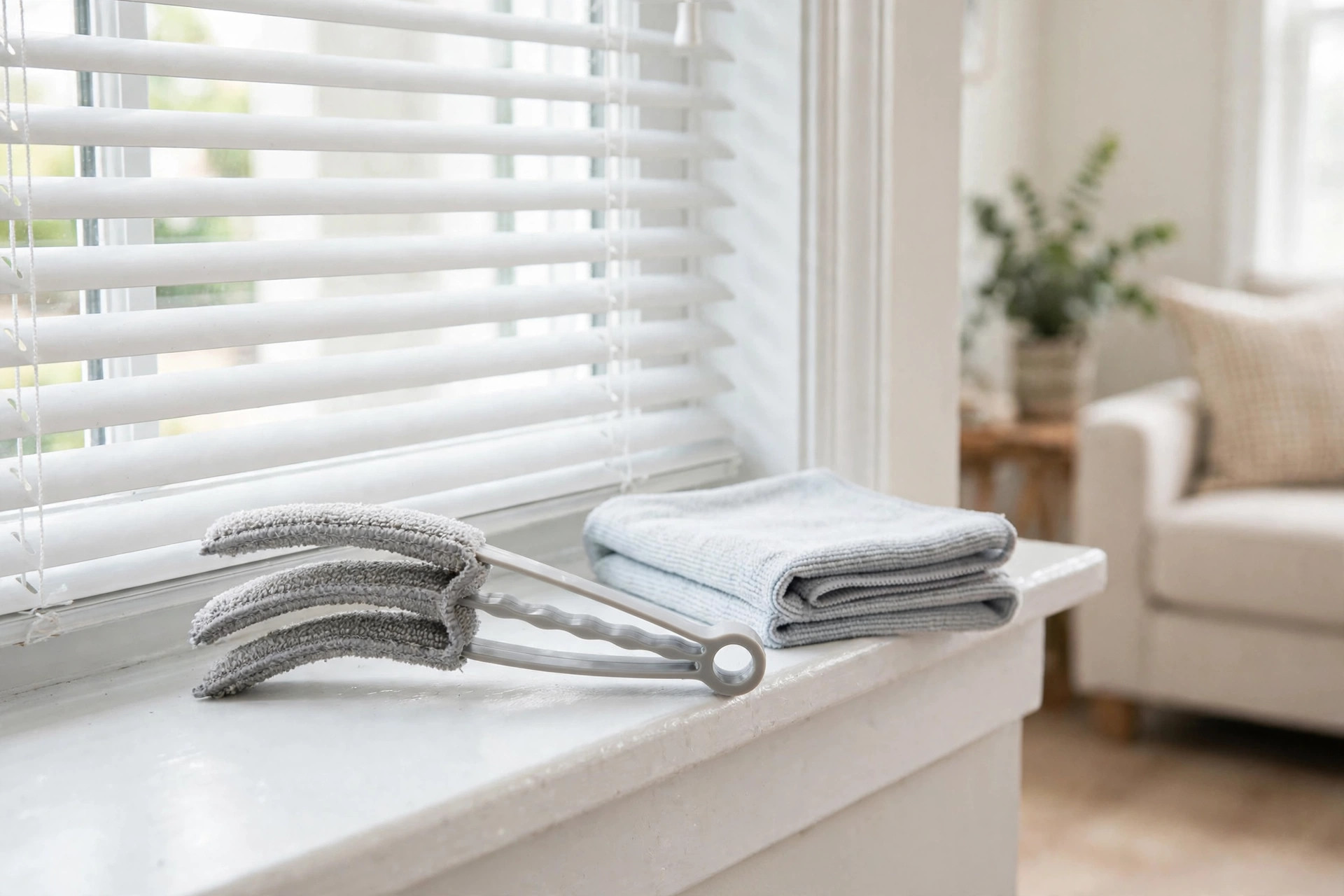

Knowing where to buy blind cleaning tools in Texas saves time and trouble. Dust builds fast on blinds, and Texas homes face dry air, pollen, and long sunlit days that make the problem worse. A blind cleaning brush, a microfiber duster, and a good cleaner can bring dull blinds back to life in one afternoon. This guide shows the best stores and websites in Texas, the tools worth buying, and what to pay.
Why Blind Cleaning Matters
Blinds catch dust the way shelves catch books. The slats sit flat and open to the room, so every speck of dust lands on them. In Texas, where wind brings fine dust through window seals, blinds can look gray within a few weeks. Dirty blinds make a room look tired even when the rest of the house is clean.
There is a health reason too. Dust on blinds feeds allergies. When the air conditioner kicks on, loose dust lifts off the slats and spreads through the room. The Environmental Protection Agency notes that indoor air can hold more dust and allergens than the air outside, so keeping window treatments clean helps the whole home (EPA).
The right tools turn blind cleaning from a chore into a quick job. A simple blind cleaning tool can clean six slats at once, both sides, in a single pass. Pair it with good cloths — like the ones in best microfiber cleaning cloth sets for florida homes — and most jobs take under an hour.
Clean blinds also help your windows last longer. Dust and grease that sit on slats for months can stain the finish, and on wooden blinds they can wear down the coating. A few minutes of care each month protects blinds that may have cost hundreds of dollars to buy. For renters, clean blinds matter at move-out time, when landlords check window treatments closely before returning a deposit.
What to Look For When Choosing Blind Cleaning Tools: Where to Buy Blind Cleaning Tools in Texas
Fit for Your Blind Type
Not all blinds are alike. Venetian blinds have wide flat slats. Mini blinds have narrow slats. Vertical blinds hang in long panels. Wood and faux-wood blinds need gentle tools that will not scratch the finish. Before you shop, measure your slat width and note the blind type. A blind cleaner made for 2-inch slats will not work well on narrow mini blinds.
Tool Design
The classic blind cleaning brush has three or four prongs covered in microfiber. It wraps around each slat and cleans both sides at once. Roller-style cleaners use soft fabric loops that glide over slats. Simple microfiber dusters with long heads reach high windows. For stubborn grease near kitchens, a small brush with a handle works best.
Ease of Cleaning the Tool Itself
A tool that traps dust should release it just as easily. Look for washable microfiber heads. Avoid cheap foam dusters that fall apart after two uses. The Family Handyman offers practical buying advice on long-lasting home tools, which applies to cleaning tools too (Family Handyman).
Types of Blind Cleaning Tools
Microfiber Blind Cleaners
These are the most popular choice. A hand-held cleaner with microfiber prongs wipes both sides of a slat at once. Most cost under ten dollars. They rinse clean in the sink and air dry overnight. Keep two on hand so one is always dry and ready.
Extended-Reach Dusters
Texas homes often have tall windows. A duster with a handle that extends to three or four feet reaches the top slats without a ladder. Many have bendable heads that angle into corners. They also work on ceiling fans and high shelves.
Ultrasonic Blind Cleaners
Some blind owners in larger Texas cities use mail-in or drop-off ultrasonic cleaning services for fabric shades and wooden blinds. For a home tool, small battery-powered sonic brushes help loosen caked dust before wiping. These cost more but suit homes with many windows.
Wet Cleaning Kits
A kit with a bucket, mild soap, and a flat sponge suits deep cleaning days. Aluminum and vinyl blinds can handle soap and water. Wooden blinds cannot. Always check the care tag before using water. This Old House covers safe methods for washing window treatments at home (This Old House).
Where to Buy Blind Cleaning Tools in Texas
Home Improvement Stores
Home Depot and Lowe’s carry blind cleaning tools in their cleaning aisles, and both have stores across Texas from Houston to El Paso. Home Depot stocks microfiber blind cleaners, extendable dusters, and wet-cleaning supplies year round (Home Depot). Lowe’s carries a similar range, including store-brand dusters and specialty brushes (Lowe’s). Prices run about the same as online, and you can take the tool home the same day.
Big-Box and Discount Retailers
Target and Walmart sell basic blind cleaning tools in their household sections. Selection is smaller, but the prices are often the lowest. Check the cleaning aisle rather than the window treatment aisle, since the tools are stocked with dusters and mops.
Specialty Cleaning Shops
In cities like Dallas, Austin, and San Antonio, local janitorial supply shops sell professional-grade blind cleaners. These tools cost a bit more but last longer. Ask at the counter for a three-prong microfiber cleaner, which many shops keep behind the register. The Good Housekeeping Institute tests home cleaning products and rates durability as a key factor (Good Housekeeping).
Online Retailers
Amazon, Target.com, and Walmart.com ship blind cleaning tools to every Texas address. Online shopping gives you the widest choice of brands and lets you read reviews. Consumer Reports publishes independent ratings of household cleaning products, which can help you sort the good tools from the poor ones (Consumer Reports). Bob Vila’s site also reviews cleaning tools and explains which features matter most (Bob Vila).
Hardware Stores
Ace Hardware stores across Texas stock blind cleaners near the brooms and mops. The staff at a local Ace can point you to the right tool and often know which brands hold up best. Small-town hardware stores may order a specialty tool for you if it is not on the shelf.
Cost and Price
Most blind cleaning tools cost very little. Expect these price ranges:
– Microfiber blind cleaner: $5 to $12 – Extendable duster: $10 to $20 – Wet cleaning kit: $15 to $30 – Small sonic brush: $15 to $35
A full kit for a four-bedroom house rarely costs more than forty dollars. Since the tools are reusable and washable, the cost per cleaning is only a few cents. Texas shoppers who buy in store avoid shipping fees, while online buyers should check the shipping cost before they decide. For cleaning advice written in plain language, The Spruce has guides on blind care that many Texas homeowners find useful (The Spruce).
Care and Upkeep of the Tools
Wash microfiber heads after every few uses. Rinse them in warm water with a drop of dish soap, squeeze out the water, and let them air dry. Never use fabric softener on microfiber. It coats the fibers and makes them less able to grab dust.
Store dusters with the head covered or hung up, so the fibers stay fluffy. Replace a microfiber cleaner when the fibers mat down and stop picking up dust. Most good ones last a year or more of regular use.
Check your tools at the start of each season. A quick shake outdoors or a rinse in the sink keeps them working at full strength. If a handle loosens on an extendable duster, tighten the locking ring before it slips during use. Small checks like these add months to the life of every tool in your kit.
Keep a small cleaning kit near the room with the most windows. When the tools are close at hand, you will use them more often. If your home also needs work on other systems, a related guide on quiet mold remediation services near me covers the signs of moisture problems, and powerful pest control service plans near me explains how regular service keeps homes free of dust-loving pests.
Safety
Blind cleaning is a safe job, but a few rules keep it that way. Use a stable step stool, not a chair, to reach high windows. Falls from chairs are a common home injury. Keep water away from wooden blinds, since moisture can warp the wood and dull the finish.
For old homes, be careful with blinds that may hold lead dust if the house was built before 1978. Wear a dust mask when cleaning very dirty blinds, and wash your hands when done. The EPA publishes guidance on lead dust safety in older homes (EPA).
If your blinds hang from cords, watch small children and pets during cleaning. Loose cords are a known hazard. Cordless blinds remove the risk entirely, and many Texas stores now sell them as the standard option.
A Simple Cleaning Routine That Works
Once you have the tools, a set routine makes the job easy. Start by closing the blinds all the way in one direction, then dust from top to bottom with your microfiber cleaner or extendable duster. Work left to right so no slat is missed. Then tilt the blinds the other way and repeat. This two-pass method catches dust on both sides of every slat.
For a deep clean, take vinyl or aluminum blinds down and lay them in a bathtub with warm water and a few drops of mild dish soap. Use a soft sponge to wipe each slat, then rinse with clean water and dry with a towel before hanging them back up. This method works best in spring, when you can open windows to air the room while the blinds dry.
Wood and fabric blinds need a dry method only. Use the microfiber cleaner on each slat, then finish with a dry cloth. For fabric shades, a light pass with a lint roller picks up dust that a duster misses. A routine like this, done every month, keeps every window in the house looking bright and clean.
FAQ
How often should I clean my blinds in Texas?
Dust them every two to four weeks. Texas dust and pollen build up fast, so a quick monthly wipe keeps blinds looking new. Deep clean with soap and water once or twice a year for vinyl and aluminum blinds.
What is the cheapest blind cleaning tool that works well?
A simple microfiber blind cleaner, usually five to twelve dollars, cleans six slats at a time and lasts for years. It is the best value for most homes.
Can I use a vacuum on blinds?
Yes. Use the brush attachment on low suction and move slowly across closed slats. This works well for the first pass on very dusty blinds, followed by a microfiber tool for the finish.
Are ultrasonic blind cleaners worth it?
For a normal home, no. Hand tools do the job. Ultrasonic cleaning suits homes with dozens of windows or delicate fabric shades that need gentle care.
Where can I find blind cleaning tools in small Texas towns?
Check the local hardware store or dollar store first. If they do not stock them, order online. Amazon and Walmart.com deliver to most Texas addresses within a few days.
Do I need different tools for wood blinds?
Wood blinds need soft, dry tools. Use a dry microfiber cleaner and skip soap and water, which can damage the finish. A feather or lambswool duster also works well.
A Short Final Word
Clean blinds change the feel of a room. Sunlight looks brighter, colors look fresher, and the air smells cleaner. Where to buy blind cleaning tools in Texas is a simple question with many good answers, from Home Depot and Lowe’s to local hardware stores and online shops. Pick a microfiber cleaner that fits your slats, wash it now and then, and give your blinds a quick pass each month. The job takes minutes, and the result lasts for weeks.
References
Bob Vila. (n.d.). Home improvement advice. https://www.bobvila.com Consumer Reports. (n.d.). Product reviews and ratings. https://www.consumerreports.org Family Handyman. (n.d.). DIY home repair and maintenance. https://www.familyhandyman.com Good Housekeeping. (n.d.). Product reviews and home advice. https://www.goodhousekeeping.com Lowe’s. (n.d.). Home improvement products. https://www.lowes.com The Home Depot. (n.d.). Home improvement products. https://www.homedepot.com The Spruce. (n.d.). Home and garden advice. https://www.thespruce.com This Old House. (n.d.). Home renovation guidance. https://www.thisoldhouse.com U.S. Environmental Protection Agency. (n.d.). Protecting human health and the environment. https://www.epa.gov
Was this guide helpful?

About Emily Rodriguez
The My Garden US editorial team writes practical, in-depth home and garden guides for American homeowners — tested advice, no fluff.
You May Also Like

Finding Reliable Same Day Appliance Repair Services Near Me
May 8, 2026 0 views
Reliable Blind Cleaning Tools for Small Apartments
July 20, 2026 0 views
Professional Grade Shower Door Descalers for Small Apartments: A Complete Guide
September 24, 2026 0 views