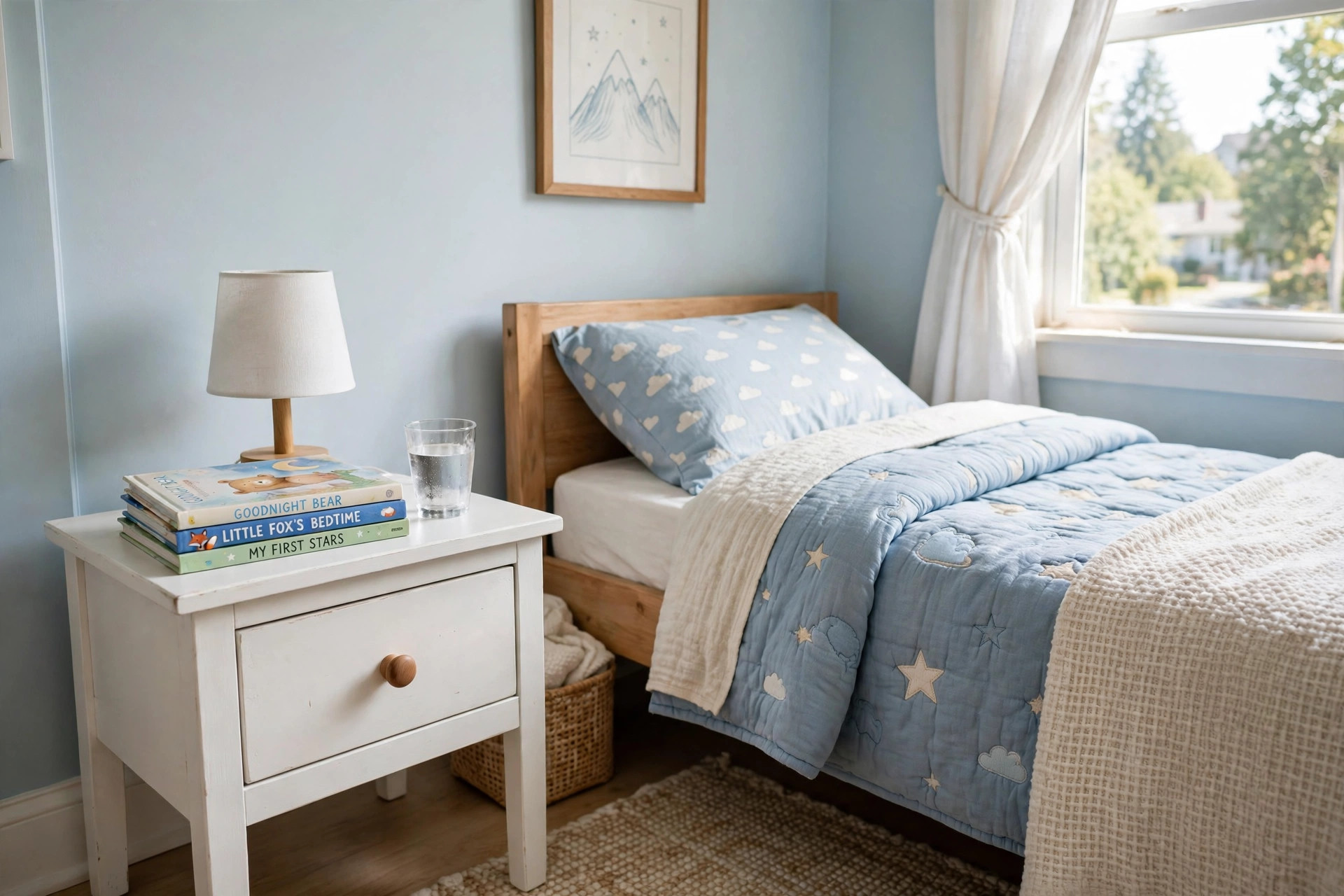

A good bedside table can change the way a child feels at night. The best kids nightstand with drawer for bedroom gives a child a lamp within reach, a place for a favorite book, and a drawer for small treasures. It also teaches order. A child learns where things belong. The room looks calmer. Bedtime runs smoother.
Parents often start with a leftover adult nightstand. That choice is easy to understand. It is already in the house. But an adult nightstand is often too tall, too sharp, and too heavy for a small child. A piece built for children fits the bed, fits the child, and fits the room. This guide walks through what matters, what to look for, what the options are, what it costs, how to keep it clean, and how to keep it safe.
Why It Matters
A nightstand does more work than it seems. At night a child reaches for water. A nightstand holds the cup. At reading time the lamp sits on it. In the morning the drawer holds the treasures a child cannot part with. These small jobs matter. When everything has a place, the child sleeps better. The parent walks through the room without tripping on clutter.
A drawer makes the difference. Open shelves invite piles. Piles fall. Drawers hide the mess and keep small parts away from younger siblings. The best kids nightstand with drawer for bedroom closes the day with one motion. The child slides the drawer shut. The room is done.
There is also the matter of habit. Children watch how rooms are kept. A child with a nightstand of their own learns to care for a small corner of the world. They wipe it. They line up their books. They tuck their alarm clock inside. These habits last longer than the furniture.
What to Look For: Best Kids Nightstand with Drawer for Bedroom
Shopping is easier when the goal is clear. Measure the bed first. Measure the room. Then look for these points.
Size and Height
The top of the nightstand should sit at or near the height of the mattress. For most twin beds, that is between twenty and twenty-six inches. If the table is too tall, the child must stretch to reach the lamp. If it is too low, the drawer feels far away. A nightstand that matches the bed lets a half-asleep child find the water glass without sitting all the way up.
Width matters too. Sixteen to twenty inches is enough for a lamp and a book. A table wider than that can crowd a small room. Keep three feet of clear space between the nightstand and the door swing, or the door will hit it.
Drawer Quality
Open the drawer in the store, or read the description with care. The drawer should glide without sticking. It should stop before it falls out. Metal drawer glides work well. Wooden runners are fine for light loads. Avoid drawers that rattle loose, because a curious toddler will pull at them.
Look inside the drawer. Solid wood or thick plywood holds screws well. Thin fiberboard can split when a screw is driven in and out. The drawer box should have a solid bottom, not a loose panel that pops free. A drawer that holds books should carry at least ten pounds without sagging.
Materials and Finish
Solid wood costs more but lasts through years of use. Pine, poplar, and birch are common choices for children furniture. Engineered wood is lighter and cheaper. It works well when the finish seals it. Ask whether the paint or stain is lead-free. In the United States, children furniture must meet paint rules set by the federal safety agency. A seller who answers this question plainly is a seller to trust.
Round the edges. Children bump into furniture. A nightstand with rounded front corners leaves no sharp marks. Some parents add foam corner guards for toddlers. A well-built piece often needs none.
Types and Options
There is no single right design. Each family has its own needs. The main types are simple.
Single-Drawer Classic
The classic nightstand has one drawer above an open shelf or a small cabinet door. It suits school-age children. The drawer holds glasses, an alarm clock, or a diary. The shelf below holds a stack of books. This is the most common design and the easiest to find. Because it is common, prices stay low and styles stay wide.
Nightstand With Open Shelf Only
Some designs skip the drawer and offer two open shelves. These cost less. They work for older children who keep books in neat rows. They are a poor fit for toddlers. Small parts fall. Dust collects. A family can add a small fabric bin to a shelf, but that is an extra step.
Two-Drawer Tall
A taller nightstand with two drawers fits a high bed or a loft. It stores more. Pajamas fit in the lower drawer. The lamp stays on top. The tall shape can tip if a child climbs it, so this type must be fixed to the wall with the strap that comes in the box.
Themed and Novelty Designs
Racing cars, princess castles, and space rockets all appear in the children section. Children love them. The danger is that the child outgrows the theme in two years. A plain nightstand in white, gray, or natural wood accepts new sheets and new wall colors for a decade. If the child asks for a theme, a plain nightstand with themed drawer pulls is the middle road.
How to Choose Step by Step
A simple order of steps keeps the choice clear.
1. Measure the bed height and the wall space beside it. 2. Decide the budget before opening any catalog. 3. Choose the material. Solid wood lasts longest. Sealed engineered wood costs less. 4. Check the safety record. Look for marks that show the piece meets the federal rules for children furniture. 5. Read the drawer details. Smooth glide. Stop device. Solid bottom. 6. Match the room. A white nightstand fits most rooms. Wood tones warm a plain room. 7. Plan delivery and assembly. Small pieces ship flat. Keep the wall strap for safety.
A lamp deserves a thought at this stage. Many families pair the nightstand with a night light with a dimmer for feeding or a night light projector for the bedroom. The lamp cord should run behind the nightstand, not across the floor. A cord that crosses the floor is a trip hazard at night.
Cost and Price
Prices run in clear bands. A simple engineered-wood nightstand with one drawer often sells for thirty to seventy dollars. A solid-wood nightstand with one drawer often sells for ninety to one hundred eighty dollars. Themed or novelty pieces fall in the middle, around eighty to one hundred fifty dollars.
The bed itself can change the plan. If the room already has a bed with storage drawers underneath, one small nightstand may be enough. The extra storage lives under the bed. If the bed has no storage, a two-drawer nightstand earns its price.
Price is not the same as value. A thirty-dollar nightstand replaced twice costs more than a ninety-dollar nightstand kept for ten years. Look at the joints. Dovetail or dowel joints hold. Stapled joints loosen. Look at the back panel. A solid back keeps the frame square. A thin cardboard back lets it twist.
Sales run often in the furniture market. Major holiday weekends bring real discounts. Buying off-season, in late winter, can bring lower prices on bedroom sets. Large home retailers list floor models and open-box pieces at a cut price. A floor model is worth a look when the drawer still glides well and the finish is clean.
Care and Upkeep
Children furniture takes hard use. A little care goes a long way. Dust the top once a week with a soft cloth. Wipe spills the same day. Water rings from a night glass sink into unfinished wood. A glass coaster on the nightstand teaches the child to protect the wood.
Tighten screws every six months. Children lean on drawers. They swing on doors. Screws loosen with time. A quick check with a screwdriver takes five minutes. Replace any screw that spins in place, because a spinning screw holds nothing.
Clean drawers once a season. Pull them out. Shake out the crumbs. Wipe the inside with a damp cloth. Let it dry before sliding the drawer back. This is also the moment to clear out broken crayons and dead batteries.
Touch up paint chips with a small brush and matching paint. Chips near the drawer front are common. Left alone, a chip lets moisture in. Covered, it disappears. Keep the touch-up paint in the drawer itself, in a small sealed bag, so it is there when needed.
Safety
Safety comes first with children furniture, and it is not a small matter. Furniture that tips over can injure a child. Each year, tip-over accidents send children to the emergency room. The fix is simple. Use the wall anchor or strap that ships with the nightstand. Fix it to a wall stud. This is the single most important step, and it costs nothing.
The federal safety agency keeps guides on furniture stability, and its rules set limits on lead and small parts in children products. Parents can read the tip-over guidance on the Consumer Product Safety Commission site before they buy. The agency also lists recalls. A quick search of the brand name there takes two minutes and can reveal a known fault.
A few more rules keep the room safe:
– Keep the nightstand low for toddlers. A low piece tips less and hurts less. – Keep medicines, coins, and small batteries out of the drawer. A drawer that a child can open is a drawer a child will open. – Keep the lamp stable. A heavy base or a clamped lamp resists a bump in the dark. – Keep cords short and hidden. Long cords wrap around small necks. – Keep hot drinks off the nightstand. A spill at night burns a sleeping child.
The pediatric guidance at HealthyChildren.org also covers safe sleep spaces and room setup for young children. It is a sound place to check the basics of a child room before the furniture arrives.
Shopping Sources Worth a Look
Most families buy online. The large retailers carry wide ranges and clear reviews. IKEA sells simple low nightstands at low prices, and its children line follows strict safety testing. Pottery Barn Kids sells solid-wood pieces in many finishes, at higher prices. Wayfair lists thousands of options, and its filters help sort by height, material, and drawer count. Home Depot carries both ready-made pieces and small unfinished tables that a family can paint together. Crate & Barrel offers clean modern designs that fit a teen room as well as a young child room.
For ideas and plain reviews, The Spruce publishes buying guides for children furniture, and What to Expect covers nursery and kid room setup from a parent point of view. Both help a buyer compare designs before spending money.
Frequently Asked Questions
What is the best height for a kids nightstand?
The top of the nightstand should sit level with the mattress or within two inches above it. For a standard twin bed this is usually twenty to twenty-six inches. Measure the bed before shopping, because bed frames and mattress thickness vary.
Is one drawer enough for a child?
For most children, one drawer is enough. It holds the small items a child wants near at night: glasses, a watch, a flashlight, a diary. Clothes and toys belong in the dresser and the toy box. A second drawer helps in a small room with no dresser.
Are nightstands with drawers safe for toddlers?
They can be safe when three rules are met. First, anchor the piece to the wall. Second, keep small and sharp items out of the drawer. Third, choose a low, stable design with rounded corners. A toddler room is also a good place for a drawer lock until the child is older.
Solid wood or engineered wood, which is better?
Solid wood lasts longer and takes touch-ups well. Engineered wood costs less and weighs less. A well-sealed engineered-wood nightstand with strong joints serves a child for years. The choice often comes down to budget and how long the piece must last.
How do I keep the drawer from sticking?
Dust and crumbs cause most sticking. Pull the drawer out, wipe the runners, and wax the wood runners with a plain candle. If metal glides stick, a drop of silicone spray on the track helps. Tighten any loose screws on the glides while the drawer is out.
Can a kids nightstand work in a shared room?
Yes. In a shared room each child gets their own nightstand, one on each side of the beds or one between them if space is tight. Matching nightstands keep the room calm. Different colors let each child claim their own side.
A Final Word
The best kids nightstand with drawer for bedroom is not the most costly one. It is the one that fits the bed, holds the lamp steady, keeps small things in order, and stays fixed to the wall. Measure first. Buy for safety. Keep it simple enough to grow with the child. A plain, sturdy nightstand serves through picture books, chapter books, and the first alarm clock. That is good value, and it is a quiet gift to a child who is learning to keep their own small world in order.
References
American Academy of Pediatrics. (n.d.). HealthyChildren.org. https://www.healthychildren.org Crate and Barrel. (n.d.). Furniture and home decor. https://www.crateandbarrel.com IKEA. (n.d.). Home furnishings. https://www.ikea.com Pottery Barn Kids. (n.d.). Kids furniture and decor. https://www.potterybarnkids.com The Home Depot. (n.d.). Home improvement products. https://www.homedepot.com The Spruce. (n.d.). Home and garden advice. https://www.thespruce.com U.S. Consumer Product Safety Commission. (n.d.). Product safety information. https://www.cpsc.gov Wayfair. (n.d.). Furniture and home goods. https://www.wayfair.com What to Expect. (n.d.). Pregnancy and parenting guidance. https://www.whattoexpect.com
Was this guide helpful?

About Emily Rodriguez
The My Garden US editorial team writes practical, in-depth home and garden guides for American homeowners — tested advice, no fluff.
You May Also Like

Nursery Wall Decal Quote for Above Crib
March 15, 2026 0 views
Toddler Potty Chair for Bathroom Training: A Simple Guide for Parents
February 22, 2026 0 views
The Crib Canopy Net for Mosquito Protection USA Parents Trust
April 16, 2026 0 views