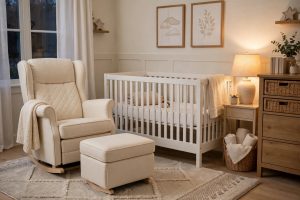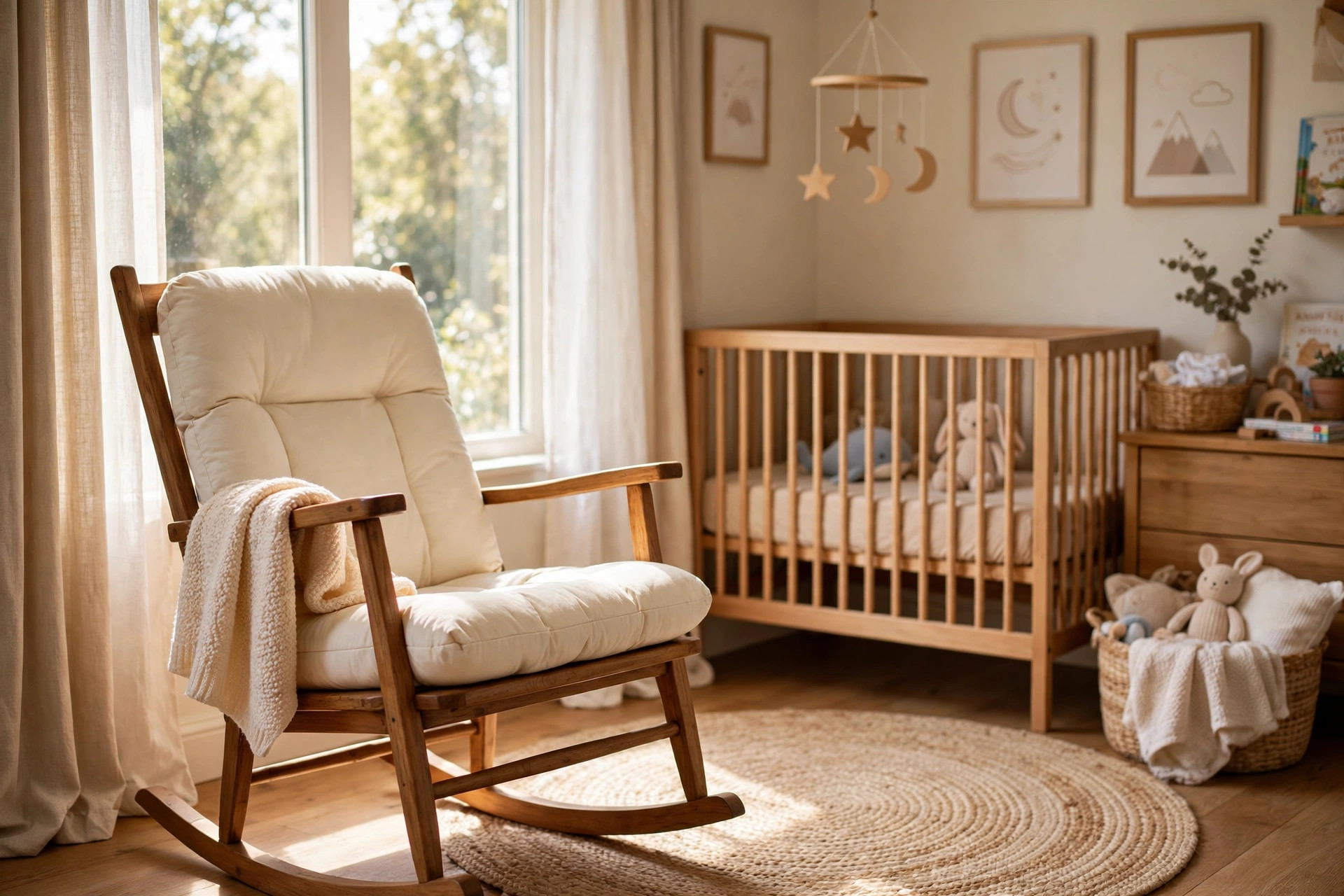

Few pieces of nursery furniture work harder than the glider. Parents sit in it for feedings, for late-night rocking, and for quiet minutes with a new baby. After months of steady use, the cushions grow flat and thin. New nursery glider replacement cushions for comfort can bring the chair back to life. They cost far less than a new chair. They also let parents keep the glider they already know and trust.
Why Replacement Cushions Matter
A glider chair earns its place in a nursery. It moves in a smooth back-and-forth motion. That motion soothes both parent and child. When the cushions wear out, the chair loses much of its value. The frame may still be strong. The mechanism may still glide well. Yet hard, lumpy padding makes long feedings a trial.
New cushions restore the seat, the backrest, and the armrests. They give the chair a fresh look as well. A simple fabric change can match a new nursery theme. This matters to families who use a hand-me-down chair or who bought one before the baby arrived.
Good replacement cushions for glider chairs also protect the frame. Bare wood or metal under thin padding can press against the body. Thick new pads spread the weight. They cut down on pressure points in the hips and lower back. For a parent who nurses or bottle-feeds many times a day, that relief is real.
There is also a money point to make. A quality glider often costs several hundred dollars. Replacement pads cost a fraction of that. The frame on a good chair lasts for years. The padding is the part that ages first. Swapping pads is the sensible repair.
What to Look For When You Choose: Nursery Glider Replacement Cushions for Comfort
Fit and Size
Fit comes first. A cushion that is too small will slide and bunch. A cushion that is too large will not sit flat. Measure the chair before you shop. Measure the seat width and depth. Measure the backrest height and width. Note the shape. Some seats are square. Others curve or taper toward the back.
Many makers sell cushions cut for their own chairs. These often fit best. If the brand is unknown or out of business, choose a universal set. Look for seat pads with ties or straps. Ties keep the pad in place when the chair rocks. Elastic corners can help as well.
Also check the armrests. Some sets include arm pads. Others sell them apart. If the old arm pads are worn, replace them too. Your arms rest there during every feeding.
Foam Type and Thickness
Foam is the heart of the cushion. Density matters more than softness alone. A very soft pad feels nice for a week. Then it packs down. A firmer high-density foam holds its shape for years.
Look for seat cushions that are at least three to four inches thick. Back cushions can be a little thinner. Many parents like a seat with a slight crown, meaning the middle sits a touch higher. This spreads weight across the hips.
Some pads use layers. A firm base layer gives support. A softer top layer gives that first-touch comfort. This mix works well for long nursing sessions. Ask the seller about the foam density if the listing does not state it.
Fabric and Feel
Fabric choice shapes daily life with the chair. Microfiber resists stains and wipes clean. Cotton breathes well and feels soft in warm rooms. Performance fabrics, often sold under brand names, stand up to spills and wash cycles.
New parents should favor machine-washable covers. Babies spit up. Bottles leak. A cover that comes off and washes saves the pad itself. Dark prints and patterns hide small stains between washes. Solid light colors show every mark, though they keep the room looking bright and airy.
Test the feel if you can shop in person. Run your hand across the cloth. Sit in a floor model if the store has one. Comfortable glider chair cushions for nursery use should feel soft but firm enough to support your back.
Strap and Closure Details
Check how the cushions attach. Ties are common and simple. Some pads use hook-and-loop strips. A few snap or button onto the frame. Make sure the straps reach the rungs or rails of your chair. Long straps can be shortened or knotted. Short straps cannot be stretched.
Zippers on covers matter too. A hidden zipper keeps the pad looking neat. It also lets you remove the cover fast. Metal zippers last longer than plastic ones, though both work fine for home use.
Types and Options
Brand-Specific Replacement Sets
Many glider makers sell exact-fit pad sets. These match the chair’s shape and strap points. The colors often match the maker’s line. They cost more than universal pads. They also fit better. If your chair is a known brand, start here. Check the maker’s site or a major retailer such as Wayfair for listed sets.
Universal Cushion Sets
Universal sets fit many chairs. They come in standard sizes. Ties adjust for smaller or larger frames. They cost less than brand-specific sets. They also come in more colors. The trade-off is fit. You may need to tuck or tie a bit extra. Read buyer reviews for notes on how a set fits common chair sizes.
Seat-Only and Back-Only Pads
If only one pad is worn, you can replace one part. Seat pads wear fastest because they take the most weight. Back pads fade and flatten next. Buying one piece saves money. Try to match the fabric and color of the piece you keep.
Custom and Made-to-Order Pads
Some shops cut pads to your exact measures. This suits odd shapes and heirloom chairs. Custom work costs more and takes longer. It gives the best fit of any option. If the chair is a family piece worth keeping for years, the cost can be worth it.
Slipcovers as a Budget Choice
A slipcover is not a new pad. It is a fabric shell that goes over the old pad. It refreshes the look. It adds a thin layer of softness. It does not fix flat foam. Use slipcovers for looks, not for support. Pair a slipcover with a thin fiber-fill booster pad for a middle-ground fix.
Cost and Price
Prices vary widely. A simple universal set may cost as little as forty dollars. Mid-range sets with good foam and washable covers run from eighty to one hundred fifty dollars. Brand-specific sets often land between one hundred twenty and two hundred fifty dollars. Custom pads start near two hundred dollars and rise with size and fabric.
Compare that to a new chair. A basic new glider may cost two hundred fifty dollars. A well-made one with an ottoman can pass six hundred. Viewed that way, new cushions are a bargain. They buy two to four more years from a solid frame.
Watch for sales around big retail events. Nursery items often drop in price in the spring and late fall. Target and Walmart run nursery sales several times a year. Online marketplaces such as Amazon show price history on some listings, which helps you spot a true deal.
Factor in shipping. Pads are bulky. Some sellers charge extra for large boxes. Free shipping can tip a close choice. Also check return terms. A pad that looks right in photos may fit wrong in your home. A fair return window protects you.
Care and Upkeep
New pads last longer with simple care. Rotate the seat pad every month or two if it is shaped the same on both sides. This spreads wear across the foam. Fluff back pads each week. A few firm pats restore the loft of fiber fill.
Wash covers on a gentle cycle with mild soap. Dry on low heat or line dry to keep the fabric from shrinking. A shrunken cover will not fit the pad. Wash the cover before the first use. New fabric can carry dust and sizing from the factory.
Vacuum the pads every few weeks. Dust and crumbs settle into seams. A hand-held vacuum with a soft brush works well. For spots, blot fast with a damp cloth. Rubbing spreads a stain. Blotting lifts it. Keep a small bottle of fabric-safe spot cleaner near the chair.
Check straps and ties now and then. They loosen with daily rocking. Retie them snug so the pads stay put. Replace any strap that frays. A loose pad is both annoying and unsafe if it slips under the parent.
Keep the pads out of strong direct sun when the chair is not in use. Sun fades fabric and breaks down foam over time. A light throw over the chair guards the pads and keeps them dust-free. Many parents find that blackout shades for the nursery also help the fabric last, since they cut the harshest afternoon light.
Safety
Comfort must not crowd out safety. Check that new cushions do not change how the chair moves. Thick pads can narrow the seat. If the seat feels too small for a safe, steady sit, the pads are too thick.
Ties and straps should be short enough that a child cannot reach them. Long loose cords near a crib or chair pose a strangulation risk. Knot extra length and tuck it behind the frame. The U.S. Consumer Product Safety Commission advises parents to keep cords and straps out of a child’s reach in the nursery.
Flame safety matters as well. Most nursery cushions meet federal flammability rules. Check the label. If a set lacks labels or the labels look fake, send it back. Reputable sellers such as IKEA and Pottery Barn Kids list compliance details on their product pages.
Avoid loose pillows behind a sleeping baby. If you rock the baby to sleep in the glider, move the baby to the crib on a flat, bare mattress. HealthyChildren.org offers clear guidance on safe sleep. Nursing pillows are fine while the parent is awake and feeding. They should not stay in the sleep space.
Allergies deserve a note. Some foams and fabrics give off a chemical smell at first. Air new pads out in a garage or spare room for a day or two before use. Choose low-VOC or CertiPUR-US certified foam if odor or sensitivity worries you.
Finally, check the frame when you swap pads. Old gliders can develop loose bolts or worn bearings. Tighten hardware. Oil the moving joints lightly if the maker allows it. A stable frame plus firm pads makes the safest chair.
Frequently Asked Questions
How do I know when it is time to replace glider cushions?
Sit and press down on the seat. If you feel the frame through the pad, the foam is done. Look for deep dents that stay after you stand. Check for flat arm pads and lumpy back pads. Stains that survive washing are a sign too. Most pads last two to four years of daily use.
Can I use universal cushions on any glider?
Mostly yes. Universal sets fit most standard gliders. They may not suit very wide or very narrow frames. Measure your chair and compare with the pad’s listed size. Sets with ties adjust best. For odd shapes, custom pads are the safer pick.
Are machine-washable covers worth the extra cost?
Yes, in most cases. Nursery life is messy. A washable cover lets you clean spills fast. It keeps the foam pad clean and dry. That alone can add a year or more to the pad’s life. Removable covers also make it easy to change colors with the season.
Will new cushions fit a glider with an ottoman?
Ottoman pads are usually sold apart from chair sets. Some sets bundle them. If your nursery glider chair with ottoman needs both, search for a matching set. Matching fabric across chair and ottoman keeps the pair looking like one piece.
How thick should replacement glider cushions be?
Aim for three to four inches on the seat. Two to three inches works for the back. Thicker is not always better. Very thick pads can push a smaller parent too far forward. They can also crowd the seat width. Balance softness with steady support.
Can I replace cushions on an old wooden rocking chair too?
Yes. A wooden nursery rocking chair takes pads much like a glider. The seat is often flat wood, so a thick pad helps a lot. Use pads with ties that wrap the slats. Make sure the pads do not slide when the chair rocks. Many of the same foam and fabric rules apply.
A Short Final Word
A glider is a workhorse of the nursery. Its cushions take the wear so the frame can last. When the pads go flat, the whole chair suffers. New pads fix the problem at a fair price. Measure well. Pick firm foam. Choose a washable cover. Tie the pads snug and check them now and then.
Sites like The Spruce and What to Expect carry more nursery guides for new parents. With fresh cushions in place, the chair feels new again. The parent rests well. The baby drifts off to the gentle rock. That is what the chair was made for.
References
Amazon. (n.d.). Online shopping. https://www.amazon.com American Academy of Pediatrics. (n.d.). HealthyChildren.org. https://www.healthychildren.org IKEA. (n.d.). Home furnishings. https://www.ikea.com Pottery Barn Kids. (n.d.). Kids furniture and decor. https://www.potterybarnkids.com Target. (n.d.). Retail store. https://www.target.com The Spruce. (n.d.). Home and garden advice. https://www.thespruce.com U.S. Consumer Product Safety Commission. (n.d.). Product safety information. https://www.cpsc.gov Walmart. (n.d.). Everyday low prices. https://www.walmart.com Wayfair. (n.d.). Furniture and home goods. https://www.wayfair.com What to Expect. (n.d.). Pregnancy and parenting guidance. https://www.whattoexpect.com
Was this guide helpful?

About Robert Taylor
The My Garden US editorial team writes practical, in-depth home and garden guides for American homeowners — tested advice, no fluff.
You May Also Like
Best Nursery Crib for Grandparents House: A Complete Guide
July 6, 2026 0 views
Best Kids Desk with Hutch for Homework: What to Know Before You Buy
June 7, 2026 0 views
Best Toddler Bed With Storage for Toys
June 15, 2026 0 views