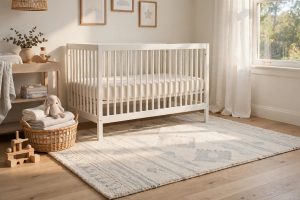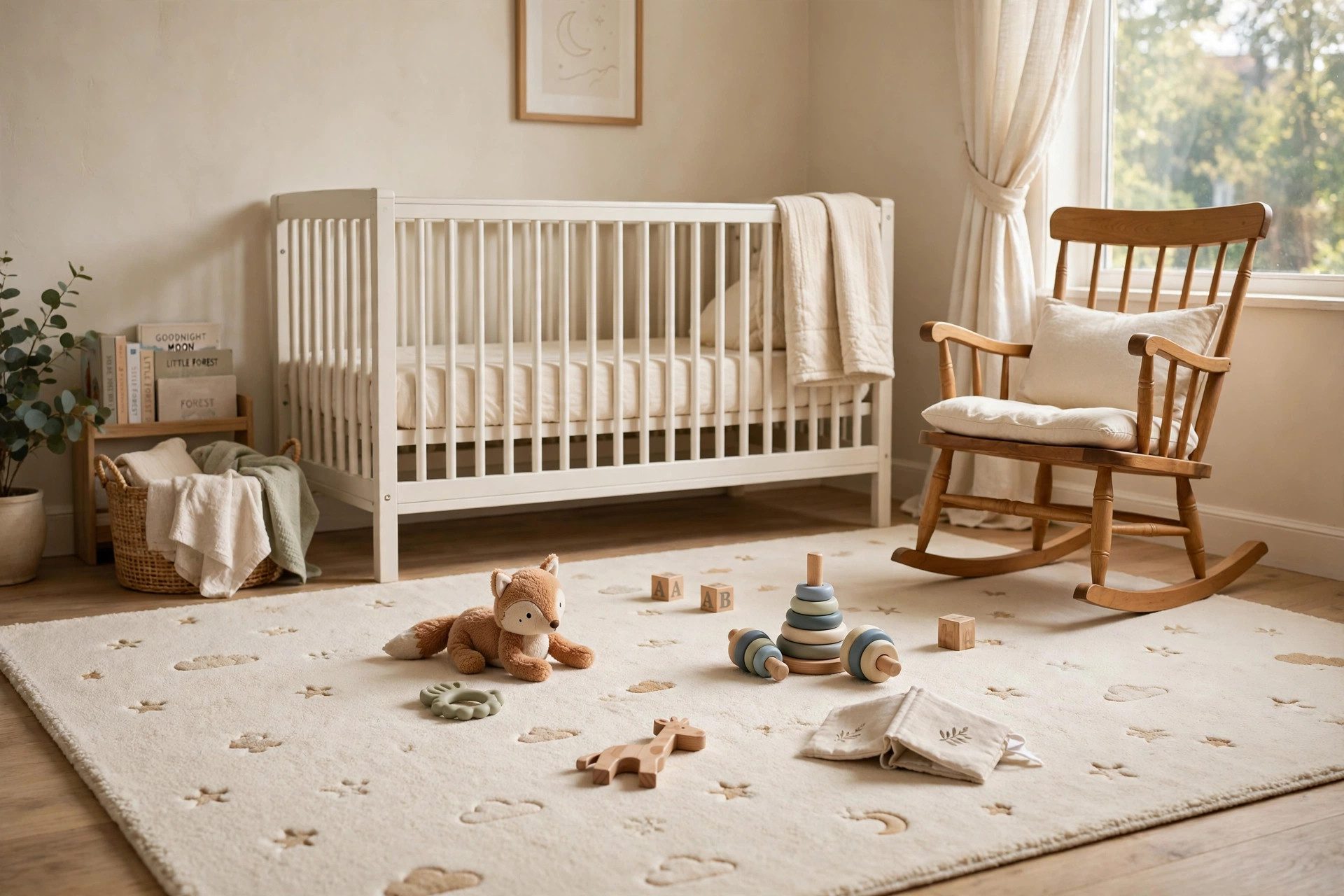

When parents look for the best nursery rug for tummy time play, they are really looking for one simple thing. They want a safe, clean, and comfortable place where their baby can spend time on the floor each day. Tummy time is the short period when a baby lies on the stomach while awake and watched. Doctors say it helps babies build strength in the neck, shoulders, arms, and back. A hard floor is too cold and too firm for this. A thick blanket can bunch up and move around. A rug made for the nursery can solve both problems at once. It gives the baby a steady surface. It gives the room a warm look. And it gives the parent a spot that is easy to keep clean.
This guide walks through the choice in plain terms. It explains why the rug matters, what to look for, the main types you will find in stores, what they cost, how to care for them, and how to keep the area safe. It answers common questions at the end. By the last page, you will know exactly what to buy and why.
Why a Good Tummy Time Rug Matters
Babies spend much of their early life lying down. On the back, they sleep. On the stomach, while awake, they work. Tummy time helps a baby learn to lift the head, push up on the arms, and later roll over and crawl. Health experts note that even a few minutes at a time, several times a day, make a real difference in the first months of life.
The surface under the baby matters more than many parents expect. A bare wood or tile floor is hard on elbows and knees. It can also feel cold, which makes the baby fussy and shortens the session. A rug that is too soft causes its own problem. The baby sinks in, and pushing up becomes too hard. The goal is a middle ground. The rug should feel warm and kind to the skin, yet firm enough that the baby can press against it and get a little push back.
There is a second benefit. A nursery rug marks a clear play zone. When you lay the same rug out day after day, the baby learns that this spot means play. Parents find that a regular spot makes the daily habit easier to keep. The nursery also looks more finished. A rug ties the crib, the chair, and the walls into one calm room.
What to Look for When You Choose: Best Nursery Rug for Tummy Time Play
Shopping for the best nursery rug for tummy time play is easier when you break the choice into a few clear points. Each point below deserves a moment of thought before you buy.
Soft but Firm Material
The top of the rug touches the baby’s skin. Cotton is the most common choice, and for good reason. It is soft, it breathes, and it washes well. Wool is warmer and naturally resists dirt, but it costs more and needs gentler care. Foam play mats are a different option. They give steady cushion and wipe clean in seconds, though some parents prefer the look and feel of real fabric. The Pottery Barn Kids nursery rug collection shows how cotton and wool rugs are sized and styled for children’s rooms, which can help you picture what fits your space.
The Right Thickness
Thickness is a balance. A rug around half an inch to one inch thick, often laid over a thin pad, works well for most babies. Very thick shag rugs look soft, but little fingers and knees sink too deep, and the fibers can trap dust. A flat or low-pile rug lets the baby move with ease. If your floor is hard, add a low rug pad under the rug instead of buying a thicker rug. The pad adds cushion without changing the surface the baby feels.
Size That Fits the Room and the Play
A small rug of three by five feet can be enough for a newborn. By six to nine months, the baby rolls and reaches in every direction. Many families move up to a five by seven or six by nine foot rug at that stage. Measure your floor space first. Leave room to walk around the rug, and keep it away from the crib and the changing table so the play area stays its own zone.
A Backing That Does Not Slip
A rug that slides on a hard floor is a hazard. Look for a rug with a non-slip backing, or buy a separate non-slip rug pad cut to size. Test the rug on your own floor before the baby uses it. Press one corner and try to push the rug across the floor. If it moves, add grip. Retailers such as IKEA and Wayfair list backing and pad options with their children’s rugs, so you can plan the whole setup in one order.
Easy to Clean
Babies spit up. They drool. Diapers leak. The best nursery rug for tummy time play is one you can clean without a long chore. Machine-washable cotton rugs are the simplest choice. A large rug that only spot-cleans is fine if you keep a washable play blanket on top of it. Dark or busy patterns hide small stains between washes, which many parents quietly prefer.
Low Pile and No Loops
High pile traps crumbs and dust. Looped pile can catch tiny toes. A flat weave or short, cut pile is the safer pick. Run your hand across the rug in the store or read the pile height in the product details online. If the fibers are long enough to hide a coin, the rug is too deep for daily tummy time.
Types of Nursery Rugs That Work Well
Stores sell four main kinds of rugs that suit tummy time. Each has a place.
Cotton flat-weave rugs. These are light, washable, and low cost. They come in many colors and patterns. They give little cushion on their own, so pair them with a pad.
Wool rugs. Wool is warm, springy, and stands up to years of use. It costs more and usually needs spot cleaning or professional care. Families who want one rug to last through several children often choose wool.
Foam play mats. Interlocking foam tiles or one-piece foam mats give even cushion and wipe clean fast. They come in plain colors that suit a nursery. Some parents use a foam mat as the base and lay a thin cotton rug over it for looks.
Layered setups. A common trick is to pair a rug pad, a flat rug, and a washable top blanket. The pad gives the cushion, the rug gives the look, and the blanket takes the daily wear. When the blanket gets dirty, it goes in the wash while the rug stays put.
Decor choices around the rug matter too. A macrame wall hanging adds warmth to the walls without taking floor space, and a fabric crib rail guard protects the crib rails once the baby starts pulling up near the rug area. For shared rooms, a room divider curtain can separate the tummy time zone from an older sibling’s play space.
Cost and Price: What to Expect
Nursery rug prices spread wide. A small cotton rug from a large store can cost as little as twenty to forty dollars. Mid-range cotton or low-pile synthetic rugs in the five by seven foot size often run from sixty to one hundred fifty dollars. Wool rugs of the same size start near two hundred dollars and climb from there. Foam play mats are priced by the set, often thirty to eighty dollars for enough tiles to cover a good play area.
A rug pad adds fifteen to forty dollars. A washable top blanket adds little, since most homes already own one. Plan the full cost of the setup, not just the rug. Also check return rules. Some stores let you try a rug at home and send it back if the color or feel is wrong. Rugs USA and Babyletto both publish clear size and material guides that make it easier to compare prices across brands before you commit.
Care and Upkeep
A nursery rug needs regular care to stay a healthy play surface. Vacuum it once or twice a week with the beater bar turned off or set low, so the suction does not pull at the fibers. Spot-clean spills right away with a damp cloth and a mild soap. Do not soak the rug unless the label says it is washable.
Wash machine-safe rugs on a gentle cycle with mild detergent, and dry them flat or on low heat so they keep their shape. Rotate the rug every few months so wear spreads evenly. Check the backing and the pad twice a year. Pads can crumble or lose grip with age. If the pad sheds bits of foam, replace it at once so the baby cannot reach the pieces.
Air the room out often. Sunlight for a short time can freshen a rug, but long hours in strong sun will fade the colors. If anyone in the home has dust allergies, wash the rug more often and keep the pile short. A short, clean rug is kinder to small lungs than a deep, dusty one.
Safety Comes First
No rug choice matters more than safe use. The U.S. Consumer Product Safety Commission publishes guidance on nursery products and recalls, and it is worth checking its site for any rug or mat recalls before you buy. A few rules cover the rest.
First, tummy time is always watched time. The baby stays on the stomach only while awake, and an adult stays within arm’s reach. Never leave a baby face down on any rug to sleep. Second, keep the rug free of small objects, loose cords, and plastic bags. Get down to the baby’s eye level and look across the rug. Anything you can see at that level is within the baby’s reach. Third, wash the rug before first use to remove factory dust and sizing chemicals.
Check labels for low chemical emissions. Look for rugs tested to common indoor air standards, and air out a new rug in another room for a day or two if it has a strong smell. If your home was built before 1978, remember that old paint dust near floors is a lead risk; general child health guidance from HealthyChildren.org explains how to keep play areas safe in older homes.
Finally, anchor the wider room. A rug does not replace a safe room. Cover outlets, secure heavy furniture to the wall, and keep the play area away from windows with cords. Sites like The Spruce keep updated nursery safety checklists that walk through the room step by step.
Frequently Asked Questions
How thick should a nursery rug be for tummy time? A rug about half an inch to one inch thick, over a thin non-slip pad, suits most babies. The surface should feel kind but stay firm enough for the baby to push against.
Can I use a regular living room rug instead of a nursery rug? You can, if it meets the same rules. It should be low pile, loop-free, non-slip, and easy to clean. Many living room rugs fail on cleaning or slip, so check each point before you decide.
Are foam play mats better than fabric rugs for tummy time? Neither is always better. Foam mats cushion well and wipe clean fast. Fabric rugs look warmer and often wash in the machine. Some families use both, with a thin fabric rug over a foam mat.
When should I start using the rug for tummy time? Most pediatric groups suggest starting tummy time in the first weeks of life, with short sessions a few times a day. A clean, firm rug can be the play surface from the start, as long as the baby is awake and watched.
How often should I clean the nursery rug? Vacuum once or twice a week and spot-clean spills at once. Wash a machine-safe rug every few weeks, or sooner after illness or a diaper leak. A washable blanket on top of the rug cuts down on full washes.
What size rug works best as the baby grows? Start with three by five feet for a newborn. Move to five by seven or larger once the baby rolls and crawls. Measure the room first and keep walk space around the rug.
A Short Final Word
The best nursery rug for tummy time play is not the softest or the prettiest rug in the store. It is the one that stays put, cleans up fast, and gives your baby a firm, kind surface day after day. Choose low pile, a non-slip base, and washable fabric. Keep the area clear and the sessions watched. Then let the rug do its quiet work while your baby grows stronger, one tummy time session at a time.
Related guides on this site include best convertible crib for small nursery room, nursery glider chair with ottoman for breastfeeding, and kids bedroom wall decals removable for renters.
References
American Academy of Pediatrics. (n.d.). HealthyChildren.org. https://www.healthychildren.org Babyletto. (n.d.). Nursery furniture and decor. https://www.babyletto.com Crib rail guard fabric for chewing protection. (n.d.). Home and garden information. https://www.crib-rail-guard-fabric-for-chewing-protection/ IKEA. (n.d.). Home furnishings. https://www.ikea.com Kids room divider curtain for shared bedroom. (n.d.). Home and garden information. https://www.kids-room-divider-curtain-for-shared-bedroom/ Nursery wall hanging macrame for boho decor. (n.d.). Home and garden information. https://www.nursery-wall-hanging-macrame-for-boho-decor/ Pottery Barn Kids. (n.d.). Kids furniture and decor. https://www.potterybarnkids.com Rugs USA. (n.d.). Discount area rugs online. https://www.rugsusa.com The Spruce. (n.d.). Home and garden advice. https://www.thespruce.com U.S. Consumer Product Safety Commission. (n.d.). Product safety information. https://www.cpsc.gov Wayfair. (n.d.). Furniture and home goods. https://www.wayfair.com
Was this guide helpful?

About James Carter
The My Garden US editorial team writes practical, in-depth home and garden guides for American homeowners — tested advice, no fluff.
You May Also Like
Best Nursery Storage for Small Apartment Living
January 18, 2026 0 views
Kids Teepee Tent for Indoor Playroom Decor: A Simple Buying Guide
May 31, 2026 0 views
Nursery Glider Swivel for Easy Movement: A Full Buying Guide
September 4, 2026 0 views