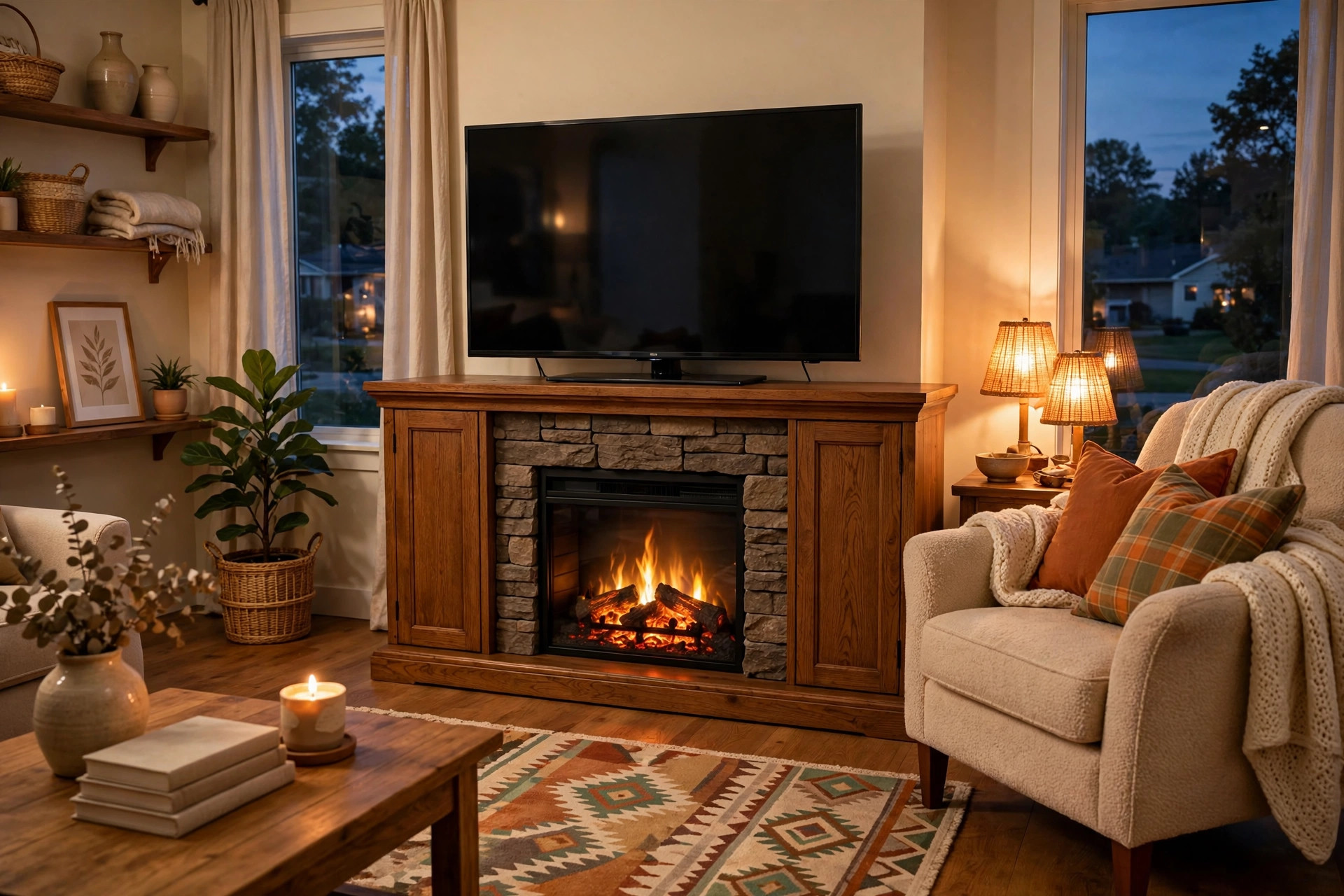

A fireplace TV stand joins two things most living rooms already want. It is a stand that holds a flat screen TV, and it is a fireplace that gives real warmth and soft light. For many families this is the best of both worlds. This best fireplace tv stands buying guide walks through all the facts you need before you buy one.
The market is full of choices. Some units use electric heat. Some use gas or gel fuel. Some are fake, with only a light show and no heat at all. Prices run from under two hundred dollars to well over two thousand. With so many models, a careful buyer does well to learn the basics first.
Why a Fireplace TV Stand Is Worth a Look
Space is the first reason people choose these units. A TV and a fireplace would each take up wall space on their own. A fireplace TV stand puts both in one footprint, which suits apartments, small dens, and open-plan rooms where wall space is short.
Cost is the second reason. Electric fireplace TV stands plug into a normal wall outlet. They need no gas line, no chimney, and no vent. A gas fireplace alone can cost thousands to install. A fireplace TV stand skips all that work. You set it in place, plug it in, and it runs.
Comfort is the third reason. On cold evenings the firebox warms the room while you watch a movie. The light from the flame effect is softer than an overhead lamp. Many owners say the room feels calmer with it on, even in the mild months of fall and spring when the heat is not really needed.
Resale value is a fourth reason. A tidy media wall with a fireplace stand reads as a finished room. Real estate writers often note that a warm, well-arranged living room leaves a good first mark on buyers.
How the Main Types Work: Best Fireplace Tv Stands Buying Guide
Electric Fireplace TV Stands
Electric models are by far the most common. A heating coil and a fan move warm air out of vents at the front or top of the firebox. LED lights and mirrors make the flame effect. Most electric fireplace models let you run the flame with or without heat, so the look is available all year.
Electric units usually draw up to 1,500 watts on the high setting, about the same as a small space heater. They warm a room of 300 to 400 square feet in a steady way. Thermostats, timers, and remotes are common on mid-range and high-end models. A timer lets you set the unit to warm the room before you sit down, then shut off on its own. This is a handy feature for people who like a warm den on winter evenings but do not want to run heat all night.
Gas Fireplace TV Stands
A few stands pair a media console with a small gas or propane insert. These give stronger heat than electric models and can serve as real zone heaters. They cost more to buy and more to install, since a gas line or tank hookup is needed. They are rare in stores, and most buyers shop for them through dealers or specialist brands.
Gel and Decorative Models
Gel-fuel models burn cans of gel alcohol in small fireboxes. They give a real flame and a little heat, with no vent needed. They are quiet and simple. The cost of gel cans adds up over time, so they suit light use rather than daily heat.
Decorative models have no real heat at all. They show a light-based flame that costs almost nothing to run. They work well in warm climates where heat is never needed, or in rooms where the look matters more than the warmth.
What to Look for When You Shop
TV Size and Weight Rating
Check two numbers before anything else: the width of the stand and its weight rating. The stand should be wider than the TV, with a few inches of surface on each side. A 55-inch TV is about 48 inches wide, so a stand of 54 to 60 inches looks right. For a 65-inch TV, look for 60 inches or wider.
Weight matters too. Read the top-weight limit in the manual or listing. Large TVs are heavier than they look. Keep the total weight of the TV, cable box, and game console well under the limit.
Heat Output and Room Size
For electric models, look for the BTU or watt rating. A 1,500-watt unit gives about 5,100 BTUs. That is fine for a living room up to 400 square feet. Larger rooms need more than one heat source, so set your hopes in line with the number.
Check whether the flame works apart from the heater. On most good models it does. This lets you enjoy the glow in July without warming the room.
Clearances and Heat Direction
Where does the hot air come out? Front-venting fireboxes send heat into the room. Top-venting models can warm the shelf where the TV sits. If vents point upward, keep a safe gap between the firebox and any device above it. Read the manual for the needed clearance, often several inches.
The Consumer Product Safety Commission advises keeping flammable items such as paper, fabric, and drapes at least three feet from heaters. A fireplace TV stand deserves the same care.
Cord and Outlet Planning
An electric fireplace TV stand needs a grounded outlet nearby. It also needs plugs for the TV, sound bar, and streamers. Plan cord paths so wires do not run across walkways. A stand with built-in cord holes or a back panel helps hide the tangle. Avoid extension cords for the heater side if you can; heaters draw high current and do best plugged straight into the wall.
Styles and Materials
Fireplace TV stands come in styles to match almost any room.
Farmhouse and rustic stands use wood grain, barn-door fronts, and iron-style handles. The electric fireplace mantel look suits traditional homes.
Modern stands use clean lines, high-gloss finishes, and glass fronts. They pair well with gray walls and minimal decor.
Traditional stands use raised panels, crown molding, and rich brown stains. They suit formal living rooms.
Stone-look and tile fronts copy real masonry around the firebox. They add texture without the weight or cost of real stone.
Material quality sets cheap stands apart from good ones. Solid wood and thick engineered wood last longer than thin particle board. Check the back panel and drawer slides; those parts tell you how well the piece is made. Read buyer reviews and buying tips for the model you like before you order.
Cost and Price Ranges
Prices fall into three bands.
Under $300: Basic electric models, often smaller, with simple flame effects and manual dials. Fine for a bedroom or small apartment.
$300 to $800: The sweet spot for most buyers. Mid-size stands with remotes, thermostats, glass ember beds, and better flame realism. Many good 60-inch models at major home retailers live in this band.
$800 and up: Large or premium units with stone or tile fronts, realistic flame engines, and solid wood frames. Some include sound-bar shelves and touch controls.
Watch for the cost of delivery. These units are heavy, and white-glove delivery can add a real sum. Running cost is small for the flame alone. Heat on high adds roughly 18 cents per hour at average US power rates, based on 1,500 watts. Guides from energy experts can help you work out exact numbers for your state.
Care and Upkeep
A fireplace TV stand needs little care, but some attention keeps it working well.
Dust the vents and fan intake every few months. Blocked vents make the heater work harder and can trip its safety shutoff. Wipe glass doors and flame screens with a soft dry cloth; harsh cleaners can scratch coated glass.
Once a year, check the power cord for wear and make sure the plug sits tight in the outlet. Keep the area in front of the vents clear of blankets, toys, and paper.
For the wood surfaces, use normal furniture care. Avoid placing hot mugs directly on the top; use coasters. If the stand uses LED bulbs for the flame effect, note that they last many years, but check the manual for how to replace them when the day comes. Advice from home repair writers and DIY guides covers the small fixes most owners can do themselves.
Safety Points to Keep in Mind
Electric fireplace TV stands are safer than open flames, but rules still apply.
– Plug the heater into its own wall outlet. Do not share the outlet with another high-watt device on a power strip. – Keep the auto shutoff feature on. Most modern units turn off if they tip over or overheat. – Do not let children or pets sit close to the hot vents. A low childproof fireplace screen or simple rule works. – Keep curtains, throws, and paper at least three feet from the front. – Turn the heat off when you leave the house or go to sleep, unless the manual says it is made for longer use. – If you buy a freestanding electric stove style insert instead, the same vent and clearance rules apply.
The EPA burn-wise guidance focuses on wood heat, but its safety habits — clear space, good air flow, and regular checks — suit any home heater.
FAQ
How much weight can a fireplace TV stand hold? Most hold 100 to 250 pounds on top. The manual lists the exact limit. Large OLED and plasma TVs are the heaviest, so check your model and stay under the rated number.
Can the TV sit directly above the fireplace? Yes, on a fireplace TV stand this is the normal setup. Heat vents should point forward, not up toward the TV. Keep the clearance the manual calls for, and never block the vents with books or boxes.
Do fireplace TV stands heat a whole house? No. They are zone heaters for one room. A 1,500-watt unit warms 300 to 400 square feet well. Larger homes need a main heating system, with the fireplace stand as a bonus in the living room.
How much does it cost to run one? The flame effect alone costs pennies per day. Full heat at 1,500 watts costs about 18 cents per hour at typical US rates. Using a timer and thermostat trims the bill.
Are they safe to leave on overnight? Most makers advise against it. Turn the heat off when you sleep. If you want the glow, run the flame-only mode, which uses little power and gives no heat.
What size stand fits a 65-inch TV? Look for a stand at least 60 inches wide, with a weight rating above your TV. Many 65- to 70-inch models carry 70-inch TVs too, but check both numbers in the listing.
A Short Final Word
A fireplace TV stand is one of the simplest upgrades a living room can get. It warms the room, holds the TV, and looks finished in a day. Shop with the numbers in mind: stand width, weight limit, watt rating, and clearance. Pick a style that fits your home, keep the vents clear, and you will have a piece that earns its place for years.
References
Family Handyman. (n.d.). DIY home repair and maintenance. https://www.familyhandyman.com Heatilator. (n.d.). Fireplaces and fireplace products. https://www.heatilator.com Lowe’s. (n.d.). Home improvement products. https://www.lowes.com Napoleon. (n.d.). Fireplaces, grills, and heating products. https://www.napoleon.com The Home Depot. (n.d.). Home improvement products. https://www.homedepot.com The Spruce. (n.d.). Home and garden advice. https://www.thespruce.com This Old House. (n.d.). Home renovation guidance. https://www.thisoldhouse.com U.S. Consumer Product Safety Commission. (n.d.). Product safety information. https://www.cpsc.gov U.S. Department of Energy. (n.d.). Energy efficiency and renewable energy. https://www.energy.gov U.S. Environmental Protection Agency. (n.d.). Protecting human health and the environment. https://www.epa.gov
Was this guide helpful?

About Lisa Anderson
The My Garden US editorial team writes practical, in-depth home and garden guides for American homeowners — tested advice, no fluff.
You May Also Like
Top Rated Chimineas for Patios for American Homes
June 17, 2026 0 views
Where to Buy Chimney Liners in California: A Complete Homeowner’s Guide
July 28, 2026 0 views
Premium Chimney Inspection Services Near Me: A Homeowner’s Guide
August 7, 2026 0 views