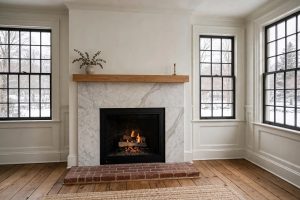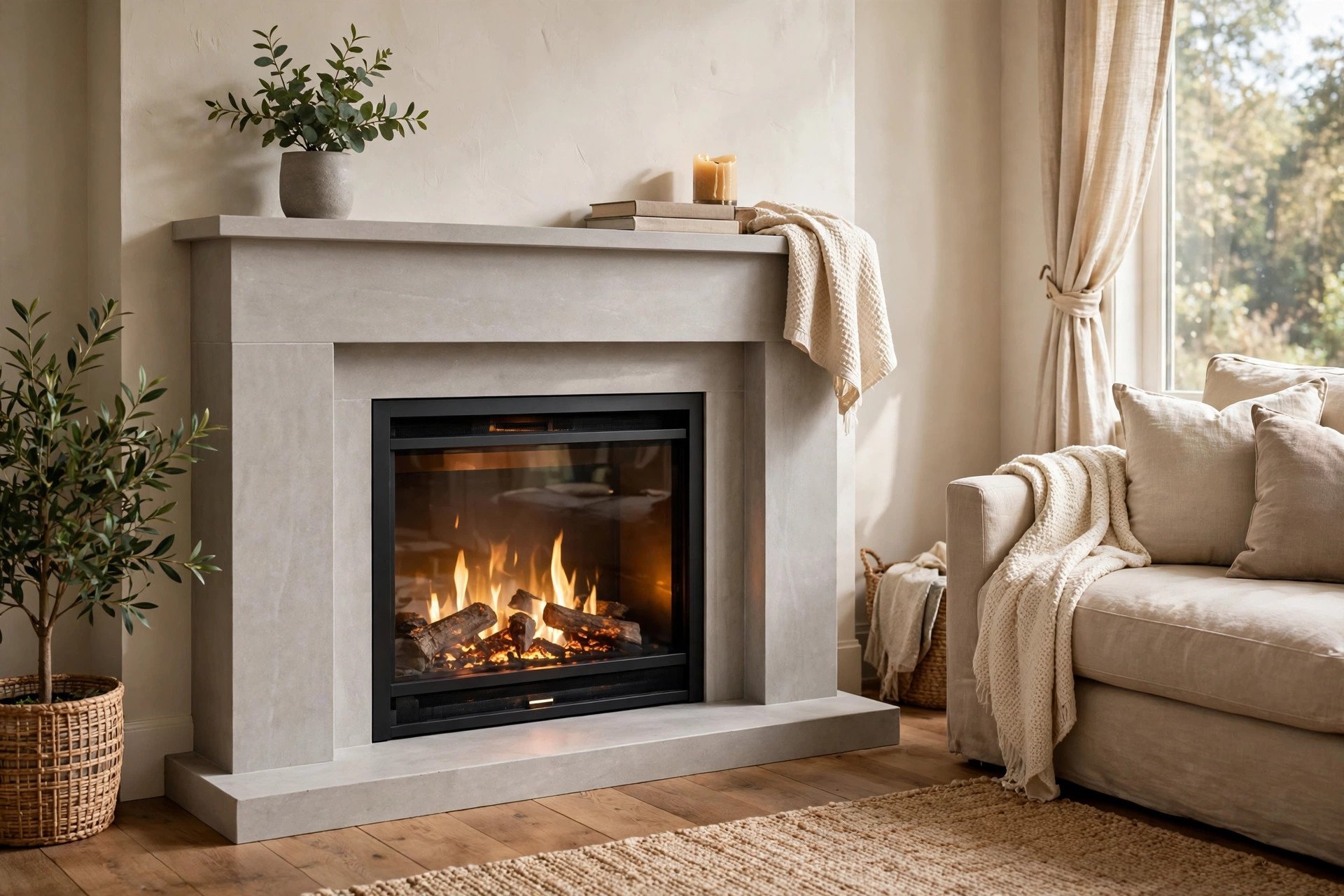

Homes in damp regions face a special problem. The air stays wet for much of the year. Wood swells. Paint peels. Metal rusts. The search for the best electric fireplace mantels for humid climates starts with this one fact. A mantel that works fine in a dry state may fail in a coastal or southern home.
An electric fireplace mantel is a piece of furniture. It holds an electric firebox. The firebox gives the look of flames and some heat. There is no real fire inside. There is no smoke and no chimney. The mantel is the frame around it. In a humid home, that frame must stand up to moisture day after day.
Why Humidity Changes Everything
Humidity is water in the air. In many parts of the South, the Gulf Coast, and the Pacific Northwest, indoor humidity stays high for months. Air conditioning helps, but not always enough. The damp air touches every surface in the room.
Wood is the first victim. Solid wood takes in water. It swells in summer and shrinks in winter. This movement opens joints and cracks finishes. Particle board and MDF swell even faster. Once MDF swells, it never goes back.
Metal has its own trouble. Steel parts rust in damp air, most of all screws and trim. Aluminum and stainless steel resist rust much better.
Stone and cast materials do well. Marble, granite, and cultured stone ignore moisture. Resin and some plastics also ignore it. These materials cost more, but they last.
Heat adds a twist. An electric fireplace puts out warm air. Warm air near a damp mantel speeds up drying and re-wetting cycles. This cycle is what breaks weak materials. A mantel for a humid climate must handle both moisture and gentle heat. Guides at This Old House explain how indoor moisture attacks woodwork in the home.
What to Look for When You Choose: Best Electric Fireplace Mantels for Humid Climates
Start with the material. This is the single most important choice. Look for mantels built from sealed hardwood, engineered stone, concrete, or high-quality resin. Read the product specs for words like “moisture resistant” or “sealed finish.” Avoid raw MDF or particle board in damp rooms. If the mantel uses MDF, check that every edge is sealed. Edges are where water gets in first.
Check the finish. A good finish seals the material under it. Catalyzed lacquer and marine-grade varnish hold up well. Simple spray paint does not. Ask the seller what finish was used. A clear answer is a good sign.
Look at the back and the base. Moisture collects behind the unit and under the base. If these spots are raw and unfinished, the mantel will soak up water from day one. The best units seal every surface, seen or unseen.
Check the hardware. Screws, hinges, and brackets should be stainless steel or coated. Bright chrome hardware can pit in damp air.
Think about the size. Measure your wall and your room. Most electric fireplace mantels range from 40 to 70 inches wide. The firebox size decides the heat output. A 1,500-watt firebox heats about 400 square feet. Larger rooms may need a second heat source. The EPA offers guidance on keeping indoor humidity in a healthy range.
Ventilation counts too. Do not push the mantel hard against the wall in a damp room. Leave a small gap at the back. Air flow behind the unit stops moisture from getting trapped. This small step adds years to the life of the mantel.
Types and Options
Electric fireplace mantels come in several styles. Each has strengths for humid homes.
Traditional wood-look mantels. These look like classic wooden mantels. Many are made from MDF with a wood veneer. They are the least expensive. They are also the most at risk in damp air. If you choose one, pick a model with a full moisture seal. Keep the room dehumidified. Reviews at Consumer Reports often test how finishes hold up over time.
Solid hardwood mantels. Oak, maple, and cherry cost more. They resist moisture better than MDF. A thick coat of sealant makes them stronger still. They can be refinished if the finish wears. This makes them a long-term choice for buyers who want real wood.
Stone and marble mantels. These are the toughest option. Water does not harm them. They weigh a great deal, so check that your floor can hold the weight. They cost the most. For a coastal home where damp air never leaves, stone is hard to beat.
Concrete and cast stone mantels. These give the look of stone at a lower price. They resist moisture well. They are heavy but lighter than real marble. Seal them once a year to keep them at their best.
Resin and polyurethane mantels. These are light and easy to move. They resist water well. Good ones look close to carved wood or stone. Cheap ones can look like plastic. Read reviews and look at real photos before buying.
Wall-mount and floating designs. Some buyers prefer a floating mantel shelf over a full cabinet. A shelf holds the firebox and leaves the floor clear. Air moves freely behind and under it. This is a real advantage in a humid room.
Corner mantels. These fit into a room corner and save wall space. They work well in small rooms. The same moisture rules apply.
Buyers who want a broader view of electric options may also look at top rated electric fireplace mantels for American homes for general buying advice that applies in any climate.
Materials That Survive Damp Air
Let us rank the common materials from best to worst for humid climates.
1. Natural stone and marble. Ignores water. Lasts for decades. Heavy and costly. 2. Concrete and cast stone. Very good with a seal coat. Mid to high price. 3. Sealed solid hardwood. Good when sealed on all sides. Needs re-sealing over time. 4. High-density resin. Good. Light and low care. Check the quality. 5. Veneered plywood. Fair. Better than MDF. Keep sealed. 6. MDF and particle board. Poor in damp air. Only buy if fully sealed and the room is dehumidified.
Finishes matter as much as the base material. A sealed hardwood mantel will beat an unsealed stone-look unit made of MDF. Always check the finish first, then the material. Family Handyman has practical articles on sealing wood against moisture.
Cost and Price
Prices vary widely. Here is what American buyers can expect.
Budget range: 200 to 450 dollars. Most units here are MDF with veneer. They look nice in the store. In a humid home, they need care. Run a dehumidifier. Wipe them dry after damp days. Expect a shorter life than costlier models.
Mid range: 450 to 900 dollars. This range has sealed hardwoods, good resin models, and some cast stone. This is the sweet spot for most humid-climate buyers. You get real moisture resistance without paying for marble.
High range: 900 to 2,500 dollars and up. Solid hardwood, marble, and granite mantels live here. They last for decades with basic care. For a permanent home in a wet region, the cost per year is often lower than replacing a cheap unit every few years.
Running cost. An electric firebox uses about 1,500 watts on high heat. That costs roughly 18 to 25 cents per hour at average rates. The flame-only mode uses very little power. The Department of Energy publishes tips on using electric heat wisely.
Watch for hidden costs. Delivery fees for heavy stone units can be high. Measure your doorways. A 70-inch mantel may not fit through a narrow hall.
Sales happen often. Holiday weekends bring price cuts at Home Depot and other large retailers. Buying off-season in spring can also save money. Keep an eye on shipping costs, which can erase a good sale price.
Care and Upkeep
A mantel in a humid home needs regular care. The work is simple. It just needs to be done.
Control the room first. Keep indoor humidity between 30 and 50 percent. A hygrometer costs little and tells you the truth. A dehumidifier is the best tool for damp rooms. Air conditioning helps in summer.
Dust often. Dust holds moisture against the surface. Wipe the mantel weekly with a dry, soft cloth. Do not use a wet cloth on wood finishes. For stone, a damp cloth is fine, followed by a dry one.
Check the seals yearly. Look for cracks, chips, or cloudy spots. Touch up small damage right away. A small chip is an open door for water. A dab of matching sealant closes it.
Mind the base. Vacuum under and behind the unit each month. Make sure the small air gap behind the unit stays open. Do not stuff storage boxes against the back.
Clean the firebox. Dust the glass front and the vents. Unplug the unit first. A soft brush clears the vents. Clean vents run cooler and last longer. The maker Napoleon and other brands publish care guides for their electric units.
Watch for warning signs. White haze on the finish means moisture is trapped under it. Swelling at the base means water is soaking in. Musty smell means mold may be growing behind the unit. Act fast. Pull the unit out, dry the area, and fix the source of moisture. The Spruce has clear guides on spotting early moisture damage in furniture.
Re-seal wood every few years. Even good finishes wear. Light sanding and a fresh coat of sealant every three to five years keeps wood mantels strong. This is a weekend job.
Safety in Humid Homes
Electric fireplaces are safer than wood fires. There is no open flame. There is no smoke. But damp air adds safety rules of its own.
Keep the unit dry. Never place it where water can drip on it. Keep it away from open windows during rain. Do not set drinks on top without a coaster.
Check the cord. Look for cracks or soft spots in the cord cover. Damp air can speed up cord wear. If the cord feels warm during use, unplug the unit and call the maker.
Give it space. Keep paper, cloth, and curtains at least three feet from the front. Blocking the heat outlet makes the unit overheat. The back needs its air gap for moisture, as noted above.
Plug it in right. Use a wall outlet, not an extension cord. Extension cords can overheat.
Watch children and pets. The glass front gets warm. It is not as hot as a real fire, but it can still burn small hands. A simple screen or gate keeps toddlers back. This is standard practice around any home heater.
Install smoke and carbon monoxide alarms. Electric units make no carbon monoxide. Still, every home needs working alarms. Test them monthly.
Turn it off when you leave. This is simple and wise. Unplug the unit during long trips. Storms in humid regions bring power surges. A surge protector adds one more layer of care.
Buyers with damp outdoor spaces should note that indoor mantels are not outdoor products. For porches and patios, see guides on outdoor fire features for humid climates instead. Outdoor-rated units use different seals and wiring.
FAQ
Do electric fireplace mantels work in humid climates? Yes. The firebox itself does not care about humidity. The mantel frame is the part at risk. Choose a moisture-resistant material and keep the room under 50 percent humidity. Then the unit will work well for years.
What is the best material for a damp room? Stone and marble are best. They ignore water. Sealed hardwood and cast stone are next. Fully sealed MDF can work, but only with a dehumidifier and regular care.
Will the heat damage the mantel? Normal heat will not damage a well-made mantel. The firebox is built to sit inside the frame. Problems come from blocked vents, not from normal use. Keep vents clear and leave the air gap at the back.
Can I put an electric fireplace mantel in a basement? You can, but basements are often the dampest rooms in the house. Use a dehumidifier. Pick a stone or resin model. Check the floor for standing water first. Never place the unit where water pools.
How long will a mantel last in a humid home? A cheap MDF unit may last three to five years in damp air. A sealed hardwood or cast stone unit can last fifteen years or more. Marble can last for decades. Care and room humidity decide the real number.
Do I need a professional to install it? Most electric fireplace mantels need no pro. They plug into a normal outlet. Heavy stone units are the exception. Get help moving them. If you add a new outlet or circuit, hire an electrician. Bob Vila covers basic fireplace mantel setup for handy homeowners.
A Short Final Word
The best electric fireplace mantels for humid climates are not always the prettiest ones in the store. They are the ones built for wet air. Sealed wood, stone, cast stone, and good resin all do the job. Raw MDF does not. Measure your room. Read the specs. Check the finish on every side, not just the front. Keep the room dry and the vents clear. Do these simple things, and your mantel will warm your home for many years. Brand guides such as Heatilator can help you compare specific models once you know what material you want.
References
Bob Vila. (n.d.). Home improvement advice. https://www.bobvila.com Consumer Reports. (n.d.). Product reviews and ratings. https://www.consumerreports.org Family Handyman. (n.d.). DIY home repair and maintenance. https://www.familyhandyman.com Heatilator. (n.d.). Fireplaces and fireplace products. https://www.heatilator.com Napoleon. (n.d.). Fireplaces, grills, and heating products. https://www.napoleon.com The Home Depot. (n.d.). Home improvement products. https://www.homedepot.com The Spruce. (n.d.). Home and garden advice. https://www.thespruce.com This Old House. (n.d.). Home renovation guidance. https://www.thisoldhouse.com U.S. Department of Energy. (n.d.). Energy efficiency and renewable energy. https://www.energy.gov U.S. Environmental Protection Agency. (n.d.). Protecting human health and the environment. https://www.epa.gov
Was this guide helpful?

About Emily Rodriguez
The My Garden US editorial team writes practical, in-depth home and garden guides for American homeowners — tested advice, no fluff.
You May Also Like
Best Fireplace Blowers and Fans for California Apartments
March 6, 2026 0 views
Ventless Stone Fireplace Surrounds Buying Guide
June 10, 2026 0 views
Top Rated Chimney Inspection Services Reviews: A Homeowner’s Guide
May 13, 2026 0 views