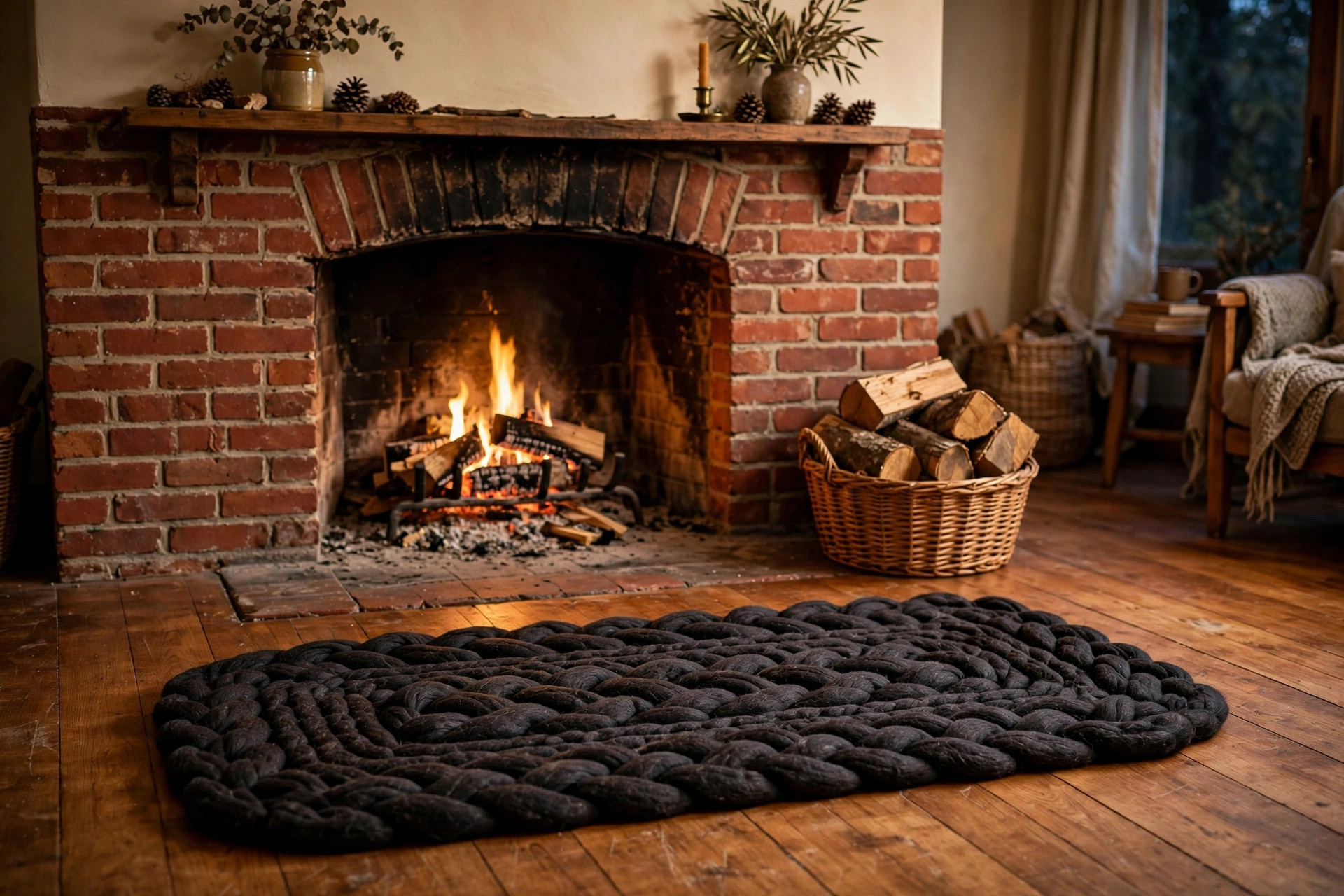

Winters in the Midwest run long and cold. From November through March, families in Iowa, Illinois, Minnesota, Wisconsin, and their neighboring states light wood fires most evenings. A hearth rug is the quiet workhorse that sits in front of the fireplace. It catches stray sparks, shields wood or tile floors from heat and ash, and gives bare feet a warm place to stand on a January morning. The best fireplace hearth rugs for Midwest homes combine fire resistance, generous size, and materials that stand up to heavy daily use.
This guide walks through what makes a hearth rug right for a Midwestern household. It covers why these rugs matter, what to look for when you shop, the main types available, what they cost, how to care for them, and the safety rules every homeowner should know.
Why a Hearth Rug Matters in a Midwest Home
A fireplace throws off more than warmth. Every time you open the door to add a log or stir the embers, small sparks can pop out and land on the floor. Hot ash drifts with the draft. A stray ember that lands on carpet or hardwood can smolder for minutes before it shows. By then the damage is done.
Midwestern homes feel this risk more than most. Heating season lasts five to six months, and the fireplace often burns every day. Hardwood floors are common in older homes across the region, and oak or maple boards scorch easily. Many families also heat with wood stoves or inserts set into older brick fireplaces, which throws more embers farther into the room.
A hearth rug acts as a barrier. It sits between the fire and the room, catching sparks before they reach the floor. It also takes the daily mess. Ash, bark bits, and soot land on the rug instead of the carpet or wood. At the end of the season, you shake out or clean the rug, and the floor beneath looks as good as it did in fall. For homes where children or pets sit close to the fire, the rug also marks a clear edge, a visual line that says the hearth zone starts here.
What to Look For When You Choose: Best Fireplace Hearth Rugs for Midwest Homes
Fire Resistance First
A hearth rug is not a decoration. It is a safety item. Look for rugs tested to a recognized fire standard. Many quality rugs carry a fiberglass core or are made of wool, which chars instead of catching flame. Check the label for burn tests or compliance marks. If the maker does not say how the rug resists fire, set it aside and keep shopping.
Material
Wool is the classic choice. It resists flame naturally, feels warm underfoot, and hides soot well. Fiberglass-based rugs resist heat best and suit wood stoves that run very hot. Cotton rugs with a flame-retardant backing cost less but wear faster and need more frequent replacement. Midwestern buyers who burn fires daily tend to favor wool or fiberglass, because both survive many seasons of heavy use.
Size
Measure the hearth before you shop. The rug should extend at least 18 inches out from the fireplace opening, and wider is better. For wood stoves, the rug must extend under and around the stove per the stove maker’s clearance chart. A rug that is too small leaves floor exposed where sparks land. When in doubt, buy the larger size. Retailers such as The Home Depot and Lowe’s stock several standard hearth rug sizes, and guides on The Spruce show how to measure for odd hearth shapes.
Thickness and Weight
A heavier rug lies flat and stays put. Thin rugs curl at the edges, and curled edges become tripping hazards. They also lift in the draft and let sparks slip under. A thick weave or a rug with a non-slip backing solves both problems. If the rug will sit on hardwood, confirm the backing will not stain or stick to the finish over a long winter.
Design and Color
Dark patterns hide soot. Browns, deep reds, charcoal, and forest green are the old standbys for a reason. Light-colored rugs show every ash footprint within a week. A traditional braided or oriental pattern also masks wear better than a plain solid weave.
Types of Hearth Rugs
Wool Hearth Rugs
Wool has guarded hearths for generations. It chars when a spark lands on it, and the charred spot often brushes away without real damage. Wool rugs cost more up front but last many years, even with daily winter use. They come in braided rounds, rectangles, and half-round shapes that fit tight against the fireplace front.
Fiberglass Hearth Rugs
Fiberglass rugs are built for maximum heat protection. They handle the higher floor temperatures around wood stoves and inserts. They feel thinner and less soft than wool, and the weave looks more modern. For safety-first buyers, especially those with a free-standing stove, fiberglass is the strongest choice.
Treated Cotton and Blended Rugs
These rugs cost the least. The fabric gets a flame-retardant treatment at the factory. They work well in front of gas fireplaces or decorative hearths that see light use. In a Midwest home with a wood fire burning nightly, they wear out faster. Treat them as a two- or three-season item and plan to replace them.
Specialty Shapes
Half-round rugs hug the curve of a raised hearth. Rectangular rugs suit flush hearths and wood stoves. Some makers cut custom shapes for corner fireplaces or wide stone hearths. If your fireplace has an unusual shape, measure carefully and compare with a fireplace hearth rugs price comparison before ordering, since custom cuts cost more and cannot be returned as easily.
Cost and Price
Hearth rug prices vary by material, size, and brand. As a rough guide for the American market:
– Treated cotton or blended rugs: 20 to 60 dollars – Mid-range wool rugs: 60 to 150 dollars – Premium wool or hand-braided rugs: 150 to 300 dollars – Fiberglass rugs: 80 to 200 dollars, depending on size
A buyer on a budget can find solid options; a budget friendly fireplace hearth rugs buying guide helps sort value from risk at the low end of the market. Spending more usually buys thicker weave, better fire resistance, and a longer life. For a household that burns wood all winter, a 120-dollar wool rug that lasts six years costs less per season than a 35-dollar cotton rug replaced every two years.
Shipping matters for large rugs. Some online sellers charge extra for oversize items. Local fireplace shops and farm stores across the Midwest often stock hearth rugs in season, and buying in person lets you feel the weight and weave before you pay. If you compare models online, test reports from Consumer Reports and buying advice from This Old House can help you read past marketing claims.
Care and Upkeep
A hearth rug needs little care, but it does need regular care. Shake the rug outside every week or two during burning season. Ash is fine and works its way deep into the weave if left alone. Vacuum the rug with a hose attachment rather than a beater bar, which can tear fibers and loosen braids.
Treat spots quickly. Blot soot with a dry cloth first, then clean with mild soap and cool water. Heat sets stains, so never use hot water on a soot mark. Once a year, take the rug outside on a dry day and beat it or shake it hard to drive out deep dust.
Inspect the rug each fall before the first fire. Look for thin spots, loose braiding, or scorched areas that go through the weave. A wool rug with a small charred patch often still protects well, but a rug worn through to the backing has lost its job. Replace it. Also check the floor beneath the rug for scorch marks, which tell you heat is getting through and the rug is too thin for your stove or fire.
Store the rug flat or rolled, never folded, during the off season. Creases become weak lines that wear first. A cool, dry basement or closet works well. Moths like wool, so a cedar block or moth sachet in the storage area is cheap insurance.
Safety Rules Every Homeowner Should Know
A hearth rug reduces risk. It does not remove it. Follow these rules through every burning season.
First, keep the rug flat at all times. A curled edge can trip a child carrying wood and can channel sparks under the rug. Tape the edges down if the rug will not lie flat on its own.
Second, never use a regular area rug as a hearth rug. Ordinary rugs are not made to resist sparks, and synthetic fibers can melt and burn. Only use a rug sold and tested as a hearth or fireplace rug.
Third, mind the clearances. The U.S. Environmental Protection Agency publishes guidance on safe wood burning, and the U.S. Consumer Product Safety Commission tracks home fire hazards. Both stress keeping combustibles away from heat sources. Your stove or fireplace manual gives exact clearance numbers. The rug must cover the floor area the manual calls for, and nothing else, not kindling, not the wood basket, should sit on it.
Fourth, pair the rug with a screen. A hearth rug catches what escapes, but a good fireplace screen with doors stops most sparks at the source. Fireplace makers like Heatilator and hearth how-to articles from Family Handyman explain how screens, rugs, and clearances work as one system.
Fifth, clean ashes often. A deep bed of ash in the firebox makes fires harder to control and throws more sparks. Scoop ash into a metal container with a lid, and set the container outside on concrete, away from the house.
Finally, check smoke and carbon monoxide alarms each month during heating season. A hearth rug is one layer of protection. Working alarms are another, and they cost very little.
Frequently Asked Questions
How big should a hearth rug be for a Midwest wood fireplace?
Start with the fireplace opening and add at least 18 inches of coverage in front and on each side. For a standard 36-inch fireplace, a rug about 5 feet wide and 3 feet deep is a common fit. For wood stoves, follow the stove maker’s clearance diagram exactly, since stove floors run hotter than open fireplaces. If you are also weighing other hearth upgrades, reviews of best outdoor fire pits for humid climates show how sizing rules shift for outdoor setups.
Are wool hearth rugs really fireproof?
No rug is fully fireproof, and honest makers do not claim that. Wool is naturally flame resistant: it chars instead of flaming, and it often self-extinguishes when the spark burns out. That makes it one of the safest natural fibers for hearth use. Fiberglass resists higher heat than wool. Whatever the material, the rug buys time and catches sparks; it does not make an unattended fire safe.
Can I put a hearth rug on hardwood floors?
Yes, and many Midwest homeowners do exactly that to guard oak and maple floors. Choose a rug with a backing rated safe for wood finishes, and lift the rug once a month to check for trapped moisture or finish changes. In damp spring weather, trapped moisture under any rug can cloud a finish, so make sure the floor is dry before the rug goes back down.
How often should I replace a hearth rug?
A quality wool rug used all winter can last five to eight years. Fiberglass lasts as long or longer. Treated cotton rugs may need replacement every two or three seasons under heavy use. Replace any rug that is worn through, will not lie flat, or has deep scorch damage. The cost of a new rug is small next to the cost of floor repair.
Do gas fireplaces need hearth rugs?
Gas fireplaces throw few sparks, so the fire risk is low. Still, many owners use a hearth rug in front of a gas unit to protect the floor from dropped tools, soot during servicing, and everyday wear. A lighter cotton rug is fine here, since heat and sparks are not the main concern.
Where should I buy one?
Local fireplace and stove shops across the Midwest stock hearth rugs each fall, and staff can match the rug to your exact stove model. Big-box stores carry standard sizes at fair prices. Online, read the size chart twice and check the return policy, since a rug that does not fit the hearth is of little use.
A Short Final Word
The best fireplace hearth rugs for Midwest homes do a simple job well. They catch sparks, take the ash and soot of a long winter, and spare the floors beneath. Wool suits the daily wood burner. Fiberglass suits the hot-running stove. Treated cotton suits the light-use or gas hearth. Buy the right size, keep it flat, pair it with a screen, and inspect it each fall. A fifty-dollar habit of care protects a five-thousand-dollar floor. That is the whole case for the hearth rug, and it has held true for as many winters as Midwesterners have burned wood.
References
Consumer Reports. (n.d.). Product reviews and ratings. https://www.consumerreports.org Family Handyman. (n.d.). DIY home repair and maintenance. https://www.familyhandyman.com Heatilator. (n.d.). Fireplaces and fireplace products. https://www.heatilator.com Lowe’s. (n.d.). Home improvement products. https://www.lowes.com Napoleon. (n.d.). Fireplaces, grills, and heating products. https://www.napoleon.com The Home Depot. (n.d.). Home improvement products. https://www.homedepot.com The Spruce. (n.d.). Home and garden advice. https://www.thespruce.com This Old House. (n.d.). Home renovation guidance. https://www.thisoldhouse.com U.S. Consumer Product Safety Commission. (n.d.). Product safety information. https://www.cpsc.gov U.S. Environmental Protection Agency. (n.d.). Protecting human health and the environment. https://www.epa.gov
Was this guide helpful?

About Emily Rodriguez
The My Garden US editorial team writes practical, in-depth home and garden guides for American homeowners — tested advice, no fluff.
You May Also Like
Top Rated Fireplace Glass Doors for Florida Homes
January 23, 2026 0 views
High Efficiency Childproof Fireplace Screens for American Homes
March 17, 2026 0 views
Ventless Stone Fireplace Surrounds Buying Guide
June 10, 2026 0 views