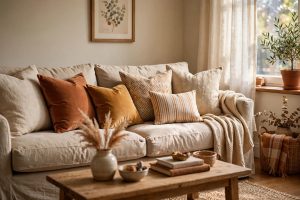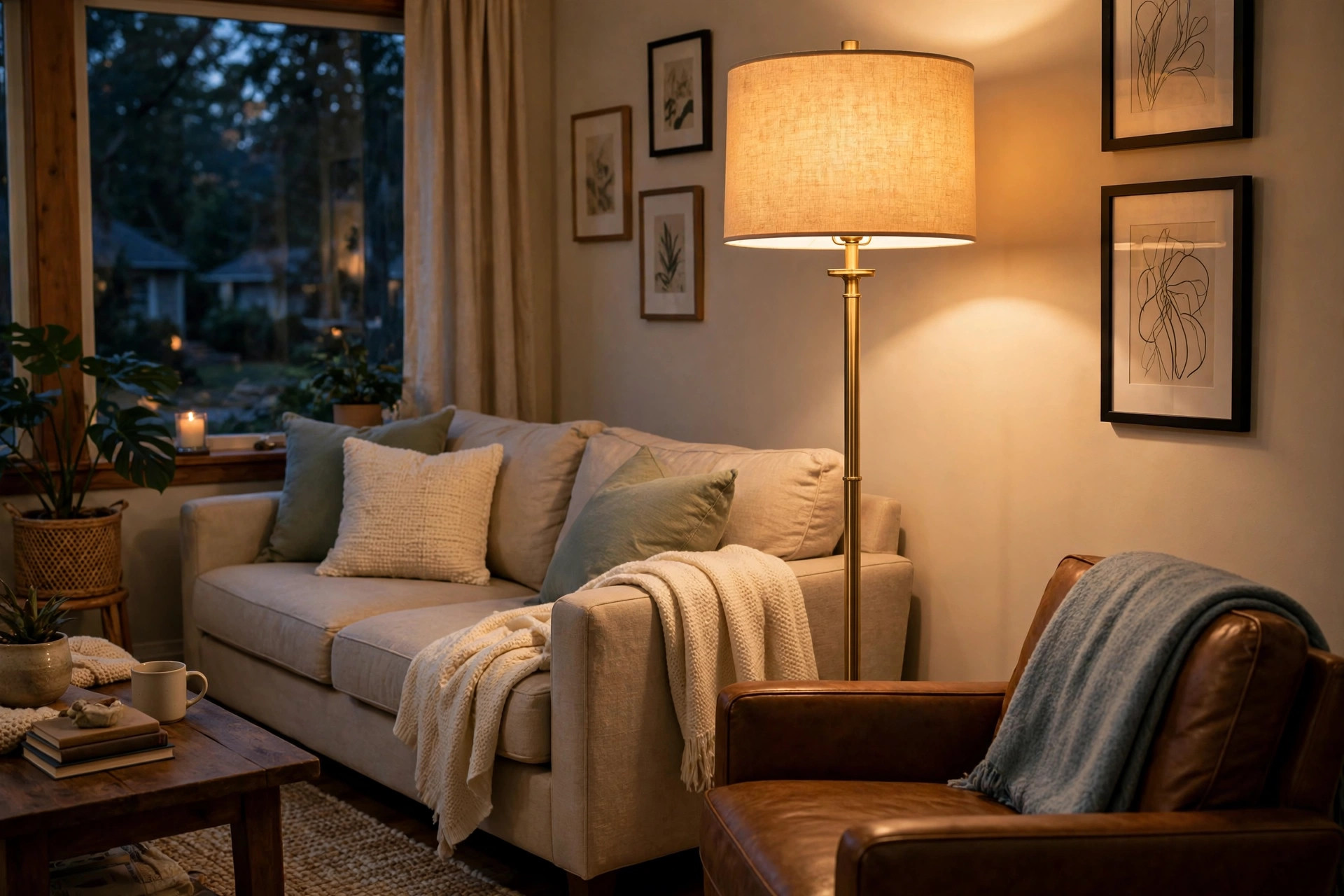

A living room feels empty without good light. The ceiling fixture alone often leaves corners dark and faces in shadow. This living room floor lamps buying guide USA will walk you through every step of choosing a floor lamp that fits your room, your style, and your budget. You will learn how to judge height, brightness, style, and price. You will also learn which safety rules matter and how to keep your lamp in good shape for years.
Whether you rent a small apartment or own a large house, the right floor lamp can change the whole mood of a room. It can give you light for reading, warmth for movie night, and a soft glow for quiet evenings. Read on for a clear, simple plan.
Why a Floor Lamp Matters in the Living Room
A floor lamp is one of the most useful pieces in a home. It moves. You can place it where you need light and move it when your room changes. Unlike a ceiling light, a floor lamp shines light from the side, which feels warmer and more human. It fills dark corners and makes a room feel finished.
Good lighting also helps the eye. Reading under weak light tires the eyes fast. A well placed floor lamp puts bright light right where your book or newspaper sits. It also helps older family members who need more light to see small print.
A floor lamp adds style too. The right base, shade, and finish can pull a whole room together. It works like a piece of art that also serves a purpose. When you pair it with the right living room wall art, the corner of your room can look like a picture from a magazine.
What to Look for When You Buy a Floor Lamp: Living Room Floor Lamps Buying Guide Usa
Before you spend money, study the key points below. They will save you from buying a lamp that is too dim, too tall, or wrong for your room.
Height and Size
Most floor lamps stand between 58 and 64 inches tall. Measure your space before you shop. The bottom of the shade should sit near eye level when you sit on your sofa, which is about 40 to 48 inches from the floor. If the lamp will sit behind a chair, a taller lamp works better. If it sits beside a low sofa, a shorter lamp looks right.
Watch the base too. A wide base takes up floor space. In a small room, a slim base or a lamp with a narrow footprint fits best. Arc floor lamps give great overhead light but need wide, heavy bases to stay steady.
Brightness and Bulb Type
Brightness is measured in lumens, not watts. For a reading spot, look for 800 to 1600 lumens. For soft mood light, 400 to 800 lumens is enough. Many modern lamps now use LED bulbs. LEDs use less power and last for years. Some lamps let you dim the light, which is a fine feature for rooms that serve many uses.
Check the shade color. A white or cream shade lets the most light through. A dark shade pushes light up and down and gives a moody look, but it gives less total light. Match the shade to your goal: bright task light or soft glow.
Shade Shape and Direction
The shade decides where the light goes. A drum shade throws light up and down evenly. A bell or empire shade sends more light downward. A torchiere shade points all light to the ceiling, which then bounces back into the room as soft, even light. For reading, pick a shade that sends light down onto your chair. For general warmth, a torchiere or upward-facing shade works well.
Many shoppers browse design sites for ideas on shade shapes. The editors at HGTV often show how different shades change a room, and their photo galleries can give you a clear picture of what suits your home.
Switch and Cord Placement
Think about how you will turn the lamp on. A foot switch on the cord is easy to reach. A rotary switch on the socket works well too. Some lamps now offer remote controls or smart controls. Place the lamp near an outlet so the cord does not run across a walkway. A long cord gives you more freedom in placement. Tape or cord covers keep the cord safe and neat.
Style and Finish
Floor lamps come in many styles: modern, farmhouse, mid-century, industrial, and classic. Brass, black, bronze, and chrome are common finishes. Pick a finish that matches your other furniture. A black lamp blends into most rooms. Brass adds warmth and a touch of class. Reviews and style roundups on Wayfair show how each finish looks in real rooms, which helps when you shop from home.
Types of Floor Lamps
There are five main types. Each one serves a different purpose. Most homes use two or more types together.
Standard Floor Lamps
The classic floor lamp has one stem, one base, and one shade. It is simple, affordable, and easy to move. Standard lamps work well beside a sofa or in a corner. They are the best first choice for most buyers. Stores like IKEA carry simple standard lamps at low prices, which is a good start for a first apartment or a rental.
Torchiere Lamps
A torchiere sends light upward to the ceiling. The light bounces down as soft, even glow. Torchieres are good for general room light but poor for reading, because no direct light reaches your lap. They often use halogen or LED bulbs. If you choose a torchiere, check that the bowl sits high enough to clear the heads of people walking by.
Arc Floor Lamps
Arc lamps curve over the seating area like a shepherd’s crook. They give overhead light without a ceiling wire. Arc lamps look striking and modern, but they are heavy and take up space. The wide base can weigh over fifty pounds. Measure carefully, because the arc must reach your chair without hitting walls or shelves. Design galleries on Houzz show arc lamps in real living rooms, which helps you judge their true size.
Reading and Pharmacy Lamps
These lamps have an adjustable arm or a swing head. You can aim the light right at your book. Pharmacy lamps often have a half shade that directs light down. They are taller and narrower than standard lamps. If you read every night, a dedicated reading lamp is worth the money. Pair it with a comfortable chair and a small living room ottoman for a perfect reading corner.
Tree and Multi-Light Lamps
Tree lamps have three or more arms, each with its own small shade. You can point each arm in a different direction. They give flexible light for large rooms. Multi-light lamps cost more but can replace two or three small lamps. They work well in rooms where you need light in several spots but have few outlets.
Cost and Price Guide
Prices vary widely. Here is a plain guide to what you can expect to pay in the United States.
– Budget, $30 to $80: Simple standard lamps with fabric shades. Good light, basic build. Best for rentals and first homes. – Mid-range, $80 to $200: Sturdier bases, nicer shades, dimmable bulbs, more style choices. This range fits most living rooms. – High-end, $200 to $600: Designer brands, solid metal builds, unique shapes. Lamps from makers like West Elm and Article often sit in this range, with strong build and refined finishes. – Designer and luxury, $600 and up: Handcrafted or imported pieces. Pay this only when the lamp is also a statement piece for the room.
Remember to budget for bulbs. LED bulbs cost more up front but last much longer than old bulbs. One LED can serve for ten years or more. Also think about delivery. Large arc lamps may carry extra shipping fees. Many stores offer free shipping on lamps over a set price, so check before you order. Price guides on The Spruce list typical costs for each lamp type, which can help you set a fair budget.
When you shop for living room floor lamps for sale USA listings online, watch for seasonal sales. Fall and spring often bring lower prices on lighting as stores clear stock. You may also find open-box deals at local lighting shops.
Care and Upkeep
A floor lamp needs little care, but a few small habits keep it working and looking good for years.
Dust the shade once a month. Fabric shades collect dust fast. Use a soft brush or the brush tool on your vacuum. Never use water on a fabric shade. For paper shades, use a dry cloth only. Metal bases can be wiped with a damp cloth and dried at once.
Change bulbs as the maker suggests. Let the bulb cool before you touch it. Old halogen bulbs get very hot and can burn your fingers. LED bulbs stay cooler and safer.
Check the cord each year. Look for cracks or bare wire. If the cord is worn, stop using the lamp until you fix or replace the cord. Keep cords out of high traffic paths. Do not run cords under rugs, because heat can build up and cause harm.
Tighten the joints. Swing arms and adjustable heads can loosen over time. A small turn with a screwdriver keeps them firm. If the lamp wobbles, check that all parts are tight and the base sits flat on the floor.
Safety Rules
Lamps are safe when used with care. Follow these rules in every home.
Keep hot bulbs away from curtains, bedding, and paper. Fabric shades can scorch if a bulb sits too close. Use only the bulb size and type that the lamp maker allows. The rating is printed on the socket or in the manual.
Place the lamp on a flat, steady surface. A wobbly lamp can fall and break the bulb. If you have small children or pets, pick a lamp with a heavy base. Put the lamp in a corner where it cannot be knocked over.
Turn the lamp off when you leave the room for a long time. This saves power and lowers risk. Use a timer plug if you often forget. For smart lamps, set a schedule through the app.
Buy lamps with a UL or ETL mark. This mark shows the lamp passed safety tests in the United States. Avoid cheap lamps with no safety mark. They may use thin wires that can overheat. Consumer safety guidance from Apartment Therapy and other home sources often stresses the value of certified fixtures.
Frequently Asked Questions
How tall should a living room floor lamp be? Most floor lamps are 58 to 64 inches tall. The shade should sit near eye level when you sit down, about 40 to 48 inches from the floor. Behind a tall chair, go taller. Beside a low sofa, go shorter.
What kind of bulb is best for a living room floor lamp? LED bulbs are the best choice for most homes. They use less power, stay cool, and last for years. Pick warm white light, around 2700 Kelvin, for a cozy living room. Pick bright white, around 3000 Kelvin, for reading.
How many floor lamps does a living room need? Most living rooms need one to three. One beside the main chair for reading, one in a dark corner for balance, and maybe one behind the sofa for mood. Rooms larger than 400 square feet often need three. Start with one and add more only if corners stay dark.
Can a floor lamp be the only light in a living room? It can work in a small room, but it is not ideal. A single lamp leaves shadows in far corners. Pair the floor lamp with table lamps or wall lights for even light. Layered light makes a room feel warm and complete.
Are arc floor lamps safe for homes with children? Arc lamps are heavy and stable, but the long arm can be a hazard if a child hangs on it. Keep arc lamps away from play areas. Make sure the wide base sits flat and cannot tip. For busy family rooms, a standard lamp in a corner is a safer pick.
How much should I spend on a floor lamp? Spend $80 to $200 for good quality in most living rooms. Budget lamps under $80 work fine for simple needs. Pay more only when the lamp is also a design piece. The catalogs at Crate and Barrel and CB2 show what higher price points buy in terms of materials and craft.
A Short Final Word
Buying a floor lamp is simple when you know what to measure and what to ask. Check the height. Check the brightness. Match the style to your room. Stay within your budget. And always pick a lamp with a safety mark.
Take your time. Visit stores, read reviews, and look at real photos of lamps in living rooms. The ideas on Apartment Therapy and The Spruce can help you see how other homes solve the same lighting problems. With this living room floor lamps buying guide USA in hand, you can pick a lamp that gives your room warm light for years to come.
References
Apartment Therapy. (n.d.). Home design ideas and inspiration. https://www.apartmenttherapy.com Article. (n.d.). Modern furniture. https://www.article.com CB2. (n.d.). Modern furniture and decor. https://www.cb2.com Crate and Barrel. (n.d.). Furniture and home decor. https://www.crateandbarrel.com HGTV. (n.d.). Home and garden ideas. https://www.hgtv.com Houzz. (n.d.). Home design and remodeling. https://www.houzz.com IKEA. (n.d.). Home furnishings. https://www.ikea.com The Spruce. (n.d.). Home and garden advice. https://www.thespruce.com Wayfair. (n.d.). Furniture and home goods. https://www.wayfair.com West Elm. (n.d.). Modern furniture and home decor. https://www.westelm.com
Was this guide helpful?

About Jennifer Lee
The My Garden US editorial team writes practical, in-depth home and garden guides for American homeowners — tested advice, no fluff.
You May Also Like
Luxury Area Rugs Buying Guide USA: How to Choose the Right Rug
January 12, 2026 0 views
Kitchen Island Stools for Florida Homes in the USA
September 8, 2026 0 views
Living Room Ottomans for Florida Homes: A Practical Guide
May 17, 2026 0 views