A living room ottoman is one of the most useful pieces of furniture you can own. This living room ottomans buying guide usa will walk you through every choice you need to make. An ottoman gives you a place to rest your feet after a long day. It can also hold blankets, magazines, and toys inside. It can serve as extra seating when guests visit. Some ottomans even work as a small coffee table with a tray on top. With so many uses, it pays to choose well. The sections below cover types, sizes, fabrics, prices, safety, and care. By the end, you will know exactly what to look for in stores across the United States.
Why an Ottoman Matters in a Living Room
An ottoman changes how a living room feels and works. It invites you to sit back and relax. It softens the look of a room full of hard edges. It adds color, texture, and warmth where the room needs it most.
A good ottoman is flexible. You can move it from one spot to another in seconds. Use it as a footrest by the sofa. Pull it into a circle of chairs when friends come over. Place a large tray on a firm ottoman and it becomes a coffee table. Lift the lid of a storage ottoman and you have a hidden place for clutter. Few pieces of furniture serve so many roles at once.
Ottomans also help small rooms work harder. In a small living room, a big coffee table can feel heavy and fixed. An ottoman is lighter in look and easy to shift. This flexibility is one reason designers recommend ottomans so often. Many decorating guides on sites like HGTV show ottomans as a simple way to refresh a room without buying new major furniture.
Finally, an ottoman is a low-cost way to try a new style. A bold color or pattern on an ottoman costs far less than a bold sofa. If you tire of the look, you can recover it or replace it without much pain. For all these reasons, shoppers across the country keep ottomans near the top of their living room lists.
How to Choose the Right Ottoman: Living Room Ottomans Buying Guide Usa
Measure First
Start with a tape measure. Write down the width of your sofa or chairs. The ottoman should be about two-thirds the width of the piece it serves. Height matters too. The top of the ottoman should sit at the same height as your seat cushion, or about one inch lower. A seat cushion is usually 17 to 19 inches from the floor.
Leave room to walk. You need at least 14 to 18 inches between the ottoman and the sofa. You also need a clear path around the room. In tight rooms, choose a smaller ottoman or a pair of small ones that you can move apart.
Decide on Its Main Job
Think about what the ottoman will do most days. If you want a footrest, choose softness and the right height. If you want storage, pick a style with a lift-off top or a hinged lid. If you need extra seating, look for a sturdy frame that can hold an adult. If it will serve as a coffee table, pick a firm, flat top that can hold a tray.
Pick a Shape That Fits
Round ottomans suit rooms with curves and soft lines. Square and rectangular ottomans suit sofas with straight lines. Long bench ottomans stretch across the front of a large sectional sofa. They look clean and give two people a place to rest their feet.
Match Your Style
Look at the lines of your current furniture. A room with a mid century sofa may suit a low tufted ottoman with tapered legs. A traditional room may suit a skirted ottoman in a classic fabric. A farmhouse room may suit a slipcovered ottoman in a washable linen. A modern room may suit a clean-lined cube in leather or a bold solid color.
Color is a big choice. A neutral ottoman in gray, beige, or navy blends with almost anything. A patterned ottoman can pull together colors from your rug and curtains. If your sofa is plain, a patterned ottoman adds life. If your sofa is bold, a plain ottoman keeps the room calm. Many retailers, including Wayfair, let you filter ottomans by color, style, and fabric, which makes comparison shopping much easier.
Types of Living Room Ottomans
Storage Ottomans
Storage ottomans have a hollow inside with a lid that lifts or a top that flips. They are among the most popular types in the United States. Use them for blankets, throw pillows, board games, or children’s toys. Some have safety hinges that keep the lid from slamming shut. Bench-style storage ottomans can stretch along a sofa and hold a great deal inside.
The downside is weight. A large storage ottoman full of blankets can be heavy to move. Lids on cheap models may not close evenly. Check reviews for notes about hinge quality and lid fit.
Standard Footstool Ottomans
A standard ottoman is a padded stool with no storage inside. It is light, simple, and often the least costly option. It does one job well: it holds your feet. Because there is no lid or hinge, there are fewer parts that can break.
Cocktail Ottomans
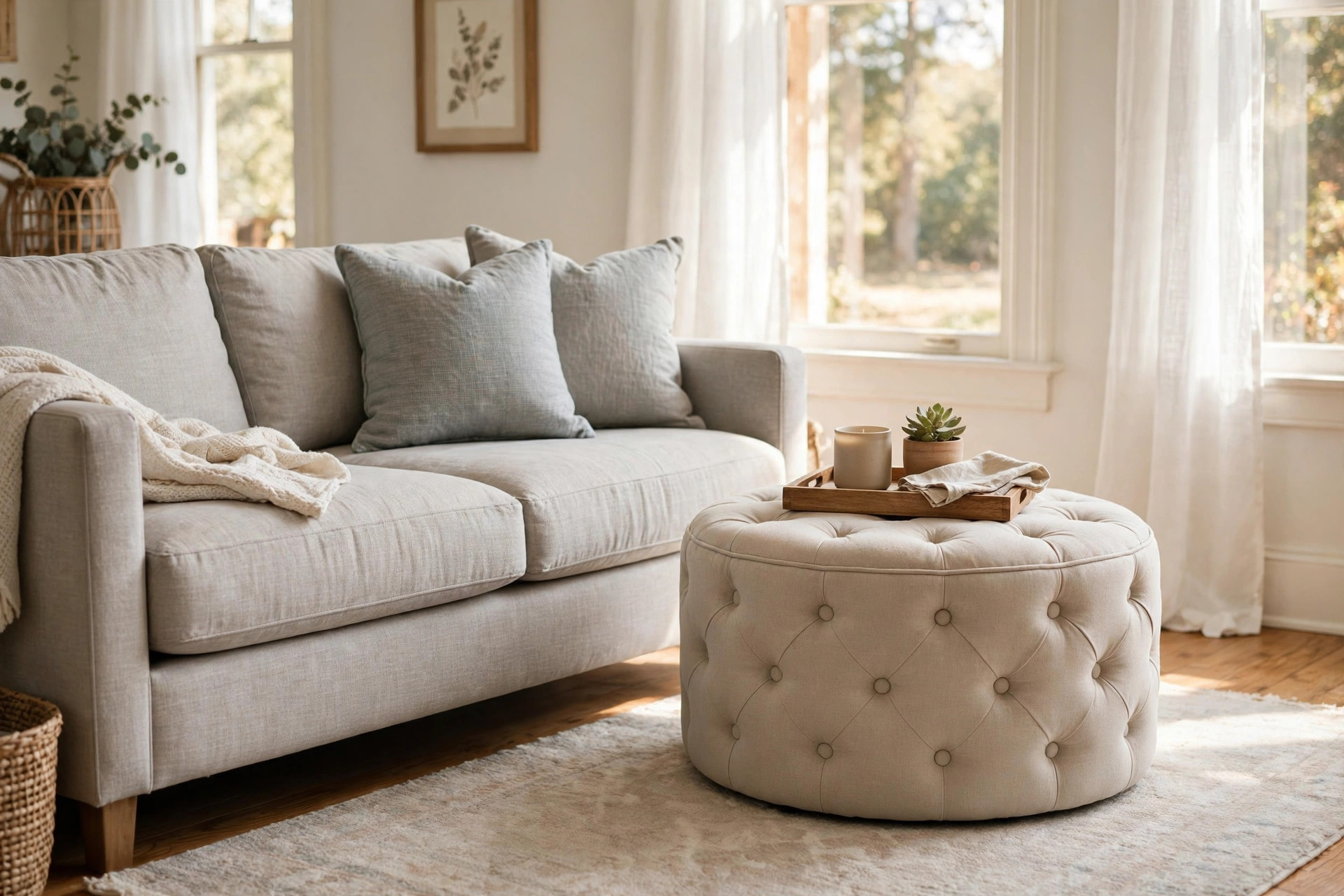
A cocktail ottoman is a large, firm, flat-topped piece that sits in front of the sofa like a coffee table. It is often tufted, with buttons or seams across the top. It holds trays, books, and drinks, but it is still soft enough for feet. Many people choose a cocktail ottoman instead of a wood or glass coffee table. It is safer for homes with small children because it has no hard corners.
Cube and Pouf Ottomans
Cubes and poufs are small and light. You can scatter several around a room. They double as side tables, footrests, or extra seats. Poufs are often soft and filled with beads or foam. They have no frame, so they are best for light use. Cubes may have a wood frame inside and can take more weight.
Ottoman Sets
Some ottomans come in sets of two or three. You can push them together to form one large piece or spread them around the room. Sets are a smart pick for growing families. You can add more pieces over time. They also travel well from room to room when you rearrange.
Fabrics and Materials
The fabric you choose decides how the ottoman looks, how it feels, and how long it lasts. Each material has clear strengths and weaknesses.
Leather looks rich and lasts for years when cared for. It wipes clean with a damp cloth. It costs more than most fabrics. It can feel cold in winter and sticky in summer. Bonded leather costs less but peels and cracks sooner than true top-grain leather.
Microfiber and performance fabrics resist stains well. They are a good pick for homes with children or pets. They come in many colors and textures. Look for fabric labels that mention stain resistance.
Velvet gives a soft, deep look that suits formal living rooms. Choose a high-quality velvet with a tight weave for the best wear. If you like this look on larger pieces too, read our velvet living sofas buying guide before you shop.
Linen and cotton slipcovers have a relaxed, casual look. You can remove them and wash them, which is a real plus. They wrinkle and may shrink if washed in hot water.
Faux leather and vinyl cost little and wipe clean. They work well in playrooms and family rooms. Keep them out of strong direct sun to slow the wear.
Whatever fabric you pick, ask for a swatch before you buy. Colors look different under your own lights. Rub the swatch and check how it handles your daily life. A good retailer will send free or low-cost samples.
Cost and Price Ranges
Ottoman prices in the United States span a wide range. Knowing the bands helps you set a budget.
Budget ottomans cost about 40 to 120 dollars. These are usually small cubes, poufs, or simple footstools. They suit dorm rooms, first apartments, and guest rooms.
Mid-range ottomans cost about 120 to 400 dollars. This is where most shoppers land. You get sturdier frames, better foam, and nicer fabrics. Build quality is strong enough for daily family use.
High-end ottomans cost 400 dollars and up, sometimes past 1,000 dollars. These come from design-focused brands and use top-grain leather, solid hardwood frames, and fine tailoring. Brands such as CB2 and Article sell modern ottomans in this range with clean lines and quality materials. You pay for design, materials, and longer life.
To stretch your dollar, shop holiday sales. Presidents Day, Memorial Day, Labor Day, and Black Friday bring real discounts on furniture. Floor models at local stores can save 20 to 40 percent. Just check them closely for wear before you buy.
Care and Upkeep
Simple care keeps an ottoman looking good for years. Vacuum fabric ottomans each month with an upholstery brush. Turn cushions and rotate the ottoman now and then so wear spreads evenly.
Clean spills at once. Blot, do not rub. Rubbing pushes stains deeper into the fabric. Use a clean white cloth and work from the edge of the stain toward the center. Test any cleaner on a hidden spot first.
Leather needs its own care. Wipe it with a soft damp cloth. Use a leather conditioner once or twice a year. Keep leather out of direct sun, which dries and fades it. Keep it away from heat vents for the same reason.
Wood legs need little care. Dust them and tighten screws once a year. If a leg wobbles, fix it early. A wobble left alone can crack the frame.
Storage ottomans need air now and then. Open the lid and let the inside air out every few months. This stops musty smells. Do not store damp items inside.
If your ottoman has a removable cover, follow the wash label exactly. Wash in cold water and line dry when the label says so. A slipcover that shrinks will not fit back on.
Safety Tips
Ottomans are soft, but they still need care around children and older adults. Choose storage ottomans with slow-close hinges or lids that lift off fully. This stops little fingers from getting pinched. Some safety notes on furniture hardware appear on sites like The Spruce.
Keep ottomans stable. A tall, narrow ottoman can tip if a child climbs on it. Choose low, wide pieces for play areas. Make sure the ottoman does not block walkways. A clear path helps prevent trips.
Check weight limits. Most ottomans made for seating hold 200 to 300 pounds. Poufs and soft cubes may hold less. If adults will sit on it often, confirm the limit in the product details.
Place the ottoman where it will not slide on hard floors. Felt pads or rubber feet keep it in place. This small step stops the ottoman from drifting into walkways.
Living Room Styling Ideas
An ottoman is also a styling tool. Match the ottoman fabric to a color in your rug. Our luxury area rugs buying guide can help you pick a rug that pairs well with your ottoman choice. Designers on Apartment Therapy often show how one curved piece can soften a whole room.
Frequently Asked Questions
What size ottoman should I buy for a standard sofa?
For a standard 84-inch sofa, choose an ottoman about 40 to 50 inches wide. The top should sit at the same height as your seat cushion or about one inch lower. Leave 14 to 18 inches of space between the sofa and the ottoman so you can walk past with ease.
Are storage ottomans worth the money?
For most homes, yes. A storage ottoman hides clutter and adds seating in one piece. It costs more than a plain footstool, but it replaces a basket or bin you would buy anyway. Choose one with strong hinges and a lid that closes smoothly.
Can an ottoman replace a coffee table?
A firm cocktail ottoman can replace a coffee table in many rooms. Add a large tray to hold drinks and keep them steady. The soft top is safer for children than glass or sharp wood corners.
Which fabric is best for pets?
Performance fabrics and microfiber handle pets best. They resist claws better than woven linen and clean up faster than velvet. Leather also works if you accept light scratch marks as part of its look. Avoid loose weaves that snag. Choose a color close to your pet’s fur to hide shedding between cleanings.
How long should a good ottoman last?
A well-made ottoman lasts 7 to 15 years in a family living room. Frames of solid wood last longest. Foam softens over time but can be replaced by an upholsterer. Cheap particle-board frames may fail in 2 to 4 years.
Where can I see ottomans in person before buying?
Large home stores across the country carry floor models you can sit on and test. Online sellers such as Crate & Barrel, West Elm, and Houzz show wide selections with customer photos and reviews. Sit on any floor model the way you would at home.
A Short Final Word
The best ottoman is the one that fits your room, your habits, and your budget. Measure your space. Pick the job it must do. Choose a fabric that suits your daily life. Spend a little more on the frame if you can. If your living room also needs seating with a classic look, our leather recliner chairs buying guide covers another popular choice. Take your time, compare a few options, and you will find an ottoman that serves your home well for years.
References
Apartment Therapy. (n.d.). Home design ideas and inspiration. https://www.apartmenttherapy.com Article. (n.d.). Modern furniture. https://www.article.com CB2. (n.d.). Modern furniture and decor. https://www.cb2.com Crate and Barrel. (n.d.). Furniture and home decor. https://www.crateandbarrel.com HGTV. (n.d.). Home and garden ideas. https://www.hgtv.com Houzz. (n.d.). Home design and remodeling. https://www.houzz.com The Spruce. (n.d.). Home and garden advice. https://www.thespruce.com Wayfair. (n.d.). Furniture and home goods. https://www.wayfair.com West Elm. (n.d.). Modern furniture and home decor. https://www.westelm.com
Was this guide helpful?

About Sarah Mitchell
The My Garden US editorial team writes practical, in-depth home and garden guides for American homeowners — tested advice, no fluff.